The best city hikes and walks around Aland-Elbe-Niederung
4.5
(1072)
4,119
hikers
23
hikes
Urban hiking trails around Aland-Elbe-Niederung traverse areas featuring riverine environments, floodplain forests, and meadows, particularly around the Elbe river. The landscape includes a mix of natural habitats and urban settings, offering varied scenery. Trails often follow riverbanks or lead through green spaces within towns. This region provides accessible paths for exploring both the natural and developed areas.
Best urban hiking trails around Aland-Elbe-Niederung
- The most popular urban hiking route is Bahnstraße Wittenberge – Oberschule Wittenberge loop from Wittenberge, a…
Last updated: October 1, 2026
3
hikers
4.93km
01:15
10m
10m
Easy hike. Great for any fitness level. Easily-accessible paths. Suitable for all skill levels.
5.0
(2)
13
hikers
Easy hike. Great for any fitness level. Easily-accessible paths. Suitable for all skill levels.

5.0
(1)
5
hikers
Easy hike. Great for any fitness level. Easily-accessible paths. Suitable for all skill levels.
5.0
(1)
5
hikers
Easy hike. Great for any fitness level. Easily-accessible paths. Suitable for all skill levels.
4.0
(1)
10
hikers
Easy hike. Great for any fitness level. Easily-accessible paths. Suitable for all skill levels.
Get access to more routes and recommendations from other explorers.
Already have an account?
Our route recommendations are based on thousands of hikes, rides, and runs completed by other people on komoot.
Start today with a free account
Your next adventure awaits.


Tips from the Community

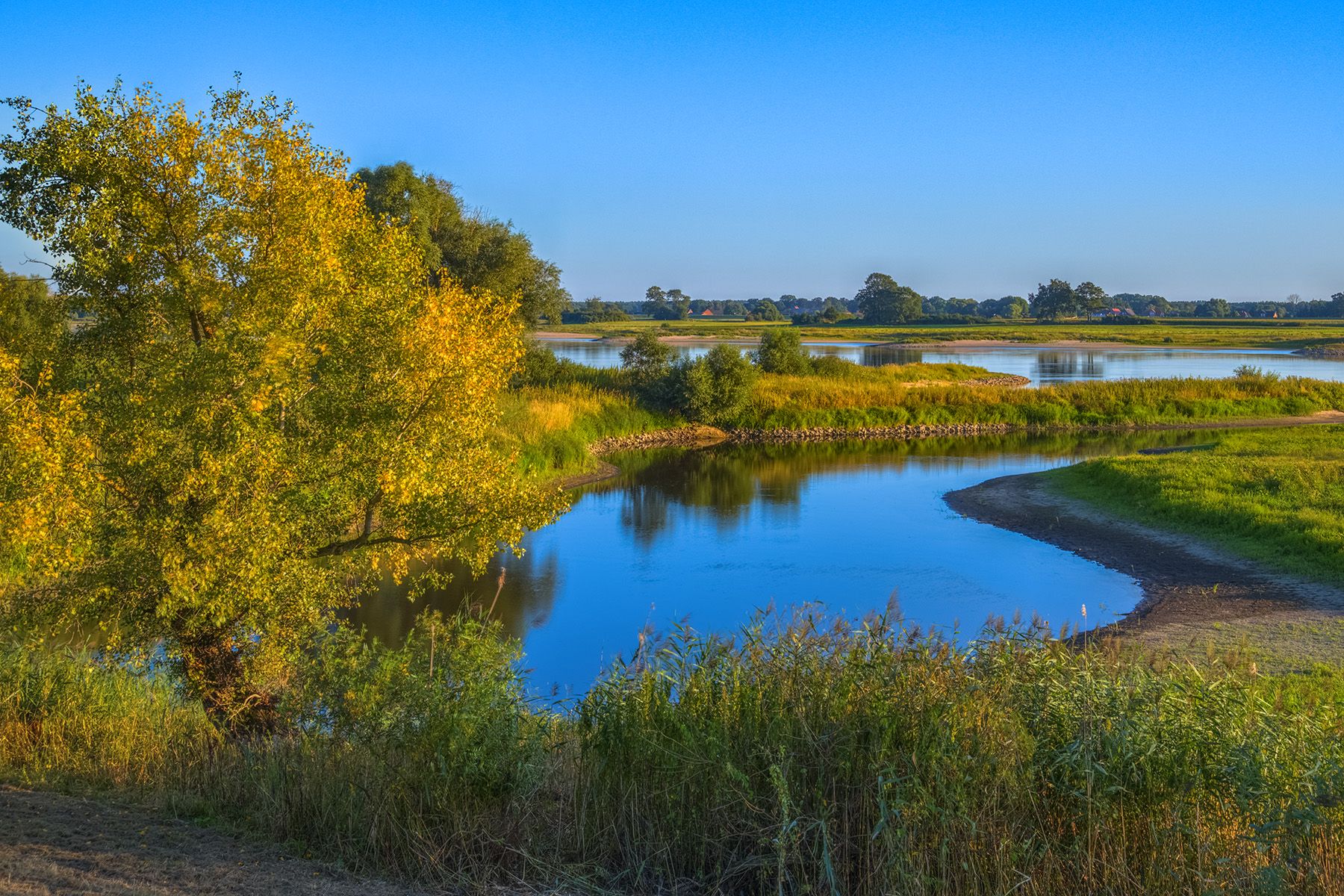
located directly on the water with a beautiful view over the Elbe meadows.
0
0

The Stadtkirche St. Marien in Wittenberg, first mentioned in 1187, is considered the mother church of the Reformation, where Martin Luther preached from 1512 onwards. As the oldest building in the city (built from approx. 1281), it was the scene of the first German-language Protestant service. It houses the Cranach Altar and is part of the UNESCO World Heritage. Main preaching church of Martin Luther (since 1512) and Johannes Bugenhagen. Here, in 1521, the mass was celebrated for the first time in German and communion was administered in both kinds (bread and wine).
1
0
The history of the school site in Wittenberge began in 1895 with the opening of the Realschule. Later, the school continued as a Realgymnasium and, in the GDR, as an Erweiterte Oberschule (EOS). Since 1992, the school has once again been operating as a Gymnasium. The school has a focus on natural sciences. Students have the opportunity to work on interdisciplinary projects in their free time and participate in competitions such as „Jugend forscht“. On the annual „Day of Science“, lecturers from universities in Brandenburg, Berlin, and Mecklenburg-Vorpommern give talks on scientific topics.
3
0
The Marie Curie High School in Wittenberge (Brandenburg) was founded in 1895 as a private higher school for boys and moved into the main building in Sandfurttrift in 1900. It developed from a reform grammar school into today's state grammar school with a focus on natural sciences, which is housed in two listed buildings.
3
0
The Steintor in Wittenberge is the city's oldest landmark, first mentioned in 1297. Rebuilt in its current form after a fire around 1430, it was the northwestern exit of the fortified city. The tower, formerly called "Alter Turm" (Old Tower), served as a prison in the 19th century and has housed a local history museum since 1928.
1
0
The harbor originally originated in the context of Wittenberg's industrial boom as a harbor basin. After the industrial facilities in the harbor area were shut down, the Nedwighafen was converted into a modern sports boat harbor. Today, the Nedwighafen serves as a central meeting point for water tourists on the Elbe and is an important part of tourism in the Prignitz. It is centrally located in the city, in close proximity to the Alte Ölmühle.
4
0

The Marie-Curie-Gymnasium in Wittenberge looks back on a long history. Founded in 1895 as a higher private boys' school, it developed over the years into an important educational institution in the region. Established in 1895 as a private boys' school, the school was transferred to municipal ownership in 1898. The main building (Haus 1) was erected between 1899 and 1900 according to plans by Wittenberge's city building councilor Friede Everhard Bruns. In 1900, the newly built building in Sandfurttrift was occupied, which was designed in the Neo-Gothic style with exposed brick facades. Today, the Gymnasium focuses on scientific subjects and has been a member of the association of Mathematical-Natural Science Excellence Centers at Schools (MINT-EC) since 2000.
0
0
The Historic Locomotive Shed in Wittenberge is a railway museum located on the grounds of the former railway depot and is one of the most important of its kind in Germany. The first locomotive shed was put into operation here as early as 1846, later followed by a rotunda with a turntable. Today, the museum houses over 40 historic railway vehicles, including steam locomotives, shunting diesel locomotives, electric locomotives, as well as freight and passenger cars. Highlights include the typical rebuilt steam locomotives of the 50.35 series, the small works locomotive "EMMA," and heavy freight locomotives. Visitors can tour Shed II, an impressive roundhouse dating from 1924 with a turntable and water towers, and experience the technology, the smell of coal and oil, and the polished machinery. The museum is run by associations and is a popular destination for technology enthusiasts and railway fans.
0
0
Frequently Asked Questions
How many urban hiking trails are available in Aland-Elbe-Niederung?
There are over 25 urban hiking trails in the Aland-Elbe-Niederung region, offering a variety of experiences. Most of these, 23 to be exact, are rated as easy, making them accessible for many hikers.
What kind of landscapes can I expect on urban hikes in Aland-Elbe-Niederung?
Urban hikes in Aland-Elbe-Niederung often blend townscapes with the region's unique natural beauty. You'll find paths winding through charming villages, alongside the Elbe and Aland rivers, and into adjacent floodplain forests and meadows. The area is known for its diverse riverine environment and rich biodiversity.
Are there any easy urban hiking trails suitable for beginners or families?
Yes, the majority of urban trails in Aland-Elbe-Niederung are easy, making them ideal for beginners and families. An example is the Bahnstraße Wittenberge – Oberschule Wittenberge loop from Wittenberge, which is just over 2 km long and offers a gentle introduction to the area.
What are some interesting sights or landmarks along the urban hiking routes?
Urban hikes in Aland-Elbe-Niederung offer a mix of natural and historical sights. You might encounter the unique Elbe floodplain, the beautiful floodplain landscape on the Aland, or the Aland-Elbe Lowlands Nature Reserve. Historical points of interest include the Bockwindmühle Wanzer, a traditional post mill, and various viewpoints like the Aulosen Observation Tower.
Are there any circular urban walks in the region?
Many of the urban hiking trails in Aland-Elbe-Niederung are designed as circular routes, allowing you to start and end in the same location. For instance, the Goethe Monument – Wittenberge Water Tower loop from Wittenberge is a pleasant circular walk of about 5 km.
What do other hikers enjoy most about urban hiking in Aland-Elbe-Niederung?
The komoot community highly rates urban hiking in Aland-Elbe-Niederung, with an average score of 4.6 stars from over 950 ratings. Reviewers often praise the well-maintained paths, the peaceful blend of urban and natural scenery, and the opportunities to observe diverse wildlife, especially birds, in the floodplain areas.
Are there any longer urban hikes for more experienced walkers?
While most trails are easy, there are a couple of moderate urban hikes for those seeking a longer challenge. The Old Oil Mill Wittenberge – Clara-Zetkin Park loop from Wittenberge is a moderate route spanning over 10 km, offering an extended exploration of the area.
Can I find urban trails that pass by cafes or places to rest?
Yes, some urban routes are designed to pass through or near villages where you might find cafes or rest areas. The region's charming villages with thatched roofs and timber-framed houses often provide opportunities for a break. For example, the Rest Area Under the Aland Bridge is a designated spot for a pause.
Is public transport available to access urban hiking trails in Aland-Elbe-Niederung?
The Aland-Elbe-Niederung region is part of Saxony-Anhalt, Germany, and generally has public transport connections to its towns and villages. While specific routes vary, it's often possible to reach starting points of urban trails via local buses or regional trains, especially to larger towns like Wittenberge, which serves as a starting point for several listed routes.
Are urban hiking trails in Aland-Elbe-Niederung dog-friendly?
Many trails in the Aland-Elbe-Niederung are dog-friendly, allowing you to enjoy urban hikes with your canine companion. However, as a nature reserve and biodiversity hotspot, it's important to keep dogs on a leash, especially in areas with sensitive wildlife like ground-nesting birds or near livestock. Always follow local signage and regulations.
What is the best season for urban hiking in Aland-Elbe-Niederung?
Urban hiking in Aland-Elbe-Niederung is enjoyable throughout the year. Spring brings blooming wildflowers and active wildlife, while autumn offers vibrant foliage. Summer is pleasant for longer walks, and even winter can be beautiful with crisp air and serene landscapes, especially along the riverbanks. The well-maintained paths generally remain accessible.
Most popular routes around Aland-Elbe-Niederung
Most popular attractions around Aland-Elbe-Niederung

Get inspired with the komoot mobile app


Explore more
Browse the best Hikes in other regions.
