Prescott National Forest
Prescott National Forest
Top 20 Natural Monuments in Prescott National Forest
Best natural monuments in Prescott National Forest span over 1.25 million acres in north-central Arizona. This region features a diverse array of natural monuments and geological features, offering varied landscapes from cactus-studded deserts to dense pine forests. The forest provides opportunities to explore unique geology, ecology, and cultural heritage. Its varied elevations and distinct natural landmarks make it a notable destination for outdoor exploration.
Best natural monuments in Prescott National Forest
- The most popular natural monuments is Thumb Butte Trail…
Last updated: October 11, 2026
Thumb Butte Trail
Highlight • Trail
Tip by

Granite Basin Lake
Highlight • Lake
Tip by

Sign up now to discover places like this
Get recommendations on the best single tracks, peaks, & plenty of other exciting outdoor places.
Prescott Viewpoint
Highlight • Viewpoint
Tip by
Spruce Mountain
Highlight • Summit
Tip by

Skull Valley Overlook
Highlight • Viewpoint
Tip by

Sign up for free to discover even more natural monuments in Prescott National Forest.
Already have an account?
Start today with a free account
Your next adventure awaits.
Popular around Prescott National Forest

Other adventures in Prescott National Forest

Tips from the Community

This is the Sierra Prieta Overlook near Prescott, Arizona. Gemini AI search showed: "The name "Sierra Prieta" means "murky mountains" in Spanish, a name given by explorer Amiel Weeks Whipple in 1853 who saw the range from a distance. Historically, the area around the Sierra Prieta overlook was important for mining and logging. Today, it's known for recreational activities like hiking and mountain biking along the Sierra Prieta trail system. Historical context Explorer's name: Explorer Amiel Weeks Whipple named the range "Sierra Prieta" in 1853 after seeing it and describing it as "murky mountains". Indigenous history: The Yavapai-Prescott tribe inhabited the area for centuries before conflicts with settlers began in the 1860s. Mining and logging: The region was a center for copper mining and logging, which began in the 1860s. Evidence of early mining can still be seen, such as old shacks. Conservation: The Prescott Forest Reserve was created in 1898 to protect the area, and the Prescott National Forest was established in 1908. Enforcement was needed to combat illegal logging and manage issues like overgrazing. Modern significance Recreation: The Sierra Prieta overlook is now part of a larger network of trails used for hiking and mountain biking, including the Whiskey Off Road race course. Scenic views: The overlook and trails offer panoramic views of the surrounding area, including Thumb Butte, Granite Mountain, and the Bradshaw Mountains."
1
0

Also check out: "This Site Listed on the AMERICAN RESOURCES NATIONAL HISTORIC LOOKOUT REGISTER: A national register recognizing a fire lookout sites, structures and towers with historic and cultural significance to forest fire detection in order to promote their protection. Maintained in cooperation with federal, state, and private forestry agencies and landowners throughout the United States. www.firelookout.net "
0
0
Excellent views and good training exercise. Hike from Smith Ravine Trail 297 or Groom Creek Trail 307. 🌲👍🏻🙂
0
0

Beautiful pictures and a very beautiful area 😉
0
0
Thumb Butte Day-Use Area and Trails detailed description, facilities and fees as of August 2024, courtesy of the Bradshaw Ranger District.
4
0
You can find many tours of this area in my published list. The Thumb Butte Trail #33 featured in this highlight has some additional noteworthy features. The East side of the loop is paved and one of the continuously steepest areas of the entire Prescott National Forest with an incline of ~714 feet elevation gain per mile with 14-21% grades, if I calculated correctly. Multiple benches along the way offer scenic overlooks and a break for those needing to catch their breath. So, it is excellent for both uphill and downhill training exercise. At the top you can also explore a brief spur to ascend a little further, but only during the part of the year, when falcons are not nesting near the peak. The West side of the loop is mostly gravel and rocks, and being longer offers a gentler set of grades. Between the two sections at the top lies another brief out and back spur with the best views of Prescott toward the South on this loop. Enjoy!
3
0

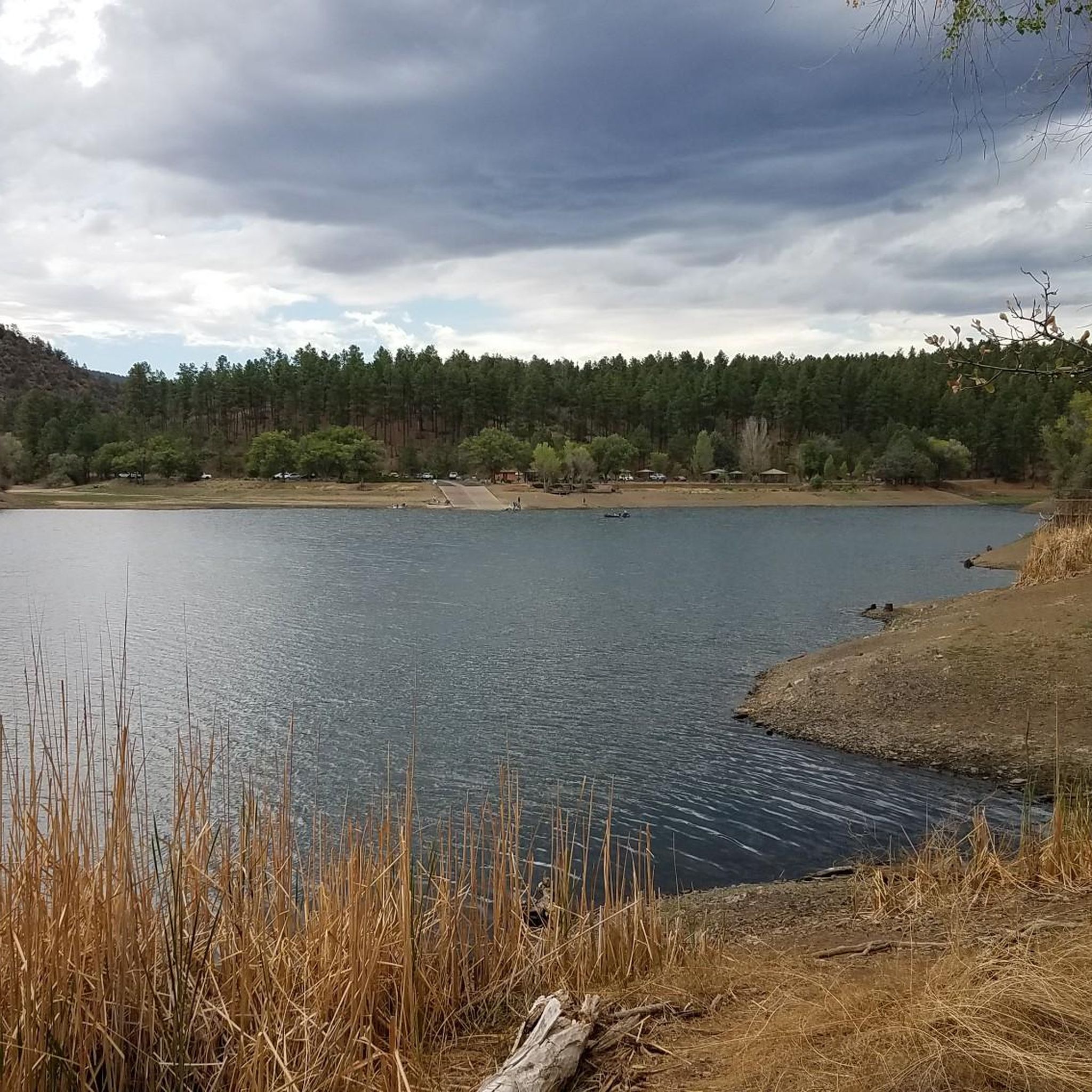
Granite Basin Lake is a small reservoir at the foot of the towering Granite Mountain. There are a bunch of different trails around the reservoir that break off in different directions, and those paths are a lot less visited than the lake itself.
0
0
Frequently Asked Questions
What are some of the most notable natural monuments to visit in Prescott National Forest?
Prescott National Forest offers a variety of distinctive natural monuments. You can explore the unique volcanic formation of Thumb Butte Trail, which provides panoramic views and educational interpretive signs. Another significant spot is Granite Basin Lake, a picturesque reservoir nestled at the foot of Granite Mountain, offering various trails.
Are there natural monuments in Prescott National Forest that are suitable for families?
Yes, several natural monuments are family-friendly. Thumb Butte Trail is popular, with interpretive signs that can engage children. Granite Basin Lake is also ideal for families, offering easy access to trails and picnic areas. Additionally, the Petroglyphs trail provides an accessible and educational experience for all ages.
What kind of geological features can I expect to see in Prescott National Forest?
Prescott National Forest is rich in diverse geological features. You'll encounter distinctive volcanic formations like Thumb Butte, as well as rugged granite landscapes, particularly around Granite Mountain, where boulders can be as large as houses. The area also features several lakes, which are small reservoirs set within these unique geological backdrops.
Where can I find historical or cultural sites within the natural monuments of Prescott National Forest?
You can discover ancient cultural heritage intertwined with the natural landscapes. The Petroglyphs trail showcases intricate Native American rock art carved into boulders centuries ago, depicting animals, human figures, and abstract designs. Exploring these sites offers a unique glimpse into the lives of indigenous peoples.
What are the best outdoor activities to do near the natural monuments in Prescott National Forest?
The natural monuments are surrounded by opportunities for various outdoor activities. You can find excellent mountain biking trails like the Groom Creek Loop Trail #307 or the Salida Gulch Trail Loop. For running, consider the Thumb Butte Trail run loop or the Lynx Recreation Trail #311. Gravel biking is also popular, with routes such as the Peavine Trail – Steep Slickrock Segment loop. You can find more details on these activities in our guides for MTB Trails, Running Trails, and Gravel Biking in Prescott National Forest.
Are there any wilderness areas within Prescott National Forest that offer a more secluded experience?
Yes, Prescott National Forest contains eight designated Wilderness Areas, totaling over 100,000 acres. These include Apache Creek, Castle Creek, Juniper Mesa, Pine Mountain, Woodchute, Sycamore Canyon, and Cedar Bench Wildernesses. These areas are perfect for wildlife viewing, hiking, horseback riding, and backpacking, offering a chance to experience untouched natural beauty and solitude. Travel is limited to foot or horseback, with no mechanized equipment allowed.
What kind of views can I expect from the natural monuments?
Many natural monuments offer stunning panoramic views. From Prescott Viewpoint, located on the Thumb Butte trail, you can see the impressive rock formations of the Granite Dells, the city of Prescott, and surrounding mountain ranges. Spruce Mountain also provides excellent vistas, and you can even climb its fire lookout for an elevated perspective.
What are the best times to visit the natural monuments in Prescott National Forest?
The varied elevations of Prescott National Forest mean that different areas are enjoyable throughout the year. Spring and fall generally offer pleasant temperatures for hiking and exploring. Summer can be hot in lower elevations but cooler in the higher pine forests. Winter hiking is possible, especially in lower areas, but higher elevations may experience snow. Always check local conditions before your visit.
Are there any lakes suitable for water-based recreation near the natural monuments?
Yes, several lakes within the forest are great for water-based activities. Besides Granite Basin Lake, which offers trails, Lynx Lake and Upper Goldwater Lake are known for fishing, hiking, and picnicking. Lynx Lake also provides opportunities for boating, making them perfect for relaxing by the water or enjoying active recreation.
What should I know about parking and permits when visiting natural monuments in Prescott National Forest?
For popular spots like the Thumb Butte Trail, there is a $5 parking fee to access the trailhead. Generally, it's advisable to check specific requirements for each area you plan to visit, especially for designated wilderness areas where certain restrictions or permits might apply for extended stays or specific activities. Parking availability can vary, so arriving early for popular trails is recommended.
Can I bring my dog to the natural monuments in Prescott National Forest?
Many trails and natural areas within Prescott National Forest are dog-friendly, provided your pet is on a leash. For example, trails around Thumb Butte and Granite Basin Lake are popular choices for dog owners. Always ensure you clean up after your pet and respect wildlife and other visitors.
What kind of wildlife might I encounter near the natural monuments?
Prescott National Forest is home to diverse wildlife, ranging from desert species to those found in pine forests. You might spot various bird species, deer, javelina, and smaller mammals. In wilderness areas like Apache Creek, there's a chance to see mountain lions. Always observe wildlife from a distance and avoid disturbing their natural habitats.
Most popular routes in Prescott National Forest
Most popular attractions in Prescott National Forest

Get inspired with the komoot mobile app


Explore more
Extend your search for the best caves by checking out these guides of the top ones in Prescott National Forest:
