The best road cycling routes around Saintes
4.3
(203)
5,616
riders
959
rides
Road cycling around Saintes offers diverse landscapes, from the gentle banks of the Charente River to more challenging hilly terrain. The region features a mix of small roads and dedicated cycling paths, including sections of La Flow Vélo. Cyclists can explore marshlands, forests, and countryside, often passing by historical sites. This varied topography provides options for different fitness levels.
Best road cycling routes around Saintes
- The most popular road cycling route is Mortagne-sur-Gironde from Meschers-sur-Gironde – loop, a 34.1…
Last updated: August 23, 2026
3.0
(2)
12
riders
54.9km
03:02
310m
310m
Moderate road ride. Good fitness required. Mostly well-paved surfaces and easy to ride.
11
riders
54.1km
02:20
240m
240m
Moderate road ride. Good fitness required. Mostly well-paved surfaces and easy to ride.

Sign up for free
5.0
(2)
4
riders
44.6km
01:46
140m
140m
Easy road ride. Great for any fitness level. Mostly well-paved surfaces and easy to ride.
1
riders
109km
04:24
440m
440m
Moderate road ride. Good fitness required. Mostly well-paved surfaces and easy to ride.
3.9
(7)
403
riders
56.1km
02:29
430m
430m
Moderate road ride. Good fitness required. Mostly well-paved surfaces and easy to ride.
4.3
(3)
114
riders
Moderate road ride. Good fitness required. Mostly well-paved surfaces and easy to ride.
3.8
(6)
54
riders
Easy road ride. Great for any fitness level. Mostly well-paved surfaces and easy to ride.
4.0
(1)
43
riders
48.3km
01:59
260m
260m
Easy road ride. Great for any fitness level. Mostly well-paved surfaces and easy to ride.
3.0
(1)
41
riders
90.9km
03:54
440m
440m
Moderate road ride. Good fitness required. Some segments of this route may be unpaved and difficult to ride.
5.0
(1)
35
riders
69.7km
02:59
460m
460m
Moderate road ride. Good fitness required. Some segments of this route may be unpaved and difficult to ride.
Get access to more routes and recommendations from other explorers.
Sign up for free
Already have an account?
Our route recommendations are based on thousands of hikes, rides, and runs completed by other people on komoot.
Start today with a free account
Your next adventure awaits.
Login or Signup
Popular around Saintes
Road Cycling Routes around Plassay
Road Cycling Routes around Fontcouverte
Road Cycling Routes around Romegoux
Road Cycling Routes in Bois Du Sable
Road Cycling Routes around Semussac
Road Cycling Routes around Arces
Road Cycling Routes around Écoyeux
Road Cycling Routes around Barzan
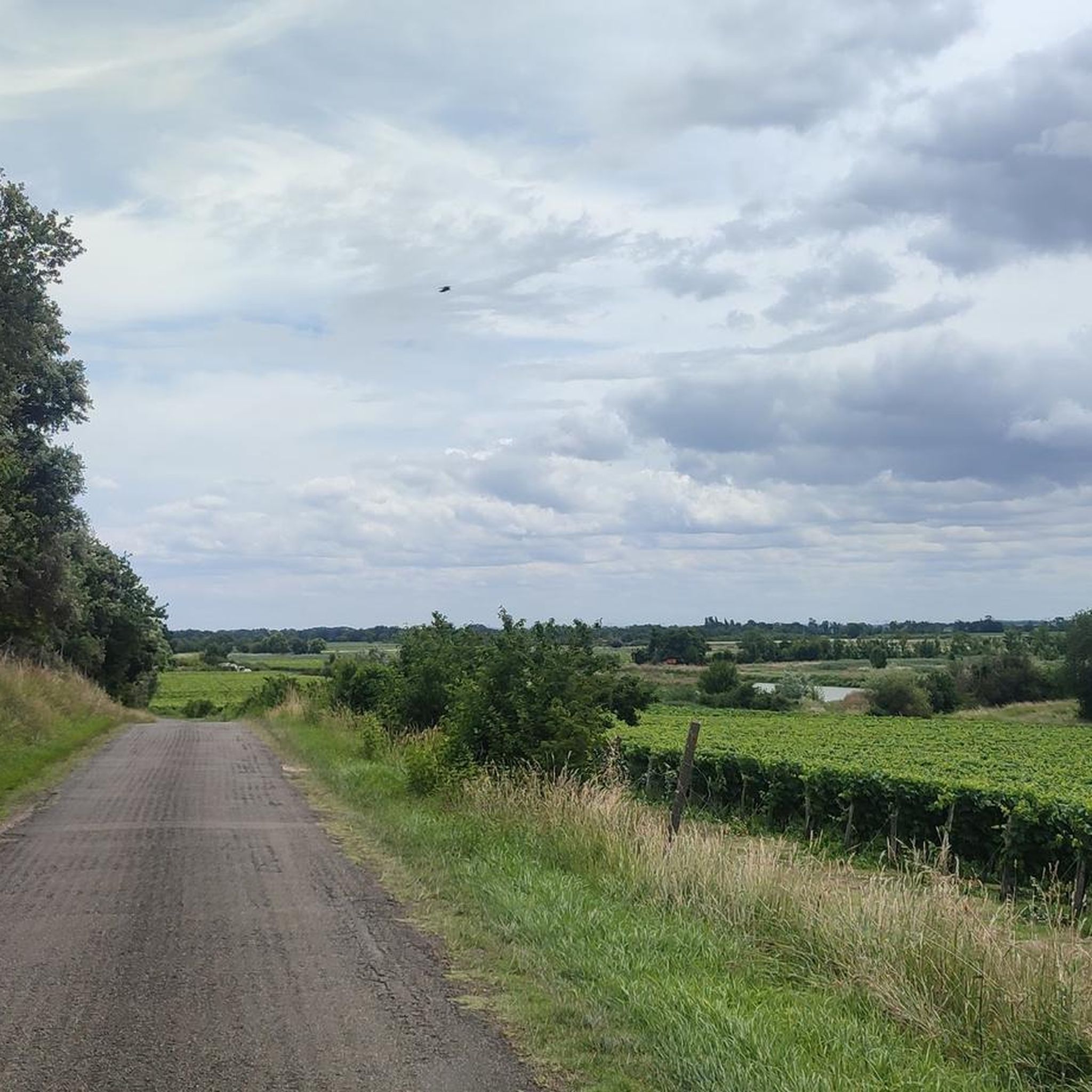
Road Cycling Routes around Floirac
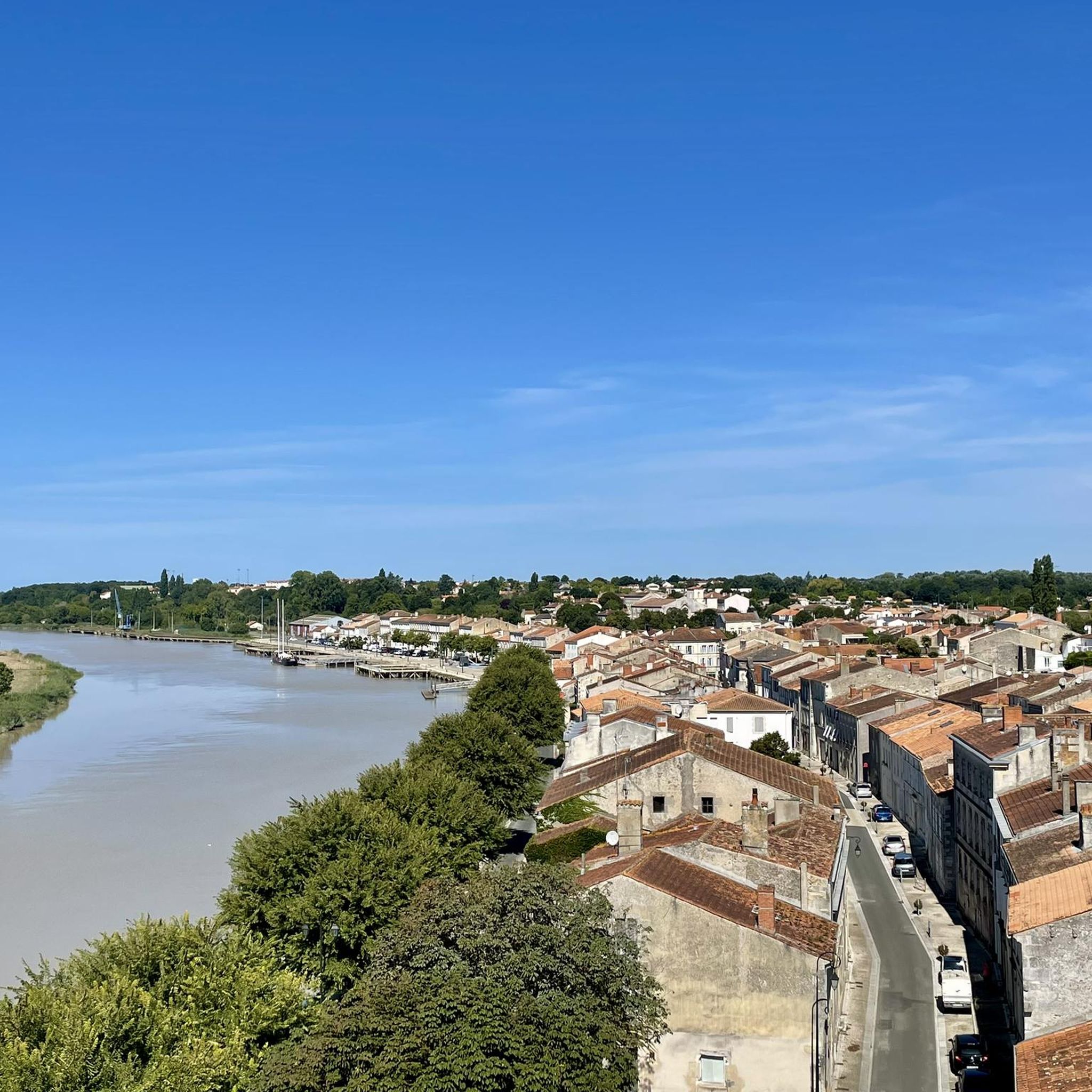
Road Cycling Routes around Geay


Tips from the Community

The site of La Baine, in Chaniers, predates the current mill. 14th century: the first attested mills A document dated 1310 mentions cloth mills at La Baine. They were built on piles driven into the riverbed and were used, among other things, for fulling fabrics. These mills then belonged to the dean and chapter of the cathedral of Saintes. They had been destroyed a few years earlier by the Count of la Marche. In 1313, the chapter obtained authorization to rebuild two mills, a weir, and a fishery. 17th century: Colbert's royal mill It was in the 17th century that La Baine gained considerable importance. A complex of five wheat mills was rebuilt on a secondary branch of the Charente, which was not used for navigation. Around 1630, the mills belonged to the brothers Charles and Jacques Duval, who held the beneficial ownership, while the lordship of Chaniers was under the chapter of the Saint-Pierre de Saintes cathedral. Then came Jean-Baptiste Colbert, minister to Louis XIV and Secretary of State for the Navy. Around 1670, Colbert had the mill redeveloped and enlarged to considerably increase its production capacity. The new complex had seven water passages and thus became one of the most powerful mills in the region. Why was Colbert interested in La Baine? The reason was directly linked to the creation and development of the Rochefort arsenal. The mill primarily produced wheat and barley flour intended for the sustenance of the Royal Navy sailors. The grains arrived via the Charente aboard gabares (flat-bottomed barges). After delivering their cargo to the mill, the gabares departed with the flour destined, among other places, for Rochefort. The mill of La Baine was therefore part of a true royal industrial and logistical system organized around the Charente and Rochefort. 19th century: gradual transformation In the 19th century, milling activity continued. The old mills gradually became a true industrial establishment. In 1845, the site was operated by five different millers. From 1897, the complex was gradually brought together by Mr. Lardy, who modernized the facilities and introduced machinery. His son Rémy Lardy succeeded him. 20th century: the flour mill In the 1930s, the mill had become a true industrial flour mill. Its capacity reached about 50 quintals of wheat per day. In 1936, the hydraulic power was supplied by several wheels about 5 meters in diameter. The total water intake was about 4 meters, with a head of 1.50 meters. The facilities included, among other things: two double grinders; a double converter; a pair of millstones; a plansichter; five purifiers. Milling activity finally ceased in the mid-20th century, with sources placing the end of industrial activity around the years 1940-1960, depending on whether one refers to the flour mill or the complete disappearance of milling activity. Today The building has been preserved and transformed into a restaurant, while retaining remarkable elements of its industrial past, notably the wheel and part of the old machinery. The Moulin de la Baine is now located at 14 rue Colbert, 17610 Chaniers, directly above the Charente. A particularly interesting point The mill, the dam, and the locks form an inseparable historical ensemble. The current dam has, however, undergone modern transformations: a prefectural decree from 2012 classifies the hydraulic structure of the Moulin de La Baine as a Class D dam, among other things.
0
0

Built from 1955 and consecrated in 1958, the Notre-Dame de Royan church symbolizes the city standing tall and proud again. The reinforced concrete monument thus fits into the general trend of renewal in sacred art after the sad events the world experienced in the 1940s. It is considered today as a feat and a masterpiece of modern architecture. "Upon entering this concrete cathedral, be silent. Here, everything is momentum, rigor, roughness, austere beauty. The twilight sings the elusive, the divine, variable and constant like the sea." ANDRÉ MALRAUX Minister of Cultural Affairs (1958-1969)
1
0

Exceptional view, the most beautiful village in France.
0
0

Perfect beachside bike trail along the boulevard, with several rest stops with seating and beach acces.
0
0

Courcoury is a natural island surrounded by the Charente and Seugne rivers, giving it a unique landscape setting between marshes and waterways, conducive to biodiversity and outdoor activities. It is also the only village in Charente-Maritime to have been awarded 4 stars by the "Villes et villages étoilés" label, recognizing its efforts to reduce light pollution through intelligent and environmentally friendly public lighting.
1
0

A beautiful church with beautiful houses hidden in an ancient but romantic village, it's worth a stop. The Saint-Étienne church in Brives-sur-Charente is recent. It was consecrated in 1868 and reflects the 14th-century Gothic style. It replaced an older church, of which only a baptismal font, listed as a historic object in 1922, and a capital remain. This font, square and made of a single block of siliceous limestone, is a rare specimen of 12th-century sculpture and symbolism. Certain characteristic features, such as the draperies, allow it to be dated to the 1150s. On three sides, we discover the Annunciation made to Mary, then on the main face of the font, Christ officiating in heaven, and finally Christ descending into hell, savior of souls.
0
0

On the beach of Royan (20,000 inhabitants). This is where the boat that takes you across the Gironde docks/departs.
0
0

It is an absolutely beautiful village.
0
0
Frequently Asked Questions
How many road cycling routes are available around Saintes?
There are nearly 1000 road cycling routes around Saintes, offering a wide variety of options for different skill levels and preferences. The komoot community has explored over 980 routes in the region.
What kind of terrain can I expect on road cycling routes in Saintes?
Road cycling around Saintes offers diverse landscapes. You'll find gentle routes along the Charente River, including sections of La Flow Vélo, as well as more challenging hilly terrain further from the river. The region features a mix of small roads, dedicated cycling paths, marshlands, and forests, often passing by historical sites.
Are there any family-friendly road cycling routes in the Saintes area?
Yes, Saintes is well-suited for family cycling, particularly along the Charente River. Sections of La Flow Vélo offer pleasant and easy rides on small roads and towpaths, ideal for families. The region has nearly 300 easy routes, many of which are suitable for a relaxed family outing.
What historical sites and attractions can I see while cycling around Saintes?
Saintes is rich in history. You can cycle past significant Gallo-Roman heritage sites like the amphitheater and the Arch of Germanicus. Medieval buildings such as the Saint-Pierre Cathedral, the Abbaye aux Dames, and the Saint-Eutrope Basilica are also accessible. Routes often lead to charming villages like Port-d'Envaux and Saint-Savinien-sur-Charente, and you can visit sites like Crazannes Castle or the Abbaye de Fontdouce.
Are there circular road cycling routes available in Saintes?
Yes, many road cycling routes around Saintes are designed as loops, allowing you to start and finish at the same point. Examples include the moderate Mortagne-sur-Gironde from Meschers-sur-Gironde – loop and the easy Between the Seugne and the Gironde – loop.
What is the best time of year for road cycling in Saintes?
The best time for road cycling in Saintes is generally during the spring (April to June) and early autumn (September to October). During these months, the weather is typically mild and pleasant, with less extreme heat than summer and fewer rainy days than winter, making for ideal cycling conditions.
Where can I find parking for cycling routes around Saintes?
Parking is generally available in and around Saintes, particularly near popular starting points for cycling routes. For routes along La Flow Vélo, you can often find parking in the towns and villages it passes through, such as Saintes itself or Port-d'Envaux. Specific trailheads for komoot routes will often indicate parking options.
Are there cafes or services for cyclists along the routes?
Yes, many routes, especially those following La Flow Vélo, pass through charming villages where you can find cafes, restaurants, and sometimes accommodation. Saintes itself offers a full range of services. It's advisable to check the specific route details on komoot for points of interest and services along your chosen path.
What do other road cyclists enjoy most about cycling in Saintes?
The road cycling routes in Saintes are highly rated by the komoot community, with an average score of 4.4 stars from over 190 reviews. Cyclists often praise the varied terrain, from peaceful riverbanks to rolling hills, and the opportunity to combine rides with cultural exploration of the region's rich Roman and medieval heritage.
Are there any specific rules or permits required for cycling on paths in Charente-Maritime?
Generally, no specific permits are required for road cycling on public roads and designated cycling paths like La Flow Vélo in Charente-Maritime. Cyclists are expected to follow standard French road rules. Always be mindful of other users on shared paths and respect local regulations.
Can I find routes suitable for advanced road cyclists in Saintes?
While Saintes is known for its gentle river routes, the region also offers more challenging options. As routes leave the immediate riverbanks, they venture into hillier countryside, providing more elevation gain and longer distances for advanced cyclists. For example, the Saintes and Gémozac from Crazannes – loop is a longer, moderate route that covers over 100 km.
Most popular routes around Saintes
Most popular attractions around Saintes

Get inspired with the komoot mobile app


Didn’t find what you were looking for?
Check out more Road cycling routes throughout Saintes below and find the perfect route in your destination.
Explore more
Browse the best Road cycling routes in other regions.
