The best traffic-free bike rides around La Guyonnière
4.4
(8)
65
riders
30
rides
Gravel biking around La Guyonnière offers diverse terrain in the Vendée region of France, characterized by a mix of natural features. The area borders Lake Jaunay, providing a slightly hilly landscape with varied surfaces including asphalt, farm roads, forest trails, and rolling tracks. The surrounding Vendée region features coastlines, marshes, vineyards, forests, and bocage, creating a rich environment for mixed-surface cycling. This extensive network of paths is suitable for those seeking varied routes and low-traffic conditions.
Best no traffic gravel…
Last updated: July 4, 2026
8
riders
54.1km
03:20
210m
210m
Moderate gravel ride. Good fitness required. Mostly paved surfaces. Suitable for all skill levels.
5.0
(1)
2
riders
10.9km
00:46
90m
90m
Easy gravel ride. Great for any fitness level. Mostly paved surfaces. Suitable for all skill levels.

Sign up for free
5
riders
67.2km
04:17
490m
490m
Hard gravel ride. Very good fitness required. Mostly paved surfaces. Suitable for all skill levels.
4.3
(3)
4
riders
29.9km
01:49
120m
120m
Easy gravel ride. Great for any fitness level. Mostly paved surfaces. Suitable for all skill levels.
3.5
(2)
7
riders
56.9km
03:54
360m
360m
Moderate gravel ride. Good fitness required. Mostly paved surfaces. Suitable for all skill levels.
Get access to more routes and recommendations from other explorers.
Sign up for free
Already have an account?
Our route recommendations are based on thousands of hikes, rides, and runs completed by other people on komoot.
Start today with a free account
Your next adventure awaits.
Login or Signup
Popular around La Guyonnière
Tips from the Community

19th century church whose unfinished bell tower was topped with a slate spire which clashes a little - a lot - with the rest of the monument.
0
0

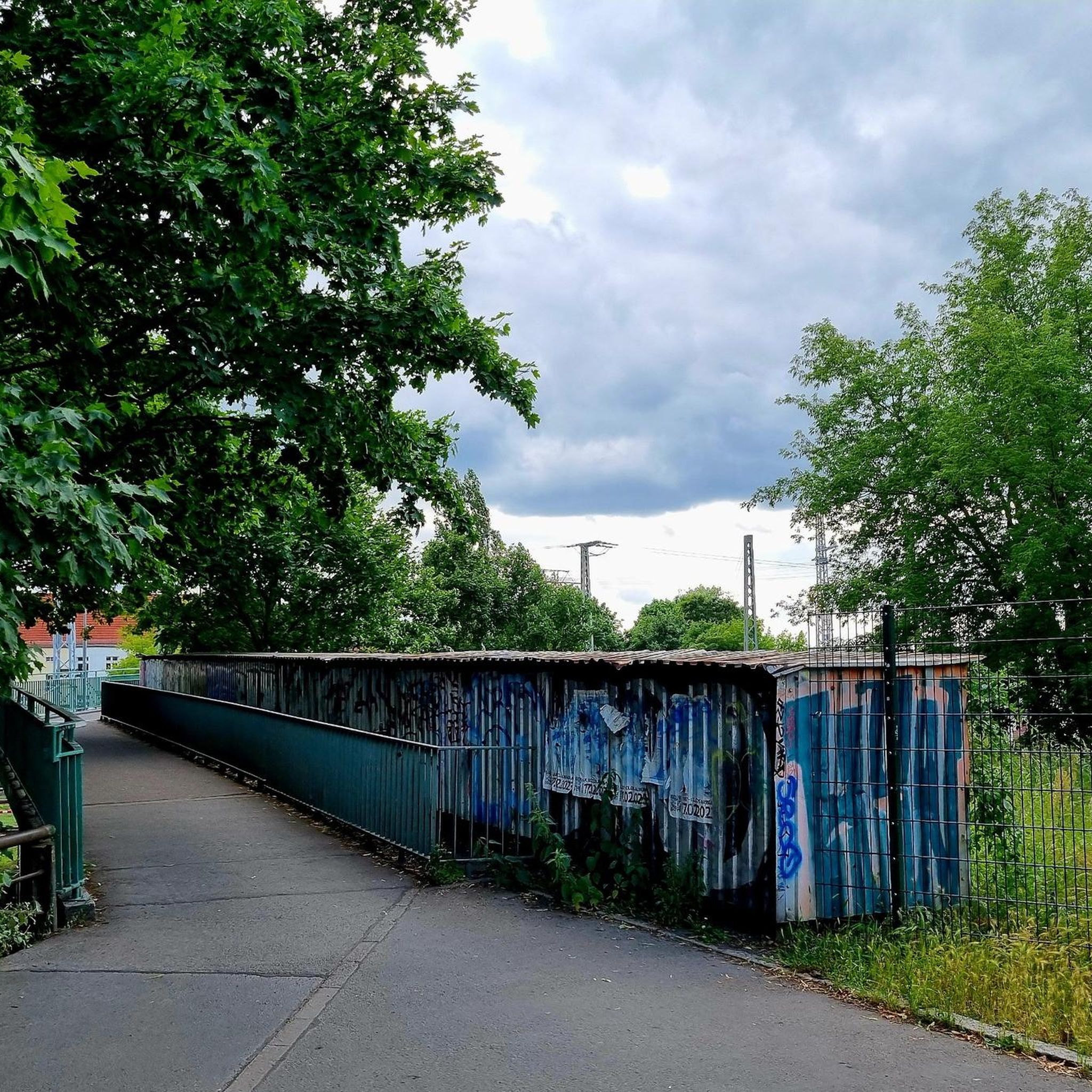
Unfortunately signs that camping is prohibited
0
0
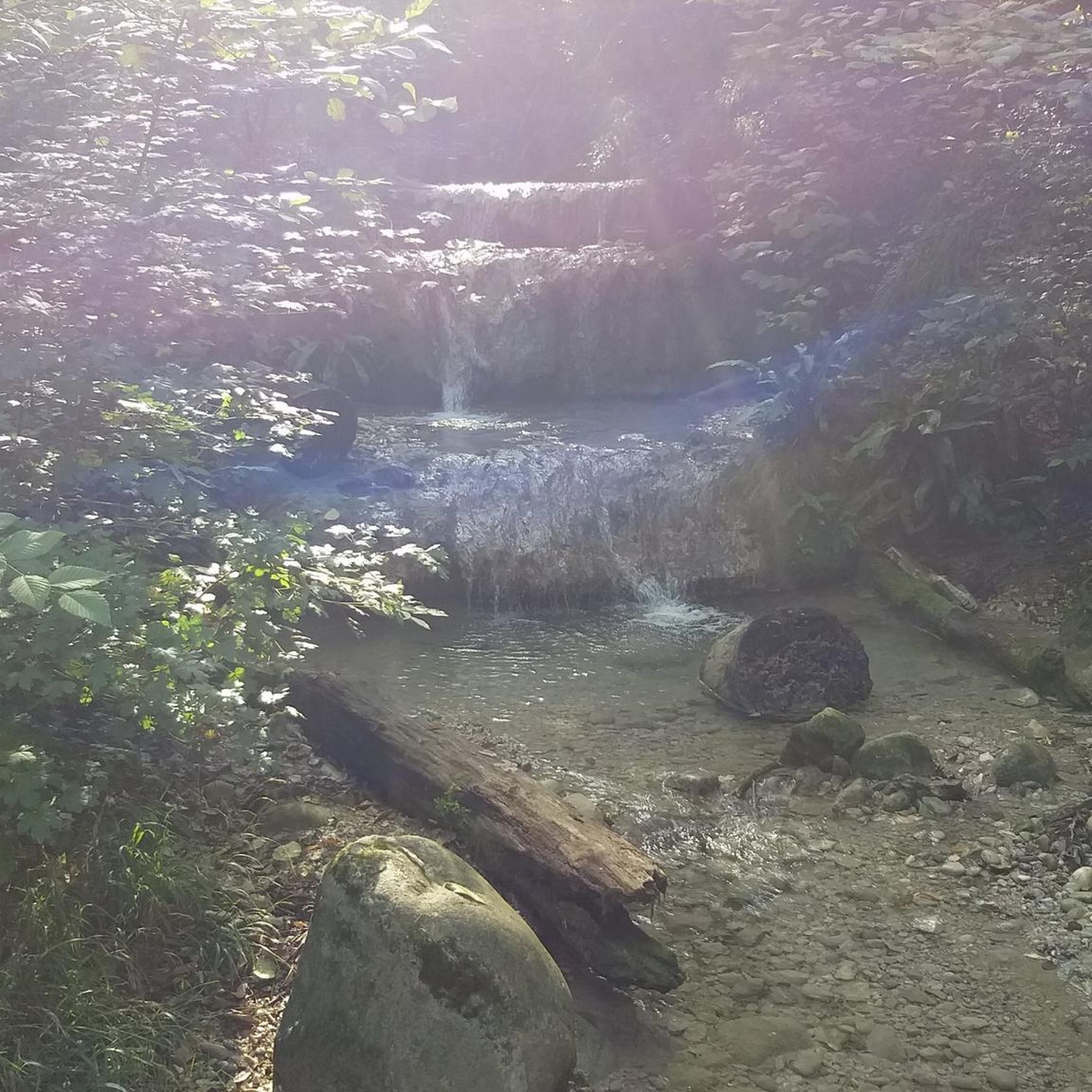
A beautiful site on the Petite Maine River. Overall, the path along it between La Poitevinière and St Georges is very pleasant. Also known as the Chauveau Mill.
0
0

As part of Heritage Days, Isabelle Favre, owner of the La Roche Thévenin estate, opened her property to the public. She allowed visitors to discover both the exterior and interior of her residence. "Traces of this ancient 5,000-hectare barony can be found as early as 1411," explains Isabelle Favre. This fiefdom was then called La Roche Brisard, after its former lords. It was in 1515 that it became the property of the Thévenins, one of the most notable and oldest families in the Barony of Montaigu. Nine generations of Thévenins have succeeded one another. The Château de La Roche Thévenin burned during the Revolution. The plane trees, cedars, and magnolias date from that time, in 1887, when the Abbot of Meslay purchased this house for sick priests. Another owner of the property is the sculptor Grootaers, who is responsible for the fountain in the Place Royale in Nantes and some of his sculptures, which led to the estate being listed as a Historic Monument. Isabelle Favre and her husband purchased this property in 1984. But their love at first sight quickly turned into a nightmare: the building, hidden by lush vegetation, required extensive renovations. Twenty-eight years of work revealed, beneath the cement slabs, terracotta mosaics, a granite staircase with arrow slits, the Thévenin coat of arms on a doorframe, and a Stations of the Cross hidden in a chapel converted into a hayloft.
0
0
Bultière Lake is an artificial reservoir. The Bultière Dam was built in 1994. It is located in the commune of Chavagne en paillers. It supplies the drinking water network. Its surface area is 72 hectares and contains 5.2 million cubic meters of water. It is possible to walk around the lake via a 15-km trail. This lake, with its exceptionally rich fish population, awaits you with almost every type of fish (perch, pike, zander, catfish, carp, roach, bream, tench, etc.). You can go predator fishing from the shore or from a boat to catch zander, pike, and catfish. It is, of course, possible to still fish for roach, bleak, or bream. Carp are also present in this lake. A night carp fishing route located on the right bank in the Maurosière sector will delight those who love a good catch.
0
0
Located east of the Parc des Remparts, the first part of the Val d'Asson Park opened in September 2020. The second part will open in July 2023. In total, it covers 5 hectares of greenery in the heart of the city. Located in the city center, parking is available at Place de l'Hôtel-de-Ville or Rue du Pont-Jarlet. Admission is free and the park is open year-round. The various paths and footbridges are accessible to people with reduced mobility. The 5 hectares of parkland connect the city center with the Hauts de Montaigu district. Crossed by the Asson River, the park features a variety of vegetation that grows along the stream's banks. When it was created, the preservation of flora and fauna was a major objective. An eco-grazing area was created there.
0
0
The Church of Saint-Jean-Baptiste is Gothic in style and features an imposing façade. It is built of stone and features ornate carved details. The façade features a richly decorated main portal, adorned with statues, reliefs, or architectural motifs. Inside the church, you will find a spacious, vaulted main nave supported by pillars or columns. The vaults feature decorative star and ribbed motifs typical of Gothic architecture. Restored over a period of five years, the interior of the building now reveals warm colors ranging from yellow to pinkish-red. Colored stained-glass windows are also a characteristic feature of Gothic churches, and the Church of Saint-Jean-Baptiste has magnificent stained-glass windows depicting biblical scenes and saints. In summary, the Church of Saint-Jean-Baptiste in Montaigu is an example of Gothic architecture with an imposing façade and decorative elements. It houses side chapels, a choir, a main altar, and colorful stained-glass windows. In addition to its aesthetic appeal, it is also an active place of worship and a significant historical landmark for the local community. The Church of Saint John the Baptist in Montaigu has a rich history dating back several centuries. Here is a brief overview of its history: The original church in Montaigu was built in the 11th century, but little information is available about this early structure. Over the following centuries, the church underwent alterations and expansions, reflecting changing architectural styles. In the 14th century, the church was rebuilt in the Gothic style, with a spacious main nave, elegant vaults, and carved details. Construction was completed in the 15th century, giving the church its current appearance. During the French Revolution in the 18th century, the Church of Saint John the Baptist was used for secular purposes. It was converted into a community hall and suffered significant damage, including the destruction of decorative and religious elements. After the Revolution, the church was gradually restored and returned to worship. Repair and renovation work was undertaken to restore damaged architectural features. Over the years, modifications and improvements were made to the Church of Saint-Jean-Baptiste. Side chapels were added, stained-glass windows were installed, and religious ornaments were restored. Today, the Church of Saint-Jean-Baptiste is an active place of worship for the Catholic community of Montaigu. It is also a tourist and cultural attraction, attracting visitors with its Gothic architecture, stained-glass windows, and history. Religious events, ceremonies, and concerts are regularly held there.
0
0
. Originally, there was an ovoid-shaped enclosure flanked by about ten towers and a gatehouse, located to the northeast. The fortified town was located to the north of the fortress and extended a little to the east. A dry moat separated the fortified town from the fortress. A barbican protected the gatehouse. A Romanesque keep of the Niort type, with its courtyard and small enclosure, was located in the castle courtyard, roughly in the middle in the north-south direction and located to the west. The fortified city extended from the rue de Gaulle, a gate was located at the level of the Carré de l'Europe (the porte de Nantes), then the ramparts continued along the rue de la Place du Champ de Foire, then went back down the Esplanade des Olivettes, where a gate was located towards the roundabout of the rue des Jardins (porte de Tiffauges) then the ramparts ran along the Asson to go up the rue du Pont Jarlet and around the barbican not far from the Presbytery The dry moats surrounding the city were 16 meters deep in the 15th century, today they are flowered and are the subject of different colored squares decorating this part of the ramparts.
0
0
Frequently Asked Questions
How many traffic-free gravel bike trails are available around La Guyonnière?
There are over 30 dedicated traffic-free gravel bike trails around La Guyonnière, offering a wide range of options for all skill levels. These routes leverage the extensive cycling network of the Vendée region, which boasts over 1100 kilometers of paths.
What kind of terrain can I expect on the no-traffic gravel bike trails in La Guyonnière?
The trails around La Guyonnière offer a wonderfully varied terrain, perfect for gravel biking. You'll encounter a mix of asphalt, farm roads, forest trails, and rolling tracks. The region features diverse landscapes including the scenic Lake Jaunay, bocage (small fields and woodlands), and even proximity to coastal paths, ensuring a rich and engaging ride.
Are there any family-friendly, car-free gravel routes suitable for beginners?
Yes, La Guyonnière and the surrounding Pays des Achards area are very accommodating for families and beginners. Many of the 30+ circuits are designed for all levels. For an easier option, consider routes like The Rousselin mill – Pont Sainte-Radegonde loop from La Bruffière, which offers a manageable distance and elevation gain, perfect for a relaxed family outing.
What are some notable landmarks or viewpoints I can discover along these gravel routes?
Many routes offer scenic views and pass by interesting landmarks. You can cycle past the historic Tiffauges Castle, explore the tranquil surroundings of Lac de la Bultière, or enjoy the picturesque Lake Jaunay. The region's bocage landscape also provides charming, traditional Vendée scenery.
Are there any longer, more challenging traffic-free gravel routes for experienced riders?
Absolutely. For those seeking a longer and more challenging ride, routes like the Montaigu Castle – The Rousselin mill loop from Montaigu Vendée offer significant distances and elevation changes. The broader Vendée region also features circuits like "La Randonneuse," a 110 km loop that traverses diverse landscapes, ideal for adventurous gravel bikers.
What is the best time of year to go gravel biking in La Guyonnière?
The Vendée region generally enjoys pleasant weather for cycling from spring through autumn. Spring (April-May) offers blooming landscapes and mild temperatures, while early autumn (September-October) provides comfortable riding conditions and beautiful fall colors. Summer can be warm, but the proximity to the coast often brings refreshing breezes.
Are there circular gravel bike routes available around La Guyonnière?
Yes, many of the gravel bike routes in the area are circular, allowing you to start and end at the same point without retracing your steps. This is a common feature of the well-developed cycling network in the Pays des Achards. For example, the Le Moulin Gros – Vendée vélo loop from Montaigu Vendée is a great circular option.
Where can I find parking for gravel bike trails in La Guyonnière?
Parking is generally accessible near the starting points of many trails, especially in and around towns like La Guyonnière or Montaigu Vendée. Many local villages and attractions also offer parking facilities. If staying at the Camping Village de la Guyonnière, you'll find convenient access to routes directly from the site.
What do other gravel bikers enjoy most about the trails in La Guyonnière?
The komoot community highly rates the gravel biking experience in La Guyonnière, with an average score of 4.4 stars. Riders frequently praise the diversity of the landscapes, from tranquil lake views to charming bocage, and the peaceful, traffic-free nature of the routes. The well-maintained paths and the opportunity to explore the Vendée's natural beauty are also often highlighted.
Can I rent a gravel bike in La Guyonnière?
Yes, if you're staying at the Camping Village de la Guyonnière, they offer bike and mountain bike rentals directly on-site, making it very convenient to get started on the trails. This allows you to explore the region's gravel routes without needing to bring your own equipment.
Are there any resources for more information on cycling routes in the Pays des Achards?
For additional information on the extensive network of cycle and mountain bike routes in the Pays des Achards, including detailed maps and descriptions, you can visit the local tourism website: achards-tourisme.com. This resource provides valuable insights into the region's commitment to cycle tourism.
Most popular routes around La Guyonnière
Most popular attractions around La Guyonnière

Get inspired with the komoot mobile app


Explore more
Browse the best Gravel rides in other regions.
