The best cycling routes around La Guyonnière
4.2
(224)
1,330
riders
250
rides
Touring cycling routes around La Guyonnière are characterized by an undulating rural landscape, featuring a mix of agricultural fields, small villages, and wooded areas. The region, part of the Vendée department, offers varied terrain suitable for cycling, with gentle ascents and descents rather than significant climbs. Rivers and historic sites, such as castles and old mills, are often encountered along the paths.
Best touring cycling routes around La Guyonnière
- The most popular touring cycling route is Discovery of Montaigu and…
Last updated: July 2, 2026
3.8
(4)
8
riders
Easy bike ride. Great for any fitness level. Mostly paved surfaces. Suitable for all skill levels.
72.3km
04:20
330m
330m
Moderate bike ride. Good fitness required. Some segments of this route may be unpaved and difficult to ride.

Sign up for free
5.0
(2)
27
riders
48.0km
03:36
330m
330m
Moderate bike ride. Good fitness required. Mostly paved surfaces. Suitable for all skill levels.
3.0
(3)
9
riders
17.9km
01:19
110m
110m
Hard bike ride. Great for any fitness level. You may need to push your bike for some segments of this route.
4.0
(1)
3
riders
40.7km
02:28
210m
210m
Moderate bike ride. Good fitness required. Mostly paved surfaces. Suitable for all skill levels.
Get access to more routes and recommendations from other explorers.
Sign up for free
Already have an account?
Our route recommendations are based on thousands of hikes, rides, and runs completed by other people on komoot.
Start today with a free account
Your next adventure awaits.
Login or Signup

Tips from the Community

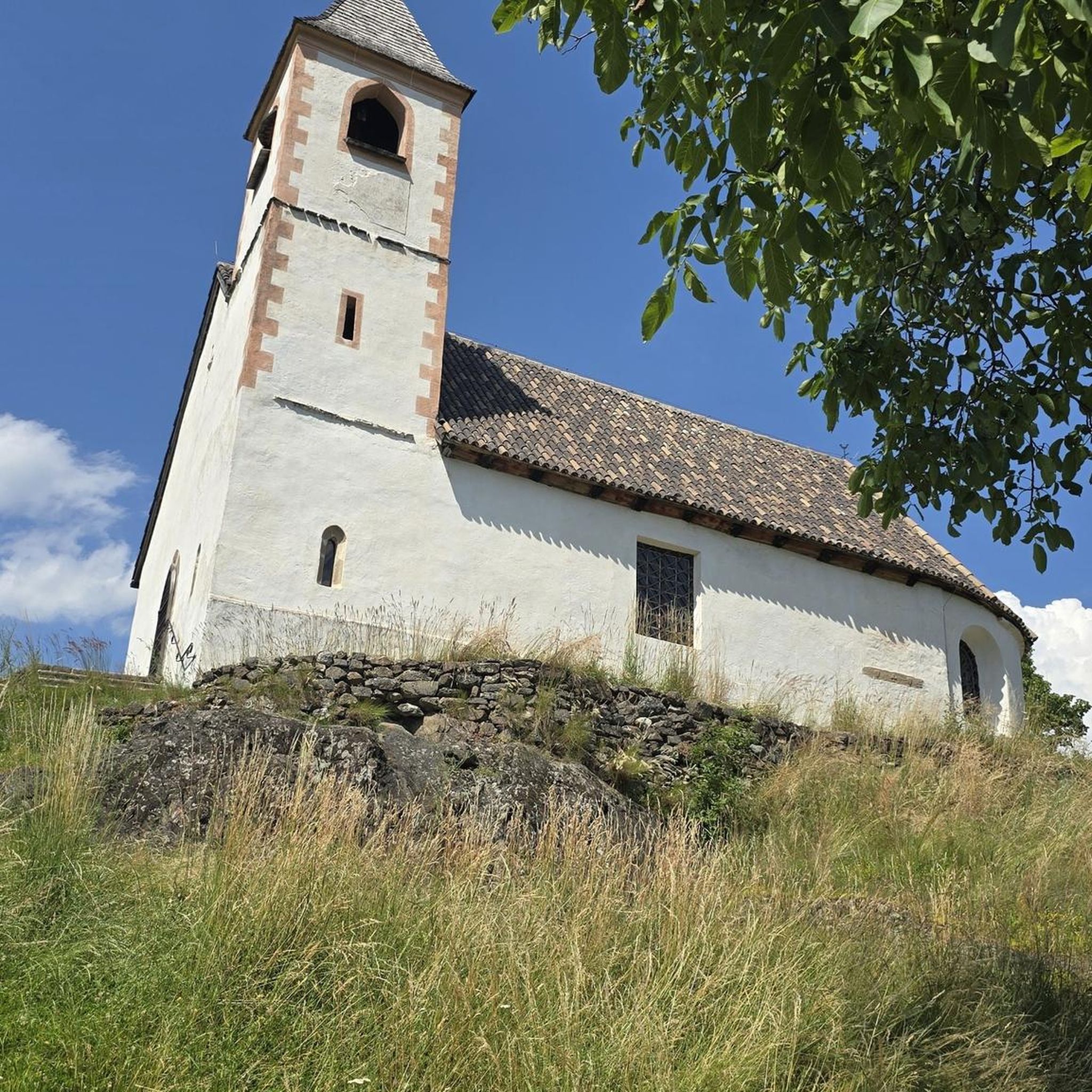
It's a shame the tree is dead, but the chapel is still as amazing as ever.
0
0

The Trinity Church is getting a makeover in the heart of Clisson Off-limits since 2018, the Trinity Church in Clisson is undergoing extensive restoration work until 2027, accompanied by reinforcement and safety work. The Trinity Church in Clisson has been off-limits since 2018 due to pieces of tufa stone found on the floor of the building, raising concerns about safety issues. The restoration has been decided upon, along with reinforcement and safety work. This work is expected to continue until 2027. The construction site will soon be explained to the residents of Clisson, using signs. The artwork and furnishings have been protected and stored, tarpaulins protect the building and the workers, the vaults and framework will be restored, and the wall plasterwork will be examined and redone where necessary. The work will concern the side aisles until next summer, the nave for the following twelve months. Then it will be the turn of the choir and transepts between January 2026 and spring 2027, then the sacristy, the bell tower and the outbuildings.
2
0
The Church of the Trinity was originally a Benedictine priory, with a parish, dependent on the abbeys of Saint-Martin-de-Vertou and Saint-Jouin-de-Marnes. In the 11th century, it was occupied by the canons regular of the Order of Saint Augustine. In 1645, Fontevrist nuns from La Regrippière en Vallet settled there. The convent burned down in 1794 by the infernal columns of the Republican armies. From the 11th century onwards, the church had a choir with an apse, side chapels, and a square bell tower. In the 17th century, the Benedictine nuns replaced the Romanesque choir with an elongated one, featuring a remarkable Baroque altarpiece. They demolished the southern part of the choir to build their oratory. During the French Revolution, the church returned to the parish. Around 1867/1868, work was undertaken. The façade was redone in a neo-Romanesque style, while the neo-Gothic style was preferred for the interior of the religious monument.
1
0
The unmissable annual event for extreme music in France. Founded in 2006 and based in the small town of Clisson for 13 years, Hellfest has established itself as one of the leading European festivals offering extreme music. A veritable marathon of hardcore, punk, grind, death metal, and trash, accessible just a few minutes from Nantes by train. More than 160 artists from all over the world perform on six stages for four days of fury! Every June, Clisson becomes the international center of metal culture, attracting more than 100,000 festival-goers to a dedicated venue. In 2014, the Hellfest Festival presented "its" town with a symbolic guitar over 10 meters high (the work of artist J.-F. Buisson), comfortably installed on the Looksor roundabout near the grounds, which welcome more than 100,000 festival-goers each year. Visible from the road, we can see the permanent installations emblematic of the metal aesthetic
0
0
Bultière Lake is an artificial reservoir. The Bultière Dam was built in 1994. It is located in the commune of Chavagne en paillers. It supplies the drinking water network. Its surface area is 72 hectares and contains 5.2 million cubic meters of water. It is possible to walk around the lake via a 15-km trail. This lake, with its exceptionally rich fish population, awaits you with almost every type of fish (perch, pike, zander, catfish, carp, roach, bream, tench, etc.). You can go predator fishing from the shore or from a boat to catch zander, pike, and catfish. It is, of course, possible to still fish for roach, bleak, or bream. Carp are also present in this lake. A night carp fishing route located on the right bank in the Maurosière sector will delight those who love a good catch.
0
0
Located east of the Parc des Remparts, the first part of the Val d'Asson Park opened in September 2020. The second part will open in July 2023. In total, it covers 5 hectares of greenery in the heart of the city. Located in the city center, parking is available at Place de l'Hôtel-de-Ville or Rue du Pont-Jarlet. Admission is free and the park is open year-round. The various paths and footbridges are accessible to people with reduced mobility. The 5 hectares of parkland connect the city center with the Hauts de Montaigu district. Crossed by the Asson River, the park features a variety of vegetation that grows along the stream's banks. When it was created, the preservation of flora and fauna was a major objective. An eco-grazing area was created there.
0
0
The Church of Saint-Jean-Baptiste is Gothic in style and features an imposing façade. It is built of stone and features ornate carved details. The façade features a richly decorated main portal, adorned with statues, reliefs, or architectural motifs. Inside the church, you will find a spacious, vaulted main nave supported by pillars or columns. The vaults feature decorative star and ribbed motifs typical of Gothic architecture. Restored over a period of five years, the interior of the building now reveals warm colors ranging from yellow to pinkish-red. Colored stained-glass windows are also a characteristic feature of Gothic churches, and the Church of Saint-Jean-Baptiste has magnificent stained-glass windows depicting biblical scenes and saints. In summary, the Church of Saint-Jean-Baptiste in Montaigu is an example of Gothic architecture with an imposing façade and decorative elements. It houses side chapels, a choir, a main altar, and colorful stained-glass windows. In addition to its aesthetic appeal, it is also an active place of worship and a significant historical landmark for the local community. The Church of Saint John the Baptist in Montaigu has a rich history dating back several centuries. Here is a brief overview of its history: The original church in Montaigu was built in the 11th century, but little information is available about this early structure. Over the following centuries, the church underwent alterations and expansions, reflecting changing architectural styles. In the 14th century, the church was rebuilt in the Gothic style, with a spacious main nave, elegant vaults, and carved details. Construction was completed in the 15th century, giving the church its current appearance. During the French Revolution in the 18th century, the Church of Saint John the Baptist was used for secular purposes. It was converted into a community hall and suffered significant damage, including the destruction of decorative and religious elements. After the Revolution, the church was gradually restored and returned to worship. Repair and renovation work was undertaken to restore damaged architectural features. Over the years, modifications and improvements were made to the Church of Saint-Jean-Baptiste. Side chapels were added, stained-glass windows were installed, and religious ornaments were restored. Today, the Church of Saint-Jean-Baptiste is an active place of worship for the Catholic community of Montaigu. It is also a tourist and cultural attraction, attracting visitors with its Gothic architecture, stained-glass windows, and history. Religious events, ceremonies, and concerts are regularly held there.
0
0
. Originally, there was an ovoid-shaped enclosure flanked by about ten towers and a gatehouse, located to the northeast. The fortified town was located to the north of the fortress and extended a little to the east. A dry moat separated the fortified town from the fortress. A barbican protected the gatehouse. A Romanesque keep of the Niort type, with its courtyard and small enclosure, was located in the castle courtyard, roughly in the middle in the north-south direction and located to the west. The fortified city extended from the rue de Gaulle, a gate was located at the level of the Carré de l'Europe (the porte de Nantes), then the ramparts continued along the rue de la Place du Champ de Foire, then went back down the Esplanade des Olivettes, where a gate was located towards the roundabout of the rue des Jardins (porte de Tiffauges) then the ramparts ran along the Asson to go up the rue du Pont Jarlet and around the barbican not far from the Presbytery The dry moats surrounding the city were 16 meters deep in the 15th century, today they are flowered and are the subject of different colored squares decorating this part of the ramparts.
0
0
Frequently Asked Questions
How many touring cycling routes are available around La Guyonnière?
There are over 230 touring cycling routes around La Guyonnière, offering a wide variety of options for different skill levels and preferences. You'll find everything from short, easy loops to longer, more challenging circuits through the Vendée countryside.
Are there easy touring cycling routes suitable for beginners or families?
Yes, La Guyonnière offers numerous easy routes perfect for beginners or family outings. For instance, the Discovery of Montaigu and its surroundings — loop by the Véloroute de Haut Bocage is an easy 29.2 km (18.1 miles) route exploring scenic paths. Another great option is the Le Moulin Gros loop from Montaigu-Vendée, a shorter 13.4 km (8.3 miles) easy ride.
What kind of terrain can I expect on touring cycling routes in La Guyonnière?
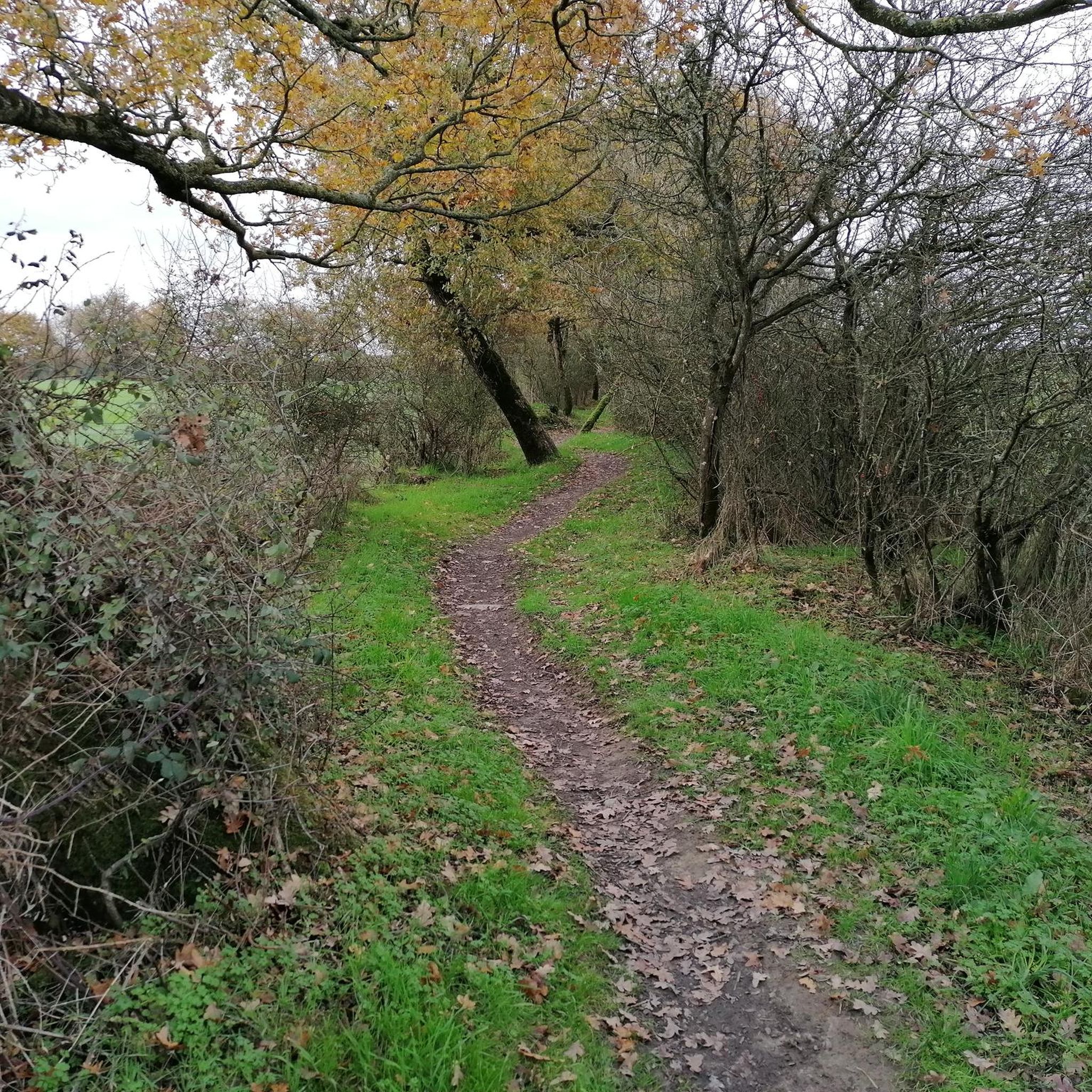
The touring cycling routes around La Guyonnière are characterized by an undulating rural landscape. You'll encounter a mix of agricultural fields, charming small villages, and wooded areas. The terrain features gentle ascents and descents, making it suitable for touring cyclists without significant mountain climbs.
Are there any circular touring cycling routes in the area?
Many of the touring cycling routes around La Guyonnière are designed as loops, allowing you to start and finish at the same point. Examples include the popular Villages of the heart of Vendée — circuit from Montaigu, a moderate 72.3 km (44.9 miles) loop, and the more challenging The Three Provinces – Tiffauges Castle loop from Treize-Septiers.
What are some scenic viewpoints or natural attractions to see along the routes?
The region offers several scenic spots and natural attractions. You can cycle past the beautiful Lac de la Bultière, or explore the Valley of the Three Provinces. The Beau Soleil natural site – The Arsenal loop from Treize-Septiers also takes you through picturesque landscapes.
Are there any historical landmarks or castles to visit while cycling?
Absolutely! The region is rich in history. You can visit the impressive Tiffauges Castle, which is featured on the The Three Provinces – Tiffauges Castle loop from Treize-Septiers. Other notable castles in the vicinity include Montaigu Castle, La Preuille Castle, and La Sénardière Castle.
What do other touring cyclists say about the routes in La Guyonnière?
The touring cycling routes in La Guyonnière are highly regarded by the komoot community, with an average rating of 4.2 stars from over 180 reviews. Cyclists often praise the charming villages, historic landmarks, and the varied, yet manageable, terrain that defines the region.
What is the best season for touring cycling in La Guyonnière?
While specific weather conditions can vary, the spring and autumn months generally offer the most pleasant temperatures for touring cycling in La Guyonnière, with comfortable conditions and beautiful scenery. Summer can also be enjoyable, though it may be warmer.
Are there routes suitable for advanced touring cyclists?
Yes, for more experienced touring cyclists seeking a challenge, there are routes with greater distances and elevation changes. The The Three Provinces – Tiffauges Castle loop from Treize-Septiers is classified as difficult, covering 44.5 km (27.6 miles) with significant elevation, providing a rewarding ride.
How long do touring cycling routes typically take in La Guyonnière?
Route durations vary significantly based on distance and difficulty. Shorter, easy routes like the Le Moulin Gros loop from Montaigu-Vendée can be completed in under an hour. Longer, moderate routes such as the Villages of the heart of Vendée — circuit from Montaigu might take over four hours, offering a full day's adventure.
Is public transport available to access the cycling trails around La Guyonnière?
While La Guyonnière itself is a smaller commune, nearby larger towns like Montaigu may offer public transport connections. It's advisable to check local bus or train schedules for services to Montaigu-Vendée, which serves as a common starting point for many routes in the area.
Are there places to park my car when starting a touring cycling route?
Many routes around La Guyonnière start from or pass through villages like Montaigu or Treize-Septiers. These villages typically offer public parking facilities where you can leave your car while you embark on your cycling tour. Look for designated parking areas near town centers or trailheads.
Most popular routes around La Guyonnière
Most popular attractions around La Guyonnière

Get inspired with the komoot mobile app


Explore more
Browse the best Cycling routes in other regions.
