The best traffic-free bike rides around Parco Naturale Regionale Appia Antica
4.3
(2467)
32,765
riders
35
rides
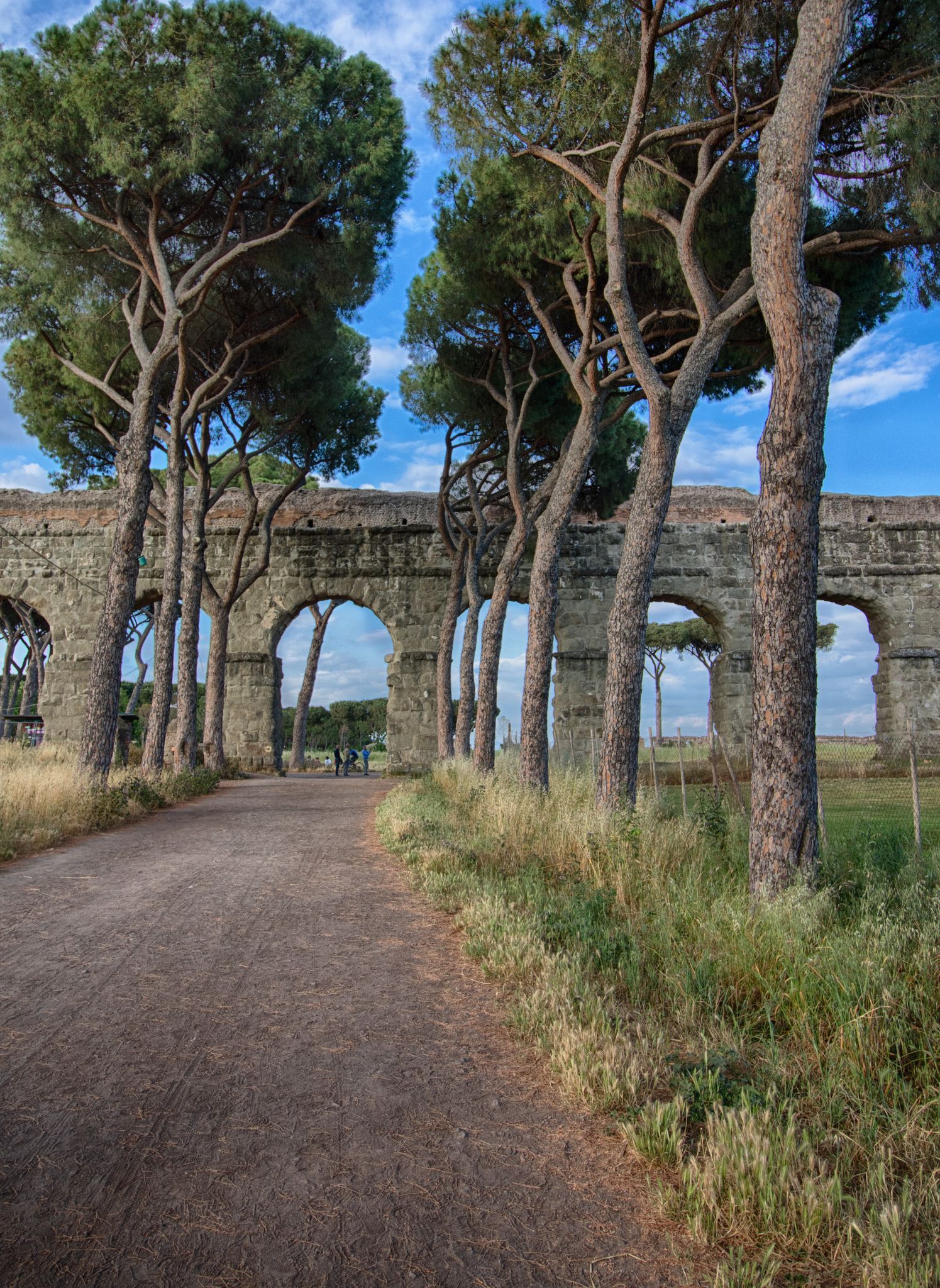
No traffic road cycling routes around Parco Naturale Regionale Appia Antica offer a unique blend of ancient history and natural landscapes just outside Rome. The region is characterized by the ancient Appian Way, which forms the heart of the park, alongside expansive Roman countryside. Cyclists can navigate paths that weave through archaeological sites, past impressive aqueducts, and along the gentle elevations of the Almone River valley. This area provides a distinct opportunity to experience historical monuments within a serene, car-free environment, particularly on weekends.
Best no traffic road cycling routes around Parco Naturale Regionale Appia Antica
- The most popular no traffic road cycling route is Tempio di Ercole loop from Ciampino, a 13.6 miles (21.9 km) trail that takes 1 hour 2 minutes to complete. This route offers views of historical sites and the surrounding Roman countryside.
- Another top favourite among local road cyclists is Bicycle Dismount Point loop from National Institute of Statistics, an easy 6.6 miles (10.6 km) path. This route provides a concise journey through parts of the park, ideal for a shorter ride.
- Local road cyclists also love the Roadbike loop from Alessandrino, a 12.8 miles (20.7 km) trail leading through the historic Roman countryside, often completed in about 49 minutes.
- Road cycling around Parco Naturale Regionale Appia Antica is defined by ancient consular roads, the picturesque Roman countryside, and numerous archaeological sites. The network offers options for easy, moderate, and difficult routes, catering to various ability levels.
- The routes in Parco Naturale Regionale Appia Antica are highly rated by the komoot community with an average score of 4.3 stars from over 1,800 reviews. More than 28,000 road cyclists have used komoot to explore Parco Naturale Regionale Appia Antica's varied terrain.
Last updated: July 12, 2026
5.0
(4)
59
riders
32.0km
01:30
290m
290m
Easy road ride. Great for any fitness level. Mostly well-paved surfaces and easy to ride.
4.9
(21)
27
riders
Easy road ride. Great for any fitness level. Mostly well-paved surfaces and easy to ride.

Sign up for free
4.0
(1)
15
riders
45.8km
02:16
450m
450m
Moderate road ride. Good fitness required. Some segments of this route may be unpaved and difficult to ride.
16
riders
25.0km
01:19
110m
110m
Moderate road ride. Great for any fitness level. Some segments of this route may be unpaved and difficult to ride.
4.2
(13)
86
riders
14.8km
00:40
90m
90m
Easy road ride. Great for any fitness level. Mostly well-paved surfaces and easy to ride.
Get access to more routes and recommendations from other explorers.
Sign up for free
Already have an account?
Our route recommendations are based on thousands of hikes, rides, and runs completed by other people on komoot.
Start today with a free account
Your next adventure awaits.
Login or Signup
Popular around Parco Naturale Regionale Appia Antica


Other adventures around Parco Naturale Regionale Appia Antica

Tips from the Community

🚴♂️ A journey through time on two wheels: the Appia Antica 🏛️ If there is one route that every cycling and history enthusiast should take at least once in their life, it is this: the Regina Viarum. Cycling on the Appia Antica is not simply a bike ride, but literally crossing through history. Imagine the sound of wheels on the cobblestones and original Roman paving, the same trodden by legions thousands of years ago, surrounded by centuries-old pine trees, mausoleums, catacombs, and monumental remains that emerge at every turn.
0
0
Not your average basilica. Discover the majesty and history of St. John Lateran, Rome's true cathedral.
0
0

On Saturday and Sunday mornings you can find many cyclists riding here, on a route of about 6 km
0
0

The Appian Way is the perfect place for a family bike ride, away from the hustle and bustle. The paths are mostly very well-maintained. In some places, you can cycle alongside the Appian Way on sandy paths, as the old stones are not very pleasant to ride on. However, this is only the case in a few places. Furthermore, throughout the entire ride, you can repeatedly see ancient ruins, etc., on both sides. Just passing by is wonderful.
2
0

Porta Asinaria / Donkey's Door At the time of the construction of the Aurelian Walls, the Via Asinaria was a secondary route, primarily connected to local traffic. For this reason, a single-arched door was built to allow passage in the space between two square towers. The importance of the gate grew particularly from the fourth century onwards, probably due to its proximity to the Lateran bishopric. During the Honorian reconstruction (early fifth century), the Porta Asinaria was monumentalized with the construction of two semicircular towers flanking the existing square towers, which have since been converted into staircases. A counter-door and a guard courtyard were also built during this period. As is well documented along the entire route of the defensive walls, the Porta Asinaria was also raised during this period, almost doubling the height of the building, from two to four stories in the towers and three in the courtyard. Belisarius (536) and Totila (546) entered Rome through the Porta Asinaria during the Greco-Gothic War, and Henry IV (1084) did so during the battle that pitted him against Pope Gregory VII. Towards the end of the 1950s, important restoration work was carried out that enabled the restoration of the building: the door was completely cleared of the burial that had partially buried it, a new travertine decoration was created for the fornix (replacing the one removed in the 16th century), and the inner door, previously known only from graphic documents before 1574, was brought to light. Text / Source: Comunicazione Sovrintendenza, Piazza Lovatelli 35, Rome https://www.sovraintendenzaroma.it/i_luoghi/roma_antica/monumenti/porta_asinaria
14
0


The Basilica of Santa Maria Maggiore is an important Roman Catholic church with the rank of major basilica. It is located on the Esquiline Hill in Rome, and is part of the territory of the Holy See. https://nl.wikipedia.org/wiki/Basiliek_van_Santa_Maria_Maggiore_(Rome)
2
0

Short country roads (B-roads) mostly paved and without cars, but bumpy. Peace and quiet among vineyards and olive trees at the foot of the Castelli Romani.
0
0
Frequently Asked Questions
How many no-traffic road cycling routes are available in Parco Naturale Regionale Appia Antica?
There are nearly 30 dedicated no-traffic road cycling routes in Parco Naturale Regionale Appia Antica. These routes offer a unique opportunity to explore the ancient Roman countryside and historical sites without vehicular interference, especially on Sundays and holidays when the Appian Way is closed to traffic.
What kind of terrain and difficulty can I expect on these no-traffic road cycling routes?
The routes vary in difficulty, with 21 easy, 4 moderate, and 4 difficult options. Many paths, especially along the ancient Appian Way, feature a mix of paved and cobblestone sections, offering a unique historical cycling experience. Routes like the easy Tempio di Ercole loop from Ciampino are relatively flat, while longer options like the difficult Via Santa Cornelia – View of the Piazza del Popolo loop from Castro Pretorio can include more significant elevation changes.
What historical landmarks and natural features can I see along the no-traffic road cycling routes?
Cycling through Parco Naturale Regionale Appia Antica is a journey through history and nature. You can pedal past ancient tombs, tumuli, and impressive ruins. Notable highlights include the iconic Via Appia Antica itself, the majestic Park of the Aqueducts, and the ancient city gate of Porta San Sebastiano. The Caffarella Park offers a glimpse into the authentic Roman countryside with rich flora and fauna.
Are there any family-friendly no-traffic cycling routes in the park?
Yes, many of the easy routes are suitable for families. The park's unique feature of closing the Appian Way to traffic on Sundays and holidays creates a very safe and enjoyable environment for cyclists of all ages. Shorter, flatter loops like the Bicycle Dismount Point loop from National Institute of Statistics are excellent choices for a family outing.
What is the best time of year to go road cycling in Parco Naturale Regionale Appia Antica?
Spring and autumn generally offer the most pleasant cycling conditions with mild temperatures and beautiful scenery. Summer can be hot, so early mornings or late afternoons are preferable. Winter cycling is possible, but be prepared for cooler temperatures and potentially wet conditions. The park's historical sites are accessible year-round.
Where can I park my car if I want to cycle the no-traffic routes?
Parking is available at various access points around the park. Given the park's proximity to Rome, it's advisable to research specific parking areas near your chosen starting point. Many visitors also opt for public transport to reach the park's entrances, especially on weekends when traffic restrictions are in place.
Can I rent a bike near the no-traffic cycling routes?
Yes, bike rental services are available in and around Parco Naturale Regionale Appia Antica, particularly near the main entrances to the Appian Way. This makes it convenient for visitors who don't bring their own bikes to enjoy the traffic-free routes.
What do other road cyclists enjoy most about cycling in Parco Naturale Regionale Appia Antica?
The area is highly rated by the komoot community, with an average score of 4.3 stars from over 1800 ratings. Reviewers often praise the unique experience of cycling through ancient history on traffic-free roads, the serene natural beauty of the Roman countryside, and the well-preserved archaeological sites that make every ride an adventure.
Are there any cafes or places to eat near the no-traffic cycling routes?
Yes, you'll find several cafes, trattorias, and refreshment points scattered along the edges and within the park, especially near popular access points and historical sites. These offer opportunities to refuel and relax during your ride, often with views of the ancient landscape.
How long does it typically take to cycle the no-traffic routes?
The duration varies significantly depending on the route length and your pace. Shorter, easy loops like the Roadbike loop from Alessandrino (20.6 km) might take around an hour, while longer, more challenging routes can extend to several hours. For instance, the Via Santa Cornelia – View of the Piazza del Popolo loop from Castro Pretorio is nearly 95 km and would be a full-day ride.
Are there any less crowded no-traffic road cycling routes in the park?
While the Appian Way itself can be popular, especially on traffic-free Sundays, exploring routes that venture slightly off the main ancient road can offer a quieter experience. The park is vast, and many of the 29 routes provide opportunities to discover serene sections of the Roman countryside. Consider exploring areas within the Valle della Caffarella for a more tranquil ride.
Most popular routes around Parco Naturale Regionale Appia Antica
Most popular attractions around Parco Naturale Regionale Appia Antica

Get inspired with the komoot mobile app


Explore more
Browse the best Road cycling routes in other regions.
