The best traffic-free bike rides around Parco naturale regionale delle Alpi Apuane
4.4
(2149)
21,702
riders
17
rides
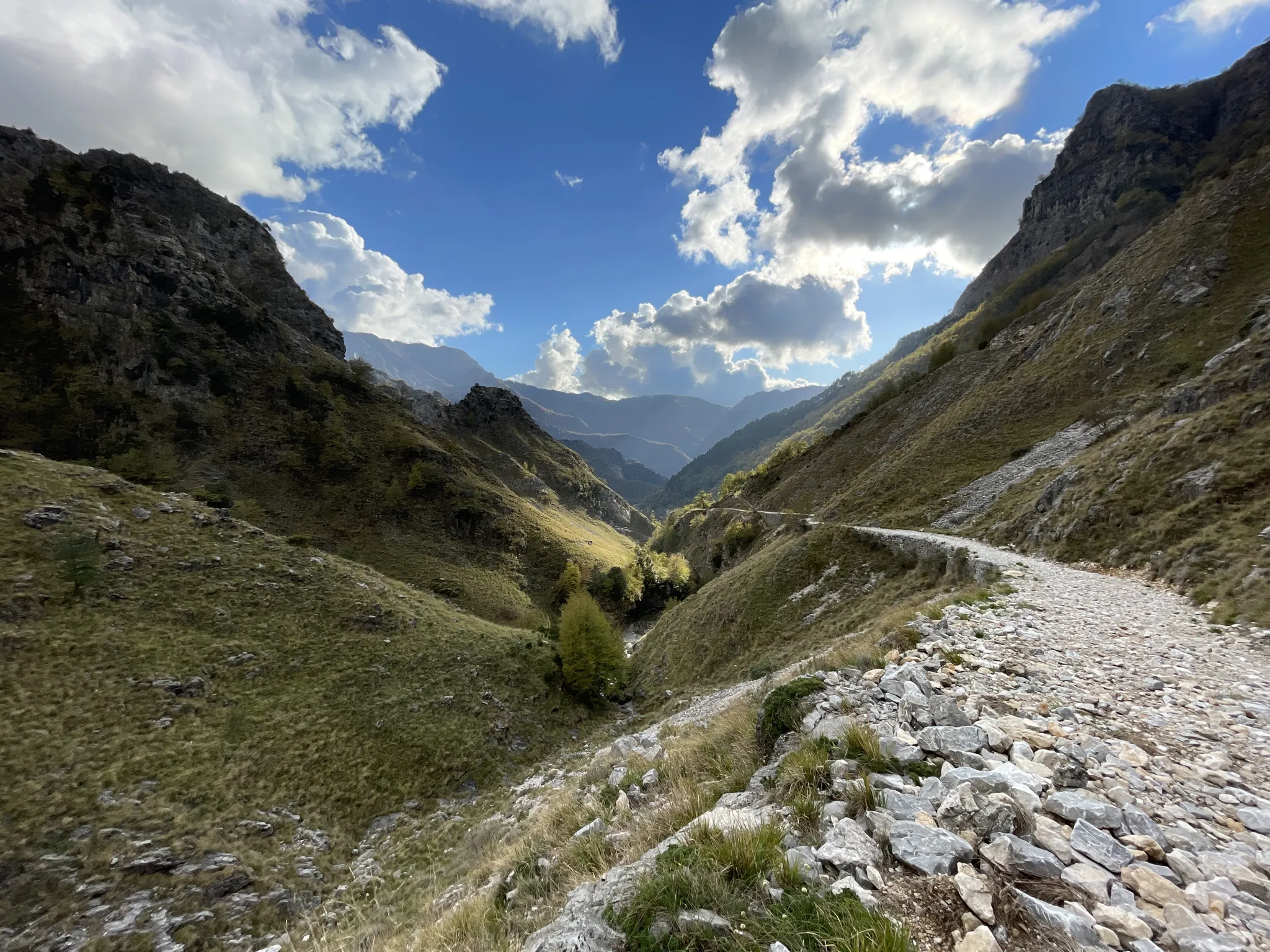
No traffic touring cycling routes around Parco naturale regionale delle Alpi Apuane traverse a landscape defined by rugged peaks and deep valleys, offering significant elevation gains. This Tuscan mountain range features dramatic "marble mountains" shaped by centuries of quarrying, creating unique cycling terrain. Cyclists will encounter quiet roads winding through lush greenery, with panoramic views extending towards the Ligurian Sea. The region's geology, part of a UNESCO Global Geopark, provides a challenging yet rewarding experience for touring cyclists.
Best no…
Last updated: July 12, 2026
6
riders
32.9km
02:46
930m
940m
Challenging 20.4-mile touring cycling route around Lake Vagli and Lake Gramolazzo, featuring significant climbs and unique historical sights
5.0
(3)
10
riders
30.2km
02:28
860m
860m
This difficult 18.7-mile (30.2 km) touring cycling loop from Lago di Gramolazzo offers stunning views of the Garfagnana region and Lake Gram

Sign up for free
3
riders
15.6km
01:18
510m
510m
Hard bike ride. Very good fitness required. Mostly paved surfaces. Suitable for all skill levels.
13
riders
14.5km
01:07
370m
370m
Moderate bike ride. Good fitness required. Mostly paved surfaces. Suitable for all skill levels.
5.0
(2)
10
riders
31.7km
02:33
830m
830m
Hard bike ride. Very good fitness required. Mostly paved surfaces. Suitable for all skill levels.
Get access to more routes and recommendations from other explorers.
Sign up for free
Already have an account?
Our route recommendations are based on thousands of hikes, rides, and runs completed by other people on komoot.
Start today with a free account
Your next adventure awaits.
Login or Signup
Popular around Parco naturale regionale delle Alpi Apuane


Other adventures around Parco naturale regionale delle Alpi Apuane


Tips from the Community

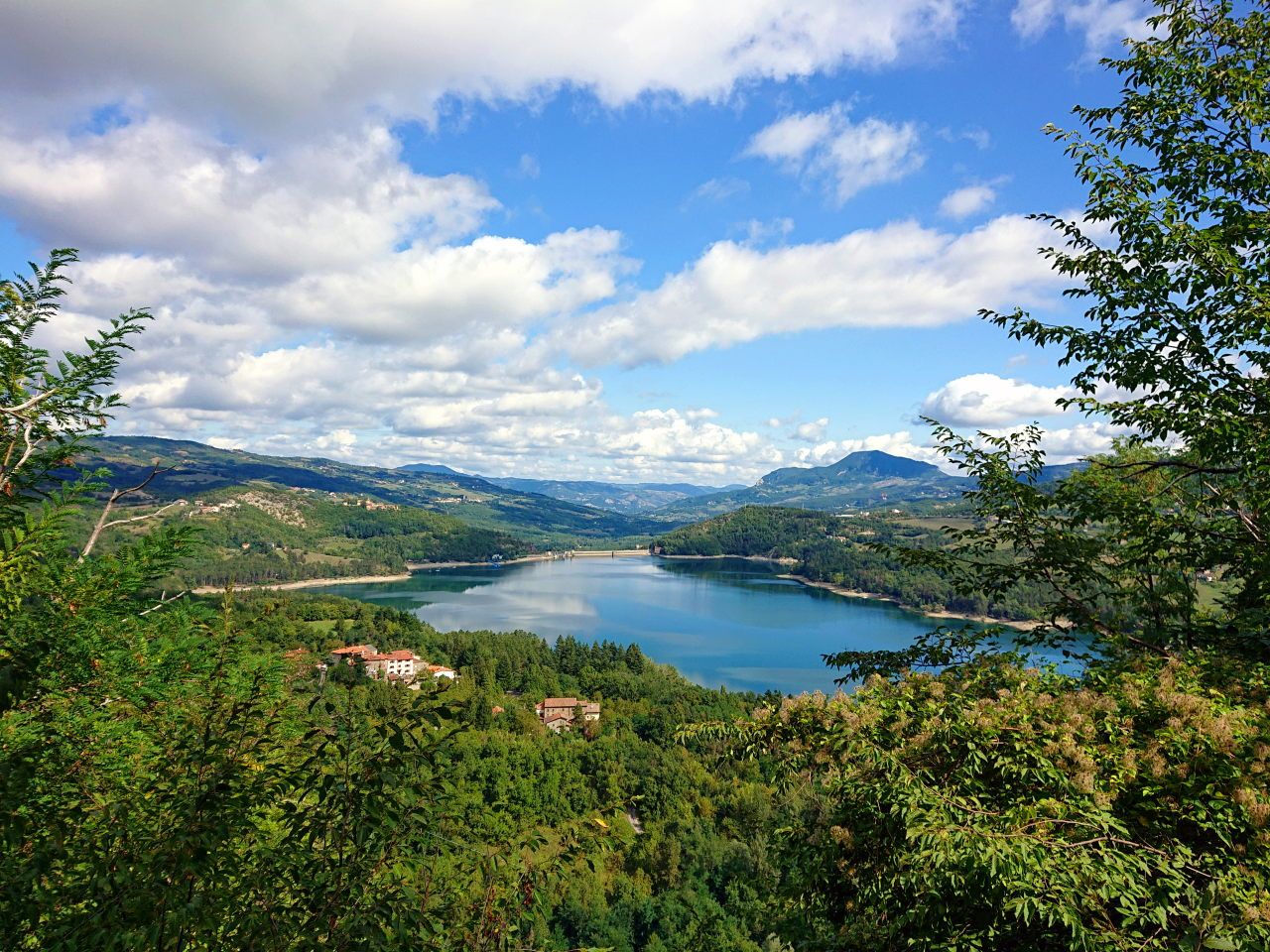
In this period the lake is at maximum capacity and offers stunning panoramas in the sunlight
0
0
The lake of Gramolazzo is a lake in the Apuan Alps located near the homonymous village in the municipality of Minucciano. Of artificial origin, it was created in the second half of the 1900s, together with the lake of Vagli by SELT Valdarno for the hydroelectric use of the Serchio river and its tributaries. The lake, which has a surface area of one square kilometer and a volume of 3.8 million cubic meters, has both the Serchio di Gramolazzo as its inflow and outflow, one of the two branches that, joining near Piazza al Serchio, form the Tuscan river. Another important stream that flows into the lake is the Acqua Bianca stream, which coming from Mount Pisanino crosses the village of Gorfigliano. A large part of the water, however, is fed through a channel on the left bank, near the dam, which with a maximum flow rate of 20 cubic meters per second discharges the waters captured from the Serchio into the Sillano valley. The waters of the lake of Gramolazzo feed the Fabbriche power plant which in turn discharges them into the lake of Vagli.
0
0

A must-see with sweeping views of the surrounding mountains, all immersed in lush greenery.
0
0
These reservoirs, created to extract hydroelectric energy, have their own charm, even as industrial architecture. This lake conceals the old town beneath its waters. Attractions such as the suspension bridge and zip line, as well as a family pool, have been built around it. During bike rides, I find refreshments here, taking advantage of the opportunity to take a break.
0
0
The place is cool and quiet during the week. Canoe rentals are available for lake excursions.
0
0


Piazza Mercurio is named after the statue of the god Hermes (Mercury in Latin), which stands atop a fountain in the center of the square. The square is surrounded by numerous historic buildings, including the ancient church of San Giovanni Decollato and the beautiful town hall, also known as Palazzo Bourdillon, named after the noble family that once owned it. Another notable building on the square is Palazzo Colombini, which now serves as the municipal library. The square is overlooked by noble palaces such as Palazzo Bourdillon, Palazzo Manetti, Palazzo Colombini, and Palazzo Nizza.
4
0
The Statua di Hermes, also known as the Fontana del Mercurio, is an important monument in Massa, located in Piazza Mercurio. The statue of Hermes (Mercury in Latin), the god of trade and exchange, stands on top of a fountain in the center of the square. The statue and fountain were erected as part of the urban development project of Alberico I Cybo-Malaspina, and they represent the hermetic ideal. Alberico wanted to mark the new city, Massa Cybea, with a strong urban symbol that expressed his personal thinking, a symbol that Massa still retains today. The Fountain of Mercury was erected in 1566 on the site of an old well, hence the name Piazza del Pozzo. It consisted of a large circular basin with thick rims, fed by two opposite taps, placed on the sides of a square pyramidal structure, on top of which stood the statue of the god Mercury. The statue of Mercury was colossal in size, depicted with open arms in a broad gesture of speech. Due to an earthquake in 1770, new changes were made to the fountain. A marble column was put up that collapsed, so the following year they brought another one from Carrara, topped by the statue of the deity.
3
0
Frequently Asked Questions
How many no-traffic touring cycling routes are available in Parco naturale regionale delle Alpi Apuane?
There are over 15 dedicated no-traffic touring cycling routes available in the Parco naturale regionale delle Alpi Apuane, offering a variety of experiences for cyclists.
What is the general difficulty level of no-traffic touring cycling routes in the Alpi Apuane?
The majority of no-traffic touring cycling routes in the Alpi Apuane are considered difficult, with 15 out of 17 routes falling into this category. These routes often feature significant elevation gains and descents, characteristic of the region's rugged peaks and deep valleys. There are also 2 moderate routes for those seeking a slightly less strenuous challenge.
What do other touring cyclists say about the no-traffic routes in Parco naturale regionale delle Alpi Apuane?
The no-traffic touring cycling routes in the Alpi Apuane are highly rated by the komoot community, with an average score of 4.5 stars from 25 ratings. Cyclists frequently praise the dramatic landscapes, unique geological features, and the rewarding challenge these routes offer.
What kind of terrain can I expect on these no-traffic touring cycling routes?
You can expect a diverse and challenging terrain. Routes wind through rugged peaks, deep valleys, and areas of lush greenery. The region is famously known as the "marble mountains," so you'll encounter landscapes shaped by centuries of marble extraction, offering a unique backdrop to your ride. Significant elevation gains are common, providing panoramic vistas of the surrounding mountains and even the Ligurian Sea.
Are there any particularly scenic no-traffic touring cycling routes that offer great views?
Absolutely. Many routes offer sweeping views. For example, the Lake Vagli and Lake Gramolazzo Loop provides stunning views around these picturesque lakes. The region's high peaks also ensure numerous viewpoints along most routes, showcasing the dramatic Apuan Alps landscape.
What natural features or landmarks can I see along the no-traffic touring cycling routes?
The Alpi Apuane are rich in natural wonders. You might encounter the unique karst phenomena, including the famous "marble mountains" and quarries. A truly spectacular sight is the Monte Forato Natural Arch, one of Italy's largest. The region also features beautiful lakes like Vagli Lake and Lago di Isola Santa, which offer picturesque stopping points. Many routes also traverse mountain passes such as Passo del Vestito and Valli Pass.
What is the best time of year to enjoy no-traffic touring cycling in the Alpi Apuane?
The Alpi Apuane are best enjoyed for touring cycling during spring, summer, and early autumn. Spring offers lush greenery and pleasant temperatures, while summer provides warm weather for longer days. Early autumn brings cooler temperatures and beautiful foliage, making it ideal for challenging rides. Always check local weather conditions, especially for higher elevations, as they can change rapidly.
Are there any circular no-traffic touring cycling routes available?
Yes, many of the no-traffic touring cycling routes in the Parco naturale regionale delle Alpi Apuane are designed as loops. Examples include the Lake Vagli and Lake Gramolazzo Loop, the Passo dei Carpinelli and Lago di Gramolazzo Loop, and the Fabbriche di Vergemoli – loop tour, allowing you to start and end at the same point without retracing your path.
Where can I park my car when starting a no-traffic touring cycling route in Parco naturale regionale delle Alpi Apuane?
Parking availability varies by starting point. Many villages and towns within or on the periphery of the park, such as Castelnuovo di Garfagnana, Fabbriche di Vergemoli, or near the lakes like Gramolazzo and Vagli, offer public parking areas. It's advisable to check specific route descriptions or local information for the most convenient parking options near your chosen trailhead.
Is it possible to reach the no-traffic touring cycling routes by public transport?
While some larger towns near the Alpi Apuane, like Castelnuovo di Garfagnana, are accessible by train or bus, reaching the specific starting points of many no-traffic touring cycling routes, especially those deep within the park, can be challenging with public transport. It often requires a combination of services or a short taxi ride from the nearest public transport hub. Planning ahead is recommended.
Are there any cafes or places to stop for refreshments along these routes?
Yes, many of the villages and small towns you'll pass through on these routes, such as Fabbriche di Vergemoli or those around the lakes, have local cafes, trattorias, or small shops where you can stop for refreshments, a coffee, or a meal. These stops offer a great opportunity to experience local hospitality and refuel during your ride.
Are there any no-traffic touring cycling routes suitable for families with children?
Given that 15 out of 17 routes are classified as 'difficult' and feature significant elevation gains, most no-traffic touring cycling routes in the Alpi Apuane are generally better suited for experienced cyclists. While there are 2 'moderate' routes, families with young children or those seeking very easy, flat rides might find the terrain challenging. E-bike tours are available in the region to assist with the demanding climbs.
Most popular routes around Parco naturale regionale delle Alpi Apuane
Most popular attractions around Parco naturale regionale delle Alpi Apuane

Get inspired with the komoot mobile app


Explore more
Browse the best Cycling routes in other regions.
