Naturpark Pfälzerwald - Kernzone Quellgebiet Der Wieslauter
Naturpark Pfälzerwald - Kernzone Quellgebiet Der Wieslauter
The best hikes from bus stations in Naturpark Pfälzerwald - Kernzone Quellgebiet Der Wieslauter
4.6
(37707)
125,481
hikers
389
hikes
Bus station hiking trails in Naturpark Pfälzerwald - Kernzone Quellgebiet Der Wieslauter explore a unique landscape designated as a core zone within the UNESCO Biosphere Reserve "Pfälzerwald-Nordvogesen." The region is characterized by natural beech and oak-beech forests, with minimal human intervention allowing for diverse age structures and abundant deadwood. Hikers encounter distinctive Buntsandstein (Bunter sandstone) formations, including steep slopes, rock reefs, and rugged edges. The area also encompasses the source region of the Wieslauter river, featuring numerous springs and streams…
Last updated: October 26, 2026
5.0
(4)
8
hikers
3.53km
01:03
100m
100m
Easy hike. Easily walkable paths.
5.0
(2)
20
hikers
Moderate hike. Mostly walkable paths. Sure-footedness required.

4.4
(84)
264
hikers
7.04km
02:01
160m
160m
Moderate hike. Good fitness required. Easily walkable paths.
4.7
(18)
98
hikers
Easy hike. Easily walkable paths.
3.6
(10)
34
hikers
Easy hike. Easily walkable paths.
Get access to more routes and recommendations from other explorers.
Already have an account?
Our route recommendations are based on thousands of hikes, rides, and runs completed by other people on komoot.
Start today with a free account
Your next adventure awaits.
Tips from the Community

Closed, double-decker house. Built in 1899.
1
0
The Waschtal with the Kaltenbach, its small waterfall and the idyllically situated Annaweiher represent an oasis of peace and relaxation. Here you can observe fish, kingfishers, ducks, and cute nutrias in their natural environment.
0
0
HANS HEMMER-HÜTTE EREcted as a shelter and hiking hut, by TECHNICAL relief organization OV. PIRMASENS THW., the railway sports club PIRMASENS. ESV. and the fishermen's community PIRMASENS-LANDAU in the ESV. SEPTEMBER- OCTOBER 1987
1
0

Between the station building and the tracks stand two strange, locked sheds. Inside was the entrance to the underpass when there were still two tracks between the sheds.
0
0
From March 9th, 2026, the bridge will be closed due to construction work 🚧. Excavators ⛓️ are currently working at the lower end. For the time being, you must take the detour ↩️ through the underpass.
0
1
A memorial stone erected on the occasion of the 90th birthday of Prince Regent Luitpold of Bavaria. Next to the memorial stone stands an oak tree planted on that day. From here, a path leads to the Weißenberg hill where the Luitpold Tower stands. Prince Regent Luitpold of Bavaria was born on March 12, 1821, the fifth child of King Ludwig I of Bavaria. Before assuming power on June 9, 1886, he rose through the ranks of the army to become Inspector General. During his twenty-five-year reign, the Kingdom of Bavaria experienced a golden age. The Palatinate belonged to Bavaria from 1816 to 1949. In honor of the Prince Regent, streets, theaters, parks, schools, observation towers, and even cakes were named after him. For example, Prinzregentenstraße, Prinzenweg (see Rittersteine No. 41), Prinzregententheater, Luitpoldpark, Luitpoldturm and the Prinzregententorte. He died on December 12, 1912.
1
0
The Ritterstein No. 71 with the inscription „Am Holläenderklotz“ is located about 600 meters north of the Luitpoldturm. The Ritterstein is positioned centrally in a hiking parking lot. Next to the Ritterstein grows an almost 20-meter-high oak tree. The inscription reads in the incorrect spelling „Holläender“. At the end of the 17th century, numerous Dutch people came to the Pfälzerwald to acquire particularly large logs for shipbuilding. For this reason, designations such as Holländerschlag, -bäume, -holz, -weg or –fahrer emerged.
1
0
Husarenfelsen: A low, massive chain of red sandstone formations west of the Luitpold Tower and east of the Weißenberg Hut, maximum height: 14m
1
0
Frequently Asked Questions
How many hiking trails are accessible directly from bus stations in Naturpark Pfälzerwald - Kernzone Quellgebiet Der Wieslauter?
There are over 390 hiking routes available that start conveniently from bus stations in this region. This includes a wide variety of trails, from easy strolls to more challenging treks, ensuring options for most hikers.
What kind of terrain can I expect on bus-accessible hikes in the Naturpark Pfälzerwald - Kernzone Quellgebiet Der Wieslauter?
The terrain in this core zone is characterized by its natural, evolving wilderness. You'll encounter distinctive Buntsandstein (Bunter sandstone) formations, steep slopes, and deeply incised valleys carved by streams. Trails may feature natural beech and oak-beech forests, with an abundance of deadwood, reflecting the area's minimal human intervention. Some paths might be rugged or less consistently cleared due to the core zone's philosophy of natural development.
Are there any easy, family-friendly hikes from bus stations in the area?
Yes, there are many easy options suitable for families. For example, the Durchguckfelsen – Großer Weiher Hinterweidenthal loop from Hinterweidenthal is an easy 3.5 km loop with minimal elevation gain, perfect for a relaxed outing. Another great choice is the View of Hermersbergerhof – Luitpold Tower on Weißenberg loop from Hermersbergerhof, which is just under 4 km and also rated easy.
What natural features or landmarks can I see on bus-accessible hikes?
Many bus-accessible routes offer access to the region's unique natural beauty. You can explore the Zieglertal in the Wieslauter Spring Area Core Zone, known for its pristine environment and the source of the Wieslauter river. The Wild Boar Rock offers splendid views overlooking the Wieslauter valley. You might also encounter the Wieslauter Spring (Ritterstein No. 230) itself, a significant natural monument.
Are there any longer or more challenging bus-accessible routes for experienced hikers?
Absolutely. For those seeking a longer adventure, the Rohrwoog Pond – Roman Rock loop from Hinterweidenthal is a moderate 16.2 km route. While the core zone emphasizes natural development, some trails can be challenging due to fallen trees or rugged paths, offering a more immersive wilderness experience.
Can I bring my dog on these bus station hiking trails?
Generally, dogs are welcome on hiking trails in Naturpark Pfälzerwald. However, as this is a core zone with sensitive wildlife, it is crucial to keep dogs on a leash at all times to protect the natural environment and other visitors. Always check specific trail regulations before you go.
What is the best time of year to hike from bus stations in Naturpark Pfälzerwald - Kernzone Quellgebiet Der Wieslauter?
The region offers unique experiences throughout the year. Spring brings lush greenery and blooming flora, while autumn showcases vibrant fall colors. Summer is ideal for longer days, but be prepared for warmer temperatures. Winter hiking is possible, but trails may be challenging due to snow or ice, and some paths might be less accessible. Always check local conditions before heading out.
Are there circular hiking routes available from bus stops?
Yes, many of the bus-accessible routes are circular, allowing you to start and end at the same bus stop without needing to arrange return transport. Examples include the Durchguckfelsen – Großer Weiher Hinterweidenthal loop and the Luitpold Tower – Luitpold Tower on Weißenberg loop from Hermersbergerhof.
What do other hikers enjoy most about the bus-accessible trails in this region?
The area is highly rated by the komoot community, with an average score of 4.6 stars. Reviewers often praise the immersive experience of a naturally evolving 'primeval forest,' the striking Buntsandstein formations, and the tranquility of the deeply incised valleys. The convenience of accessing these unique landscapes directly from public transport is also frequently highlighted.
Are there any viewpoints or panoramic spots accessible from bus station hikes?
Yes, several routes lead to excellent viewpoints. The Luitpold Tower – Luitpold Tower on Weißenberg loop from Hermersbergerhof, for instance, includes the Luitpoldturm, an observation tower offering magnificent panoramic views directly into the core zone. The Wild Boar Rock also provides splendid views overlooking the Wieslauter valley.
What should I know about hiking in a core zone like Naturpark Pfälzerwald - Kernzone Quellgebiet Der Wieslauter?
As a core zone, human intervention is minimized to allow nature to develop freely. This means you might encounter fallen trees across paths, and trails may not always be perfectly cleared. It's essential to stick to designated routes, as leaving them is strictly forbidden to protect the sensitive ecosystem. Be prepared for a more rugged, wilderness-like experience.
Most popular routes in Naturpark Pfälzerwald - Kernzone Quellgebiet Der Wieslauter
Most popular attractions in Naturpark Pfälzerwald - Kernzone Quellgebiet Der Wieslauter
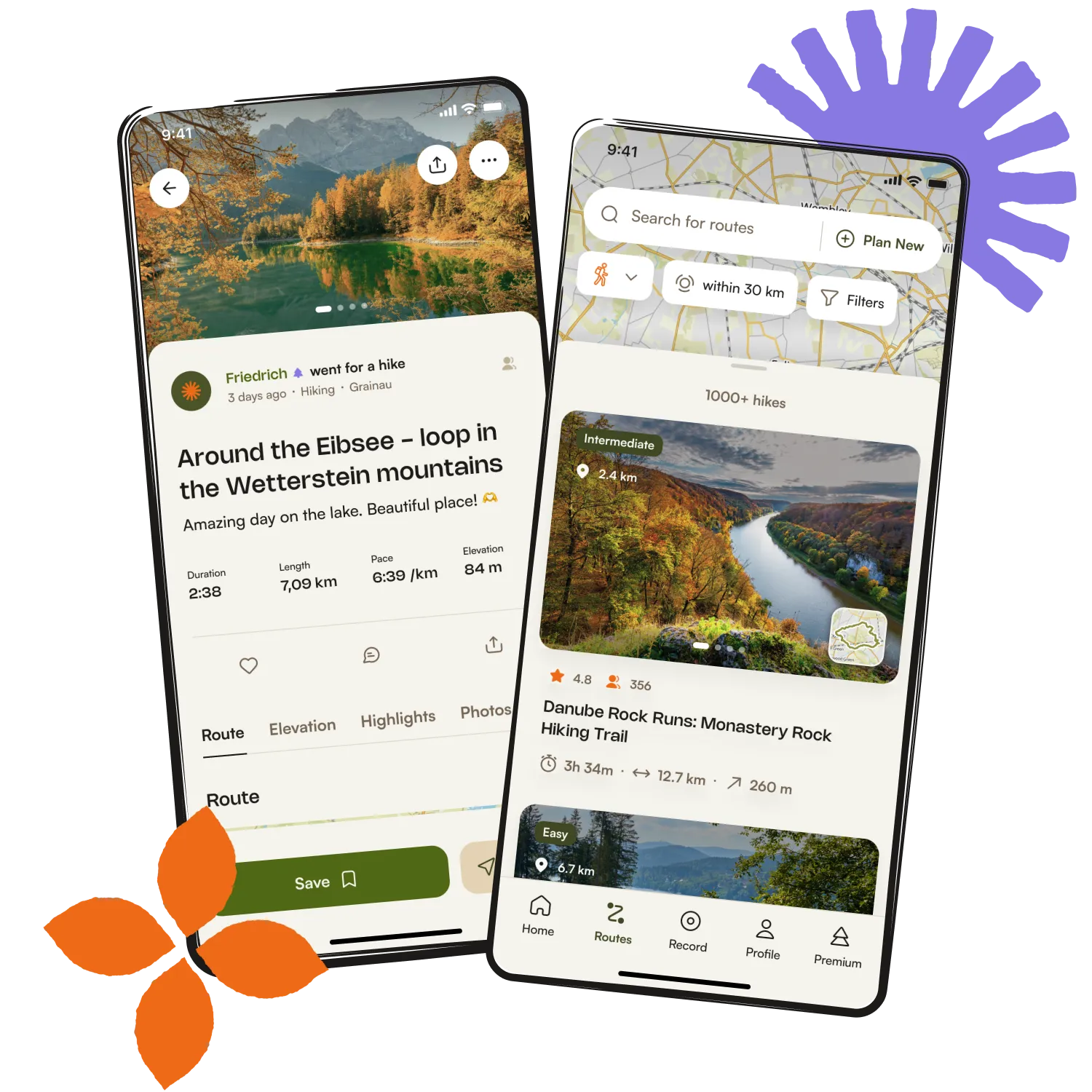
Get inspired with the komoot mobile app


Explore more
Browse the best Hikes in other regions.