Top 6 Castles around Narrow Water
Best castles around Narrow Water are situated in a region rich with history and strategic importance, overlooking Carlingford Lough and the Cooley Mountains. This area features a blend of medieval fortifications and later architectural styles. The landscape is characterized by its coastal position and proximity to significant waterways. Visitors can explore historical sites that reflect centuries of Irish heritage and defensive architecture.
Best castles around Narrow Water
- The most popular castles is Narrow Water Castle, a 16th-century tower house…
Last updated: August 23, 2026
Carlingford
Highlight • Settlement
Showing Translation
Tip by

Carlingford Castle (King John's Castle)
Highlight • Castle
Showing Translation
Tip by
Sign up now to discover places like this
Get recommendations on the best single tracks, peaks, & plenty of other exciting outdoor places.
Sign up for free
Narrow Water Castle
Highlight • Other
tripadvisor.com/Attraction_Review-g736883-d7071009-Reviews-Narrow_Water_Keep_and_Castle-Warrenpoint_County_Down_Northern_Ireland.html
Narrow Water Keep/Tower House:
Wikipedia (Narrow Water Castle (Irish: Caisleán an Chaoil), 2022-09-25):
en.m.wikipedia.org/wiki/Narrow_Water_Castle
The actual Narrow Water Castle itself can be …
Tip by

Moyry Castle
Highlight • Historical Site
Tip by

Taaffes Castle
Highlight • Castle
Translated by Google •
Tip by
Sign up for free to discover even more castles around Narrow Water.
Sign up for free
Already have an account?
Start today with a free account
Your next adventure awaits.
Login or Signup


Tips from the Community

Taaffes Castle (2026-08-07): https://taaffescastle.com/ TRIPADVISOR (Taaffes Castle Bar, 2026-08-07): https://www.tripadvisor.ie/Restaurant_Review-g315880-d2223151-Reviews-Taaffes_Castle_Bar-Carlingford_Cooley_Peninsula_County_Louth.html
1
0

This charming seaside town overlooks the Mourne Mountains, whose silhouette rises along the coast of Northern Ireland. Carlingford is very lively at weekends thanks to its many pubs and restaurants, which attract visitors from the north, and is famous for its oysters. The village has several historical sights, such as the small King John's Castle, with its romantic silhouette overlooking the sea, and Taaffe's Castle, a former 16th-century merchant's house located a little further from the quay.
6
0
Above the medieval street pattern, which dominates the silhouette of Carlingford, stands the imposing ruin of Carlingford Castle, also known as King John’s Castle. This castle was built around 1190 by the Norman knight Hugh de Lacy and was for centuries the strategic key to the entrance of Carlingford Lough.
5
2
Taaffe's Castle is a fortified merchant's house dating from the early 16th century, built by the wealthy Taaffe family, who later became the Earls of Carlingford. Situated near the old harbour, the building originally served as a trading post on the ground floor with residential floors above. The architecture displays typical defensive features such as machicolations, narrow loopholes, spiral staircases, and multi-level garderobes. [curiousireland.ie], [castles.nl], [carlingfor...centre.com] The main structure is a four-storey rectangular tower, later extended with a 16th-century northern extension. Its location and construction clearly demonstrate Carlingford's importance as a thriving trading town during that period. After the 17th century, it fell into disuse, and eventually fell into disuse. Today, it forms part of a pub complex and remains a striking example of medieval urban defensive architecture in Carlingford.
6
1

Carlingford Castle, also known as King John’s Castle, is a striking 12th-century fortress overlooking the charming medieval town of Carlingford and its scenic harbour. Built by Hugh de Lacy to guard the strategic Lough, the castle has a commanding presence with its weathered stone walls and rugged silhouette against the water. Though partially in ruins, it still captures the atmosphere of Ireland’s Norman past, and its elevated position offers sweeping views of the surrounding mountains and coastline.
2
2

On my way through County Armagh, I came across Moyry Castle, a ruined castle perched on a small hill overlooking the historic Moyry Pass - the so-called 'Gap of the North'. It is fascinating to think of how this strategic route was once crucial in securing control of the region. The castle's massive, weathered walls still speak of the turbulent times of the 17th century when it was built by the 1st Earl of Devonshire, Charles Blount. What struck me most was the atmosphere up here: a mixture of isolation and history. The small rectangular structure with its distinctive curves just has a different feel - not ostentatious or over-the-top, but rather functional and robust. The location offers sweeping views over the rolling hills and the Belfast-Dublin railway line that winds through the landscape. It's quiet up here, with only the gentle sound of the wind and the occasional train passing by in the distance. It's definitely worth a quick stop if you're looking for a place steeped in history that's not too crowded. The site is easily accessible and is well worth a detour from the main route. The surrounding meadows also offer a lovely spot for a little break - perfect for taking in the surroundings.
2
2
Moyry Castle stands over the Moyry Pass, also known as "The Gap of the North" - a strategically important crossing that has played an important role for centuries. The small, rectangular castle with its three floors and thick stone walls gives you an idea of the challenges that the defenders once had to overcome. It was built in 1601 by Charles Blount, 1st Earl of Devonshire, to secure the pass and control access to Ulster. As you explore the old fortress, you can see the surrounding landscape, which alternates between rolling hills and forests. It feels like you have been transported back in time, as the walls silently tell of long-ago conflicts. Just a short distance away is the Belfast-Dublin railway line, which shows you how this place has changed over time without losing its historical character. A visit to the castle not only gives you a sense of the country's history, but also of the strategic importance of the Moyry Pass, which has been the link between the north and south of Ireland for centuries.
1
2

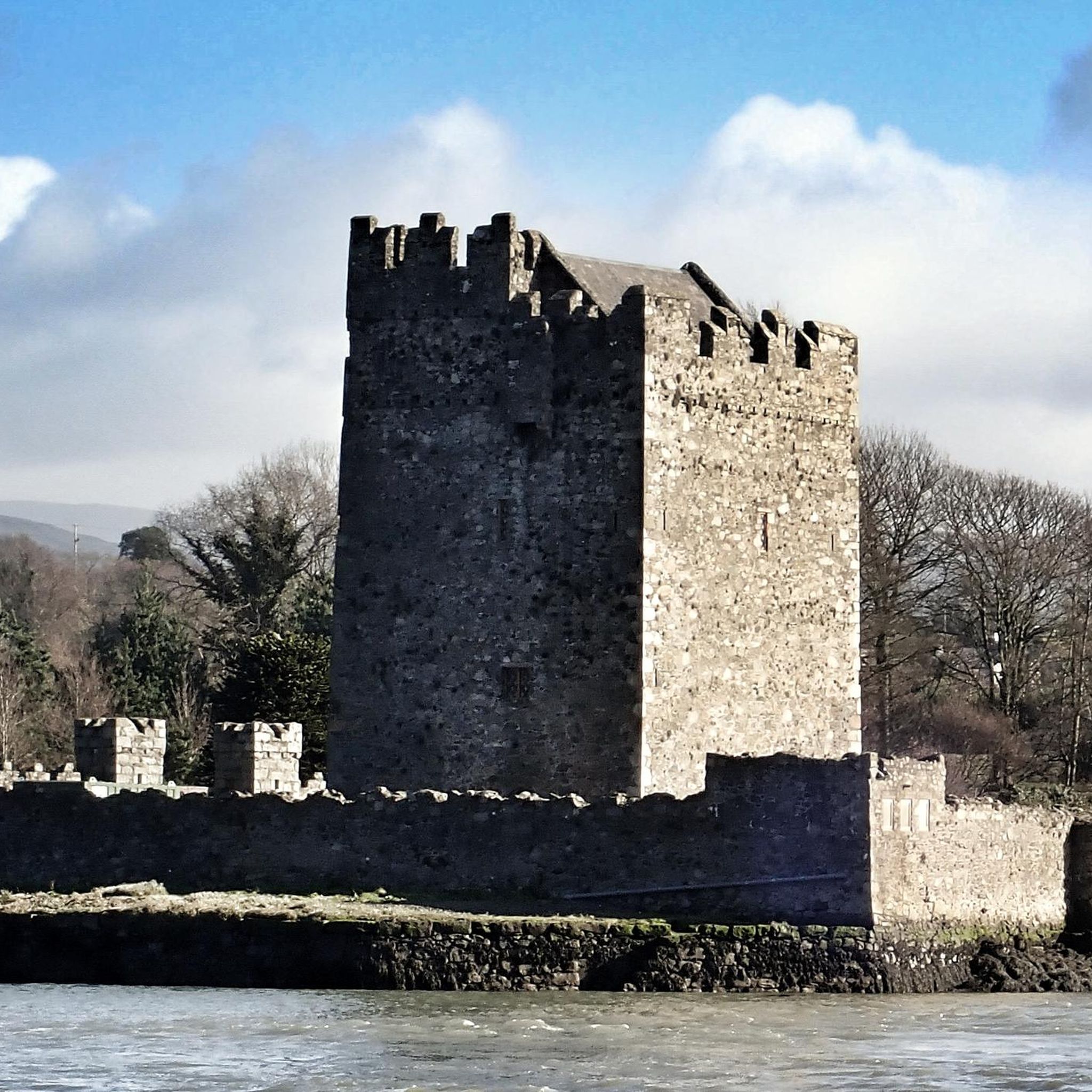
Perfectly placed on the beautiful Shores of Carlingford Lough, this was a 13th century Norman keep, a replacement tower house and bawn was built at Narrow Water in the 16th century. The replacement structure, built in the 1560's, was a typical example of the tower houses built throughout Ireland at the time. The castle was damaged during the Irish Rebellion of 1641, and sold to the Hall family in the 1670's. It was occupied by the Hall family until they built an "Elizabethan revival style" mansion in the early 19th century. This Mansion is also called Narrow Water Castle.
0
0
Frequently Asked Questions
What types of castles can I explore around Narrow Water?
The Narrow Water area offers a diverse range of castles, from 16th-century tower houses like Narrow Water Castle, which are examples of medieval defensive architecture, to 12th-century Norman fortresses such as Carlingford Castle. You can also find 19th-century revival-style mansions, though some of these are private residences.
What is the historical significance of the 16th-century Narrow Water Castle?
The 16th-century Narrow Water Castle, a tower house and bawn, was strategically built around 1568 by the Magennis family. Its purpose was to guard the narrow crossing of the Newry River, a vital trade and supply route. It played roles in the 1641 Irish Rebellion and other military actions, offering a tangible glimpse into Ireland's turbulent past.
Are there other historically significant castles in the area besides Narrow Water Castle?
Yes, Carlingford Castle, also known as King John's Castle, is a striking 12th-century fortress overlooking Carlingford Lough. Another important site is Moyry Castle, built in 1601, which defended the Moyry Pass, an ancient route known as 'The Gap of the North'.
Are there family-friendly castles to visit near Narrow Water?
Many of the castles, including Narrow Water Castle and Carlingford Castle, are suitable for family visits, offering historical exploration and scenic views. The exterior exploration of these sites, often combined with walks, can be enjoyable for all ages. Some may offer seasonal guided tours that provide deeper insights.
What outdoor activities or walking trails are available near the castles?
The area around Narrow Water offers various outdoor activities. You can find easy hikes like the Cloughmore Trail or the Fathom Wood loop. For more challenging routes, there are options like the Carlingford Lough Greenway for running or cycling. Explore more options in the Easy hikes around Narrow Water, Cycling around Narrow Water, and Running Trails around Narrow Water guides.
When is the best time of year to visit the castles around Narrow Water?
The summer months (typically June-August) are ideal for visiting, as guided tours for the interior of the 16th-century Narrow Water Castle may be available. The weather is also generally more favorable for exploring the exteriors and enjoying the scenic views of Carlingford Lough and the Cooley Mountains.
How much time should I allocate for visiting the castles?
For exterior exploration of a site like Narrow Water Castle, you might spend 1-2 hours. If guided tours are available, or if you plan to explore the surrounding areas and trails, you could easily spend half a day or more at a single location. Visiting multiple castles would require a full day or more.
Are there any lesser-known or unique castles worth exploring?
Beyond the prominent sites, Moyry Castle offers a glimpse into a strategic defensive structure from 1601. Additionally, Killeavy Castle, a 19th-century Grade A listed building, has been transformed into a restaurant, hotel, and events venue, offering a different kind of castle experience.
Can I experience nature or spot wildlife near the castles?
Yes, the strategic location of castles like Narrow Water Castle on the County Down bank of the Clanrye River, where it meets Carlingford Lough, provides picturesque views and opportunities to observe local wildlife, especially birds, along the water's edge and in the surrounding natural landscapes.
How can I reach the castles using public transport?
The town of Carlingford, home to Carlingford Castle, can be reached daily by bus from Dundalk and Newry. For other castles, public transport options may be limited, and checking local bus schedules for routes to nearby towns or villages is recommended.
Are there dining options or cafes near the castles?
While some castles are purely historical sites, Killeavy Castle operates as a restaurant, hotel, and events venue, offering dining facilities. The nearby town of Carlingford also has many pubs and eateries.
Is parking available at the castles?
Parking availability varies by castle. For the 16th-century Narrow Water Castle, visitors can typically walk a short path from the A2 road. For Moyry Castle, it is generally not possible to park directly in front of the site. It's advisable to check specific parking information for each castle before your visit.
Most popular attractions around Narrow Water

Get inspired with the komoot mobile app


Explore more
Looking for the best castles somewhere else? Discover other guides around Narrow Water:
