Attractions and Places To See around Lamnay - Top 9
Attractions and places to see around Lamnay include historical sites and natural features within this rural commune in the Sarthe department of France. Lamnay serves as a base for exploring the surrounding region, which offers a variety of cultural and natural points of interest. The area is characterized by its tranquil rural setting, with proximity to towns like La Ferté-Bernard and Le Mans, as well as natural parks. Visitors can find historical monuments, religious buildings, and castles within a short…
Last updated: June 24, 2026
Porte Saint Julien
Highlight • Other
Translated by Google •
Tip by

Château de Montmirail
Highlight • Castle
Translated by Google •
Tip by

Sign up now to discover places like this
Get recommendations on the best single tracks, peaks, & plenty of other exciting outdoor places.
Sign up for free
Saint-Germain Church of Sceaux-sur-Huisne
Highlight • Religious Site
Translated by Google •
Tip by

Saint-Denis Church of Cormes
Highlight • Religious Site
Translated by Google •
Tip by
Church of Our Lady of the Assumption of Montmirail
Highlight • Religious Site
Translated by Google •
Tip by
Sign up for free to discover even more attractions around Lamnay.
Sign up for free
Already have an account?
Start today with a free account
Your next adventure awaits.
Login or Signup



Tips from the Community

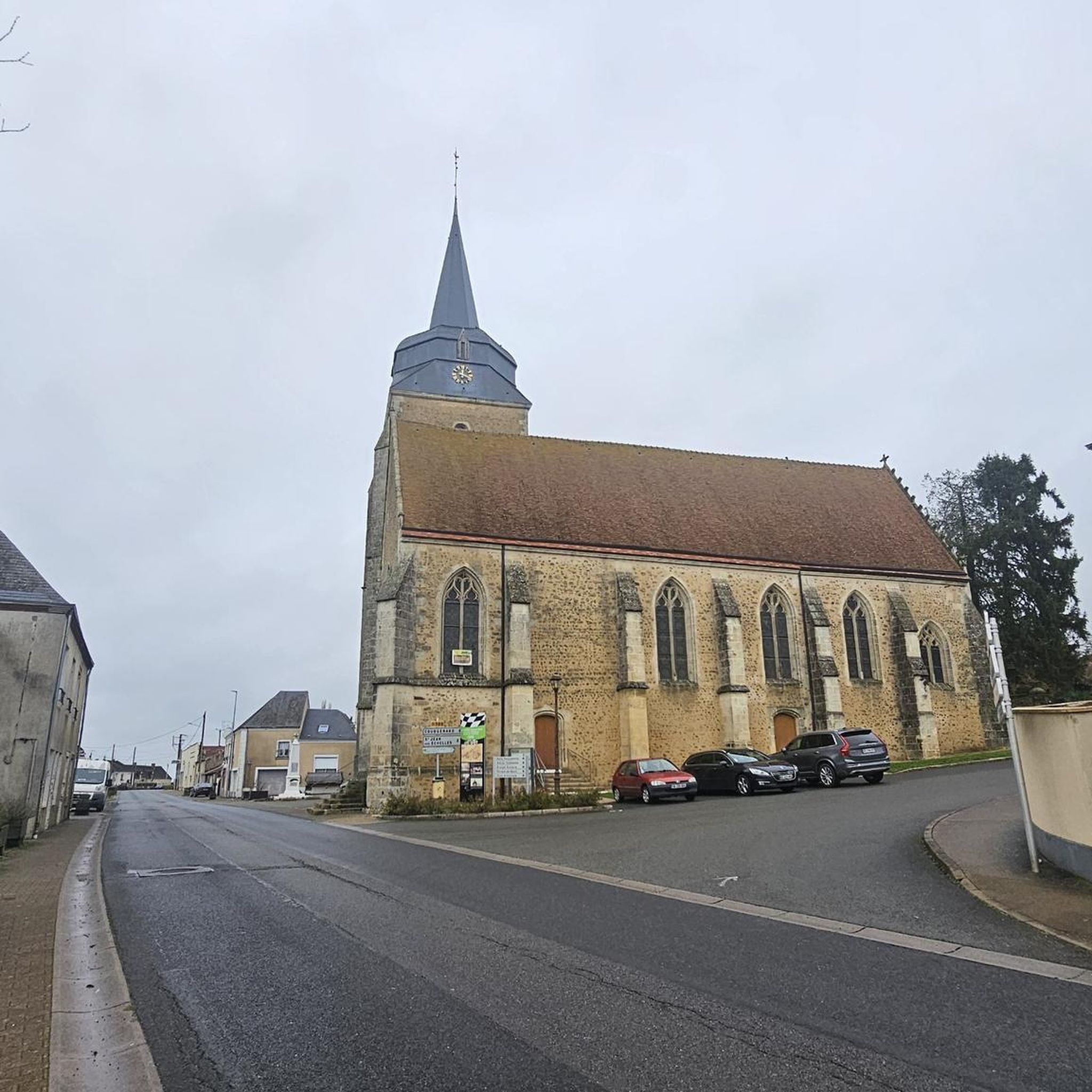
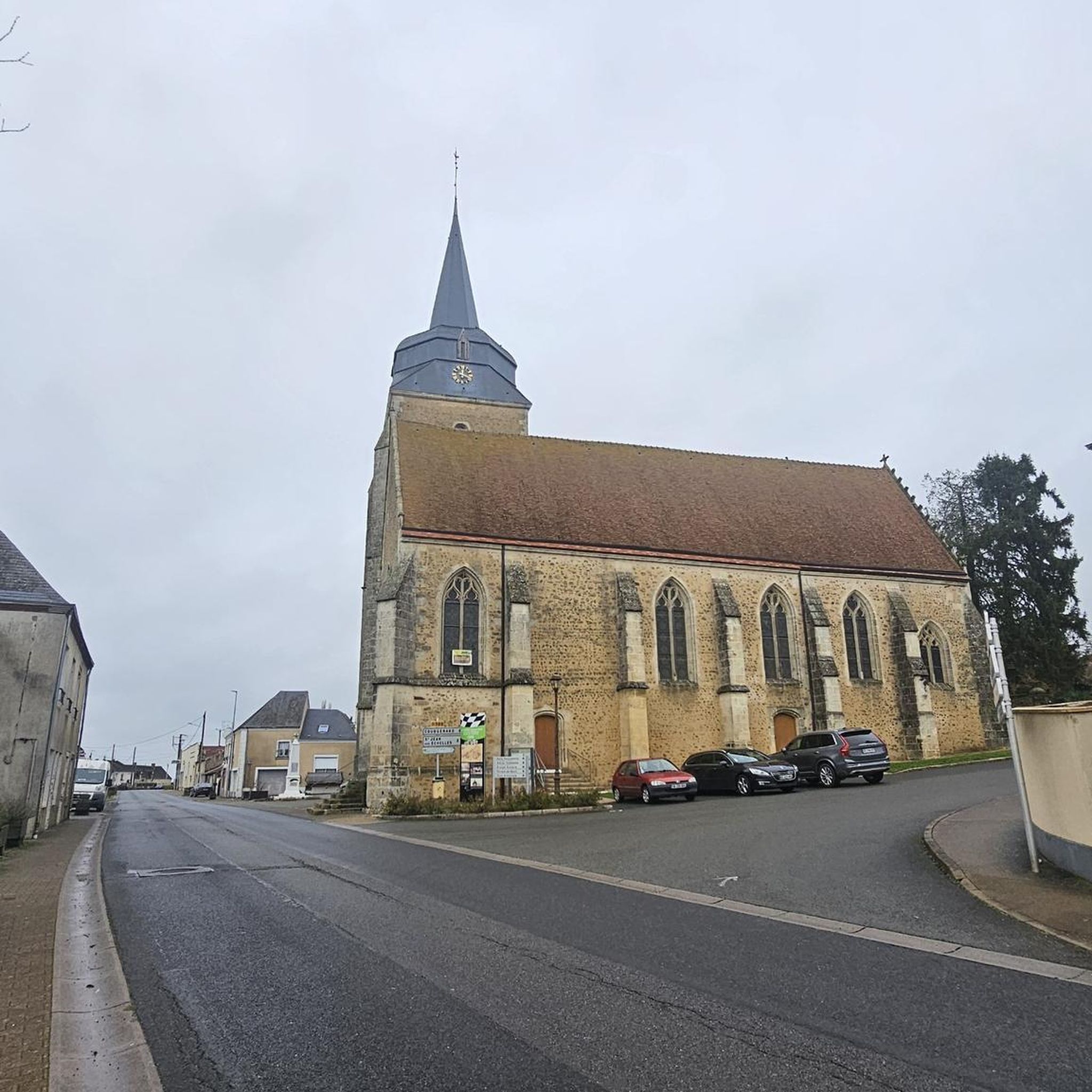
The first mentions of the Saint-Germain church in Sceaux-sur-Huisne appear in the cartulary of the Saint-Vincent abbey in Le Mans: around 1050, Bouchard de Théligny gave the Sceaux church land and a meadow located at proximity. At this time, the building, then "in bad woods", was rebuilt in stone. The nave is considered to be the oldest part of the church and dates back to the 11th century, but it is in reality difficult to date due to multiple alterations and even reconstructions. The masonry shows several repetitions and a confused assembly of elements which could come from older buildings, such as the remains of the Gallo-Roman villa which was exhumed at the end of the 19th century in the valley (small regularly cut rubble stones, debris of roof tiles). There are also traces of old openings, such as a door opening onto the priory. Although it is probable, there is no element to formally identify the Romanesque construction. The current openings are later, such as the small Gothic bay in the western wall and perhaps the south door (15th century?) and the other openings probably made around the first half of the 18th century. Significant masonry and structural work is actually mentioned in the nave in 1709. The choir and the bell tower were probably built in the first half of the 16th century, in a late Gothic style. The factory accounts mention various works in the 1530s and 1540s: roofing, construction of a ballet, stained glass window of the "grant window"... The tower was perhaps built in several stages if we rely on the changes masonry nets in the elevation. It was visibly remodeled at the end of the 16th century or the beginning of the 17th century, as indicated by the semi-circular openings, one of which was walled up. From 1570, the du Bouchets were lords of Sceaux and had their coat of arms, "azure with three rings of sand", affixed to the keystone of the chapel under the bell tower (since replaced by a flower) and on the vault paneled nave and choir. As for the windows on the north wall of the choir, they were undoubtedly open in the 18th century like those in the nave. During the Revolution, the church was seized as national property and sold to a certain René Neveu in September 1796, excluding the furniture. The two bells installed in 1719 and the fittings were handed over to the administration to be melted down. The church was returned to the town after the death of Mr. Neveu in the 1810s. The church underwent some occasional maintenance work (mainly on the roof) in the 19th and 20th centuries, but not an overall restoration. In 1831, an estimate was drawn up to enlarge the church with a chapel, in order to better accommodate all parishioners: this project was not carried out. The same year, the flag which still covers the bell tower was put up. The current sacristy (Gambert architect) was added in 1862 to replace another very dilapidated one, blocking a window now only visible from the inside. The second half of the 19th century also saw the clearing of the surroundings of the church, cluttered with lean-tos and hidden by an imposing washhouse finally moved in 1870. The last work, concerning the roofing, was carried out in 1989. The church of Sceaux-sur-Huisne has been listed as a Historic Monument since 1926.
0
0
The first part of the church, a wide and short nave (slate roof) dates from the 11th century. It shows a device marked by the use of russet and monolithic arch bays characteristic of the beginning of the 11th century. During the Renaissance a new choir was built and the Romanesque bell tower was raised. The nave received new windows, the main portal was rebuilt and the elevation of the stone bell tower began on the left annex. The interior of the church was restored in the 1990s by the Cormes Heritage Committee. Schedules Monday, Thursday & Friday: 4:00 p.m. - 6:00 p.m. Tuesday: 5:00 p.m. -7:00 p.m. Wednesday: 10:00 a.m. - 12:00 p.m.
0
0
The Romanesque nave is the oldest part of the church. The choir has a stone vault with ribbed ribs, divided into two bays, in the upper part of the main altar. The stained glass window is from the beginning of the 16th century, it represents the marriage, in 1505, of Marie de Melun and John of Bruges with, behind the two figures, Saint John and the Virgin. The Gothic style sink dates from the 16th century, with a main shelf hollowed out by two round bowls. On the sides are two columns with small carved capitals. In 1625, addition of a side nave. In the 19th century, construction of the castle chapel and the sacristy, then modification of the choir. In 1505 John of Bruges had the choir rebuilt for his wedding. The Notre-Dame de l'Assomption church dates from various periods. The church was built in the 15th and 16th centuries. Originally dependent on the bishopric of Chartres, the parish of Montmirail was only attached to the bishopric of Le Mans in 1801.
0
0

The castle of Montmirail is a striking example of the castles of the region. The good news is that you can stay there if you wish, as the castle is now open to the public as a hotel. Make it a weekend run or just appreciate its beauty as you pass by.
2
0

This door probably existed from the origin of the fortification of the city. The current building was however rebuilt, at the same time as the enclosure, around 1480. It has a function that is both ostentatious and legal. It actually served as a place of collection of the granting (tax on goods) under the Old Regime. Its monumentality and its decor express the importance given to the city at the time.
0
0

with water point and wc nearby! by bike it's always practical!
1
0
Frequently Asked Questions
What historical sites can I visit near Lamnay?
The region around Lamnay is rich in history. You can explore the impressive Château de Montmirail, a striking example of regional architecture. Another significant historical landmark is the Porte Saint Julien in La Ferté-Bernard, a medieval gate that once served as a tax collection point. Lamnay itself is home to the 16th-century Saint-Martin Church, a listed historical monument.
Are there any castles to explore in the Lamnay area?
Yes, the most prominent castle near Lamnay is the Château de Montmirail, located about 6.6 km away. This beautiful castle also operates as a hotel, offering a unique opportunity to stay overnight or simply admire its architecture. Further afield, you can find a castle in Nogent-le-Rotrou, approximately 25 km from Lamnay.
What kind of outdoor activities are available around Lamnay?
While Lamnay is a tranquil rural area, the surrounding region offers various outdoor activities. The Base de loisirs de La Ferté-Bernard, about 9 km away, provides opportunities for canoeing, kayaking, sailing, paddleboarding, swimming, and mountain biking. For those who enjoy nature, the Forêt de Perseigne, about 46 km away, is ideal for enjoying natural scenery. Lamnay also has a communal pond for relaxation and nature observation.
Are there family-friendly attractions near Lamnay?
Yes, several attractions cater to families. The Château de Montmirail is a fascinating historical site that can be enjoyed by all ages. The Base de loisirs de La Ferté-Bernard offers a wide range of activities like swimming, canoeing, and mountain biking, perfect for a family day out. Additionally, the Saint-Denis Church of Cormes is also noted as family-friendly.
What are some notable religious buildings to see?
The area features several historically significant churches. The Saint-Germain Church of Sceaux-sur-Huisne, with mentions dating back to 1050, is a must-see, listed as a Historic Monument since 1926. The Saint-Denis Church of Cormes, with parts dating from the 11th century, and the Saint Peter's Church in Berfay, with its 11th or 12th-century architecture, are also worth visiting. In Lamnay itself, the 16th-century Saint-Martin Church is a significant landmark.
Can I find opportunities for cycling or running near Lamnay?
Absolutely! Lamnay is a great base for outdoor activities. There are numerous routes for both cycling and running. For cycling, you can explore routes like the 'Lavoir loop from Cherré-Au' or the 'Château de Semur-en-Vallon loop from Vibraye'. Runners can enjoy routes such as the 'Running loop from Lamnay' or the 'Lavoir loop from Saint-Jean-des-Échelles'. You can find more details on these and other routes in the Cycling around Lamnay and Running Trails around Lamnay guides.
What are some unique day trip ideas from Lamnay?
Lamnay's central location makes it ideal for day trips. Consider visiting La Ferté-Bernard, just 9 km away, known for its medieval character and the historic Porte Saint Julien. Another excellent option is Le Mans, about 40 km away, famous for its 24-hour car race and the historic Cathédrale Saint Julien. Nogent-le-Rotrou, within the Perche Regional Natural Park, also offers a charming castle and is about 25 km from Lamnay.
What is the best time of year to visit attractions around Lamnay?
The best time to visit attractions around Lamnay generally depends on your preferred activities. Spring and autumn offer pleasant weather for exploring historical sites and enjoying outdoor activities like cycling and hiking, with milder temperatures and beautiful scenery. Summer is ideal for water-based activities at the Base de loisirs de La Ferté-Bernard, though it can be busier. Winters are quieter, but some attractions might have reduced hours.
Are there any local markets or cultural centers nearby?
Yes, the nearby town of La Ferté-Bernard, approximately 9 km from Lamnay, hosts lively markets on Saturdays and Mondays, offering a taste of local life and produce. For cultural experiences, the region also features the Muséotrain et train touristique, a museum and tourist train attraction, and the ATHENA Cultural Center, both located within the Sarthe department.
What do visitors enjoy most about the attractions near Lamnay?
Visitors appreciate the blend of historical richness and natural tranquility. The Château de Montmirail is particularly loved for its beauty and the unique opportunity to stay overnight. The historical significance of sites like the Porte Saint Julien and the ancient churches also receives high praise. The overall charm of the rural setting combined with accessible historical gems makes the area a delightful destination for exploration.
Are there any specific natural features or viewpoints to discover?
Lamnay itself features a communal pond, offering a local spot for relaxation and nature observation. For broader natural beauty, the Forêt de Perseigne, located about 46 km away, provides extensive opportunities for enjoying natural scenery and walks. While specific viewpoints are not detailed, the rural landscape offers many picturesque spots to appreciate the French countryside.

Get inspired with the komoot mobile app


Explore more
Still not found the Highlight you’re looking for? See guides of the top attractions in other regions:
