Attractions and Places To See around Saint-Sulpice-De-Royan - Top 20
Best attractions and places to see around Saint-Sulpice-De-Royan include a mix of historical sites, natural landscapes, and coastal features. This commune in Charente-Maritime is situated slightly inland but close to the Royan coastline, providing diverse points of interest. The area is characterized by gently rolling landscapes, including fields, marshes, and wooded areas, strategically located between the Val de Seudre and the Gironde estuary.
Best attractions and places to see around Saint-Sulpice-De-Royan
- The most popular attractions is Lighthouse of George de…
Last updated: May 25, 2026
Saint-Georges-de-Didonne Beach
Highlight • Beach
Translated by Google •
Tip by

Chay Beach
Highlight • Beach
Translated by Google •
Tip by

Sign up now to discover places like this
Get recommendations on the best single tracks, peaks, & plenty of other exciting outdoor places.
Sign up for free
Bunkers at Pointe de Suzac with a View of the Gironde Estuary
Highlight • Historical Site
Translated by Google •
Tip by
Our Lady of the Aviators Chapel in Saint-Palais
Highlight • Other
Translated by Google •
Tip by

Carrelets of Saint Palais sur mer
Highlight • Other
🐟 Origin of the carrelets
Showing Translation
Tip by
Sign up for free to discover even more attractions around Saint-Sulpice-De-Royan.
Sign up for free
Already have an account?
Start today with a free account
Your next adventure awaits.
Login or Signup

Tips from the Community

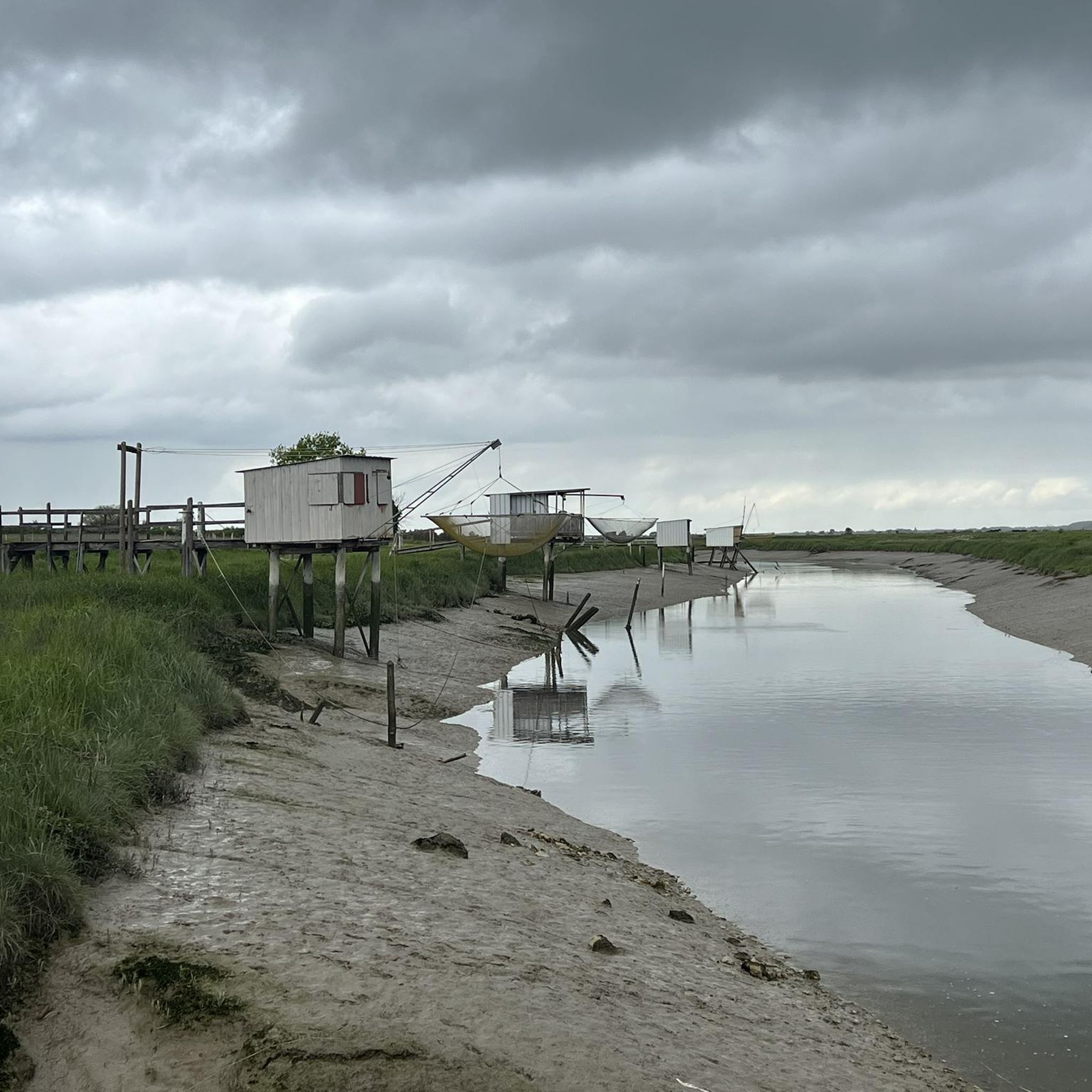
The carrelets of Saint-Palais-sur-Mer are among the most emblematic elements of the Charente coastline. Their history blends traditional fishing, tourist development, and local heritage. 🐟 Origin of the carrelets Originally, the word "carrelet" referred to a square fishing net used since the 17th century. A precise description can be found as early as 1769, in the writings of the scholar Henri-Louis Duhamel du Monceau, who mentioned this type of fishing on the Saintonge coast. 👉 At that time, these were not yet the current huts, but simply a net operated from rudimentary structures. ⚓ Artisanal fishing structures The first local carrelets were simple wooden platforms, built by the fishermen themselves to stand above the water. They were mainly used to catch shrimp, fish, and crabs near the shore, without going out to sea. 👉 It was a family and coastal fishery, less dangerous than sea fishing. 🏖️ 19th – early 20th century: transition to a leisure activity At the turn of the 20th century, with the rise of seaside resorts like Saint-Palais, the carrelets evolved. Holidaymakers and notable figures adopted this practice: construction of fixed jetties, appearance of huts on stilts. The carrelets then became places for relaxation as much as for fishing. 👉 They already contributed to the postcard image of the coast. 🪵 After 1945: democratization and multiplication After the Second World War, the number of carrelets increased sharply. They became a symbol of popular leisure and conviviality. The transition was gradually made from a means of subsistence to a recreational activity. 🌊 Storms and reconstruction The carrelets are fragile in the face of storms: 1999: massive destruction (up to 90% in some areas) 2010 (Xynthia storm): new damage Many have been rebuilt identically, respecting tradition. 🏛️ Today: protected heritage In Charente-Maritime, there are about 400 carrelets. They are: integrated into the public maritime domain allocated by administrative authorization (often renewed every 5 years) Since 2018, they have been recognized as cultural heritage of the department. 👉 In Saint-Palais, they can be observed in particular: at Pont du Diable at the conche du Concié at the Puits de l’Auture
0
0
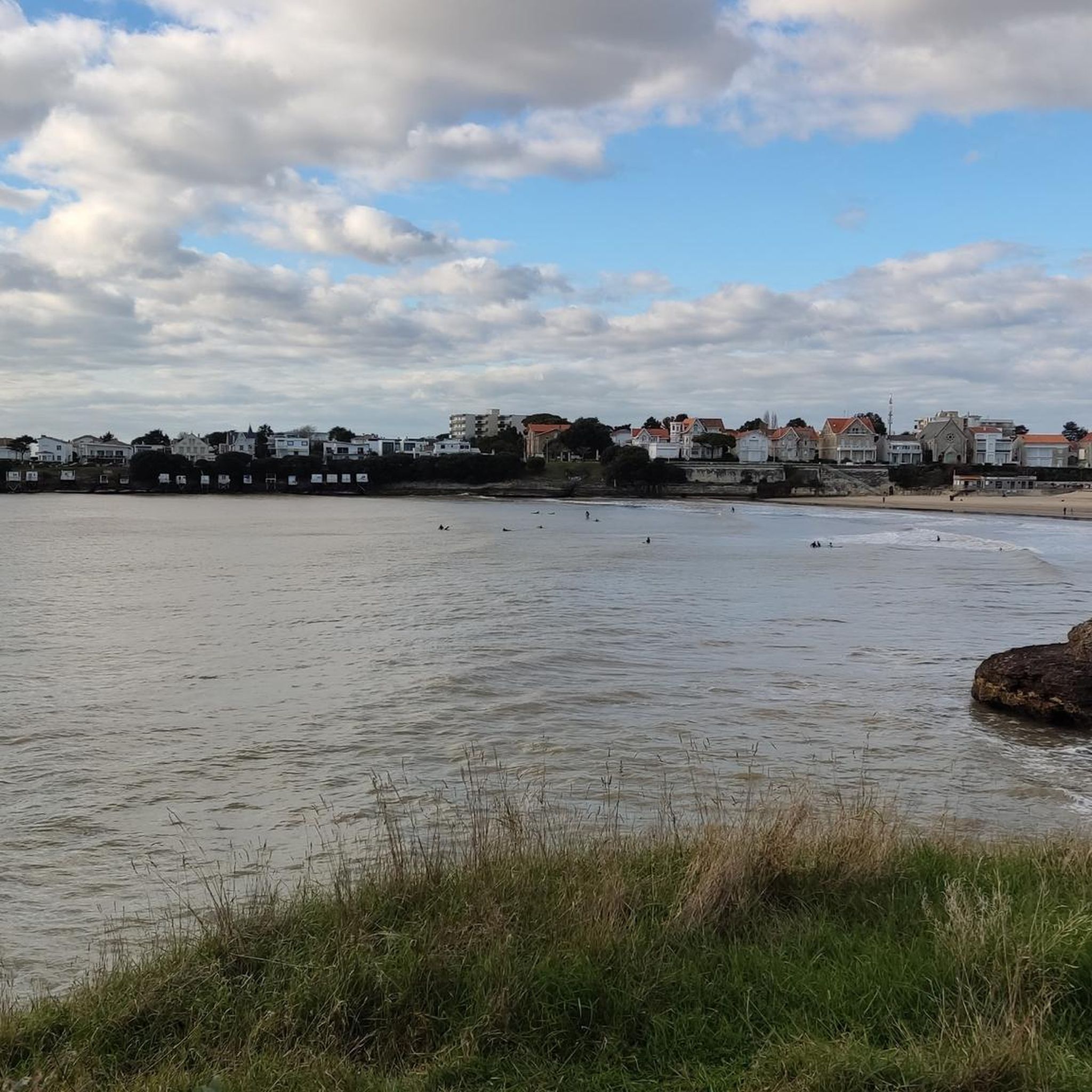
🏖️ General Overview Chay Beach is a family-friendly, fine sandy beach located in Royan (Charente-Maritime), on the Côte d’Argent promenade between Pigeonnier Beach and Pointe du Chay. It stretches for approximately 200 meters and boasts a pleasant natural setting, with a cove bordered by rocks typical of the Charente coastline. 🏝️ Features • 🌊 Beach type: fine sand, sheltered cove. • 🏄♂️ Atmosphere: relatively calm and family-friendly, ideal for children and vacationers seeking relaxation away from the large urban beaches. • 🐾 Pets: prohibited from April 1st to September 30th. • 🫧 Water quality: excellent (Blue Flag label awarded for 2025). 🧭 Lifeguard and Safety • Swimming is supervised during the season (June to early September), with areas marked by red and yellow flags. • The area is classified as a Category 3 "Supervised Beach" and lifeguards are present during the indicated hours. 🪑 Amenities On-site, you can find: • 🏖️ Sun loungers, parasols, and mattresses for rent. • 🚿 Foot rinse and public restrooms. • 📶 Wi-Fi access, first aid station, and an area accessible to people with reduced mobility (assistance may be required depending on the slope). • 🍴 Beachfront restaurant ("Le Chay" bar-restaurant with sea views). 🚶♂️ Atmosphere and Activities • 🎈 Ideal for families and leisurely strolls. • 🌞 People come here for swimming, playing on the sand, flying kites, or simply relaxing by the ocean. • 🅿️ Parking is available nearby, and the beach is easily accessible on foot or by bike from Royan town center in just a few minutes. 🧭 Practical Tips • 📆 Best time to visit: summer for supervised swimming and full services, but also during the off-season for a more peaceful atmosphere. • ☀️ Arriving early in the morning makes parking easier during peak season. • 🐶 Dogs are not allowed during the summer season; check the signs on site during the off-season.
0
0
The Chay de Royan beach is a continuation of the Pigeonnier cove on the Côte d'Argent promenade and offers a larger area than the latter. This sandy beach is family-friendly with a restaurant on the beach. It is supervised during the summer season (mid-June to early September) and you can rent mattresses and cabins. The environment of this beach is very pleasant, there are fewer houses than on the other beaches in Royan. A large car park is available near this beach (left side). Access is possible for people with reduced mobility via an inclined plane with assistance (the slope is steep). Dogs are prohibited from April 1st to October 31st.
1
0

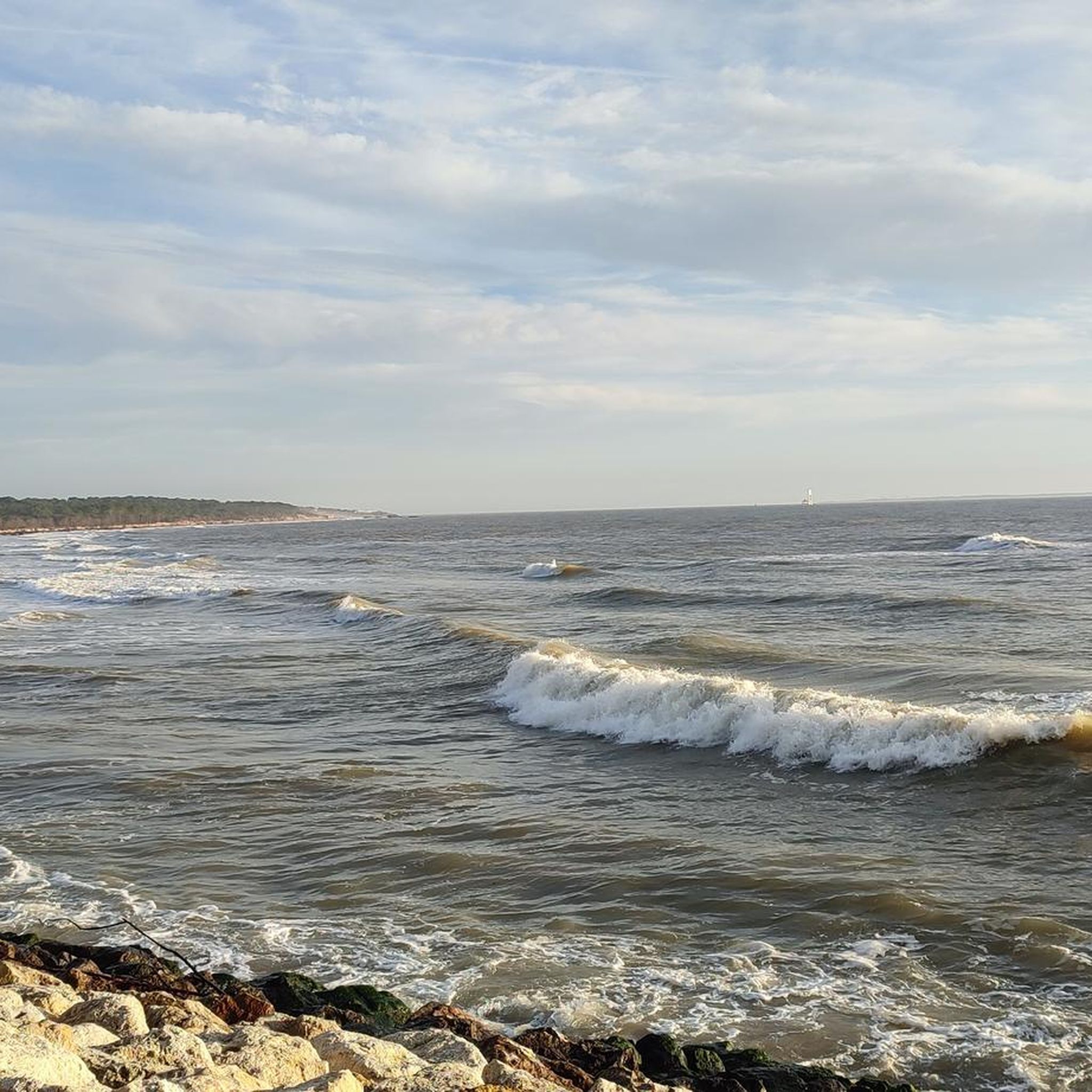
Chay Beach is a sandy beach that offers a breathtaking view of the Cordouan lighthouse. It is surrounded by rocky cliffs and, as such, is sheltered from the wind and is a pleasant place to do your hike.
4
0
2 detachments of the 44th division of the Heer (land army) of the Wehrmacht arrived in Royan and its region on 06/23/1940. Their mission is to control the Gironde estuary which controls access to the port of Bordeaux. In December 1941, the Pio.Btl.327 of Oberstleutnant HUMBERT took part in the first work to build support points (the famous "Atlantic Wall") with the Fest.Pio.stab.28 of the Oberst SCHULTZ based in Royan and the Oberbauleitung PAULA of the Organization Todt. The work took on more scope from October 1942 thanks to the Todt Organization, and was supervised by the Pionere Führer of the AOK 7 (7th Army), Generalmajor Otto SCHAUM. In Charente Maritime, all the works will require the implementation of more than 4 million m3 of concrete. The TODT organization had a standardized fortification program "REGELBAUTEN" already used for the construction of the Siegfrid line. The Atlantic Wall required 300,000 French workers and nearly 3,000 companies. The Chay, Suzac and Coubre batteries were installed in March 1942. Southern limit of the "Festungen Gironde Nord", the Suzac B1 battery, which became S 30 HKAA 5/746 Köln, was equipped, in 1944, with 5 series firing pieces composed of 4 tubes of 76.2 GK 307 (r) horse-drawn installed under casemates at 120° firing H669 and four 105 K 331 Schneider cannons sheltered under structures at 60° firing H671, controlled from a post of fire direction PDT H636a., armament supplemented by support weapons of lower caliber (50 mm mortar, 20 machine gun, DCA) installed on platform, in tank or in tobruk, and by a concrete shelter for H128 personnel and an H134 block. A minefield protects access to the battery and concrete obstacles deter any attempt to land on the beaches. The Suzac battery, then the southern limit of La Poche de Royan, hit by bombing during Operation "Vénérable" on April 14 and 15, 1945, was largely destroyed by Allied aviation supported by "Lorraine" and the "Duquesne", two old ships built in 1913 and 1928 respectively. There remain on the ground 5 bunkers (in English) or blockhouses in German) under the command of a firing post (CP) and the ruins of a shelter buried under ivy. 2 other shelters are embedded in buildings where they serve as cellars. Finally a last bunker is exploded.
4
1
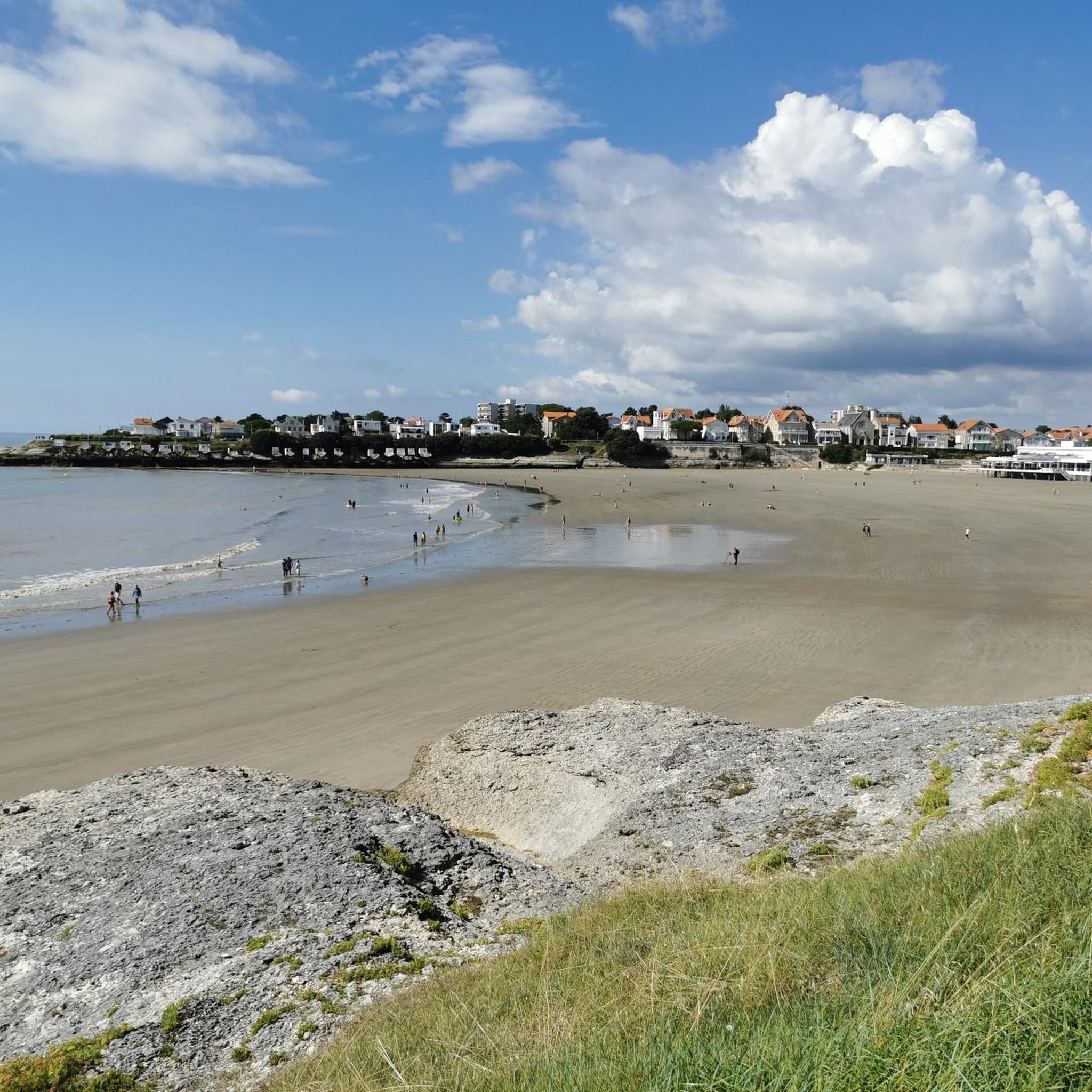
Grande Conche Beach (or Saint Georges de Didonne Beach) is set between two limestone cliffs: to the north, on the Royan side, by the Vallières cliff and to the south, towards Meschers, by the Suzac cliff. Long of more than 2 km, the beach of Saint-Georges is very arranged in its part close to the city center and more natural, wild towards the point of Suzac. On this immense expanse of fine sand, swimming is supervised in summer (several lifeguard stations). Many activities and services are offered: kindergarten, beach club, swimming school, beach volleyball, nautical base, rental of tents and parasols, restaurants. Outside the summer period, sand yachting sessions take place on the Grande Conche beach under the aegis of the St Georges de Didonne sailing club.
1
0

The idea of erecting an oratory on this land was presented to Monsignor Le Camus, Bishop of Saintes and La Rochelle in 1903. The project was approved and, a year later, the building saw the light of day. Consisting of a nave in exposed stone and a narthex bell tower, the chapel can accommodate 15 to 20 people. The baptism of the Jeannette bell, the blessing of the oratory dedicated to Notre Dame as well as the first mass took place on August 25, 1904. Having become too small to accommodate all the faithful, the chapel underwent some modifications in 1908, in particular an enlargement, and the stone nave gave way to a longer and much wider brick nave. Monsignor Augouard, Bishop of Congo-Brazzaville blesses the Chapel again for the occasion. Following the feat of Louis Blériot crossing the English Channel in an airplane in 1909, the chapel then dedicated to Notre Dame became the chapel of the Aviators and then a little later that of the Sailors. When Joseph Odelin died in 1927, the chapel was offered to the diocese. During the Second World War and like the Royan coast, the bombings did not spare the chapel of the airmen, rebuilt in 1947. Created in 2005, the association of Friends of Notre Dame du Platin has the mission of bringing to life and maintaining the Chapel of the Aviators. Masses are celebrated there throughout the summer and the pilgrimage at the end of August closes the summer season. On the occasion of the guided tour of the Sentier des Douaniers, we invite you to discover the interior of the chapel and admire the models of planes it houses, offerings also called ex-voto.
1
0

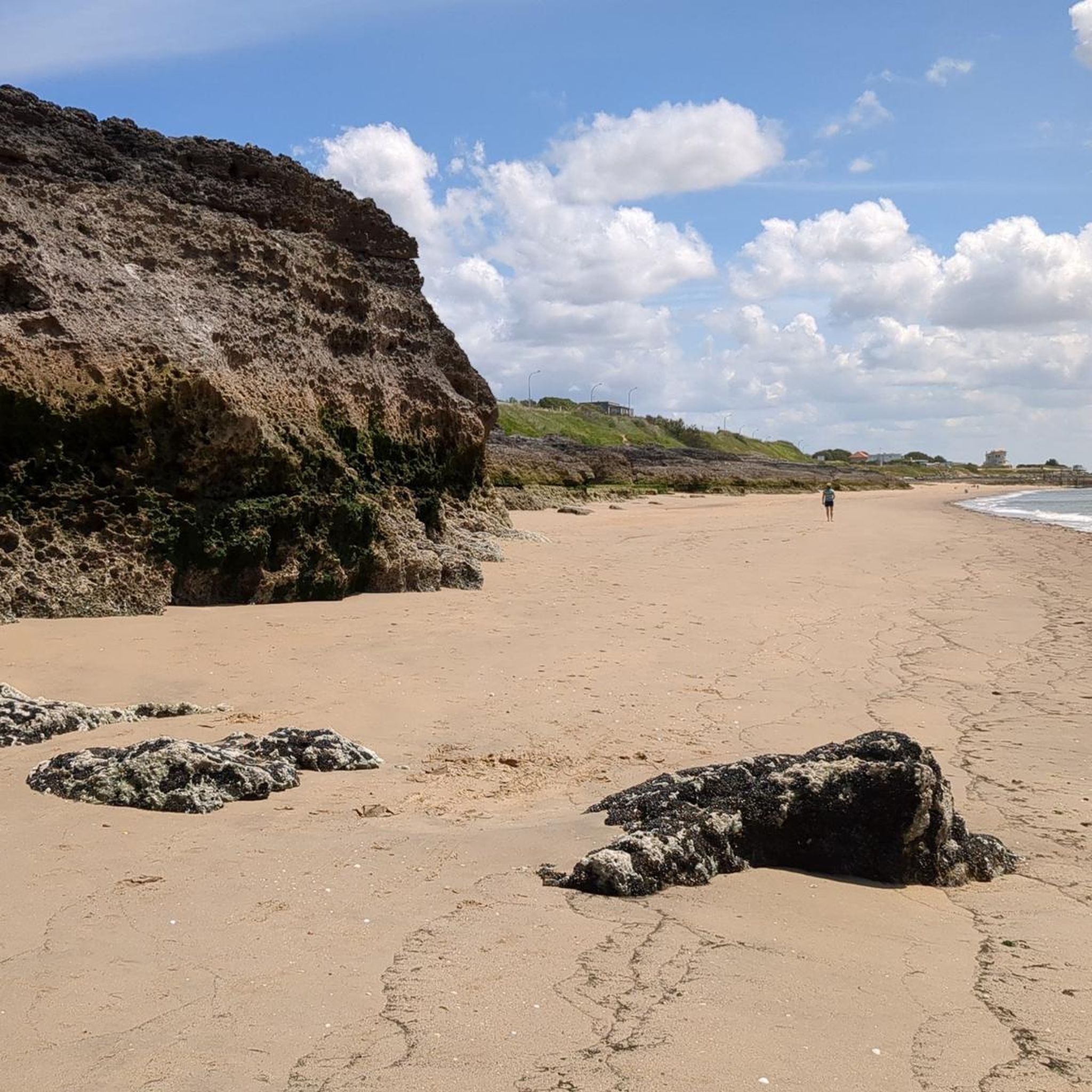
Pretty fine sand beach surrounded by imposing rocks.
2
0
Frequently Asked Questions
What historical sites can I explore around Saint-Sulpice-de-Royan?
The area offers a rich history. You can visit the Saint-Sulpice Church, a Romanesque church dating back to the 12th century with a charming medieval garden. Another unique architectural landmark is the Protestant Temple, built in 1855, known for its octagonal shape. For a glimpse into World War II history, explore the Bunkers at Pointe de Suzac with a View of the Gironde Estuary, remnants of the Atlantic Wall fortifications.
Are there any unique architectural landmarks in the area?
Yes, Saint-Sulpice-de-Royan features several unique architectural landmarks. The Saint-Sulpice Church is a significant Romanesque monument from the 12th century, notable for its facade with five arches and a square bell tower. The Protestant Temple, built in 1855, stands out with its rare octagonal design, one of only a few in France. You can find more information about the Protestant Temple on Wikipedia.
Where can I learn about local traditions and products?
To experience local expertise in wines and spirits, you can visit the Jules Gautret Cellars in Fontbedeau. They have been producing Cognac, Pineau, and Charente wines since 1847, offering insight into the region's agricultural heritage.
What natural landscapes can I discover near Saint-Sulpice-de-Royan?
The region boasts diverse natural landscapes, including gently rolling fields, marshes, and wooded areas such as the Forest of Chatelard and the woods of La Roche or La Lande. Its strategic location between the Val de Seudre and the Gironde estuary also provides unique natural environments to explore.
Are there good viewpoints to enjoy the scenery?
Absolutely. The Lighthouse of George de Didonne's port offers breathtaking views of the magnificent Gironde estuary after climbing its 144 steps. The Bunkers at Pointe de Suzac also provide historical context alongside scenic views of the estuary. For a truly unique perspective, microlight flights are available to see the Royan region's landscapes from above.
What outdoor activities are available around Saint-Sulpice-de-Royan?
The area is excellent for outdoor enthusiasts. You'll find numerous circuits for hiking and mountain biking through the woods and marshes. For specific routes, you can explore the MTB Trails around Saint-Sulpice-De-Royan or the Running Trails around Saint-Sulpice-De-Royan. There are also options for Gravel biking around Saint-Sulpice-De-Royan.
Can I find beaches close to Saint-Sulpice-de-Royan?
Yes, Saint-Sulpice-de-Royan is conveniently located just 7 kilometers from the beaches of Royan. You can visit Saint-Georges-de-Didonne Beach, a long sandy beach between two limestone cliffs, offering supervised swimming and various activities in summer. Another option is Chay Beach, a sandy beach sheltered by rocky cliffs, providing a pleasant spot with views of the Cordouan lighthouse.
Are there family-friendly attractions in Saint-Sulpice-de-Royan?
For family entertainment, Pirate Parc is an indoor park offering activities like slides, trampolines, and a ball pit. Additionally, Saint-Georges-de-Didonne Beach is very family-friendly, with a kindergarten, beach club, and supervised swimming during the summer season.
What is the best time to visit Saint-Sulpice-de-Royan for outdoor activities?
The spring and autumn months generally offer pleasant weather for hiking and cycling, with milder temperatures and fewer crowds. Summer is ideal for enjoying the beaches and water activities, though it can be busier. Always check local weather forecasts before planning your outdoor adventures.
Are there any gardens or green spaces to visit?
Yes, adjacent to the Saint-Sulpice Church, you'll find a charming Medieval Garden. This 800m² garden is organized into eight 'courtyards' and cultivates around 200 historical plant varieties, including a vegetable garden, herbs, medicinal plants, and a rose garden.
What is the Port of Royan like?
The Port of Royan is a large marina located in the heart of Royan, offering 1000 berths. It's well-sheltered and provides a great place to enjoy the sea breeze, view boats, and observe the Gironde estuary. The port also serves as a ferry terminal for crossings to Le Verdon-sur-Mer and is one of three fishing ports in Charente Maritime with an auction, known for its quality seafood.
What do visitors particularly enjoy about the coastal areas near Saint-Sulpice-de-Royan?
Visitors love the expansive sandy beaches like Saint-Georges-de-Didonne Beach, which is praised for its perfect semicircle shape and being flanked by white cliffs. Chay Beach is appreciated for its fine sand, imposing rocks, and being sheltered from the wind, offering a pleasant and family-friendly atmosphere with views of the Cordouan lighthouse.
Most popular routes around Saint-Sulpice-De-Royan
Most popular attractions around Saint-Sulpice-De-Royan

Get inspired with the komoot mobile app


Explore more
Still not found the Highlight you’re looking for? See guides of the top attractions in other regions:
