The best traffic-free bike rides around Almonacid De Toledo
3.7
(3)
33
riders
9
rides
Gravel biking around Almonacid De Toledo offers an extensive network of rural paths and unpaved roads, ideal for varied terrain cycling. The region features a landscape of cultivated fields, notably olive groves, alongside rolling hills and river valleys. Cyclists can explore the Castilian steppe, characterized by open and exposed gravel tracks, and areas with oak openings, savannas, and sand dunes. These natural features provide a diverse environment for no traffic gravel bike trails.
Best no traffic gravel bike trails around…
Last updated: October 28, 2026
4
riders
28.3km
02:10
260m
260m
Moderate gravel ride. Good fitness required. Mostly paved surfaces.
8
riders
39.6km
02:54
300m
300m
Moderate gravel ride. Good fitness required. Mostly paved surfaces.

3.7
(3)
8
riders
Moderate gravel ride. Good fitness required. Mostly paved surfaces.
2
riders
22.4km
01:34
210m
210m
Moderate gravel ride. Good fitness required. Mostly paved surfaces.
2
riders
29.3km
02:05
320m
320m
Moderate gravel ride. Good fitness required. Mostly paved surfaces.
Get access to more routes and recommendations from other explorers.
Already have an account?
Our route recommendations are based on thousands of hikes, rides, and runs completed by other people on komoot.
Start today with a free account
Your next adventure awaits.


Other adventures around Almonacid De Toledo

Tips from the Community

From the hills of Cobisa, you can enjoy a magnificent panoramic view of Toledo and the Tagus Valley. Surrounded by olive groves and La Mancha landscapes, this municipality combines the tranquility of a residential setting with proximity to one of the most important historical cities in Spain.
8
0

Toledo is a historic city in central Spain, the capital of the autonomous community of Castile-La Mancha. Located about 70 kilometers south of Madrid, it stands on a rocky promontory surrounded by the Tagus River and is entirely declared a UNESCO World Heritage Site. It is universally known as the "City of Three Cultures" for the centuries-long and peaceful coexistence of Christians, Muslims, and Jews.
0
0
Located in the Plaza de la Constitución, in the historic Town Hall in the Neo-Mudéjar style, designed by Ezequiel Martín Martín and built between 1927–1928, with a striking brick facade, masonry panels, horseshoe arches and ceramic decorations, culminating in a circular tower topped with a bulbous dome (tiled, from 1930).
3
0
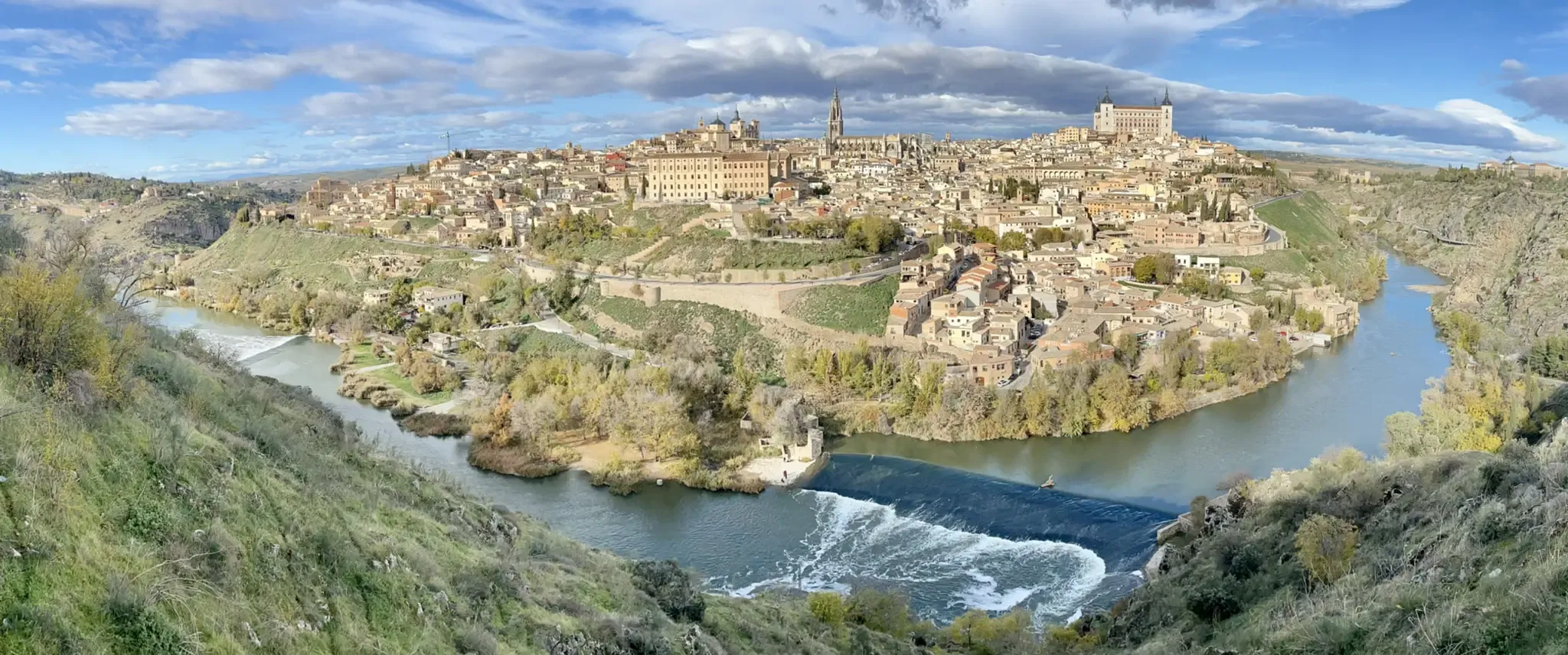
The view of Toledo from the Mirador del Valle road is considered one of the most iconic panoramas in Spain and, for many, the best way to admire the city. From this vantage point, you can appreciate the historic center surrounded by the Tagus River, which forms a meander that embraces the city. The Alcázar of Toledo dominates the upper part of the city. The Primate Cathedral, with its prominent Gothic tower, is also visible. Historic bridges such as the Alcántara Bridge and the San Martín Bridge are also prominent.
7
0
The Santa María de Benquerencia neighborhood, popularly known as El Polígono, is one of Toledo's most important and unique districts. Located east of the historic center, on the left bank of the Tagus River. It is Toledo's third district and its most populated, with over 22,000 inhabitants.
2
0
The view of Toledo from the Mirador del Valle road is considered one of the most iconic panoramas in Spain and, for many, the best way to admire the city. From this vantage point, you can appreciate the historic center surrounded by the Tagus River, which forms a meander that embraces the city. The Alcázar of Toledo dominates the upper part of the city. The Primate Cathedral, with its prominent Gothic tower, is also visible. Historic bridges such as the Alcántara Bridge and the San Martín Bridge are also prominent.
7
0
The most iconic view of Toledo from the road in the Cabeza area is from the Mirador del Valle, located in Ronda del Valle, very close to the Hermitage of the Virgen de la Cabeza. This spot is famous for its classic panoramic view, seen on postcards and paintings, with the Alcázar, the Primate Cathedral, and the Tagus River framing the city.
3
1
Cobisa, very close to Toledo, is ideal for cycling and hiking.
9
0
Frequently Asked Questions
How many no-traffic gravel bike trails are available around Almonacid de Toledo?
There are 5 dedicated no-traffic gravel bike trails in the Almonacid de Toledo area featured in this guide. These routes are specifically curated to offer a peaceful cycling experience away from vehicular traffic, traversing the region's extensive network of rural paths and unpaved roads.
What kind of landscapes can I expect on these no-traffic gravel routes?
The no-traffic gravel routes around Almonacid de Toledo offer a diverse and picturesque landscape. You'll cycle through cultivated fields, notably olive groves, and experience rolling hills, river valleys, and the unique Castilian steppe. The area is known for its serene natural environment, blending monumental heritage with tranquil rural settings, often filled with the aromatic essences of thyme, rosemary, and olives.
Are there any circular no-traffic gravel bike routes?
Yes, all the no-traffic gravel bike routes in this guide are circular, allowing you to start and end your ride in the same location. For example, the Plaza de la Concordia, Cobisa – Picnic Area loop from Nambroca offers a substantial circular ride, as does the Mora Town Hall loop from Mora.
What attractions can I see along the no-traffic gravel bike trails?
Many routes pass by or near significant historical and natural attractions. You might encounter impressive medieval fortresses like Almonacid Castle or the Castle of the Counts of Orgaz. The region also features charming villages such as Mascaraque and Burguillos de Toledo, offering glimpses into authentic Manchegan architecture and local life.
Are there any family-friendly no-traffic gravel bike trails?
While all routes are rated moderate, the extensive network of rural paths ensures a safe, car-free environment suitable for families with some cycling experience. The relatively flat sections and well-maintained gravel surfaces make for enjoyable rides. Consider routes that are shorter in distance, such as the Mora Town Hall loop from Mora, which is approximately 22 km.
What is the best time of year for gravel biking in Almonacid de Toledo?
The best time for gravel biking in Almonacid de Toledo is typically during spring (March to May) and autumn (September to November). During these seasons, the weather is milder, and the natural scenery is particularly vibrant or rich in autumnal colors. Summers can be very hot, and winters can be chilly, making spring and autumn ideal for comfortable rides.
Are there any routes that offer views of specific natural features or wildlife?
Yes, the region's diverse ecosystem means you might encounter various natural features and wildlife. For instance, the Bee-eater Colony Site loop from Santa María de Benquerencia suggests opportunities to observe local birdlife. The routes often traverse areas with oak openings, savannas, and cultivated fields, providing a chance to experience the local flora and fauna.
What is the typical duration for these no-traffic gravel bike routes?
The no-traffic gravel bike routes in this guide vary in length and duration. The shortest route, the Mora Town Hall loop from Mora, can take around 1 hour 30 minutes to 2 hours. Longer routes, such as the Plaza de la Concordia, Cobisa – Picnic Area loop from Nambroca, might take 2 hours 45 minutes to 3 hours 30 minutes, depending on your pace and stops.
Where can I find parking for these no-traffic gravel bike trails?
As these routes often start from or pass through villages like Nambroca, Burguillos de Toledo, Santa María de Benquerencia, or Mora, you can typically find public parking within these settlements. Look for designated parking areas near the starting points mentioned in the route descriptions, such as the Cobisa – Plaza de la Concordia, Cobisa loop from Burguillos de Toledo which starts from Burguillos de Toledo.
Are there any cafes or places to rest along the no-traffic gravel routes?
While the routes themselves are primarily rural and traffic-free, they often connect or pass near small villages. These villages, such as Mora or Burguillos de Toledo, typically offer local cafes, bars, or small shops where you can refuel and rest. It's always a good idea to carry sufficient water and snacks, especially on longer stretches between settlements.
What kind of terrain should I expect on these gravel trails?
You should expect varied terrain, typical of gravel biking. The routes primarily use "caminos rurales" (rural paths) and unpaved roads. This includes packed gravel, dirt trails, and some sections that might be slightly rocky or sandy, especially in areas resembling the Castilian steppe. The diverse topography includes rolling hills and river valleys, ensuring a mix of smoother sections and more challenging climbs.
Can I combine these routes with visits to historical sites?
Absolutely. The region is rich in history, and many routes are designed to integrate with historical sites. For example, the View of the Palacio de Galiana – Alcántara Bridge loop from Santa María de Benquerencia offers views of significant landmarks. You can easily plan your ride to include stops at places like Almonacid Castle or other nearby historical villages.
Most popular routes around Almonacid De Toledo
Most popular attractions around Almonacid De Toledo

Get inspired with the komoot mobile app


Explore more
Browse the best Gravel rides in other regions.
