The best traffic-free bike rides around Sailly-Lez-Lannoy
4.5
(369)
1,685
riders
79
rides
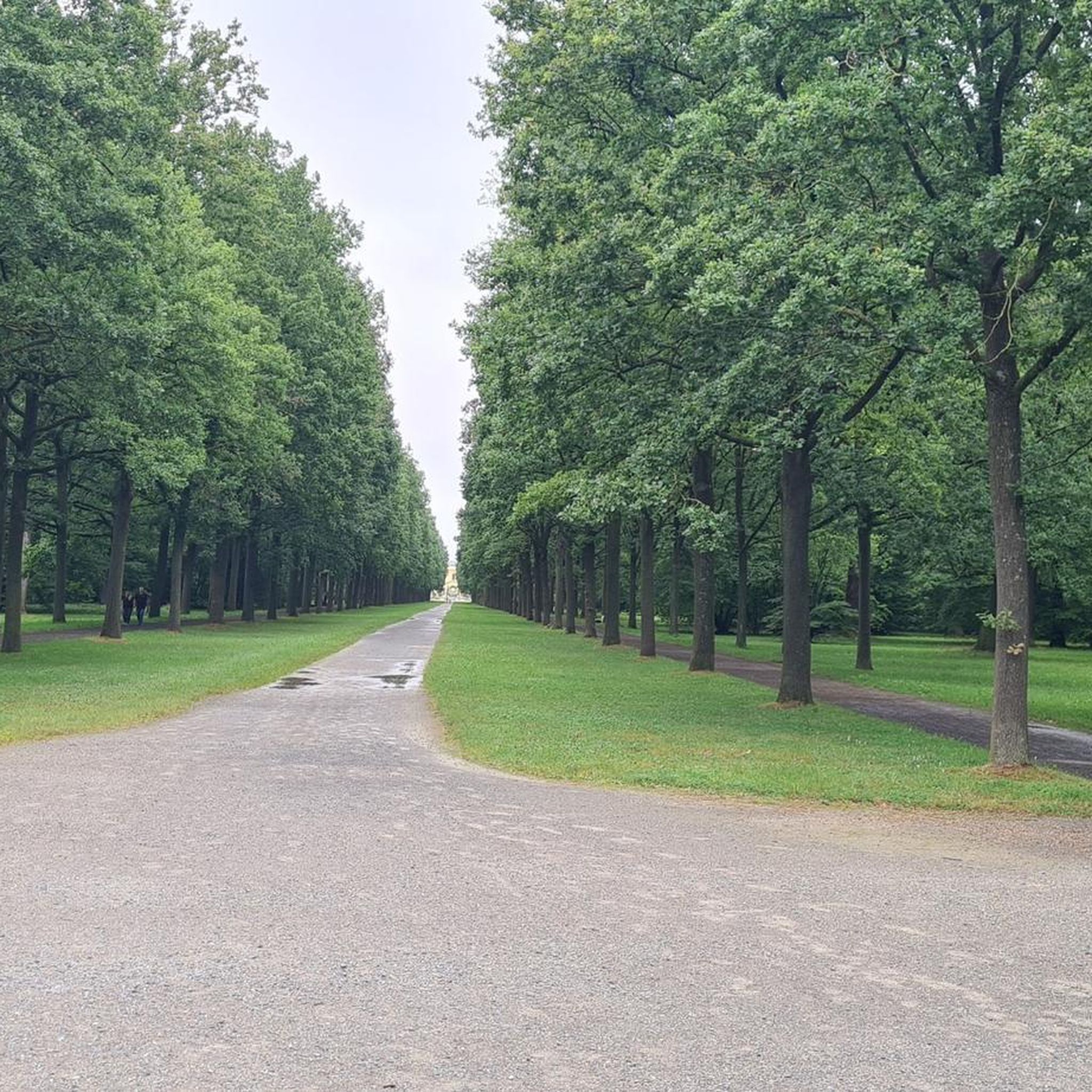
No traffic gravel bike trails around Sailly-Lez-Lannoy are situated within the Hauts-de-France region, offering diverse landscapes for off-road cycling. The area features extensive greenways like the Val de Marque, paths along the historic Canal de Roubaix, and routes around Lac du Héron. The terrain includes a mix of forests, open fields, and canal towpaths, providing varied surfaces for gravel biking.
Best no traffic gravel bike trails around Sailly-Lez-Lannoy
- The most popular no traffic gravel bike trail is Bois de Templeuve…
Last updated: May 21, 2026
4.0
(5)
29
riders
64.8km
03:41
250m
250m
Moderate gravel ride. Good fitness required. Mostly paved surfaces. Suitable for all skill levels.
4.7
(3)
14
riders
47.9km
02:37
120m
120m
Moderate gravel ride. Good fitness required. Mostly paved surfaces. Suitable for all skill levels.

Sign up for free
4.3
(3)
10
riders
32.9km
01:56
110m
110m
Easy gravel ride. Great for any fitness level. Mostly paved surfaces. Suitable for all skill levels.
7
riders
119km
06:32
420m
420m
Hard gravel ride. Very good fitness required. Mostly paved surfaces. Suitable for all skill levels.
5.0
(2)
10
riders
51.1km
03:10
110m
110m
Hard gravel ride. Good fitness required. You may need to push your bike for some segments of this route.
Get access to more routes and recommendations from other explorers.
Sign up for free
Already have an account?
Our route recommendations are based on thousands of hikes, rides, and runs completed by other people on komoot.
Start today with a free account
Your next adventure awaits.
Login or Signup
Popular around Sailly-Lez-Lannoy

Tips from the Community

***** a journey of discovery through beautiful nature
0
0

Please note: in summer the park is open every day (except Saturdays) from 10am to 7pm, but in winter it is only open on Thursdays, Fridays and Sundays, each time from 10am to 6pm.
4
0
However dilapidated the castle may be, the future promises improvement: The current owners of the castle, Pierre and Annie Moulin-Duthoit and their children, are responsible for its restoration, particularly Olivier Moulin, who wrote a thesis on this heritage at the end of his architectural studies. ...that's why you can see signs of construction work from a distance (approaching close is not permitted). Source: leershistorique.fr
2
0
The Château de Royères, probably around 1100, was a feudal motte with a wooden tower and a retractable walkway... which Havide de Néchin brought as a dowry to Lambert de Wattrelos. The inhabitants of Tournai submitted to Philip II Augustus. The Tournai region would belong to the French royal family for over 300 years (1187-1521). La Royère is located in the Château de Lille, in the Flanders region, on the hills of Leers and Néchin, on the edge of the Wattines forest, on the border with Tournaisis: it is the castle of the border. In 1227, it was probably a feudal motte with a stone tower that was purchased by Arnoul IV. Wealthier than the seller Hugues de Roubaix, he may have had Tournai's stone walls built. From 1500 onwards, the lords of Roubaix also became lords of La Royère through marriage: the de Werchin and the de Melun. Pierre de Melun, governor of Tournai, lord of Roubaix and La Royère, and a Protestant supporter, was considered civilly dead by Philip II, the Catholic king. His possessions passed to the Ligne family through Anne de Melun. As a supporter of the Edict of Nantes (Henry IV, 1598), Louis XIV returned La Royère to the de Melun family. This led to family disputes: the property first went to the de Ligne family and then back to the de Melun family. A Crombez from Tournai bought La Royère, 35 hectares (Popp map circa 1850). Miss Crombez de Remond de Montmort married Count Ferdinand Costa de Saint-Gérix de Beauregard… Everything was then sold to farmers. Source: leershistorique.fr
2
0
Please note: the towpath on the south side is temporarily closed towards Leers between the Pont de Petix-Preux and Rue de Belva. A short detour along Rue de la Motterie is the solution.
3
0
Also note the charming bridge keeper's house. Ten years ago (2015), it was for sale for €52,000. Source: lavenir.net
3
0
The Roubaix Canal, or the Espierres Canal, as it's called in French or Belgian, forms part of the link between the Deûle River in France and the Scheldt River in Belgium. In 1843, the two canals were connected between Leers, France, and Leers-Nord, Belgium. Despite damage sustained during the two world wars, the canal was the pinnacle of the region's textile industry for over a hundred years, transporting coal from Belgium to numerous French factories. In Leers-Nord, Belgium, the workers who pulled the coal-laden barges were called "satcheux" (sailors). Next to the lock keeper's house, a stone's throw from France, the crossing point between France and Belgium, a customs guardhouse was built. Customs officers were present to inspect the numerous goods transported by barge. After the decline of the textile industry in the 1970s and 1980s, the canal gradually lost its usefulness and was closed to shipping in 1983. In the early 2000s, the canal was the subject of a cross-border rehabilitation project to allow tourist boats to pass through again. As part of the Interreg Blue Links project, a collaboration between France, Flanders, and Wallonia, it was flooded again. The final works were completed in 2011, and navigation reopened. Since the early 20th century, the Roubaix/Espierres Canal has been a place of conviviality, walking, and fishing for cross-border residents and commuters. Consequently, strong public opposition has arisen to the plan to convert the canal into a motorway. Source: www.caue-nord.com
3
0

Frequently Asked Questions
How many no-traffic gravel bike trails are available around Sailly-Lez-Lannoy?
There are over 50 dedicated no-traffic gravel bike trails around Sailly-Lez-Lannoy, offering a wide range of options for all skill levels. These routes are specifically designed to keep you away from vehicular traffic, providing a serene cycling experience.
What kind of terrain can I expect on the no-traffic gravel trails in this region?
The terrain around Sailly-Lez-Lannoy is quite varied, offering a rich gravel biking experience. You'll find a mix of well-maintained greenways, gravel sections along historic canals like the Canal de Roubaix, and paths winding through forests and open fields. Some routes may include segments with more challenging surfaces, reflecting the diverse landscapes of the Hauts-de-France region.
Are there any easy, beginner-friendly no-traffic gravel routes?
Yes, Sailly-Lez-Lannoy offers a good selection of easy, beginner-friendly no-traffic gravel routes. For example, the Bois de Templeuve – Les 4 chemins paved sector loop from Baisieux is an easy option, perfect for those new to gravel biking or looking for a relaxed ride. There are 26 easy routes in total, ensuring a gentle introduction to the area's beautiful landscapes.
What natural attractions can I see along these no-traffic gravel bike trails?
Many no-traffic gravel routes in the area pass by beautiful natural attractions. You can cycle past the scenic Heron Lake, explore the tranquil Vert Bois de Blandain forest, or follow the picturesque Val de Marque Greenway. The region's network of rivers and canals also provides stunning waterside paths.
Are there any challenging no-traffic gravel routes for experienced riders?
Absolutely. For experienced gravel bikers seeking a challenge, there are 15 difficult no-traffic routes available. The Heron Lake – Greenway Hem-Anstaing loop from Willems, for instance, is rated as difficult and offers a more demanding ride. Some routes even incorporate sections of the legendary Paris-Roubaix cobbles for a truly unique and challenging experience.
Can I find circular no-traffic gravel routes around Sailly-Lez-Lannoy?
Yes, many of the no-traffic gravel routes around Sailly-Lez-Lannoy are circular, allowing you to start and end your ride in the same location. This is convenient for planning your day, especially if you're driving to a trailhead. Examples include the Bois de Templeuve – Bois du Fay loop from Baisieux and the As the water flows – Greenway Hem-Anstaing loop from Baisieux.
What historical landmarks can be explored on these routes?
Beyond natural beauty, the region offers historical points of interest. You can discover the Ruins of la Royère castle, or pass by other notable castles like Château de La Fontaine and Templeuve Castle. These add a historical dimension to your gravel biking adventure.
Is it possible to access these trails using public transport?
While direct public transport access to every trailhead can vary, the region around Sailly-Lez-Lannoy is generally well-connected. Many routes are accessible from towns and villages that have bus services or are near train stations. It's advisable to check local public transport schedules and bike carriage policies for specific routes and starting points.
Are there any no-traffic gravel routes suitable for families?
Yes, several no-traffic gravel routes are suitable for families, particularly the easier and moderate options that follow greenways or canal towpaths. These paths often have smoother surfaces and gentle gradients, making them enjoyable for riders of all ages. Look for routes with minimal elevation gain and shorter distances for a family-friendly outing.
What do other gravel bikers enjoy most about cycling in Sailly-Lez-Lannoy?
The komoot community highly rates the gravel biking experience in Sailly-Lez-Lannoy, with an average score of 4.5 out of 5 stars from over 340 ratings. Riders frequently praise the extensive network of traffic-free paths, the diverse landscapes ranging from serene forests to picturesque canals, and the opportunity to explore both natural beauty and historical sites away from busy roads.
When is the best time of year to go gravel biking in Sailly-Lez-Lannoy?
The best time for gravel biking in Sailly-Lez-Lannoy is generally from spring to autumn (April to October). During these months, the weather is typically mild and pleasant, with less rain, making for ideal riding conditions. Spring brings blooming nature, while autumn offers beautiful foliage. Winter rides are possible, but trails might be muddier and temperatures colder.
Are there options for parking near the no-traffic gravel bike trails?
Yes, many of the trailheads and starting points for no-traffic gravel routes in and around Sailly-Lez-Lannoy offer convenient parking facilities. It's common to find parking in nearby villages or designated areas close to greenways and natural parks, making it easy to access the trails by car.
Most popular routes around Sailly-Lez-Lannoy
Most popular attractions around Sailly-Lez-Lannoy

Get inspired with the komoot mobile app


Explore more
Browse the best Gravel rides in other regions.
