The best walks and hikes around Sailly-Lez-Lannoy
4.4
(1609)
10,623
hikers
648
hikes
Hiking around Sailly-Lez-Lannoy offers a blend of natural beauty and repurposed industrial landscapes in the Nord-Pas-de-Calais region of northern France. The terrain is characterized by former coal mining slag heaps, known as terrils, which have been rehabilitated into green spaces offering elevated paths and panoramic views. The area also features extensive canal towpaths and is situated near the Scarpe-Escaut Regional Nature Park, providing diverse environments including forests, wetlands, and agricultural lands.
Best hiking trails around Sailly-Lez-Lannoy
- The most popular hiking…
Last updated: July 3, 2026
4.3
(74)
222
hikers
14.5km
03:41
40m
40m
Hike the 9.0-mile Lac du Héron loop from Willems, a moderate route through a nature reserve with lake views and wildlife spotting.
4.6
(199)
1,280
hikers
7.97km
02:01
10m
10m
Moderate hike. Good fitness required. Easily-accessible paths. Suitable for all skill levels.

Sign up for free
4.8
(4)
34
hikers
15.2km
03:50
20m
20m
Moderate hike. Good fitness required. Easily-accessible paths. Suitable for all skill levels.
5.0
(5)
43
hikers
8.68km
02:12
20m
20m
Moderate hike. Good fitness required. Easily-accessible paths. Suitable for all skill levels.
4.4
(7)
29
hikers
Moderate hike. Good fitness required. Easily-accessible paths. Suitable for all skill levels.
Get access to more routes and recommendations from other explorers.
Sign up for free
Already have an account?
Our route recommendations are based on thousands of hikes, rides, and runs completed by other people on komoot.
Start today with a free account
Your next adventure awaits.
Login or Signup


Tips from the Community

During the winter of 2024-2025, several renovations were carried out: the restrooms, pontoons, walkways, and wooden structures were replaced. New furniture (benches, picnic tables) was also installed.
2
0
The park is 12 hectares in size, so much more than the name (6 acres = approx. 6 hectares) suggests.
2
0
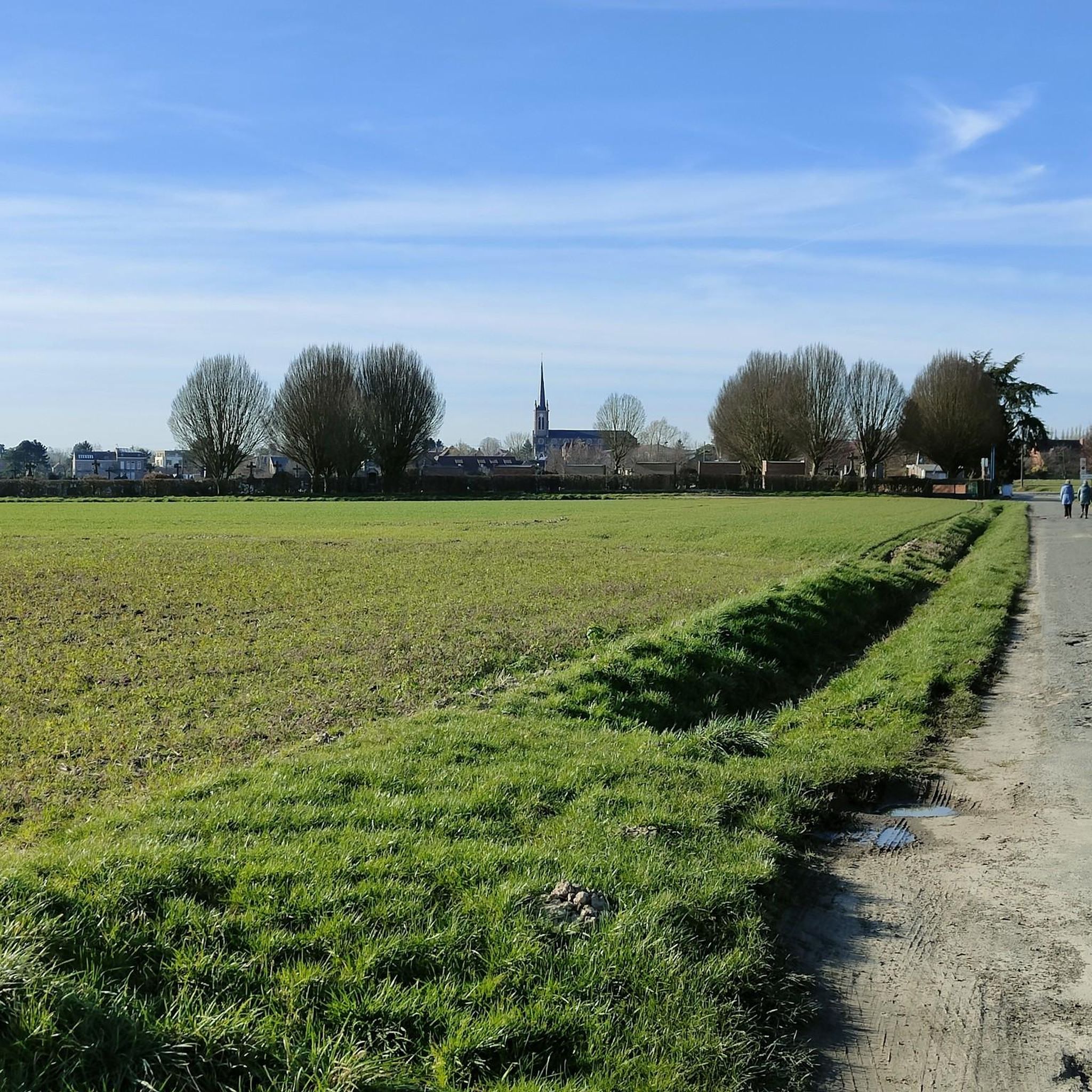
The current St. Martin's Church dates only from 1854 and was preceded by another, much smaller church on the same site. That first church belonged to the Knights Templar, who donated it to the parish after the Council of Vienne in 1530. In 1711, part of the ceiling collapsed during a mass, killing five people. Then, in 1800, a violent storm destroyed the already towering spire. Around 1849-1850, Abbot Pluchart, the parish priest, began construction of the current church with the help of architect Leroy, which was consecrated in 1854. Following the law introducing the separation of church and state in 1905, the building was inventoried and became state property. As elsewhere in France, the state entrusted the heritage to the municipality. In 1917, the local blacksmith, under orders from the "German Command," was called upon, along with three companions, to remove the two bells and hand them over to the Germans so they could be turned into German artillery pieces. In 1922, the bells, bearing the names Solange-Augustine and Martine, were returned. The church sustained little damage during the 1939-1945 war (bombings and storms), and a restoration followed immediately in 1947-1948 (a stained-glass window above the portico and some stone repairs). In 1949-1950, the municipality gave the building its current appearance by removing the very narrow staircase made of Soignies stone and the protective fencing from the garden. Finally, in November 1977, the collapse of several vaults in the choir prompted the municipality to investigate and renovate the entire nave, repair, reinforce, or replace several pointed arches, and completely repaint the interior. Source: www.willems.fr
2
0
The town hall of Saillez-lez-Lannoy once housed the girls' school. The first girls' school was founded in 1854 by the Sisters of the Childhood of Jesus. Until 1886, the school functioned very well and gained a certain reputation, but the academic inspectorate became increasingly strict regarding the secular nature of schools... which forced the municipal authorities to secularize this school in 1903. The school was located in part of the current town hall, with two classrooms: one for younger children and one for older children. Children began school at the age of five and often left at fourteen to go to work. In the older classroom, the students were divided into four groups, each under the responsibility of a single teacher. The headmistress lived in the house next to the school, which now houses the mayor's office. The schoolyard was fenced and shaded by lime trees. Source: musee-virtuel-de-sailly.fr/lecole-des-filles
2
0
The church was accessible when I visited. If you're not, you can take a virtual tour of the interior at: http://musee-virtuel-de-sailly.fr/galerie-visite-de-leglise-saint-pierre/
2
0
Saint Peter's Church in Sailly-lez-Lannoy was built at the end of the 18th century (the plans date back to 1788) to replace an earlier church from the 15th century (a baptismal font from 1535 stands at the entrance) that had been plundered by beggars in 1566. Thanks to extensive embellishment work between 1850 and 1900, the church now boasts a magnificent Way of the Cross (restored in 1930), the pulpit of truth, and stained-glass windows depicting the life of Saint Peter. Source: musee-virtuel-de-sailly.fr
2
0
The former town hall also served as a boys' school with one classroom. There was no girls' school until 1856. Source: saillylezlannoy.fr
2
0
The Church of St. John the Baptist in Forest-sur-Marque is a Neo-Romanesque building from the late 19th century (circa 1870). It replaced the dilapidated church from 1617.
2
0
Frequently Asked Questions
How many hiking trails are available around Sailly-Lez-Lannoy?
There are over 500 hiking routes available around Sailly-Lez-Lannoy, offering a wide variety of experiences for all skill levels. The komoot community has explored these trails over 10,000 times, providing valuable insights and ratings.
What kind of terrain can I expect when hiking near Sailly-Lez-Lannoy?
The terrain around Sailly-Lez-Lannoy is quite diverse. You'll find unique 'terrils' (rehabilitated coal mining slag heaps) that offer elevated paths and panoramic views. There are also tranquil canal towpaths, such as the La Marque Canal Towpath and the Espierres Canal, providing flat routes. Additionally, the nearby Scarpe-Escaut Regional Nature Park features forests, wetlands, and agricultural lands.
What do other hikers say about the trails in Sailly-Lez-Lannoy?
The trails in Sailly-Lez-Lannoy are highly rated by the komoot community, with an average score of 4.4 stars from over 1,500 reviews. Hikers often praise the varied landscapes, from the unique terrils to the peaceful canal paths and the natural beauty of the regional park.
Are there any unique natural features or landmarks to see while hiking?
Yes, the region is known for its unique 'terrils' (slag heaps) which are now green spaces offering great views. You can also explore the diverse ecosystems of the Scarpe-Escaut Regional Nature Park. Notable natural highlights include Heron Lake and the Vert Bois de Blandain forest.
Can I find trails that follow waterways or canals?
Absolutely. The area is well-served by canal towpaths, offering pleasant and relatively flat routes. You can enjoy walks along the La Marque Canal Towpath and the Espierres Canal, which even connects into Belgium and the Roubaix Canal.
Are there easy hiking options suitable for beginners or casual walkers?
Yes, Sailly-Lez-Lannoy offers nearly 300 easy hiking routes. These trails are generally shorter and have minimal elevation gain, making them perfect for a relaxed stroll or for those new to hiking. An example is the Heron Lake – Path to Lac du Héron loop from Forest-sur-Marque, which is an easy 4 km path.
Are there more challenging hikes for experienced hikers?
While the region is generally known for its moderate terrain, there are about 11 routes classified as difficult. These trails might involve longer distances or slightly more varied elevation, providing a greater challenge for experienced hikers looking to push themselves.
Are there any circular hiking routes available?
Yes, many of the trails around Sailly-Lez-Lannoy are designed as loops, allowing you to start and end at the same point. For instance, the popular Bonniers Loop Trail is a moderate 14.5 km circular route.
Is the area suitable for family-friendly walks?
Yes, the region offers many family-friendly options, especially the easy and moderate trails. The flat canal towpaths and the well-maintained paths in parks like the 6 Bonniers Park are ideal for walks with children. The diverse landscapes also provide interesting sights for younger explorers.
Can I bring my dog on the hiking trails?
Most trails in the region are dog-friendly, but it's always recommended to keep your dog on a leash, especially in nature reserves or agricultural areas, to protect local wildlife and livestock. Always check local signage for specific restrictions.
What is the best time of year to go hiking in Sailly-Lez-Lannoy?
Spring and autumn are generally considered the best times for hiking in Sailly-Lez-Lannoy. The weather is mild, and the natural landscapes, from the terrils to the forests, are particularly beautiful with blooming flowers or vibrant fall foliage. Summer can also be pleasant, but it's advisable to start early to avoid the midday heat.
Are there any historical or cultural sites near the hiking trails?
The region's history is deeply tied to its coal mining past, and the terrils themselves are a testament to this industrial heritage, now part of a UNESCO World Heritage site. You can also find sites like the Belgium–France Border on the Canal de Roubaix, which reflects the area's cross-border connections.
Most popular routes around Sailly-Lez-Lannoy
Most popular attractions around Sailly-Lez-Lannoy

Get inspired with the komoot mobile app


Explore more
Browse the best Hikes in other regions.
