The best traffic-free bike rides around Rocchetta Di Vara
4.4
(51)
624
riders
11
rides
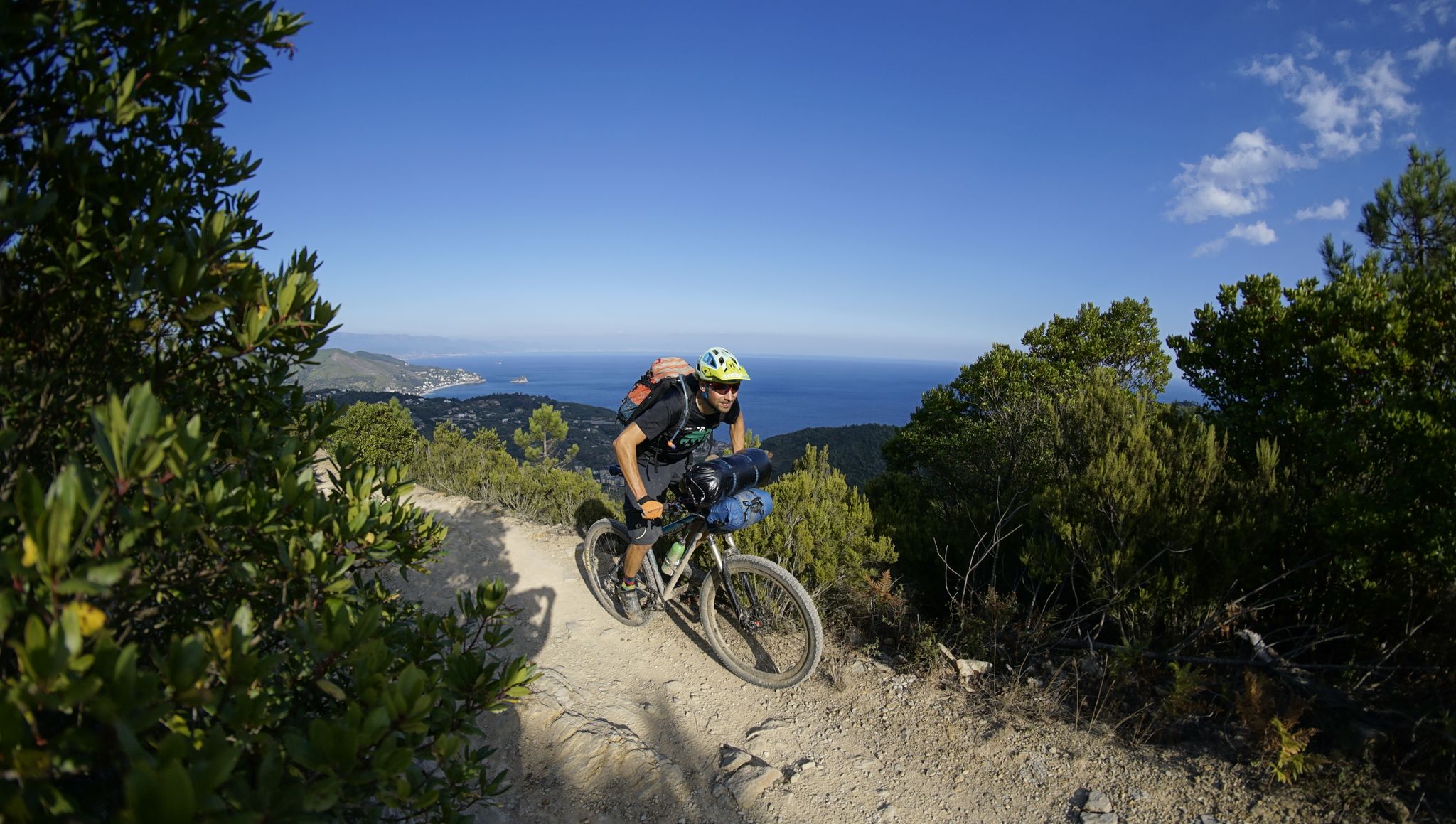
No traffic touring cycling routes around Rocchetta Di Vara traverse the mountainous terrain of Val di Vara, characterized by wide ridges and mixed deciduous forests. Touring cyclists encounter varied ascents and descents through picturesque scenery. The region offers glimpses of the Apuan Alps and distant views of the Ligurian Sea from elevated points. The Val di Vara is known for its pristine nature, providing a tranquil backdrop for rides.
Best no traffic touring cycling routes around Rocchetta Di Vara
- The…
Last updated: June 30, 2026
23
riders
40.5km
03:09
1,040m
1,040m
Hard bike ride. Very good fitness required. Mostly paved surfaces. Suitable for all skill levels.
5.0
(1)
14
riders
44.4km
04:37
1,240m
1,240m
Hard bike ride. Very good fitness required. Mostly paved surfaces. Suitable for all skill levels.

Sign up for free
11
riders
35.2km
03:23
870m
870m
Hard bike ride. Very good fitness required. Mostly paved surfaces. Suitable for all skill levels.
5.0
(3)
9
riders
45.3km
03:35
1,300m
1,300m
Hard bike ride. Very good fitness required. Mostly paved surfaces. Suitable for all skill levels.
5.0
(1)
6
riders
16.5km
01:21
510m
520m
Hard bike ride. Very good fitness required. Mostly paved surfaces. Suitable for all skill levels.
Get access to more routes and recommendations from other explorers.
Sign up for free
Already have an account?
Our route recommendations are based on thousands of hikes, rides, and runs completed by other people on komoot.
Start today with a free account
Your next adventure awaits.
Login or Signup


Other adventures around Rocchetta Di Vara

Tips from the Community

small village but very suggestive and picturesque to pass by bicycle
0
0

The name Calice al Cornoviglio combines two distinctive elements of the village: "Calice," of uncertain origin but perhaps derived from the Latin calix (cup), referring to the site's concave shape, and "Cornoviglio," the mountain (561 m) that overlooks the village and lends its name to the entire ridge. This toponym appears in medieval documents and recalls the village's ancient connection with the surrounding Apennine territory. Calice was long ruled by the Malaspina dello Spino Secco family, who built a strategic castle there, documented since the 11th century and modified several times over the centuries. Today, the fortress houses the Diocesan Museum of Sacred Art and the Chestnut Documentation Center, two testimonies to the profound intertwining of history, spirituality, and the territory's resources. A short distance away is the parish church of Santa Maria Lauretana, an elegant 18th-century Baroque building with exquisite decorations and a polychrome marble high altar. The village comes alive throughout the year with traditional events such as the Feast of Our Lady of Loreto (September), the Chestnut Festival (October) and various summer festivals, which highlight the historical and cultural roots of the place.
0
0
During the Second World War, the Pra Bon area, located in the mountainous territory of the Municipality of Zeri (Massa-Carrara), played a strategic role in the supply network organized by the Allies for the partisan formations active in the Ligurian-Tuscan-Emilian Apennines. The location, a high grassy expanse located near the Foce di Prabono, was used as a launch field for materials intended for the liberation struggle. Due to its isolated position, difficult to access by land but visible from the sky and large enough to receive airdrops, Pra Bon was ideal for this purpose. Allied aircraft — generally taking off from southern Italy or from bases in Corsica — carried out night airdrops of weapons, ammunition, food, medicines and radio equipment intended for the partisan detachments operating in the area. The materials were parachuted and collected on site by the partisan brigades, who then took care of their distribution and protection. The operations were not without risks. The area was subject to continuous roundups by Nazi-Fascist forces, aware of the logistical importance of those places. In particular, on August 3, 1944, near the nearby Monte Picchiara, a violent clash took place between partisan forces and German troops during one of these roundups. The toponym "Pra Bon" or "Pra Bono", which means "good meadow" in the local dialect, still evokes the memory of that period: from a place of transhumance and summer pasture, it was transformed for a few crucial months into a clandestine hub of the Resistance, a meeting point between the mountains of Lunigiana and the liberated skies.
0
0

Village historically linked to the tradition of transhumance The ancient village of Noce is one of the first villages you encounter when entering the Zeri Valleys. In ancient times, the village of Noce was completely rural, historically linked to the work of shepherds and with them to the beautiful tradition of transhumance towards the town of Formentara. This took place through the ancient road called "Trianara", recently restored. During the Second World War, the village of Noce suffered a terrible roundup, during which almost the entire village was burned down. Today, the current village is very different from the original, which in ancient times was built almost entirely of stone arches and vaults.
0
0
Here the dirt road runs along the ridge of the mountains between the Vara Valley and the Magra Valley
0
0
The Ponte della Cresa is a stone bridge built in the 14th century and despite the frequent flooding of the Verde river, it has maintained its original structure to this day. The bridge connects the new neighborhoods with the historic center. The bridge is located along the Verde river near Porta San Francesco. Under the arch of this bridge, on January 31, the characteristic fire of San Geminiano takes place. The Ponte della Cresa is considered by many to be the true symbol of the city of Pontremoli. It is also interesting to note that the name Pontremoli derives from the Latin 'Pons Tremulus', which means 'unsafe bridge'. This was a term used to describe the original conurbation of the city.
0
0
Entrance to Pontremoli from Porta San Francesco
0
0

Beautiful path along the river to enjoy nature and relax
0
0
Frequently Asked Questions
How many no-traffic touring cycling routes are available in Rocchetta Di Vara?
There are 12 dedicated no-traffic touring cycling routes around Rocchetta Di Vara, offering a variety of experiences through the region's diverse landscapes. These routes are carefully selected to provide a peaceful and scenic cycling adventure away from vehicular traffic.
Are there any easy or moderate no-traffic touring routes for beginners or families?
While many routes in Rocchetta Di Vara are challenging, there are a couple of moderate options suitable for those seeking a less strenuous ride. For example, the Water fountain at Madonna di Sanna – Path of Forgiveness loop from Follo is a moderate route that offers a pleasant experience. The region's focus on quiet paths makes it generally suitable for families looking for car-free environments, though the terrain can still be hilly.
What kind of landscapes can I expect on these no-traffic touring routes?
The no-traffic touring routes in Rocchetta Di Vara traverse a rich variety of landscapes. You'll cycle through the 'Green Valley' of Val di Vara, characterized by lush mixed deciduous forests, wide ridges, and expansive grasslands. Many routes offer stunning panoramic views, including glimpses of the Apuan Alps, the Ligurian Sea, and the entire Gulf of La Spezia from elevated points.
What are some notable attractions or points of interest along the no-traffic touring routes?
Along these quiet routes, you can discover several interesting points. You might encounter historical sites like the Malaspina Castle in Suvero or the Palazzo Vinciguerra in Rocchetta di Vara. Natural highlights include peaks like Monte Croce and Monte Albereto, or scenic spots like the Monte Cornoviglio (scenic road). The region also features religious buildings such as the Oratory of Santa Croce and the Sanctuary of Our Lady of Reggio.
Are there any loop routes available for no-traffic touring cycling?
Yes, several of the no-traffic touring routes are designed as loops, allowing you to start and end at the same point. Examples include the challenging Ponte della Cresa – Historic Center of Pontremoli loop from Zeri and the Poppy Flower Near Alpicella – Strada del Poggio Termine loop from Calice al Cornoviglio, providing a complete circular journey through the scenic Val di Vara.
What is the best season to enjoy no-traffic touring cycling in Rocchetta Di Vara?
The best seasons for no-traffic touring cycling in Rocchetta Di Vara are generally spring and autumn. During these times, the weather is typically mild, and the natural scenery, with blooming flowers or vibrant autumn foliage, is at its most beautiful. Summer can also be enjoyable, especially in the forested areas, but be prepared for warmer temperatures, particularly on exposed climbs.
What do other touring cyclists say about the no-traffic routes in Rocchetta Di Vara?
The no-traffic touring routes in Rocchetta Di Vara are highly regarded by the komoot community, with an average rating of 4.62 out of 5 stars. Cyclists frequently praise the tranquility of the Val di Vara, the stunning panoramic views, and the immersive experience of cycling through pristine natural environments away from cars.
Is parking available near the starting points of these no-traffic routes?
Given the rural nature of Rocchetta Di Vara and its surrounding villages, parking is generally available in or near the small towns and hamlets that serve as starting points for many routes. It's advisable to check specific village parking options, but you can usually find suitable spots in places like Zeri, Calice al Cornoviglio, or Follo.
Can I reach Rocchetta Di Vara by public transport with my bicycle?
While Rocchetta Di Vara is nestled in a more secluded area, public transport options exist to nearby larger towns. However, direct public transport to Rocchetta Di Vara that accommodates bicycles might be limited. It's recommended to research local bus services or regional trains to nearby hubs like La Spezia and then plan your final approach, potentially cycling the last leg or arranging a private transfer if carrying a bike.
Are there any cafes or places to eat along the no-traffic touring routes?
The no-traffic routes often pass through or near small villages and hamlets where you might find local trattorias, cafes, or small shops. These offer opportunities to refuel and experience local Ligurian hospitality. However, given the quiet nature of these routes, services might be sparse in some sections, so it's always a good idea to carry sufficient water and snacks.
Are the no-traffic touring routes suitable for advanced cyclists looking for a challenge?
Absolutely. Many of the no-traffic touring routes in Rocchetta Di Vara are classified as difficult, featuring significant elevation gains and descents through mountainous terrain. Routes like the Strada del Poggio Termine – Rastrello Pass loop from Zeri or the Rastrello Pass – Chapel of the Alpini loop from Zeri offer rewarding challenges with extensive climbs and breathtaking views, perfect for experienced touring cyclists.
Most popular routes around Rocchetta Di Vara
Most popular attractions around Rocchetta Di Vara

Get inspired with the komoot mobile app


Explore more
Browse the best Cycling routes in other regions.
