The best traffic-free bike rides in Massif De Thiescourt
10
riders
5
rides
No traffic gravel bike trails in Massif De Thiescourt traverse a landscape characterized by wooded hills and valleys within the Oise department of Hauts-de-France. The region features diverse ecosystems, including the massifs of Attiche and Thiéscourt, separated by the valleys of the Oise, Matz, and Divette. Waterways like La Broyette add to the natural beauty, providing serene passages along routes. This area offers a blend of challenging and picturesque routes suitable for gravel biking, often utilizing predominantly paved paths and…
Last updated: July 6, 2026
3
riders
53.0km
03:15
360m
360m
Moderate gravel ride. Good fitness required. Mostly paved surfaces. Suitable for all skill levels.
2
riders
40.4km
02:34
220m
220m
Moderate gravel ride. Good fitness required. Mostly paved surfaces. Suitable for all skill levels.

Sign up for free
2
riders
37.8km
02:26
400m
390m
Moderate gravel ride. Good fitness required. Mostly paved surfaces. Suitable for all skill levels.
1
riders
66.6km
04:18
400m
410m
Hard gravel ride. Good fitness required. You may need to push your bike for some segments of this route.
1
riders
Moderate gravel ride. Good fitness required. Mostly paved surfaces. Suitable for all skill levels.
Our route recommendations are based on thousands of hikes, rides, and runs completed by other people on komoot.
Start today with a free account
Your next adventure awaits.
Login or Signup
Popular around Massif De Thiescourt

Tips from the Community

charming village with a beautiful church and a very reputable old inn!
0
0

In the heart of the Compiègne forest, the Armistice Glade marks the place where the armistice was signed on November 11, 1918, and then that of June 22, 1940. The site today includes the memorial with the “Armistice Wagon” (recreated car), the statue of Marshal Foch and the Alsace-Lorraine monument.
0
0
Located along the canal in Longueil-Annel, the Cité des Bateliers (Watermen's City) showcases the history of boatmen and local river life. The museum, housed in a former boatman's house and barges, showcases the daily lives of families who lived by the rhythm of navigation.
0
0
Created in 1919, the Méry-la-Bataille national necropolis contains the remains of 1,538 soldiers who died for France during the Battle of Matz in June 1918. Adjacent to the municipal cemetery, it brings together the bodies exhumed from various temporary cemeteries in the Oise, of which 1,286 are buried in individual graves and 254 in two ossuaries. This memorial pays tribute to the soldiers who fell during one of the decisive offensives of the First World War, which helped halt the German advance towards Paris.
0
0

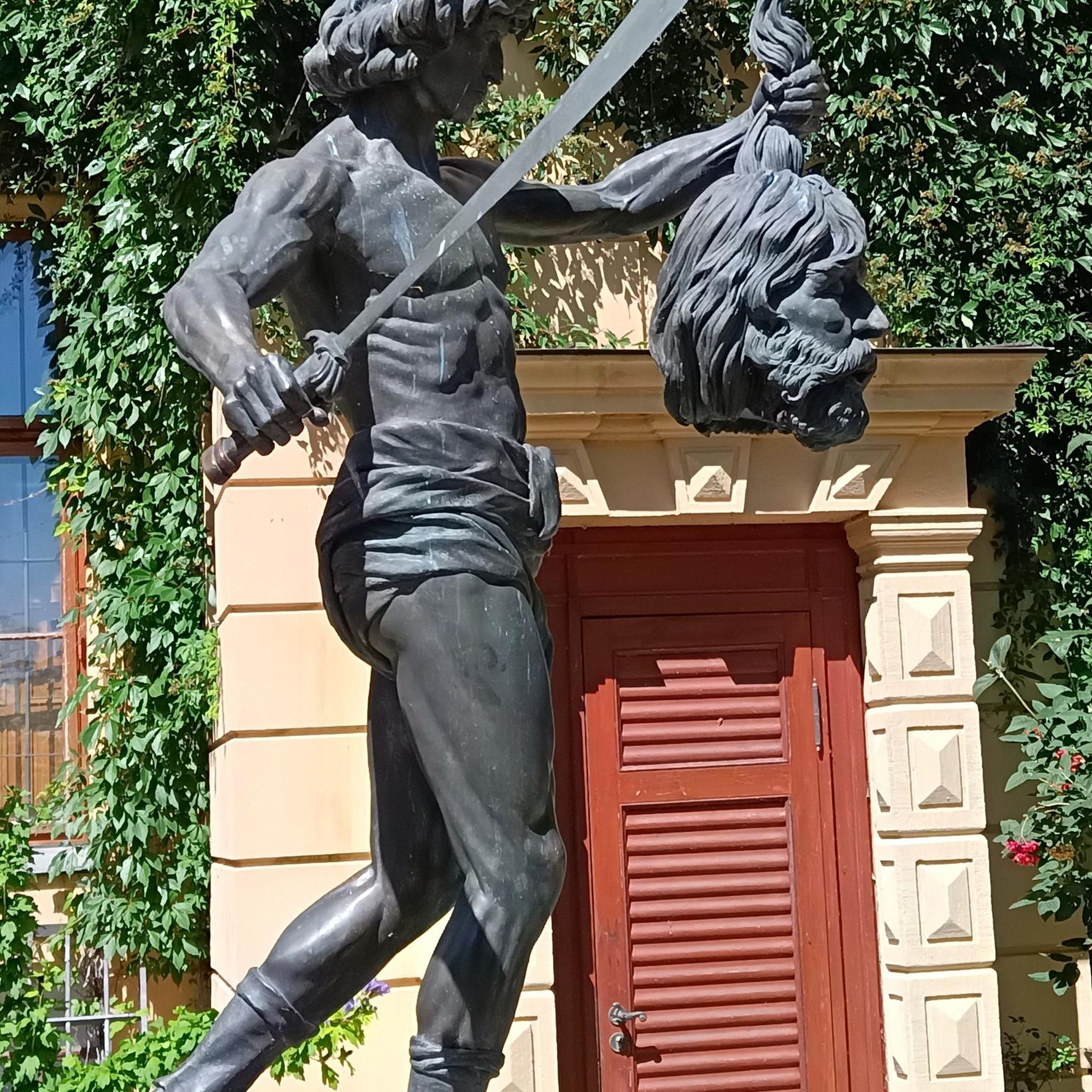
The square itself houses a statue of Joan of Arc, a tribute to the city's historical connection to this iconic figure. The Town Hall, with its rich history and stunning architecture, continues to captivate visitors, offering a glimpse into the past while remaining a vibrant part of Compiègne's present.
2
0
The architecture of the town hall is a true feast for the eyes. The central structure is dominated by a tall bell tower, flanked by two turrets connected by a decorative railing. This imposing façade, 47 meters high and 24 meters wide, is decorated with striking Gothic elements such as pinnacles and basket arches. The large niche now houses a high relief depicting the equestrian statue of Louis XII. It is an original creation from 1869 by the sculptor Henri-Alfred Jacquemart in the realistic style so prevalent at the time. However, contrary to the usual appearance of equestrian statues during the reign of Louis XII, Henri-Alfred Jacquemart chose not to build a horse walking "à l'amble," that is, with both straight legs raised simultaneously. On October 12, 1530, a clock was placed on the summit of the bell tower. From that time on, every quarter of an hour, she animated three wooden jaquemarts with bell hammers. The Compiègneis quickly gave them three nicknames corresponding to the enemies of the time: Langlois for the English, Flandrin for the Flemish, and Lansquenet for the Germans. Even today, they chant the life of the city by "punching the time," that is, by striking their hammer to strike the hours.
2
0

The Aisne is a river in northern France that rises in the Argonne massif and joins the Oise near Compiègne in the Oise department. The Aisne department is named after the river. The Romans already knew the river in ancient times as the Axona; in 57 BC, Caesar defeated a large Belgian coalition in the Battle of the Aisne during the Gallic War. Battles were also fought there during the First World War.
6
0
Frequently Asked Questions
How many no-traffic gravel bike trails are available in Massif De Thiescourt?
There are 5 dedicated no-traffic gravel bike trails listed in this guide for the Massif De Thiescourt region. These routes offer a range of distances and elevations to suit different preferences.
What is the typical difficulty level of no-traffic gravel bike trails in Massif De Thiescourt?
Most of the no-traffic gravel bike trails in Massif De Thiescourt are rated as 'moderate' difficulty, requiring good basic fitness. There is also one 'difficult' route for those seeking a greater challenge. For example, the Footbridge over the Aisne – Vieux-Moulin loop from Ribécourt is a moderate ride, while the Noyon to Compiègne – Tour de l'Oise gravel is considered difficult.
What kind of terrain can I expect on these no-traffic gravel trails?
The Massif De Thiescourt region is characterized by wooded hills and valleys, so you can expect a mix of forest paths, rural tracks, and predominantly paved sections. The routes often traverse diverse ecosystems, offering varied surfaces suitable for gravel biking.
Are there circular no-traffic gravel bike routes available?
Yes, many of the no-traffic gravel bike trails in Massif De Thiescourt are designed as loops. For instance, the Beaux Monts Viewpoint – Allée des Beaux-Monts loop from Longueil-Annel and Le lavoir – The Wash House loop from Lassigny are excellent examples of circular routes that bring you back to your starting point.
Where can I park when accessing no-traffic gravel bike trails?
Parking is generally available in or near the starting villages of the routes. For example, routes like the French Army Amx13 – Necropolis of Méry-la-Bataille loop from La Neuville-sur-Ressons typically have parking options in the nearby towns or designated trailheads. It's advisable to check specific route details for precise parking information.
What natural features or landmarks can I see along these routes?
The Massif De Thiescourt offers a rich blend of natural beauty and historical sites. You might encounter the scenic Montagne du Paradis with its views over the Matz valley, diverse flora and fauna in the massifs of Attiche and Thiéscourt, and serene waterways like La Broyette. Historical landmarks include military cemeteries, ancient stone quarries, and the ruins of Château Mennechet.
Are there family-friendly no-traffic gravel bike trails in the Massif De Thiescourt?
While most routes require good basic fitness, the 'moderate' difficulty trails can be suitable for families with older children who are comfortable with longer distances and some elevation. The car-free nature of these trails makes them safer for family outings. Always check the distance and elevation profile of a specific route to ensure it matches your family's capabilities.
Are dogs allowed on the no-traffic gravel bike trails?
Generally, dogs are allowed on trails in the Massif De Thiescourt, especially in forested and rural areas, provided they are kept under control, preferably on a leash, and owners clean up after them. It's always best to respect local signage and regulations, particularly in nature reserves or protected areas.
When is the best time of year to ride no-traffic gravel trails in Massif De Thiescourt?
Spring and autumn are often ideal for gravel biking in Massif De Thiescourt, offering pleasant temperatures and beautiful scenery with changing foliage. Summer can also be enjoyable, especially in the shaded forest sections, but be prepared for warmer weather. Winter riding is possible, but trails might be muddy or icy, so check conditions beforehand.
Can I reach the no-traffic gravel bike trails by public transport?
While the Massif De Thiescourt is primarily accessed by car, some larger towns in the vicinity, such as Compiègne or Noyon, have train stations. From there, you might need to cycle to the trailheads or use local bus services if they accommodate bikes. For more detailed information on public transport options in the Oise department, you can consult resources like Conseil Départemental de l'Oise.
Are there cafes or restaurants near the no-traffic gravel bike trails?
The routes often pass through or near charming villages where you can find local cafes, bakeries, or small restaurants to refuel. It's a good idea to plan your stops in advance, especially on longer routes, as services might be sparse in the more remote forest sections. Towns like Thiescourt or Élincourt-Sainte-Marguerite offer options.
What makes the Massif De Thiescourt ideal for no-traffic gravel biking?
The Massif De Thiescourt is renowned for its extensive network of quiet forest roads and rural paths, making it perfect for no-traffic gravel biking. Its 'Petite Suisse' picarde landscape, with rolling valleys and dense forests, provides a serene and picturesque environment away from busy roads, allowing for a truly immersive outdoor experience.
Most popular routes in Massif De Thiescourt

Get inspired with the komoot mobile app


Explore more
Browse the best Gravel rides in other regions.
