Top 20 Natural Monuments in Serbia
Natural monuments in Serbia offer diverse geological formations and landscapes across the country. The terrain includes deep river canyons, unique rock formations, and extensive cave systems. These sites preserve significant natural heritage, showcasing Serbia's varied ecosystems and geological history. The country's natural monuments provide opportunities for exploring different types of outdoor environments.
Best natural monuments in Serbia
- The most popular natural monuments is Beli Majdan (White Quarry) — Rakovac Cave, a cave where granite stone was quarried, forming a unique complex with 4-meter-high galleries. This site was historically used as a hideout during wartime.
- Another must-see spot is Midžor – Highest Peak of Serbia, a summit offering views from the highest point in Serbia. This peak is a notable destination for those seeking elevated perspectives.
- Visitors also love Avala Tower, a man-made monument and viewpoint. It provides 360-degree views stretching for many kilometers, serving as a mountain escape for Belgrade residents.
- Serbia is known for its diverse natural monuments, including deep canyons like Uvac, unique rock formations such as Đavolja Varoš, and extensive cave systems like Resavska Cave. These sites offer a variety of natural features to see and explore.
- The natural monuments in Serbia are appreciated by the komoot community, with 88 highlights, including 37 photos and 49 upvotes from visitors.
Last updated: July 7, 2026
Beli Majdan (White Quarry) — Rakovac Cave
Highlight • Cave
During World War II, the "Beli Majdan" cave was used as a common hideout for the local population of the village of Rakovac and workers of the Rakovac quarry during raids organized by the occupiers.
This was also the case during the Great Enemy Offensive on Fruška Gora on August 28, 1942. Those who hid in the „Beli Majdan“ remained safe, whereas 58 workers from the Rakovac quarry were arrested.
The director of the Rakovac quarry, Ing. Josip Suić, intervened and managed to liberate 32 workers, but the rest were sent to the internment camp in Sremska Mitrovica, where most of them were killed.
[This site is part of the Liberation Routes Hiking Tour "The Liberation Walk" (6km)]
Tour: komoot.com/tour/1881448190?share_token=aQX2irH9OHv16zbghqkWFCaaumiVA4C634I6ri4nXXDKLs8eSK&ref=wtd
Tip by

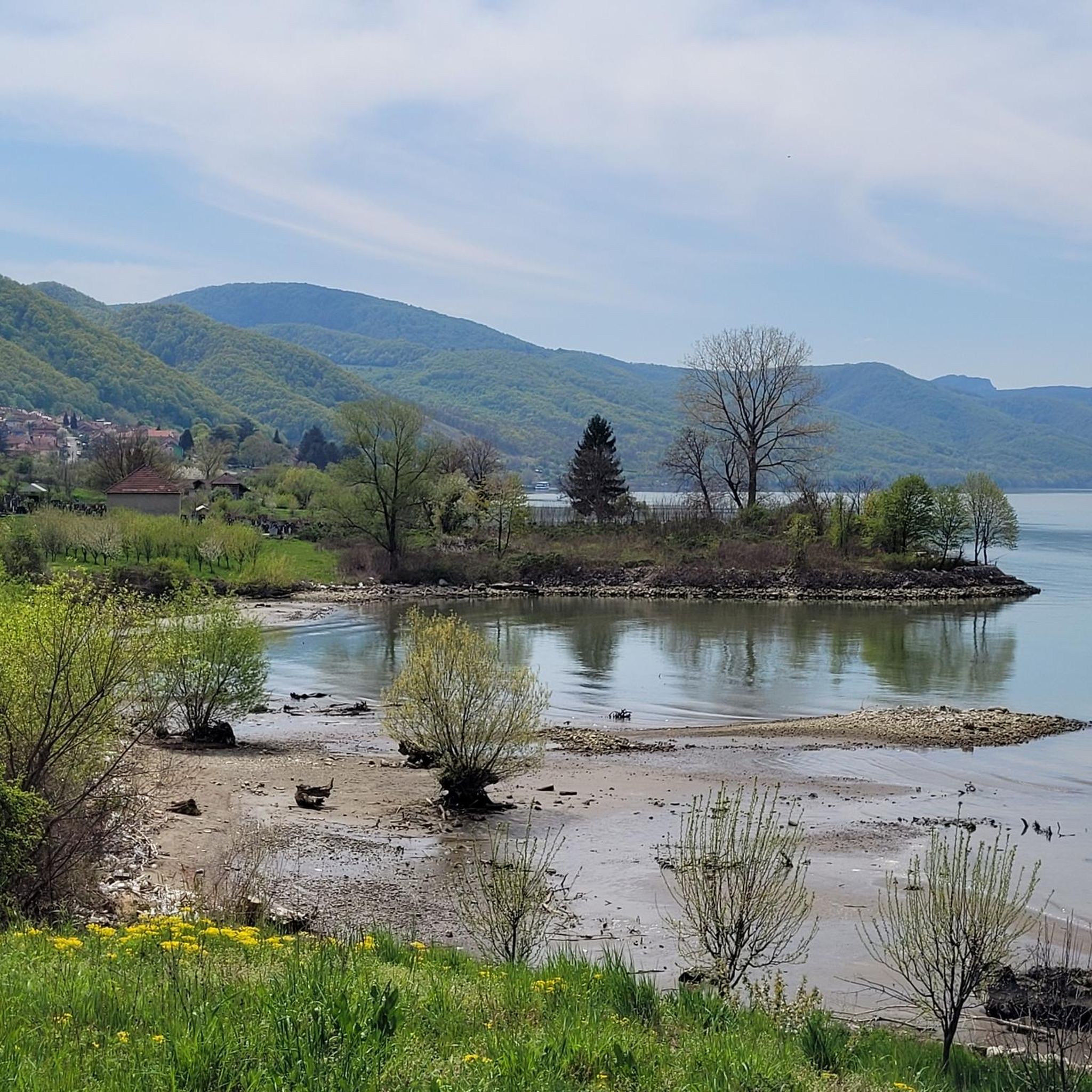
Danube Gorge Between Donji Milanovac and Tekija
Highlight • Gorge
While on the Romanian side the mass tourism prevails and high traffic, it is quiet on the Serbian side, contemplative often shady, little traffic and you drive through a beautiful nature and only occasionally appear between Donji Milanovac and Tekija a few houses.
AS A CYCLIST THE SERBIAN PAGE IS THE ABSOLUT BETTER ALTERNATIVE !!!
The so-called Danube Gorge at the Iron Gate is a gorge between the Serbian fortress Golubac and the town of Kladovo, where the Danube sought an adventurous path through the foothills of the Carpathians and today forms the border between Serbia and Romania. Over more than 100 kilometers, the Danube flows through densely wooded mountains. Sometimes it lies almost casually, expands to the width of a lake and gives the view of deep green forests. Then again she squeezes through narrow ravines with up to 300 meters high rock walls. At its narrowest point near the town Tekija, it is just 150 meters wide, but eerie 90 meters deep. Here is located on the Romanian side, the monastery Mraconia.
Among sailors this passage was once regarded as perilous, because the Danube in the Iron Gate often rolled wildly in her bed. At the end of the 19th century, the river began to be tamed. First, through the regulation of rapids and over the past 50 years by hydroelectric power plants and their associated barrages.
Translated by Google •
Tip by

Sign up now to discover places like this
Get recommendations on the best single tracks, peaks, & plenty of other exciting outdoor places.
Sign up for free
Belgrade Fortress (Kalemegdan)
Highlight • Castle
With its universities, colleges and scientific institutions, Belgrade is the educational centre and, with numerous publishing houses, radio and television stations as well as daily and monthly newspapers, it is also the dominant media centre in the country. Belgrade is the seat of the Serbian Orthodox Church and the residence of the Serbian Patriarch. The largest Christian church on the Balkan Peninsula, the Cathedral of Saint Sava, is in Belgrade.
Due to Yugoslavia's rejection of Soviet hegemony and Stalinism and as a meeting place for the Non-Aligned Movement, Belgrade became an international political centre during the time of communist Yugoslavia. During the period of socialist Yugoslavia, Belgrade developed into a European metropolis. In the major urban development project Novi Beograd, which was to become the representative center of socialist Yugoslavia, aspects of increasing densification were combined with strong impulses for the economic and cultural dynamism of the city after the fall of the Berlin Wall. The Sava Congress Center, built here between 1977 and 1979, is the largest congress center in all the Balkan countries, and the Štark Arena, built between 1991 and 2004, is one of the largest sports halls in the world. The Belgrade Waterfront urban renewal project, estimated to last 30 years on the demolished site of the old "Beograd" train station, brought the city its most profound change since the Second World War.
After the collapse of the Second Yugoslavia in 1991, Belgrade became the capital of the newly formed Federal Republic of Yugoslavia, which led to political and social uncertainty in Serbia. This was evident in the unrest on March 9, 1991, and in mass demonstrations in 1996/1997. The late 1990s were marked by the suppression of civil protests and the suppression and liquidation of opposition politicians during the regime of Slobodan Milošević. War-related shortages and an economic embargo gave rise to a black market and war profiteering. This also led to a new economic class, the Serbian oligarchs, also known as the Taikune. The years of crisis culminated in the Kosovo War with Operation Allied Force, which began on March 24, 1999: NATO began its 78-day air raids against the Federal Republic of Yugoslavia, which hit the inner city of Belgrade particularly hard. During the heaviest bombardment of the city in the night between May 7 and 8, the Chinese embassy was completely destroyed, among other things. This led to a serious crisis in the relationship between the major powers of the United States and the People's Republic of China, and NATO was forced to refrain from any further bombings in the inner city of Belgrade for the rest of the bombings.[92] In some places in the cityscape, war ruins can still be seen that have neither been demolished nor rebuilt.
Translated by Google •
Tip by

Kajmakčalan Observation Post Memorial
Highlight • Monument
Tip by

Midžor – Highest Peak of Serbia
Highlight • Summit
Translated by Google •
Tip by

Dumbovački Waterfall
Highlight • Waterfall
Tip by

Avala Tower
Highlight • Monument
Next to it is the TV transmission tower with sight seeing cupola at 125m height.
Playground and sports courts are available free of charge next to the tower.
Fun for whole family.
Explore and respect.
Thanks
Tip by

Boletinska Reka Gorge
Highlight • Gorge
In the Cretaceous sediments, fossils of new ammonite species and fossils of rays were found. First, it goes on a byway long downhill before the gorge in front of me
lies. Since the gorge is very narrow, I am at least in the shade here.
The small creek bed is however dried out at this time of the year. I take a break and take a look at the rock formations with the individual sediments. Unfortunately, I do not find fossils. After about 2 hours I'm on my way again.
The way back to the main road is not as long as the way to the gorge, but much steeper. I'm bathing in sweat at the top and am happy today only a short distance to drive. First, but it goes on uphill in brooding heat without shadows.
But even this torture is worthwhile. You always have a wonderful view of the Danube.
Translated by Google •
Tip by
Šiljak Peak (Rtanj)
Highlight • Summit
Tip by
View of the Rock Sculpture of Decebalus and the Danube
Highlight • Viewpoint
Translated by Google •
Tip by

Sign up for free to discover even more natural monuments in Serbia.
Sign up for free
Already have an account?
Start today with a free account
Your next adventure awaits.
Login or Signup
Popular around Serbia
Transcontinental Race No10: crossing Europe from France to Turkey
TCR No. 8 — racing across Europe
5 days of gravel adventure in Serbia — Serbia Upside Down
Running Trails in Serbia
Hiking in Serbia
Road Cycling Routes in Serbia
Cycling in Serbia
MTB Trails in Serbia

Gravel biking in Serbia

Mountain Hikes in Serbia


Tips from the Community

You can spend a lot of time here. There are wonderful views of the Danube and the city, and it's free.
0
0

It is slippery and quite dangerous during the rain and after. It was very hard to climb the rock next to the waterfall when it was wet, and there are steep hills on the routes to the waterfall. Be careful.
0
0

The 55 m high statue of the Dacian king Decebalus has unfortunately not been completed to this day.
0
0

Here lie smaller gorges separated by the Dubova Gulf. Their names date back to the Ottoman Empire, when the Danube waters were swift and full of whirlpools resembling a "pot." In Mali Kazan, the Danube is at its narrowest (150-180 m) and deepest. The steep flanks of Mt. Miro, formed from Jurassic limestone, rise above the Danube. The highest peaks, Veliki Strbac (768 m) and Mali Strbac (626 m), are already integrated into the hiking trail as viewpoints towards Mali Kazan and Veliki Kazan, respectively. The Hajducka Vodenica archaeological site and the submerged karst spring of the same name are located at the foot of the hill. Before the construction of the dam in the Djerdap area, traces of prehistoric necropolises and settlements from the Roman and medieval periods were discovered at this site.
0
0
The statue of the Dacian king Decebalus is a 55-meter-tall statue and the tallest rock sculpture in Europe. It is located on a rock formation in the Almăj Mountains on the banks of the Danube near the village of Dubova, southwest of the city of Orșova (Romania), in the Iron Gates Nature Park. Source: https://de.wikipedia.org/wiki/Statue_des_Decebalus
0
0

"Beli Majdan" (which means "White Quarry"), also known as the Rakovac Cave, is a stone quarry where granite stone was likely dug, probably since the Middle Ages, and used as building blocks for the nearby Rakovac Monastery, houses in the Rakovac village, as well as for tombstones at the local graveyard. By digging out granite blocks, a unique cave complex was formed, with 4-meter-high galleries supported by stone pillars. During World War II, the "Beli Majdan" cave was used as a common hideout for the local population of the village of Rakovac and workers of the Rakovac quarry during raids organized by the occupiers. This was also the case during the Great Enemy Offensive on Fruška Gora on August 28, 1942. Those who hid in the „Beli Majdan“ remained safe, whereas 58 workers from the Rakovac quarry were arrested. The director of the Rakovac quarry, Ing. Josip Suić, intervened and managed to liberate 32 workers, but the rest were sent to the internment camp in Sremska Mitrovica, where most of them were killed. [This site is part of the Liberation Routes Hiking Tour "The Liberation Walk" (6km)] Tour: https://www.komoot.com/tour/1881448190?share_token=aQX2irH9OHv16zbghqkWFCaaumiVA4C634I6ri4nXXDKLs8eSK&ref=wtd
1
0

If you want to enjoy the mountains, consider this scenic route for your Saturday or Sunday walk. Remember sunglasses because more than half the road will be without trees.
0
0

Once you get into the park, the ride is quite nice up and down. The road has been recently paved and it lightly travelled.
0
0
Frequently Asked Questions
What are some of the most unique geological features found among Serbia's natural monuments?
Serbia is home to remarkable geological formations. The Uvac Canyon is famous for its dramatic serpentine meanders carved by the Uvac River. Another unique site is Đavolja Varoš (Devil's Town), featuring over 200 'earth pyramids' formed by erosion. The Vratna Gates present a series of impressive natural stone bridges, considered the largest in Europe, remnants of ancient cave systems.
Are there any family-friendly natural monuments in Serbia?
Yes, several natural monuments in Serbia are suitable for families. The Avala Tower offers 360-degree views and has a playground and sports courts at the top. The Belgrade Fortress (Kalemegdan), while also a historical site, provides scenic views and open spaces for families. The area around Krupajsko Vrelo (Krupaj Spring) is also a peaceful retreat with tranquil pools and a waterfall, suitable for a relaxed family visit.
What kind of wildlife can I expect to see at Serbia's natural monuments?
The Uvac Special Nature Reserve is a vital habitat for the griffon vulture, a rare and majestic bird with a wingspan of up to 3 meters, making it one of Europe's best places to observe these scavengers. The Vratna Gates area is also rich in flora and fauna, including deer, mouflons, and numerous bird species.
What are the best natural monuments to visit in Eastern Serbia?
Eastern Serbia offers several impressive natural monuments. Krupajsko Vrelo (Krupaj Spring) is a captivating karst spring with crystal-clear turquoise water. Resavska Cave is one of Serbia's oldest and most significant explored caves, featuring diverse and colorful speleothems. The Vratna Gates, a series of natural stone bridges, are also located in Eastern Serbia.
What are the hiking conditions like at natural monuments in Serbia?
Hiking conditions vary significantly. For instance, the trail to Dumbovački Waterfall is described as very challenging, with steep hills, slippery sections, and requiring sturdy footwear. In contrast, the Midžor – Highest Peak of Serbia offers elevated perspectives but can be cold and windy at the top, requiring warm clothes. Trails at Šiljak Peak (Rtanj) are rocky and lack water sources, so preparation is key. Always check specific trail conditions before heading out.
Are there any natural monuments with historical significance?
Yes, some natural monuments also hold historical importance. Beli Majdan (White Quarry) — Rakovac Cave is a former granite quarry that served as a hideout during World War II. The Belgrade Fortress (Kalemegdan), while a fortress, is also considered a natural monument due to its location and views, and has a rich history dating back centuries.
What outdoor activities can I do near Serbia's natural monuments?
Beyond exploring the monuments themselves, you can find various outdoor activities. For hiking, there are routes like the 'View of Lake Perućac – Banjska Stena Viewpoint loop' near Tara National Park. Cycling enthusiasts can explore routes such as the 'Ada Bridge Descent – Ada Ciganlija Lake loop' for road cycling or the 'Tennis Guy Coffee Stop – Beočin–Futog Ferry Crossing loop' for touring. You can find more details on these activities in the Hiking in Serbia, Road Cycling Routes in Serbia, and Cycling in Serbia guides.
What should I pack when visiting natural wonders in Serbia?
Packing essentials depend on the specific site and activity. For challenging hikes like Dumbovački Waterfall, sturdy, waterproof shoes and bug spray are recommended. When visiting Šiljak Peak (Rtanj), bring plenty of water and warm, spare clothes due to potential cold and wind. Generally, layers, sun protection, and sufficient water are advisable for most outdoor excursions.
Are there any natural monuments that offer panoramic views?
Absolutely. The Avala Tower provides expansive 360-degree views. Midžor – Highest Peak of Serbia offers elevated perspectives from the highest point in Serbia. Additionally, the View of the Rock Sculpture of Decebalus and the Danube and the View of the Iron Gates Gorge on the Danube provide wonderful river and gorge vistas.
What is the best way to experience the Uvac Canyon?
The Uvac Canyon is best experienced through hiking or boat tours. The Molitva Viewpoint offers iconic panoramic views of the serpentine meanders. Boat tours often include visits to the impressive cave systems, such as the Usak Cave system, which includes the Ice Cave (Ledena Pećina) with its stunning speleothems.
Can I find amenities like cafes or accommodation near these natural monuments?
While specific amenities vary by location, popular natural monuments often have facilities nearby. For example, the Avala Tower area has cafes and restaurants. For more remote sites, it's advisable to check in advance or bring your own provisions. Larger towns and cities in the region will offer a wider range of accommodation and dining options.
Most popular routes in Serbia
Most popular attractions in Serbia

Get inspired with the komoot mobile app


Didn’t find what you were looking for?
Find even more amazing natural monuments in Serbia by checking out the top Highlights region by region:
Explore more
Extend your search for the best caves by checking out these guides of the top ones in Serbia:
