Top 3 Caves around Burgwallbacher Forst
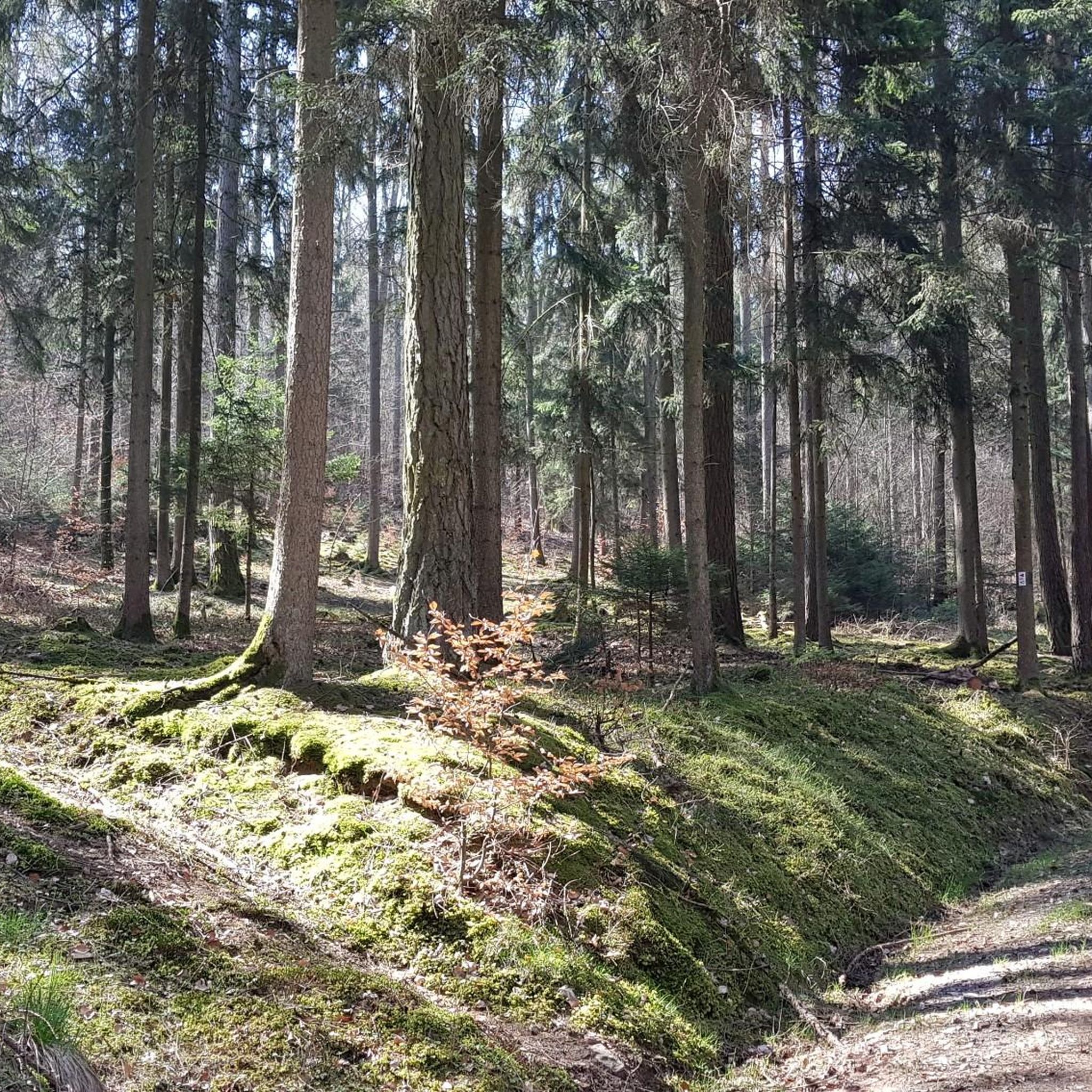
Best caves around Burgwallbacher Forst are found in a 16.18 km² uninhabited, completely wooded area in the Rhön-Grabfeld district of Bavaria, Germany. The region is primarily known for its natural scenery and hiking routes. While the Burgwallbacher Forst itself does not contain extensive natural cave systems, the surrounding area offers a variety of subterranean and grotto-like formations. These include natural rock shelters, historical mining tunnels, and man-made grottoes.
Best caves around Burgwallbacher Forst
- The most popular caves is Teufelskeller (Devil’s…
Last updated: August 22, 2026
Teufelskeller (Devil’s Cellar)
Highlight • Cave
Translated by Google •
Tip by

Marian Grotto
Highlight • Religious Site
Translated by Google •
Tip by

Sign up now to discover places like this
Get recommendations on the best single tracks, peaks, & plenty of other exciting outdoor places.
Sign up for free
Moritz Visitor Mine (Lignite Tunnel)
Highlight • Historical Site
Translated by Google •
Tip by

Marian Grotto Schönau
Highlight • Religious Site
Translated by Google •
Tip by

Öschicher Wichtelhöhle
Highlight • Cave
Translated by Google •
Tip by
Start today with a free account
Your next adventure awaits.
Login or Signup
Popular around Burgwallbacher Forst


Tips from the Community

Lovingly designed grotto, surprisingly embedded in the landscape and offering visitors a contemplative stopover.
3
0

When you arrive at this place, you're immediately impressed because you didn't expect it to be like this. It's definitely worth seeing.
3
0

A truly worth seeing gnome cave, many don't even know it...
0
0

Located directly on the road, this small settlement of Wichtel
0
0


Beautiful windy grotto just outside of Schönau.
0
0
Mariengrotte is a shady resting place in summer
7
0

The Mariengrotte is located at the beginning of the Way of the Cross through the forest. Many benches invite you to linger.
1
0
Frequently Asked Questions
Are there natural caves within the Burgwallbacher Forst itself?
The Burgwallbacher Forst is primarily a densely wooded area known for its natural scenery and hiking routes. While the broader region of Bavaria has many impressive cave systems, there are no widely recognized or publicly documented notable natural caves directly within the Burgwallbacher Forst boundaries. The guide focuses on subterranean formations, rock shelters, historical mining tunnels, and grottoes found in the surrounding area.
What types of subterranean sites can I explore near Burgwallbacher Forst?
Near Burgwallbacher Forst, you can explore a mix of natural rock formations, historical mining tunnels, and religious grottoes. These include natural monuments like Teufelskeller (Devil’s Cellar), historical sites such as Moritz Visitor Mine (Lignite Tunnel), and man-made grottoes like Marian Grotto Schönau.
Are there family-friendly cave experiences around Burgwallbacher Forst?
Yes, several sites are suitable for families. The Moritz Visitor Mine (Lignite Tunnel) offers insights into the region's history and geology in an accessible way. The Marian Grotto Schönau and Öschicher Wichtelhöhle are also considered family-friendly, offering unique points of interest for all ages.
What historical sites related to caves can I visit?
The Moritz Visitor Mine (Lignite Tunnel) is a significant historical site. It provides a glimpse into the geology and the past life and work of miners in the region, offering an educational experience about the area's industrial heritage.
What are the geological features of the caves in this area?
The region around Burgwallbacher Forst features diverse geological formations. Sites like Teufelskeller (Devil’s Cellar) are natural rock shelters, often formed in basalt, within the biosphere reserve. The Moritz Visitor Mine (Lignite Tunnel), while man-made, showcases the geological layers and resources of the area, specifically lignite deposits.
What outdoor activities can I do near these caves?
The area around Burgwallbacher Forst is excellent for various outdoor activities. You can find numerous routes for road cycling, general cycling, and gravel biking. For example, explore the 'Schönau–Wegfurt cycle path' for cycling or 'Saale Cycle Path' for gravel biking. You can find more details on these activities in the Road Cycling Routes around Burgwallbacher Forst, Cycling around Burgwallbacher Forst, and Gravel biking around Burgwallbacher Forst guides.
Is caving or climbing permitted at these sites?
At Teufelskeller (Devil’s Cellar), climbing is explicitly forbidden to protect nature and ensure visitor safety. For other sites, especially historical mines or grottoes, access is typically regulated, and entering unauthorized areas or attempting caving without proper guidance and equipment is not advised. Always observe local signage and regulations.
What do visitors enjoy most about the caves and grottoes in this region?
Visitors appreciate the unique blend of natural beauty, historical insight, and cultural significance. The Teufelskeller (Devil’s Cellar) is praised as an 'absolute natural highlight,' while the Moritz Visitor Mine (Lignite Tunnel) offers a fascinating look into the past. The Marian Grotto Schönau is noted for its beautiful setting and peaceful atmosphere. The komoot community has shared over 400 photos and given more than 600 upvotes to these sites.
Are there any hidden or lesser-known caves to explore?
The Öschicher Wichtelhöhle is described as a 'truly worth seeing gnome cave' that 'many don't even know.' It's a smaller, perhaps less frequented, but charming spot located directly on the road, offering a unique discovery for those seeking something off the main path.
Do I need a permit for visiting these cave sites?
Generally, permits are not required for visiting the publicly accessible highlights mentioned, such as Teufelskeller (Devil’s Cellar), Moritz Visitor Mine (Lignite Tunnel), or the Marian Grottoes. However, always respect local regulations, especially in nature reserves, and adhere to any posted rules regarding access or activities.
Can I bring my dog to the cave trails?
While the specific cave interiors might have restrictions, many of the surrounding trails and natural areas are dog-friendly. For instance, the nature trail around the Bauersberg near the Moritz Visitor Mine (Lignite Tunnel) is suitable for walks. Always keep dogs on a leash, especially in nature reserves like the Gangolfsberg, and clean up after them to protect the environment and other visitors.
Most popular routes around Burgwallbacher Forst
Most popular attractions around Burgwallbacher Forst

Get inspired with the komoot mobile app


Explore more
Extend your search for the best caves by checking out these guides of the top ones around Burgwallbacher Forst:
