Top 7 Castles around Montieri
Best castles around Montieri are found in a historic town nestled in Tuscany's Metalliferous Hills, boasting a rich medieval past. The area offers insights into its fortified history, centered around the town itself and the notable Castle of Fosini. Montieri functioned as a medieval mining castle, built around 900 AD, retaining much of its medieval character. The region provides a blend of cultural and historical interest for visitors.
Best castles around Montieri
- The most popular castles is Massa Marittima Historic…
Last updated: May 18, 2026
Massa Marittima Historic Center
Highlight • Historical Site
Translated by Google •
Tip by

Montemassi Castle
Highlight • Castle
Translated by Google •
Tip by

Sign up now to discover places like this
Get recommendations on the best single tracks, peaks, & plenty of other exciting outdoor places.
Sign up for free
Tatti Village
Highlight (Segment) • Settlement
The village is on a hill. The green hills of Maremma …
Translated by Google •
Tip by

Candeliere Tower
Highlight • Monument
Translated by Google •
Tip by

Rocchette Pannocchieschi Mining Castle Ruins
Highlight • Castle
Translated by Google •
Tip by

Sign up for free to discover even more castles around Montieri.
Sign up for free
Already have an account?
Start today with a free account
Your next adventure awaits.
Login or Signup

Tips from the Community

The Archaeological Museum is housed in the ancient Palazzo del Podestà (1225), which overlooks the Piazza del Duomo of Massa Marittima. The collection is organized into sections, ordered chronologically from the lower paleolithic to the etruscan age; the main piece of the prehistoric collection is the eneolithic statue-stele of Vado all’Arancio, the only find of its type in Maremma; the etruscan finds come mainly from excavations carried out at the village of Lago dell’Accesa, they are mainly kitchenware, loom weights, fishing weights and bricks; also present are the funerary trousseaux found in the necropolises, especially pottery (figulina clay and bucchero), bronze fibulae, iron pot stands, iron and bronze weapons. On the ground floor, an educational section is set up with a life-size reconstruction of typical caves: a paleolithic and an eneolithic one. Guided tours and educational activities, organization of cultural events and film screenings are available.
1
0
The massive Torre del Candeliere (or clock tower) is 24m high and was built to assert its authority in 1228, a few years after Massa Marittima gained independence as a Free Commune. The building's peculiar name derives from the custom of always keeping a fire lit on its summit, making it resemble a huge candle. In 1413, a bell was placed for the first time, later replaced in 1760 by the current one, weighing about 140kg. The first clock was instead placed on the facade in 1443. The Torre del Candeliere is the quintessential panoramic viewpoint of the town. It is therefore visitable, and through its Sienese Arch, it is possible to access the Fortress, the only stretch of walls still walkable today. The Arch and the Fortress were built after the Tower: with the conquest of Massa by Siena in 1335, the Tower was partially demolished, and then rebuilt about a third lower than the original.
1
0

The Montemassi fortress was an imposing medieval fortification that overlooked the entire village from the top of the hill.
0
0
The castle is undoubtedly the most famous monument in the municipality of Roccastrada, if not in the entire Upper Maremma, due to its historical significance (it is depicted in the famous fresco "Guidoriccio da Fogliano at the Siege of Montemassi" in Siena's Palazzo Pubblico, attributed to Simone Martini) and for its outstanding example of Gothic architecture. The fortification, which crowns a 280-meter hill above the town, consists of the remains of two main buildings: to the north is the Palazzo/Mastio, with the base of the sloping wall featuring numerous large windows, indicating its residential and not strictly military function, and the remains of a polygonal tower. Inside the Palazzo
0
0
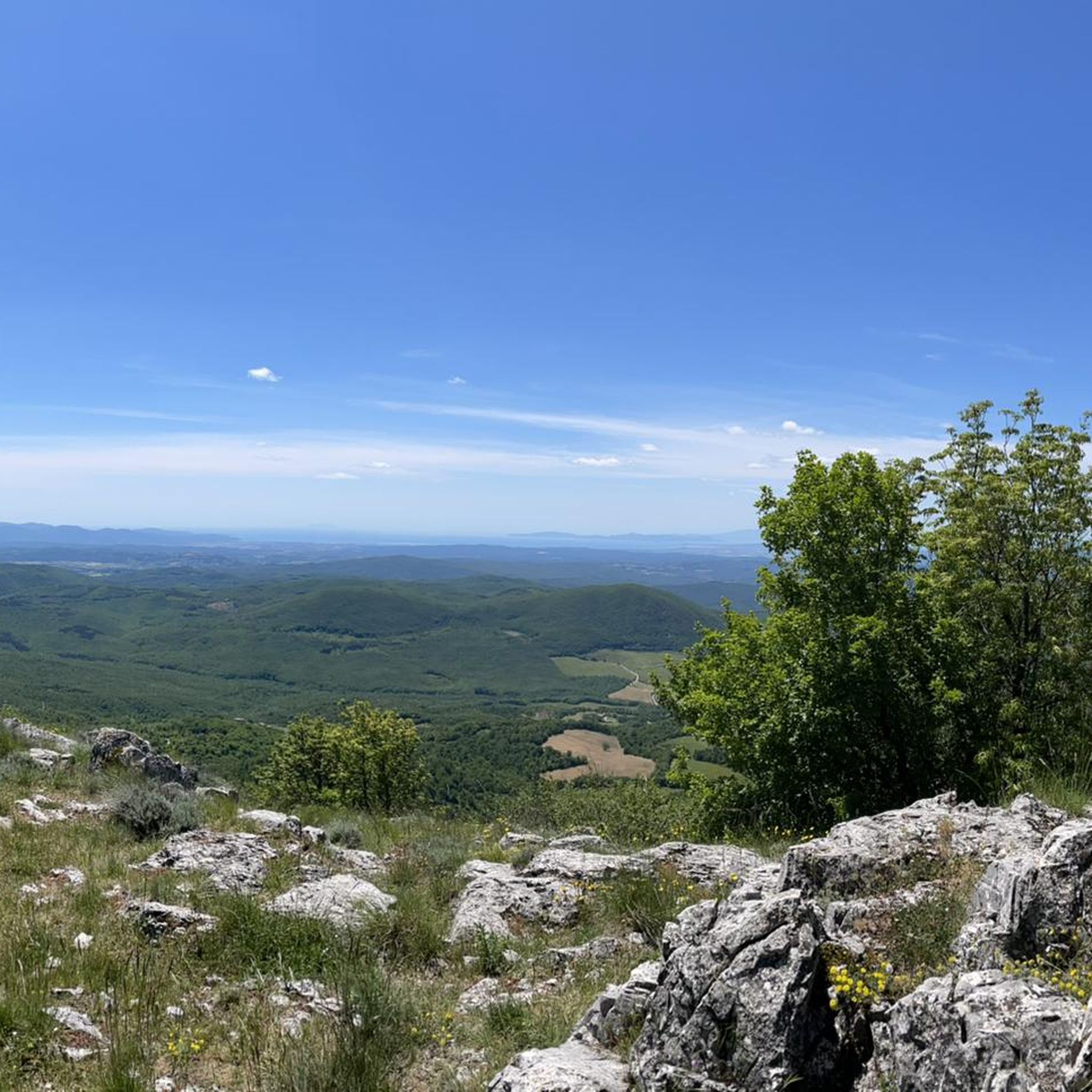
An ancient village once owned by the Aldobrandeschi family and then by Siena, it still bears the marks of the past rulers: the keep, the surrounding walls, and the evocative arched gateway are well preserved. The medieval features of the church of San Sebastiano, renovated in the 18th century, are still evident. Coming to today, I recommend a refreshing stop, perhaps for an aperitif, at Barrino di Tatti, just outside the medieval village. The food is excellent, while from the terrace and dining room, we gaze across the Maremma to the sea.
0
0
Massa Marittima is a fortified medieval village located on a hill, known for its beauty and wealth of artistic and architectural heritage. Key attractions include the magnificent Piazza Garibaldi, with the Cathedral of San Cerbone, the Palazzo del Podestà, and the Palazzo Comunale. Other points of interest include the Fonti dell'Abbondanza with its famous fresco of the Tree of Fertility and, in the upper town, the Torre del Candeliere and the Cassero Senese within the medieval walls.
1
0
The Torre del Candeliere is a museum monument that is an integral part of the Massa Marittima Museum System. The tower was erected in 1228 to both monitor the area (as a watchtower) and assert the authority of the Municipality of Massa Marittima, which had recently freed itself from the rule of the Prince-Bishop. The tower was originally a third taller than its current counterpart, the result of Siena's reconstruction following the war that brought it victory over Massa. Another Sienese initiative was the construction of the majestic arch connecting it to the Cassero, built in the center of the city to monitor the still-rebellious Massa Marittima residents, ready to rise up.
1
0
The tower was erected in 1228 to both monitor the territory (as a watchtower) and assert the authority of the Municipality of Massa Marittima, which had recently freed itself from the rule of the Prince-Bishop. The tower was originally a third taller than its current counterpart, the result of Siena's reconstruction following the war that brought it victory over Massa. Another Sienese initiative was the construction of the majestic arch connecting it to the Cassero, built in the center of the city to monitor the Massa Marittima residents, who were still rebellious and ready to rise up.
1
0
Frequently Asked Questions
What kind of historical sites can I expect to find around Montieri?
Montieri and its surroundings offer a rich medieval past, primarily featuring fortified towns, castle ruins, and historical residences. You'll find sites like the medieval mining town of Montieri itself, the ancient Montemassi Castle, and the unique archaeological remains of the Rectory of San Niccolò. The area provides a blend of cultural and historical interest, showcasing its defensive structures and mining heritage.
Are there any well-preserved castles or just ruins near Montieri?
You'll find a mix of both. While some sites like the Montemassi Castle are castle ruins offering charm and tranquility with wonderful views from the ascent to its tower, others like the Castle of Fosini still preserve significant architectural remnants. Montieri itself functions as a medieval mining castle, with visible defense walls and 14th-century tower houses. The Tatti Village also retains its original appearance with an Aldobrandesco Castle and surrounding walls.
What is the historical significance of Montieri as a 'castle'?
Montieri itself functioned as a medieval mining castle, built around 900 AD. Its strategic importance stemmed from its abundant mineral resources, particularly silver and copper. The town retains much of its medieval character, with narrow, paved alleys and stone buildings. The Cassero, located in the highest part of the town, was a significant defensive and administrative center, and three towers from the original defense walls are still visible today.
Can I visit the Castle of Fosini, and what makes it notable?
The Castle of Fosini is an ancient fortress dating back to the 10th century, built on a cliff overlooking the Pavone stream. While centuries of maintenance have introduced non-original parts, the northern and eastern walls still preserve their initial characteristics. It offers a glimpse into the region's feudal history and its dramatic setting makes it an intriguing site for those interested in medieval architecture and local heritage. Access is generally possible, but it's advisable to check local information for specific visiting details.
Are there any unique historical sites related to Montieri's mining past?
Absolutely. The Rectory of San Niccolò, an archaeological site near Montieri, features the remains of a church with a peculiar flower-shaped plan, boasting six petals, making it one of Italy's most unique churches. This building was entirely linked to the fervent mining and metallurgical activities that characterized the Montieri area, which was one of Tuscany's most important sites for copper and silver mining. Another example is the Rocchette Pannocchieschi Mining Castle Ruins, where excavations revealed traces of settlements and a mineral processing area from the 10th century.
What are some family-friendly activities or castles to visit around Montieri?
Many of the medieval villages and historic centers, such as Massa Marittima Historic Center and Tatti Village, are great for families to explore. They offer charming streets, historical architecture, and a chance to step back in time. The fortress in Massa Marittima provides interesting views, and the overall atmosphere of these towns is generally relaxed and enjoyable for all ages. Exploring the visible remnants of Montieri's own defense structures can also be an engaging activity for families.
What are the best times to visit the castles and historical sites in Montieri?
The best times to visit are generally during the spring (April to June) and autumn (September to October) when the weather is pleasant for exploring. Summers can be hot, especially for outdoor activities, but still enjoyable. Winter offers a quieter experience, though some smaller sites might have reduced hours or accessibility.
Are there hiking or cycling routes that incorporate these castles?
Yes, the region around Montieri is excellent for outdoor activities. You can find numerous routes for hiking, gravel biking, and mountain biking that pass by or lead to these historical sites. For instance, there are routes like 'Castello Fòsini e Gerfalco da Montieri' for mountain biking or the 'Poggio di Montieri Loop Trail' for hiking. You can explore more options on the Hiking around Montieri, Gravel biking around Montieri, and MTB Trails around Montieri guide pages.
Where can I find panoramic viewpoints near Montieri's castles?
Several locations offer stunning panoramic views. From the top of Montieri's hill, you can enjoy breathtaking views extending from Monte Amiata to Corsica. The ascent to the tower at Montemassi Castle is highlighted for its wonderful views. Additionally, the Candeliere Tower in Massa Marittima provides a great view from above, and the Rocchette Pannocchieschi Mining Castle Ruins offer a superb panorama that opens up to the sea and the islands of the Archipelago.
Are there any notable historical residences besides traditional castles?
Yes, the Palace Papi Mattii, also known as Palazzo dei Marchesi, is a significant historical residence in Montieri. While not a defensive castle, it's characterized by an impressive loggia and houses the Fonti di Sopra (Upper Fountains), dating back to 1233. Its grand architecture and ancient fountains provide a connection to the town's past civic life and engineering prowess, showcasing Montieri's aristocratic and administrative history.
What are some of the most popular castle-related highlights according to visitors?
Visitors particularly enjoy the Massa Marittima Historic Center, a medieval town with beautiful, well-preserved monuments and an old fortress. Montemassi Castle is also highly appreciated for its charm, tranquility, and the wonderful views from its tower. The medieval settlement of Tatti Village, with its Aldobrandesco Castle and surrounding walls, is another favorite.
Where can I find cafes or restaurants near these historical sites?
The historic centers of towns like Montieri, Massa Marittima, and Tatti Village offer various cafes and restaurants. Massa Marittima, for example, has nice little cafes and restaurants that complete the overall picture. In Tatti, the Barrino di Tatti is recommended for a refreshing stop, perhaps for an aperitif, just outside the medieval village.
Most popular routes around Montieri
Most popular attractions around Montieri

Get inspired with the komoot mobile app


Explore more
Looking for the best castles somewhere else? Discover other guides around Montieri:
