Top 9 Caves around Strotzbüsch
Best caves around Strotzbüsch offers a diverse landscape shaped by volcanic activity, featuring unique geological formations and historical sites. The region, part of the Vulkaneifel, is characterized by its ancient volcanic past, which has created both natural caves and those formed by human activity. Visitors can explore a variety of cave types, from those with volcanic origins to historical sites. This area provides insights into both geological processes and human history within a natural setting.
Best caves around Strotzbüsch
- The…
Last updated: September 30, 2026
Elf Grotto and Elbesbach Waterfall
Highlight • Cave
The …
Translated by Google •
Tip by

Falkenlay Stone Age Caves
Highlight • Cave
Showing Translation
Tip by

Sign up now to discover places like this
Get recommendations on the best single tracks, peaks, & plenty of other exciting outdoor places.
Falkenlay Stone Shelter and Viewpoint
Highlight • Mountain Hut
Translated by Google •
Tip by

The old Lippi
Highlight • Structure
Translated by Google •
Tip by

Elfengrotte and Teufelsbrücke at Elbesbach, Bad Bertrich
Highlight • Cave
Translated by Google •
Tip by

Sign up for free to discover even more caves around Strotzbüsch.
Already have an account?


Tips from the Community

The success of the film "Tatort Falkenlay" inspired the idea of building a concrete replica of the main character, the old Lippi, for the film crew, the community, and guests. Apparently, it's located in the cave of events, and so the idea was born! What should it look like? He prefers to indulge in his favorite pastime: relaxing around the campfire! A friendly neighbor lent his face and hands to create lifelike casts. They constructed the upper body skeleton from strong wire. The legs were made from plumbing pipes and attached to the body. Now the hard work began. Everything had to be filled with scrap paper, wrapped several times, and then rewired. After dressing Lippi in old pants, they could begin the concrete work. Now the fine details of the body were modeled. The head, face, hands, and feet, which had been pre-cast, were placed in their designated places. The masterpiece was complete! With the kind support of the Kennfus volunteer fire department, Lippi then moved to his cave beneath the Falkenlay!
1
0


There is so much to discover on this section
1
1

A hut with a great view of the valley.
4
0

Caves and a nice rest area with information board
2
0
Shelter and a great view awaits us on the Falkenlay, a carved falcon greets us, and there is also information
5
0

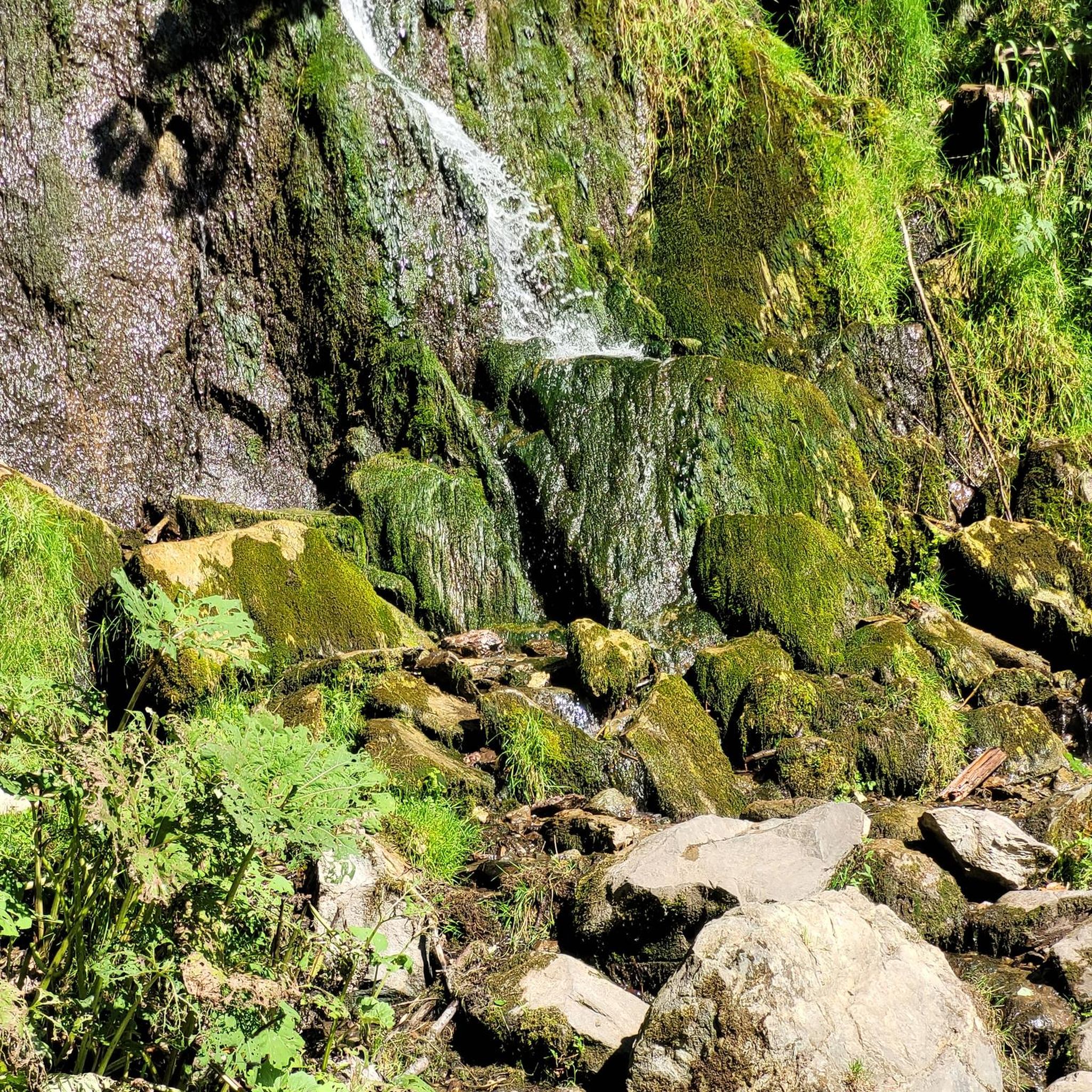
Nice VIP highlight with the passage grotto, the waterfall and the Teufelsbrück. Belongs to a hike around Bad Bertrich.
27
0

The cheese grotto got its name from the cheese loaves apparently stacked here. The also common naming Elfengrotte does not come from elves, but here was the eleventh mill in the Ueßbachtal.
10
0
Frequently Asked Questions
What types of caves can I explore around Strotzbüsch?
The region around Strotzbüsch, part of the Vulkaneifel, offers a diverse range of caves. You'll find natural caves formed by volcanic activity, such as the Elf Grotto and Elbesbach Waterfall with its unique basalt columns. There are also historical sites like the Falkenlay Stone Age Caves, which show evidence of ancient human habitation. Additionally, the broader Vulkaneifel region features fascinating 'ice and millstone caves' like the Birresborner Eishöhlen, which were created by centuries of basalt mining.
Are there any family-friendly caves to visit near Strotzbüsch?
Yes, several caves are suitable for families. The Falkenlay Stone Age Caves are a series of smaller caves in volcanic rock that are fun for exploration. The Elfengrotte and Teufelsbrücke at Elbesbach, Bad Bertrich, with its small waterfall, is also easily accessible and offers a scenic natural feature for all ages. The Mühlsteinhöhlen Hohenfels-Essingen are also described as a thrilling adventure, especially for children, with partially finished millstones still visible.
What historical significance do the caves in this region hold?
The caves around Strotzbüsch offer a rich glimpse into both geological and human history. The Falkenlay Stone Age Caves, for instance, have archaeological finds indicating they were inhabited by Stone Age hunters between 2000 and 4000 BC. Other caves, like the Birresborner Eishöhlen and the Mühlsteinhöhlen des Rother Kopfes, are remnants of the region's basalt mining industry, which was significant until the 19th century, showcasing the strenuous craft of millstone extraction.
What are the 'ice caves' in the Vulkaneifel region?
The 'ice caves' in the Vulkaneifel, such as the Birresborner Eishöhlen and the Mühlsteinhöhlen des Rother Kopfes, are not naturally formed karst caves but rather former basalt quarries. They are known as ice caves due to a 'cold trap effect' where cold air enters in winter and remains trapped, leading to ice formation that can persist well into the summer. Temperatures inside typically stay between -1 and +6 degrees Celsius year-round.
What should I wear or bring when visiting the caves?
When exploring the caves, it is highly recommended to wear sturdy shoes due to uneven terrain. A flashlight or headlamp is essential for visibility in the dark interiors. For the colder 'ice caves' like the Birresborner Eishöhlen or Mühlsteinhöhlen des Rother Kopfes, warm clothing is advisable, even in summer, as temperatures can be near freezing. A helmet might also be a good idea for some areas.
Are there any caves that are closed during certain times of the year?
Yes, some caves, particularly the 'ice caves' like the Birresborner Eishöhlen, serve as winter refuges for bats. To protect these hibernating bats, such caves are typically closed to visitors from October to March. It's always a good idea to check local information before planning your visit.
Can I find hiking trails that include cave exploration?
Absolutely. Many caves are integrated into scenic hiking routes. For example, the Buchenlochhöhle in Gerolstein is part of popular trails like the Eifelsteig and the Gerolsteiner Felsenpfad. There's also a Geo-circular trail around the Birresborn Ice Caves, approximately five kilometers long, allowing visitors to explore the caves and the surrounding landscape.
What outdoor activities can I do near the caves around Strotzbüsch?
The area around Strotzbüsch offers a variety of outdoor activities. You can find numerous MTB Trails, including routes like the 'Holzmaar – Gemündener Maar loop'. There are also Running Trails, such as the 'Mürmes Nature Reserve loop', and Gravel Biking routes like the 'Lieser Cycle Path – Grünewald Viaduct loop'. Many of these routes pass through the diverse volcanic landscape, often near the cave sites.
What is the Buchenlochhöhle known for?
The Buchenlochhöhle in Gerolstein is a karst cave, approximately thirty meters long, known for its geological and archaeological significance. It was formed millions of years ago by groundwater. Stromatopores, ancient marine animals, contributed to the formation of the Gerolstein Dolomites where it's located. Archaeological finds show Neolithic inhabitants used it 30,000 years ago, and it also served as a refuge during WWII. Today, it's a roost for bats.
What makes the Elf Grotto unique?
The Elf Grotto and Elbesbach Waterfall is unique because it's a hollow path created by volcanic activity around 50,000 years ago. Its basalt columns resemble stacked cheese wheels, earning it the nickname 'cheese grotto'. This distinctive appearance is due to the way the lava cooled and weathered over centuries.
Are there any caves that require special equipment or permits?
While most publicly accessible caves in the region, like the Birresborner Eishöhlen or the Mühlsteinhöhlen, do not require permits, some might have narrow or steep sections. For instance, entry into the Buchenlochhöhle requires climbing a narrow, steep wooden ladder. For deeper or more challenging cave explorations, such as the Schinderhannes Cave, special equipment might be needed if you wish to go beyond the easily accessible parts. Always bring a flashlight and wear sturdy shoes.
What do visitors enjoy most about the caves around Strotzbüsch?
Visitors frequently appreciate the unique geological formations, the historical insights, and the adventurous atmosphere. The 'cheese wheel' basalt columns of the Elf Grotto, the ancient history of the Falkenlay Stone Age Caves, and the cool, sometimes icy, interiors of the millstone caves provide memorable experiences. Many also enjoy the integration of these sites into scenic hiking trails.
Most popular routes around Strotzbüsch
Most popular attractions around Strotzbüsch

Get inspired with the komoot mobile app


Explore more
Extend your search for the best caves by checking out these guides of the top ones around Strotzbüsch:
