Top 20 Castles in Saalekreis
Castles in Saalekreis offer a journey through the region's history and architectural heritage, set within the diverse landscapes of Saxony-Anhalt, Germany. The district features a variety of historical sites, from well-preserved medieval fortresses to Renaissance palaces, often situated along rivers or on strategic hilltops. This area provides cultural exploration combined with natural scenery. Saalekreis is known for its blend of medieval castles, baroque palaces, and historical castle parks.
Best castles in Saalekreis
- The most popular castles is Querfurt Castle,…
Last updated: July 6, 2026
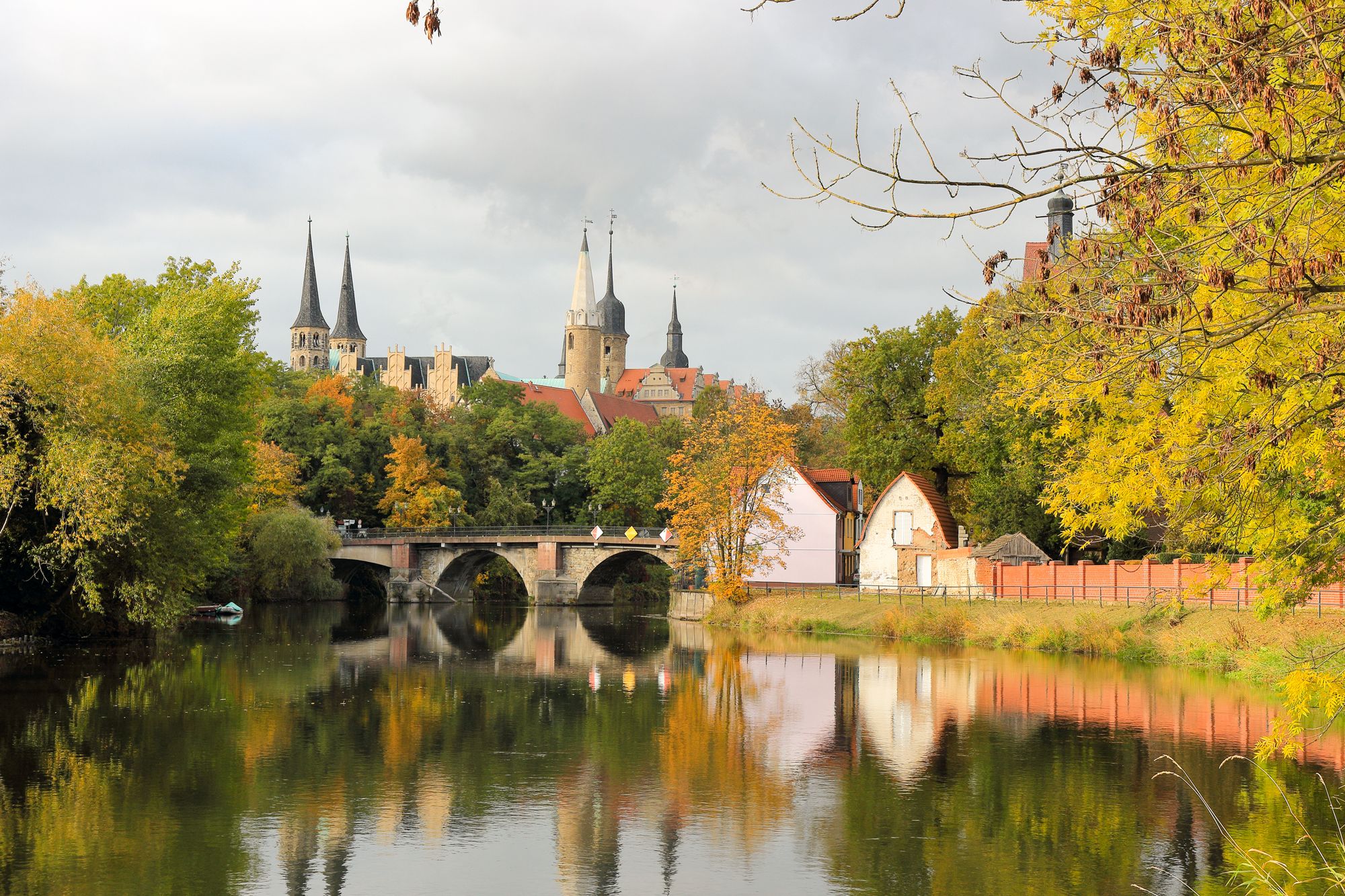
Merseburg Cathedral
Highlight • Religious Site
Translated by Google •
Tip by

Wettin Ferry
Highlight • Bridge
Translated by Google •
Tip by

Sign up now to discover places like this
Get recommendations on the best single tracks, peaks, & plenty of other exciting outdoor places.
Sign up for free
Neumarkt Bridge (Waterloo Bridge), Merseburg
Highlight • Bridge
Translated by Google •
Tip by

Dieskau Palace Park
Highlight • Historical Site
Translated by Google •
Tip by

Castle Park
Highlight • Structure
Translated by Google •
Tip by

Wettin Castle
Highlight • Castle
Translated by Google •
Tip by
Ostrau Castle
Highlight • Castle
Even though there is still a lot to do.
The castle grounds are surrounded by a moat.
Translated by Google •
Tip by
Ruins of St. Sixti Collegiate Church (Merseburg)
Highlight • Religious Site
Translated by Google •
Tip by
Querfurt Castle
Highlight • Castle
Translated by Google •
Tip by

Dölkau Castle
Highlight • Castle
19th century,
1804 to 1806
architectural style
classicism
builder
Karl Ludwig August von Hohenthal
Builder/Architect
probably Johann Carl Friedrich Dauthe
Condition
Dölkau Castle has been renovated. The farm …
Translated by Google •
Tip by

Sign up for free to discover even more castles in Saalekreis.
Sign up for free
Already have an account?
Start today with a free account
Your next adventure awaits.
Login or Signup
Popular around Saalekreis
The National Natural Landscapes in Saxony-Anhalt
Walking and Wellness – spa towns in the Leipzig area
Out with Fräulein Draußen on the Saale Cycle Path
#GoFurther – discover the views of Germany!
With the PlusBus to wonderful hikes near Leipzig
Nature trails for big & small in the nature park "Unteres Saaletal"
Art, history and museums in Germany — cultural Tours on MDV

Childrens' worlds and swimming fun – Tours with kids on MDV
Hike and enjoy with Germany’s MDV – explore around Leipzig and Halle
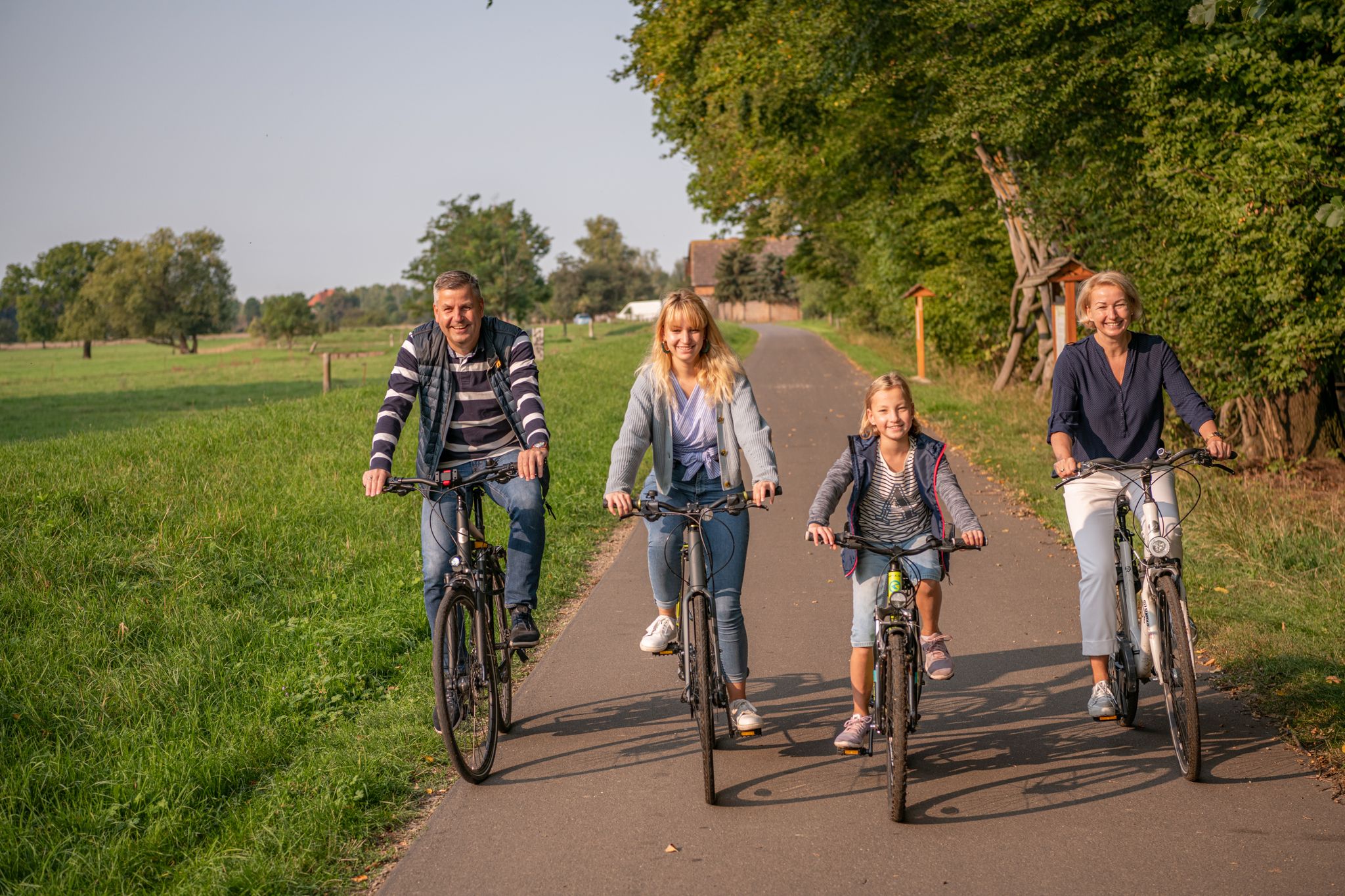
The 11 most beautiful cycle Tours in Germany’s Saale-Unstrut region
Other adventures in Saalekreis


Tips from the Community

Information about the ferry can be found at https://www.fähren-wettin-löbejün.de/wettin-oeffnungszeiten-preise/
6
1

In 979, a document first mentions a "Castellum." Querfurt has had a castle since then at the latest. The town itself was first mentioned in documents about a hundred years earlier. The castle was the ancestral seat of the noble lords of Querfurt, who for centuries were also burgraves of Magdeburg. With the death of Bruno XI of Querfurt in 1496, the noble family died out. The castle proved impregnable until 1640, but changed hands several times during the Thirty Years' War (1618 to 1648). The Swedish occupation lasted from 1642 to 1650. In 1663, the princes of Saxe-Querfurt made the castle their residence and Querfurt the capital of their domain.
15
0
The 57-meter-high Paris Tower at Querfurt Castle was originally called the Hausmannsturm (Houseman's Tower). It dates back to the late 14th century. Its baroque dome was added in 1659. It served as a fire watchtower until 1969; today, it can be climbed as an observation tower. There is also a tower dungeon.
12
0

In a tithe register of the Hersfeld monastery created between 881 and 899, Querfurt is mentioned for the first time as a place where Curnfurt im Friesenfeld is subject to tithing and was first titled castellum in a document from Emperor Otto II from 979. The castle there has been the ancestral home of the noble lords of Querfurt since the 10th century. Traces of the oldest surviving building structure also date from the 10th century, which are parts of the inner curtain wall and the granary and armory. The stone buildings were limited to the area between today's granary, the Dicker Heinrich keep and the castle church. These period solid buildings also underline the importance of the Querfurt noblemen. In 1004, at the same time as the foundation of a castle chapel, a canons' monastery was founded, which was followed from 1162 by the construction of a Romanesque church in the middle of the castle courtyard. In the 14th century, a burial chapel with the tumba of Gebhard XIV of Querfurt was added. The Fat Henry was built at the beginning of the 12th century, followed by the construction of the Martial Tower at the beginning of the 13th century and the construction of the Paris Tower at the beginning of the 14th century. The outer curtain wall was added around 1350. During the 15th century, mainly fortificational changes were made. The bastions and the west gate date from the period between 1460 and 1490. After the death of the last lord of the castle, Bruno IX. von Querfurt In 1496, Querfurt and its castle were confiscated as a fief of the Archdiocese of Magdeburg. Albrecht of Brandenburg then had structural changes made to the complex in 1528 and 1535. Towards the end of the Thirty Years' War, from 1640 to 1642, the fortress, which was considered impregnable, changed hands several times after heavy sieges and shelling. The subsequent period of occupation by the Swedes lasted from 1642 to 1650. In 1663, the imperial princes of Saxony-Querfurt made the complex their residence and thus Querfurt the capital of their territory. The so-called Princely House was therefore built between 1660 and 1668. Around 1700, new gun emplacements were built on the widened berm above the Zwinger, before Querfurt was built after the death of Adolph III. of Saxony-Weißenfels fell back to the Electorate of Saxony. Source: Wikipedia
13
1

I was lucky enough to be invited to an event in the castle, wonderful. Even though there is still a lot to do. The castle grounds are surrounded by a moat.
24
0

Current opening times & prices: https://www.fähren-wettin-löbejün.de/wettin-oeffnungszeiten-preise/
14
0
The ferry constantly commutes across the Saale, so there are hardly any waiting times.
17
0
Frequently Asked Questions
What types of castles can I expect to find in Saalekreis?
Saalekreis offers a diverse range of historical structures, from well-preserved medieval fortresses to Renaissance palaces. You'll find sprawling complexes like Querfurt Castle, baroque palaces such as Ostrau Castle, and even sites transformed into monasteries like Goseck Castle.
Which castles offer a deep dive into the region's history?
Many castles in Saalekreis provide extensive historical insights. Querfurt Castle features a museum documenting daily life and building history. Merseburg Castle houses the Cultural History Museum, showcasing the area's past from prehistoric times. Plötzkau Castle hosts diverse museums on the Counts of Plötzkau and agricultural history. Goseck Castle, originally a noble seat, was converted into a monastery and is an important stop on the 'Himmelswege' tourist route.
Are there family-friendly castles in Saalekreis?
Yes, several castles are suitable for families. Querfurt Castle is a popular choice, offering castle tours and a café. Merseburg Castle's outdoor facilities are freely accessible, and its castle garden is part of the 'Gartenträume Sachsen-Anhalt' network. Dieskau Palace Park also offers a pleasant environment for family visits.
What outdoor activities can I do near the castles in Saalekreis?
The region around Saalekreis castles is excellent for outdoor activities. You can find numerous routes for cycling, mountain biking, and gravel biking. For example, there are routes like the 'Geiseltal Lake Marina – View of Marina Braunsbedra loop' for MTB, or the 'Marina Mücheln on Lake Geiseltal – Geiseltalsee Pier loop' for touring bicycles. Explore more options on the MTB Trails in Saalekreis, Cycling in Saalekreis, and Gravel biking in Saalekreis guide pages.
Which castles offer scenic views or are located in natural settings?
Many castles in Saalekreis boast beautiful surroundings. Wettin Castle offers scenic viewpoints. Plötzkau Castle provides wonderful views of the 'Unteres Saaletal' Nature Park from its tower. Giebichenstein Castle, nestled atop a hill, offers serene atmospheres with lush green surroundings and breathtaking views of the river. Goseck Castle also provides expansive views, having been built to be visible from afar.
Are there any castles that are particularly well-preserved or have unique architectural features?
Querfurt Castle is renowned as one of the largest and best-preserved medieval castles in Central Germany, often used as a film set. Merseburg Castle is a Renaissance-style complex with a distinctive Neptune fountain and a historic castle garden. Plötzkau Castle stands out with its 21 distinctive gables, rebuilt in Renaissance style.
Can I visit castles that are still in use or have modern functions?
Yes, some castles have adapted to modern uses while retaining their historical charm. Merseburg Castle currently houses the district administration and a Cultural History Museum. Giebichenstein Castle serves as a campus for the Burg Giebichenstein University of Art and Design Halle and is a venue for events. Goseck Castle, originally a castle, was transformed into a monastery and now features an information point about the nearby Goseck Circle.
What is the best time of year to visit the castles in Saalekreis?
The castles in Saalekreis are generally enjoyable throughout the warmer months, from spring to autumn, when the weather is pleasant for exploring outdoor facilities and castle parks. Summer often brings special events like concerts and summer cinema at Querfurt Castle. However, some museums and indoor exhibitions are open year-round, so checking specific castle opening hours is recommended for winter visits.
Are there any castles with unique archaeological or cultural connections?
Goseck Castle is particularly notable for its archaeological connections. It is an important stop on the 'Himmelswege' tourist route, which connects archaeological sites in Saxony-Anhalt. Nearby, you can visit the Goseck Circle, a reconstructed Neolithic sun observatory. An information point at Schloss Goseck features an exhibit about the Goseck Circle and its excavations.
What facilities or amenities can I find near the castles?
Many castles offer amenities for visitors. Querfurt Castle has a castle café. Dieskau Palace Park also features a café and parking. In towns like Merseburg, you'll find various cafes, pubs, and accommodation options within easy reach of Merseburg Castle. For specific details, it's always best to check the individual castle's website.
How accessible are the castles in Saalekreis by public transport?
Accessibility varies by castle. Merseburg Castle is located in the town of Merseburg, which is generally well-connected. For Goseck Castle, public transport options are available, and you can find more detailed information on how to reach it by public transport through local services. For other castles, it's advisable to check specific routes and schedules for buses or trains to the nearest towns.
Are there any castles that are considered 'hidden gems' or less commonly visited?
While the main castles like Querfurt and Merseburg are well-known, exploring sites like Dölkau Castle or Schkopau Castle might offer a quieter experience. Plötzkau Castle, with its unique gables and diverse museums, also provides a rich historical experience that might be less crowded than the most prominent sites, offering wonderful views of the 'Unteres Saaletal' Nature Park.
Most popular routes in Saalekreis
Most popular attractions in Saalekreis

Get inspired with the komoot mobile app


Didn’t find what you were looking for?
Explore Saalekreis’s best castles region by region:
Explore more
Looking for the best castles somewhere else? Discover other guides in Saalekreis:
