Attractions and Places To See in Area Naturale Protetta Di Interesse Locale Monte Castellare - Top 9
Best attractions and places to see in Area Naturale Protetta Di Interesse Locale Monte Castellare, located near San Giuliano Terme in the province of Pisa, Italy, offers a diverse range of attractions. This protected area covers approximately 240 hectares on the Monte Pisano, featuring gentle to medium slopes and evidence of past quarrying for limestone and white marble. Visitors can explore ancient human settlements, historical routes, and a natural landscape characterized by garigue vegetation and wild orchids. The area provides opportunities to experience both cultural heritage and panoramic views.
Best attractions and places to see in Area Naturale Protetta Di Interesse Locale Monte Castellare
- The most popular attractions is Dante's Pass, a mountain pass that holds historical and literary significance, believed to have been traversed by Dante Alighieri. It connects the Pisan and Lucchese sides of the mountains and offers landscape views of Pisa.
- Another must-see spot is Villa Belvedere (Villa Bosniaski), a 19th-century historical site, once home to a Polish naturalist. Though now in ruins, it offers panoramic views of Pisa and the Tuscan Archipelago's islands.
- Visitors also love Spelonca Hermitage, an ancient religious building with structures dug into the rock. This site includes a cistern, a staircase, and a circular basin, suggesting its use as a hermitage.
- Area Naturale Protetta Di Interesse Locale Monte Castellare is known for its historical sites, natural features, and panoramic viewpoints. The region offers a variety of attractions to see and explore, from ancient ruins to unique botanical gardens.
- The attractions in Area Naturale Protetta Di Interesse Locale Monte Castellare are appreciated by the komoot community, with 9 highlights, 61 photos, and 268 upvotes.
Last updated: August 29, 2026
Dante's Pass
Highlight • Mountain Pass
One of these has a particular historical-literary value, because it would have been traveled by no less than Dante Alighieri: it is precisely the Passo di Dante, who in the Comedy at canto XXXIII of the Inferno refers "al monte per che i Pisan veder Lucca non ponno." (ie the mountain that prevents the view of a city from the other one.) Above the stone slab that bears these verses, there is a bust of the Poet.
Naturally this pass, that connected the Lucca side with the Pisan one, was well known long before Dante: from the Neolithic to the Roman age it had been traveled by people of all origins, but from the Renaissance onwards it was known just as "Dante's Pass".
The tour up to the Pass, which is located just over 200 m above sea level and offers beautiful landscape views of Pisa, can be started from S. Maria del Giudice or S. Giuliano, with distances that vary depending on the starting point and if you go to on foot or by bike.
Tip by

Villa Belvedere (Villa Bosniaski)
Highlight • Historical Site
Translated by Google •
Tip by

Sign up now to discover places like this
Get recommendations on the best single tracks, peaks, & plenty of other exciting outdoor places.
Sign up for free
Villa Belvedere (Casa del Polacco) Ruins
Highlight • Historical Site


Knowledge result


Show all
Villa Belvedere (Polish House)
4.5
(111)
Tourist attraction in Italy
OVERVIEW
REVIEWS
PHOTO
INFORMATION
WHO LOVES
DIRECTIONS
SHARE
SAVE
56017 San Giuliano Terme PI
5.1 km

Visited 3 years ago
Open 24 hours a day
Timetables or services may vary
329 952 5874
Suggest a change
Are you the owner of this activity? Claim it now
Add website
Description
Villa Belvedere, also known as Villa Bosniaski or villa of the Polish, was built in the year 1881, on the apical spur of Monte Castellare near San Giuliano
You can get there from Asciano and then go down to San Giuliano Terme along a Singletrack path through the vegetation
Translated by Google •
Tip by

Spelonca Hermitage
Highlight (Segment) • Religious Site
The hermitage was founded in 1190 by the black hermits (by the priests magister Johannes de Petris, later called Honestus, and Dulcis). The founders were not hermits in the classical sense who chose solitude and meditation (eremos = alone), but groups of monks who decided to live together like the apostles, in poverty, in rather isolated places, even in contrast with the ecclesiastical institutions. They also dedicated themselves to the religious assistance of the population who lived in these places and who had difficulty reaching the churches. There were many hermit settlements in Tuscany and especially on the Monti Pisani, which some identify with the Mons heremita, which also appears in a fresco in the Camposanto monumentale of Pisa and in another in the church of S. Agostino in S. Gimignano. The many legends that exist regarding the presence of hermits on the Monti Pisani at the beginning of the Christian era and in the early Middle Ages are not, to this day, supported by documentary or archaeological evidence.
The most evident construction currently is represented by a small single-hall church, from a later period than the foundation; the facade and the barrel vault are from 1800, but the structures, which also show a later extension that could have eliminated a previous apse, are of medieval origin.
An uncommon case, there are interesting structures in its vicinity dug directly into the rock including a cistern with a quadrangular mouth, dug partly into the rock and partly into the cave room by means of a retaining wall, on which there are also stone supports and notches in the rock (probable support of wooden structures), a staircase with holes for a gate or door and a circular basin surrounded by channels, post holes and joints; furthermore, base rooms for probable structures of the hermitage are visible. Similar structures also seem to be present on the right side beyond the opening of the cave.
From Comunedipisa.it
Translated by Google •
Tip by

View of Pisa from Monte Castellare
Highlight • Viewpoint
Translated by Google •
Tip by

Sign up for free to discover even more attractions in Area Naturale Protetta Di Interesse Locale Monte Castellare.
Sign up for free
Already have an account?
Start today with a free account
Your next adventure awaits.
Login or Signup
Popular around Area Naturale Protetta Di Interesse Locale Monte Castellare
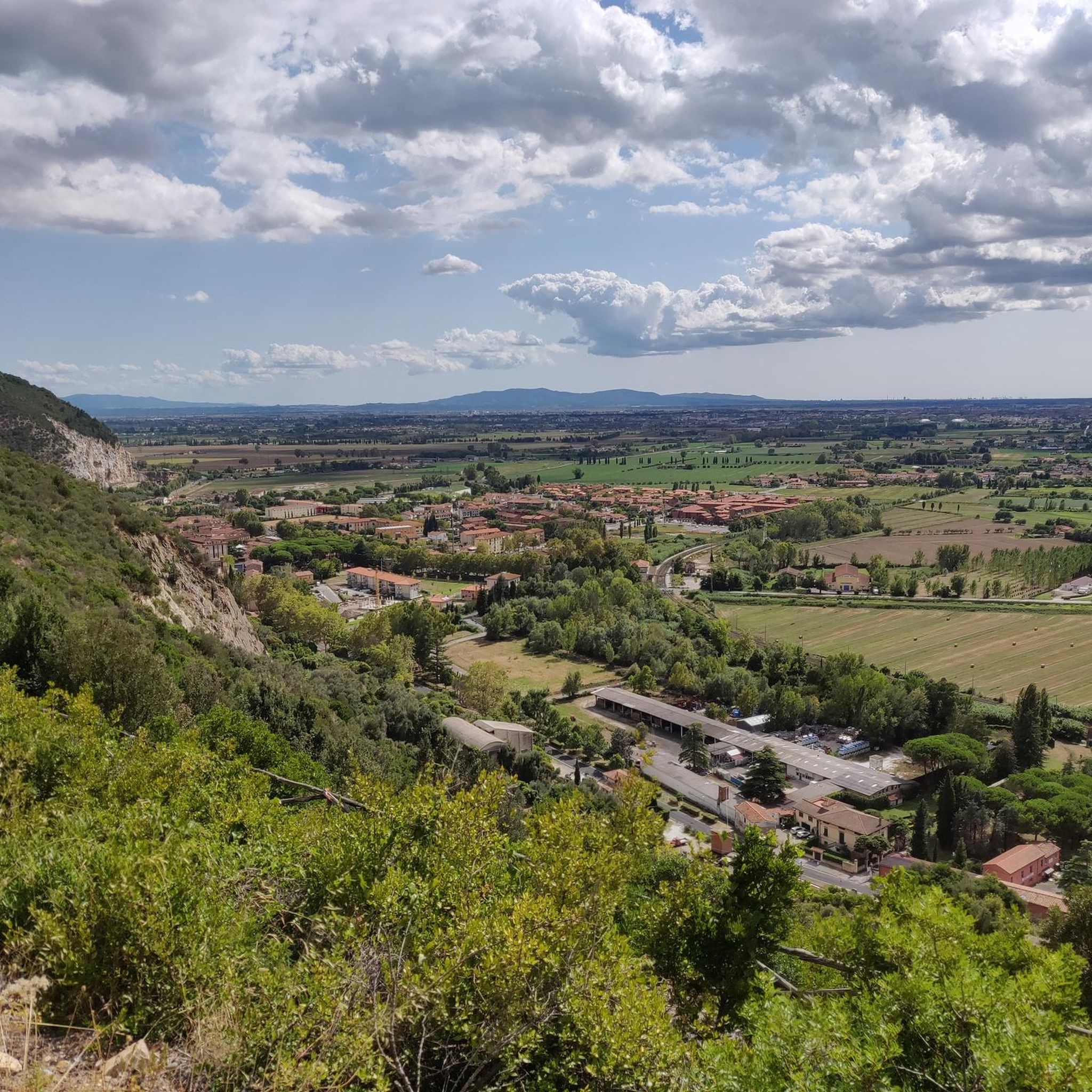
Hiking in Area Naturale Protetta Di Interesse Locale Monte Castellare
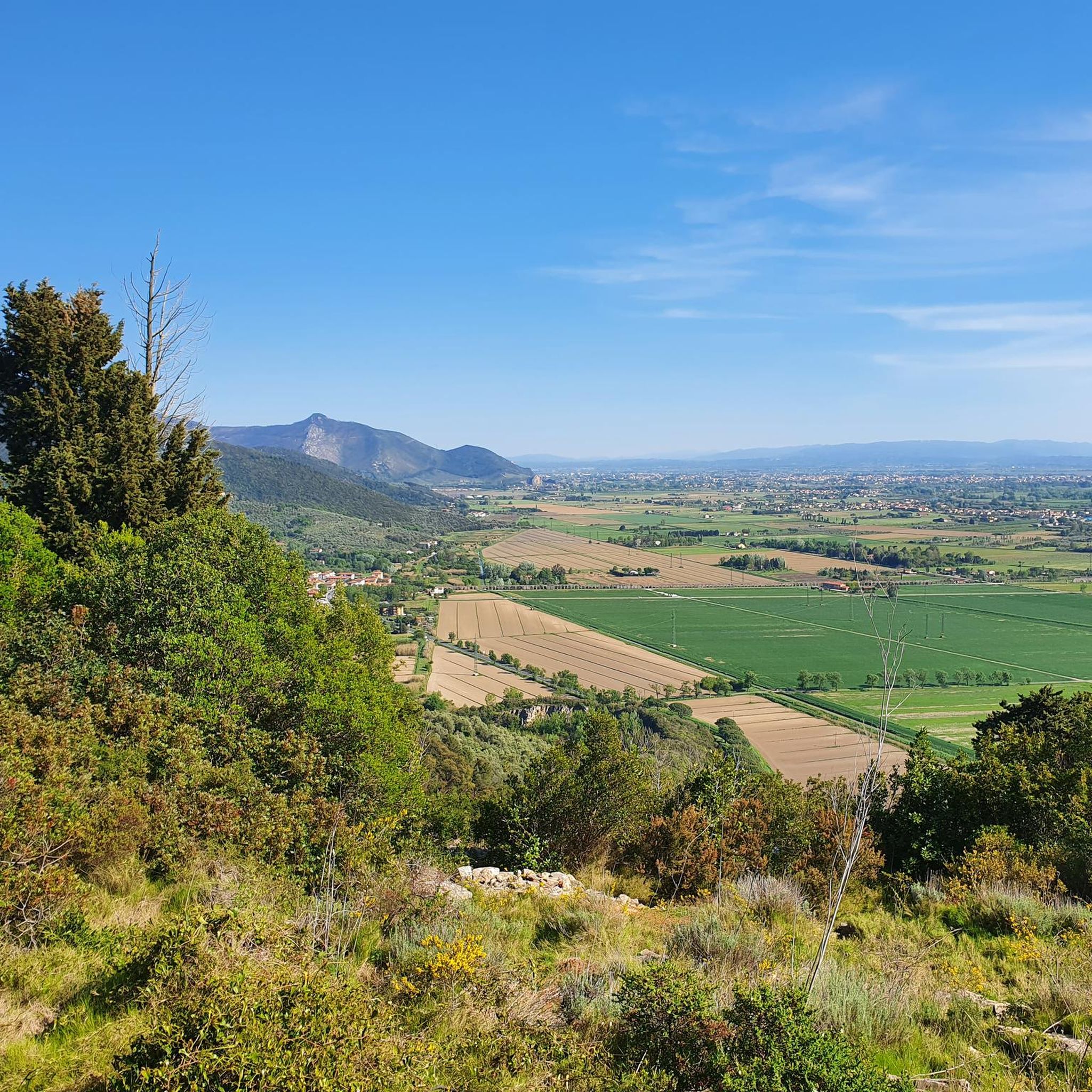
Cycling in Area Naturale Protetta Di Interesse Locale Monte Castellare
Road Cycling Routes in Area Naturale Protetta Di Interesse Locale Monte Castellare
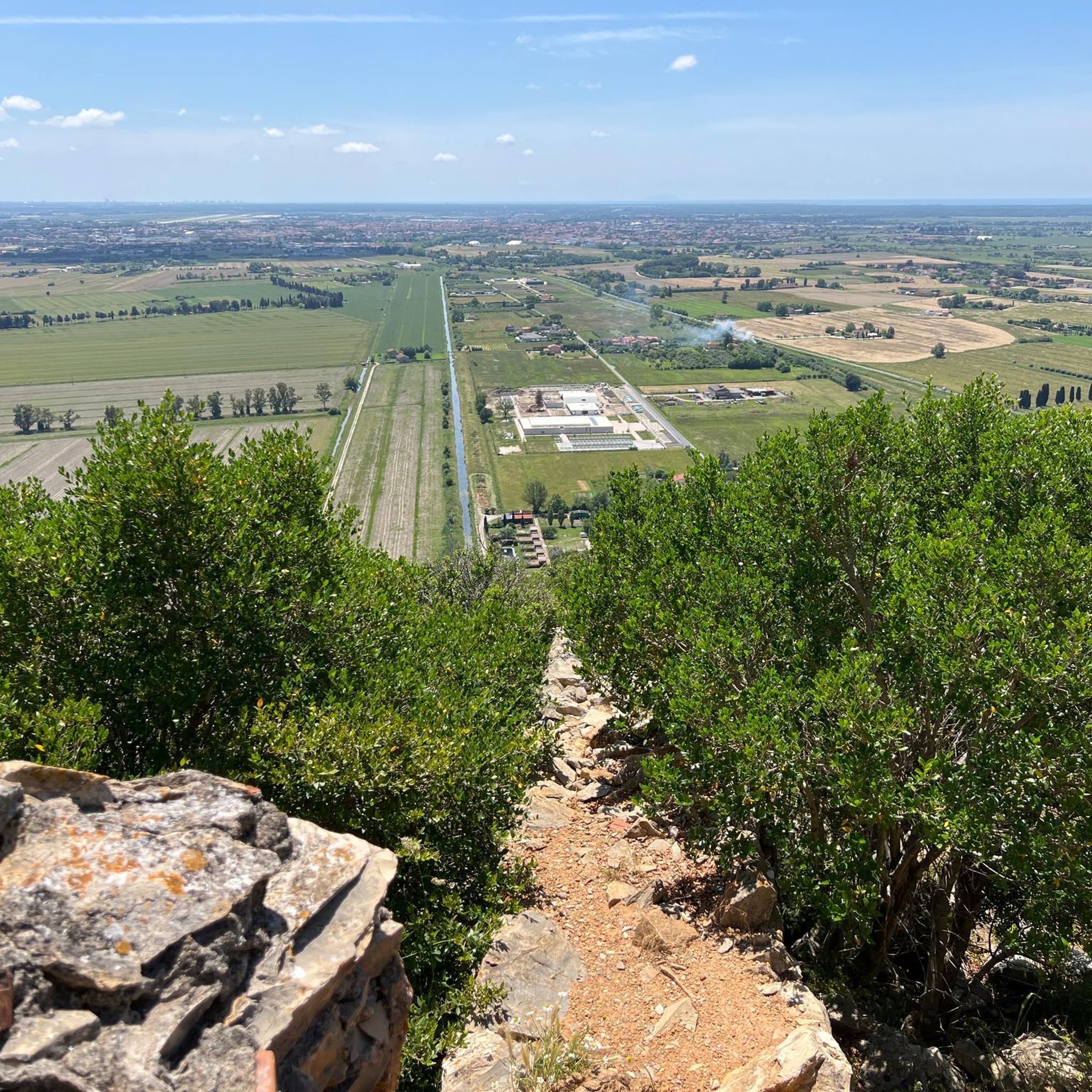
Running Trails in Area Naturale Protetta Di Interesse Locale Monte Castellare
MTB Trails in Area Naturale Protetta Di Interesse Locale Monte Castellare

Gravel biking in Area Naturale Protetta Di Interesse Locale Monte Castellare
Tips from the Community

The Passo di Dante is a scenic pass located at 335 meters above sea level in the Monti Pisani, the mountain range that historically separates the cities of Pisa and Lucca. This place owes its name to a famous mention by Dante Alighieri in Canto XXXIII of the Inferno in the Divine Comedy (verses 28-30). In the text, Count Ugolino recounts a premonitory dream in which Monte Pisano is described as the mountain "per che i Pisan veder Lucca non ponno" (through which the Pisans cannot see Lucca).
0
0

Villa Belvedere, also known as Villa Bosniaski or Polish villa, was built in 1881, on the apical spur of Monte Castellare above San Giuliano Terme, near Pisa, by the Polish Sigismondo De Bosniaski and for his wife Elisa di Rulikowski, Russian countess. The villa is built on two floors plus the basement and has a rectangular plan. The building was composed of 12 rooms equally arranged on the three floors in total. In the basement De Bosniaski had set up a sort of private museum of the Carboniferous plant fossils he owned. The water supply was guaranteed by some cisterns that received rainwater from the gutters of the villa itself and by some pipes that took water from the terraces made of dry stone walls for agriculture. To access the villa, a new road was built on the ridge of the mountain starting from Asciano in the locality of Asciano Valle. Another access is from the San Giuliano Terme side through a narrow path partially interrupted due to the limestone marble extraction quarries below. The villa was abandoned following the death of De Bosniaski, after which it was used by the Germans in the Second World War as an observation post. Currently the villa is an uninhabitable ruin as the roof has collapsed together with part of the attics. The villa is immersed in a garden of which the unusual floral species and fruit trees that still grow in the area surrounding the villa can still be seen today. Source Wikipedia (https://it.wikipedia.org/wiki/Villa_Belvedere_(San_Giuliano_Terme)
1
0

The ancient settlement is located in the Lucca area, but near the border with the province of Pisa, near the Passo di Croce where the old communication route between Pisa and Lucca passed and can be reached on foot from the pass itself. Some authors identify the area as the Hermitage of San Giuliano di Spelonca, others as S. Giorgio. The hermitage was founded in 1190 by the black hermits (by the priests magister Johannes de Petris, later called Honestus, and Dulcis). The founders were not hermits in the classical sense who chose solitude and meditation (eremos = alone), but groups of monks who decided to live together like the apostles, in poverty, in rather isolated places, even in contrast with the ecclesiastical institutions. They also dedicated themselves to the religious assistance of the population who lived in these places and who had difficulty reaching the churches. There were many hermit settlements in Tuscany and especially on the Monti Pisani, which some identify with the Mons heremita, which also appears in a fresco in the Camposanto monumentale of Pisa and in another in the church of S. Agostino in S. Gimignano. The many legends that exist regarding the presence of hermits on the Monti Pisani at the beginning of the Christian era and in the early Middle Ages are not, to this day, supported by documentary or archaeological evidence. The most evident construction currently is represented by a small single-hall church, from a later period than the foundation; the facade and the barrel vault are from 1800, but the structures, which also show a later extension that could have eliminated a previous apse, are of medieval origin. An uncommon case, there are interesting structures in its vicinity dug directly into the rock including a cistern with a quadrangular mouth, dug partly into the rock and partly into the cave room by means of a retaining wall, on which there are also stone supports and notches in the rock (probable support of wooden structures), a staircase with holes for a gate or door and a circular basin surrounded by channels, post holes and joints; furthermore, base rooms for probable structures of the hermitage are visible. Similar structures also seem to be present on the right side beyond the opening of the cave. From Comunedipisa.it
0
0

In addition to being a point on numerous trekking routes on the Pisan mountains, Passo Dante is a crossing point for those who, on the route between Lucca and Pisa, do not want to go through the tunnel but want to pass over it. The road is suitable for MTBs. Not suitable for gravel although I have seen some. There are points with sharp stones and very high steps, but the sloping section is not long, so it can be pushed if you fear for your safety.
1
0

HI! I'm doing my degree thesis in architecture on the redevelopment and reuse of Villa Bosniaski, I wanted to know if anyone has historical photos or other documents regarding the villa and the other surrounding buildings. Thank you!
0
1
Easy excursion suitable for families with children. The villa is now a ruin but can be visited internally on the ground floor and with the stairs to the room that will lead outside. However, be careful.
1
0
Easy hike. The villa is a ruin but can still be visited. However, pay due attention. Bring a sandwich and a beer for a good lunch or a nice snack with a view of Pisa
0
0
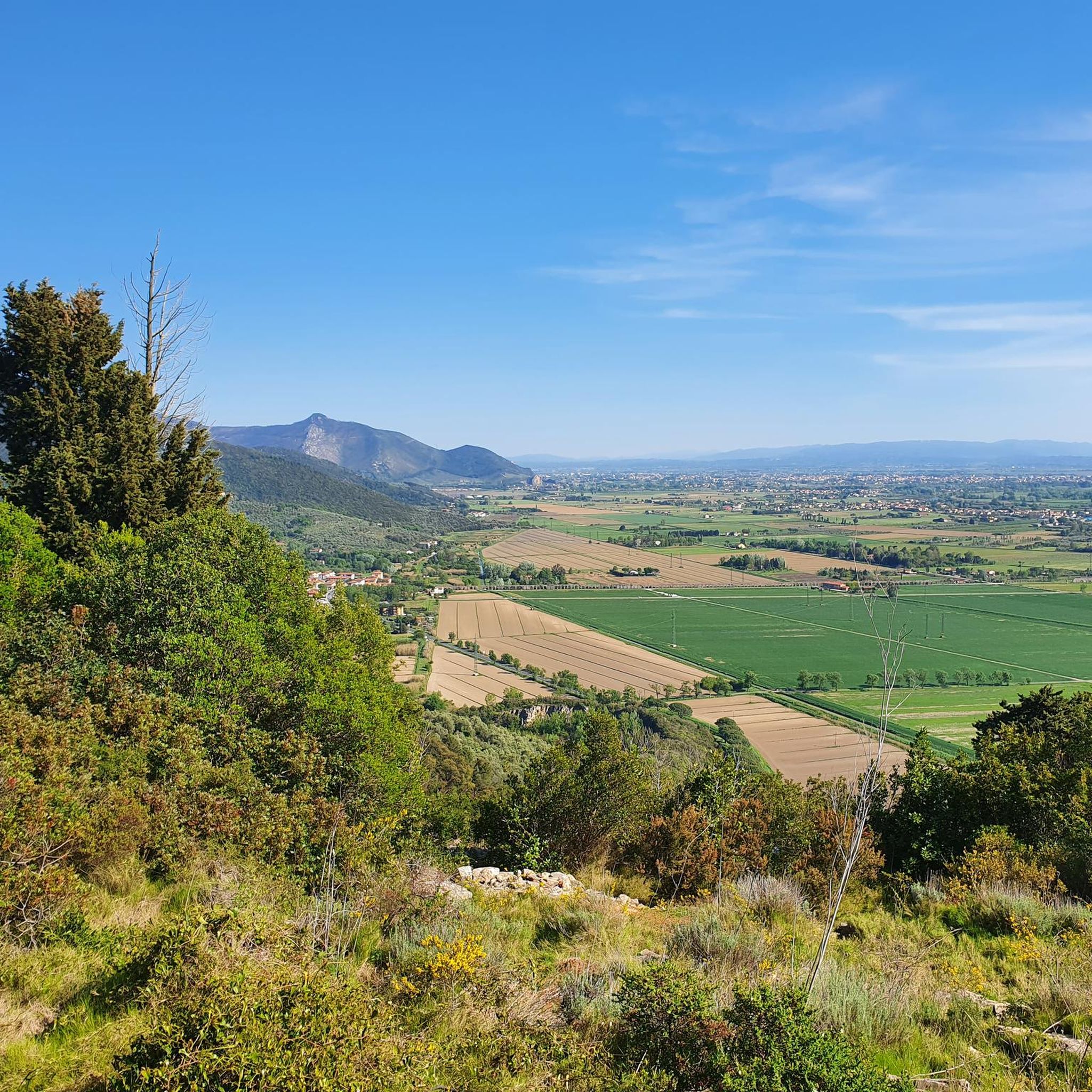
Beautiful panorama over the whole plain of Pisa. On the clearest days, you will see the Baptistery and the leaning tower very well, with the island of the gorgona and the capraia in the background. Easy hike to Polish or Bosniaski's villa or bel vista. Suitable for families
4
0
Frequently Asked Questions
What historical sites can I explore in Area Naturale Protetta Di Interesse Locale Monte Castellare?
The area is rich in history. You can visit the Dante's Pass, a mountain pass with historical and literary significance, believed to have been traversed by Dante Alighieri. Another notable site is the Spelonca Hermitage, an ancient settlement with structures dug into the rock. Additionally, the summit of Monte Castellare holds ruins of ancient human settlements dating from the late Bronze Age to the early Middle Ages.
What natural features and viewpoints can I discover in Monte Castellare?
Monte Castellare offers diverse natural landscapes and panoramic views. From the summit of Monte Castellare and the ruins of Villa Belvedere (Villa Bosniaski), you can enjoy extensive views of the Pisan coastline, the plain of Lucca, and even the islands of the Tuscan Archipelago. The area is also characterized by garigue vegetation, a type of Mediterranean scrubland with a diverse flora, including over 40 species of wild orchids.
Are there any unique botanical gardens or plant life to see?
Yes, you can visit the Giardino dei Profumi (Garden of Perfumes) located along the road to Villa Belvedere near Asciano. This small botanical garden showcases many garigue floral species, including some of the over 40 species of wild orchids that thrive in the area. Informative signs, some in Braille, accompany the plants.
Can I visit the ruins of Villa Belvedere?
Yes, the ruins of Villa Belvedere (Villa Bosniaski), a 19th-century building once home to a Polish naturalist, are accessible. Though now in ruins, it offers impressive panoramic views of Pisa and the Tuscan Archipelago's islands. An accessible dirt road from Asciano leads to the villa, which is surrounded by a garden with unusual floral species and fruit trees.
What kind of hiking trails are available in Area Naturale Protetta Di Interesse Locale Monte Castellare?
The Monte Castellare area is well-suited for hiking, with many paths available for trekking. You can find a variety of routes, including easy hikes like the "Dante's Pass – Passo Croce loop from San Giuliano Terme" or the "Medicean Aqueduct of Pisa loop from Asciano." For more options, explore the easy hikes guide for the region.
Are there options for mountain biking or cycling?
Absolutely! The area offers numerous trails suitable for mountain biking and general cycling. For mountain biking, you might consider routes like the "Rocca di Ripafratta – Puccini Cycle Path loop from San Giuliano Terme." For road cycling, routes such as the "Leaning Tower of Pisa – Lucca City Walls loop from San Giuliano Terme" are popular. You can find more details in the MTB Trails guide and the Cycling guide for the area.
Are there easy or family-friendly walks in the area?
Yes, Monte Castellare offers several easy and family-friendly walks. Many trails are suitable for all ages, including those leading to Dante's Pass. The Giardino dei Profumi is also a pleasant and accessible spot for families. The easy hikes guide provides specific routes that are generally suitable for families.
What is the best time of year to visit Monte Castellare?
The Monte Castellare protected area is enjoyable throughout much of the year. Spring and autumn are particularly pleasant for hiking and exploring the natural beauty, as the weather is mild and the vegetation is vibrant. Spring is especially rewarding for seeing the wild orchids in bloom. Summer can be warm, but early mornings or late afternoons are still good for outdoor activities.
Are there any unique natural phenomena or caves to explore?
Yes, the area features the Buca delle Fate, a cavern approximately 200 meters deep. This hypogeum is surrounded by local legends, partly due to the mysterious steam clouds that rise from its openings in winter. While exploring, always prioritize safety and be aware of local regulations.
What archaeological discoveries have been made in Monte Castellare?
Archaeological excavations on the summit of Monte Castellare have revealed ruins of ancient human settlements. These findings date from the late Bronze Age to the early Middle Ages and include artifacts such as pottery, dishes, jewelry, stone discs, hearths, and arrowheads, providing insight into the region's long history. For more detailed information, you can visit the San Giuliano Terme tourism website: Sito Archeologico del Monte Castellare.
Where can I find local olive oil products?
You can explore the Strada dell'Olio dei Monti Pisani (Monti Pisani Oil Road). This route highlights the region's extensive olive groves and connects old oil mills, offering a glimpse into the local agricultural heritage and the production of "Olio Extra Vergine Toscano IGP 'Monti Pisani'." It's a great way to experience the local culture and taste authentic regional products.
Can I bring my dog to the trails in Monte Castellare?
Generally, dogs are welcome on trails in natural areas like Monte Castellare, especially if kept on a leash. However, it's always best to check for specific signage or local regulations at trailheads or visitor centers, as rules can vary within protected areas to protect wildlife and ensure visitor safety.
Most popular routes in Area Naturale Protetta Di Interesse Locale Monte Castellare

Get inspired with the komoot mobile app


Explore more
Still not found the Highlight you’re looking for? See guides of the top attractions in other regions:
