Attractions and Places To See in Cartagena De Indias - Top 20
Attractions and places to see in Cartagena De Indias include a historic walled city, Caribbean islands, and vibrant cultural neighborhoods. This UNESCO World Heritage site is known for its well-preserved colonial architecture and significant historical landmarks. The region offers a blend of urban exploration and natural beauty, from ancient fortifications to pristine beaches.
Best attractions and places to see in Cartagena De Indias
- The most popular attractions is La Gorda Gertrudis by Fernando Botero, Plaza de Santo Domingo, a…
Last updated: July 2, 2026
Puerta del Reloj (Clock Gate), Cartagena
Highlight • Monument
Tip by

San Pedro Claver Church
Highlight • Religious Site
Tip by
Sign up now to discover places like this
Get recommendations on the best single tracks, peaks, & plenty of other exciting outdoor places.
Sign up for free
La Gorda Gertrudis by Fernando Botero, Plaza de Santo Domingo
Highlight • Monument
Tip by
Getsemaní Street Art District
Highlight • Structure
Translated by Google •
Tip by

Bolívar Park (Cartagena)
Highlight • Monument
Tip by
Sign up for free to discover even more attractions in Cartagena De Indias.
Sign up for free
Already have an account?
Start today with a free account
Your next adventure awaits.
Login or Signup


Tips from the Community

The Plaza de Bolívar is a green oasis in the heart of the historic center of Cartagena de Indias. It is considered one of the most important and symbolic places in the city, offering a cool retreat from the Caribbean heat through its many tall trees and fountains. In the center of the park stands an equestrian statue of Simón Bolívar, the "Liberator" of South America. The bronze statue was inaugurated in 1896.
0
0
The statue "La Gorda Gertrudis" (also known as Reclining Figure 92) is a famous bronze work by Colombian artist Fernando Botero. Fernando Botero (1932-2023) is world-renowned for his style called "Boterismo", characterized by exaggerated, voluminous forms. Botero donated the sculpture, weighing around 650 kg (1443 lbs), to the city of Cartagena in the year 2000.
0
0
The Iglesia de San Pedro Claver (also Santuario de San Pedro Claver) is one of the most historically significant churches in Cartagena. It is located on the square of the same name in the historic city center, was built between 1580 and 1654 by Jesuits, and is considered an outstanding example of Spanish colonial architecture. The church is named after the Spanish Jesuit Peter Claver (San Pedro Claver), who lived in Cartagena in the 17th century. He dedicated his life to the care and evangelization of slaves arriving from Africa, baptizing an estimated 300,000 people. Beneath the church's main altar lie the mortal remains of the Saint.
0
0
The famous Torre del Reloj (Clock Tower) is considered the city's landmark and is the main entrance to the historic center. The tower stands on the original main entrance of the city fortifications, which was built in the 17th century (between 1601 and 1631). At that time, it was known as Boca del Puente (,,Bridge Mouth"), as a drawbridge connected the old town with the Getsemaní district. The structure is about 30 meters high and was completed at the end of the 19th century in the neoclassical style above the old archway.
0
0
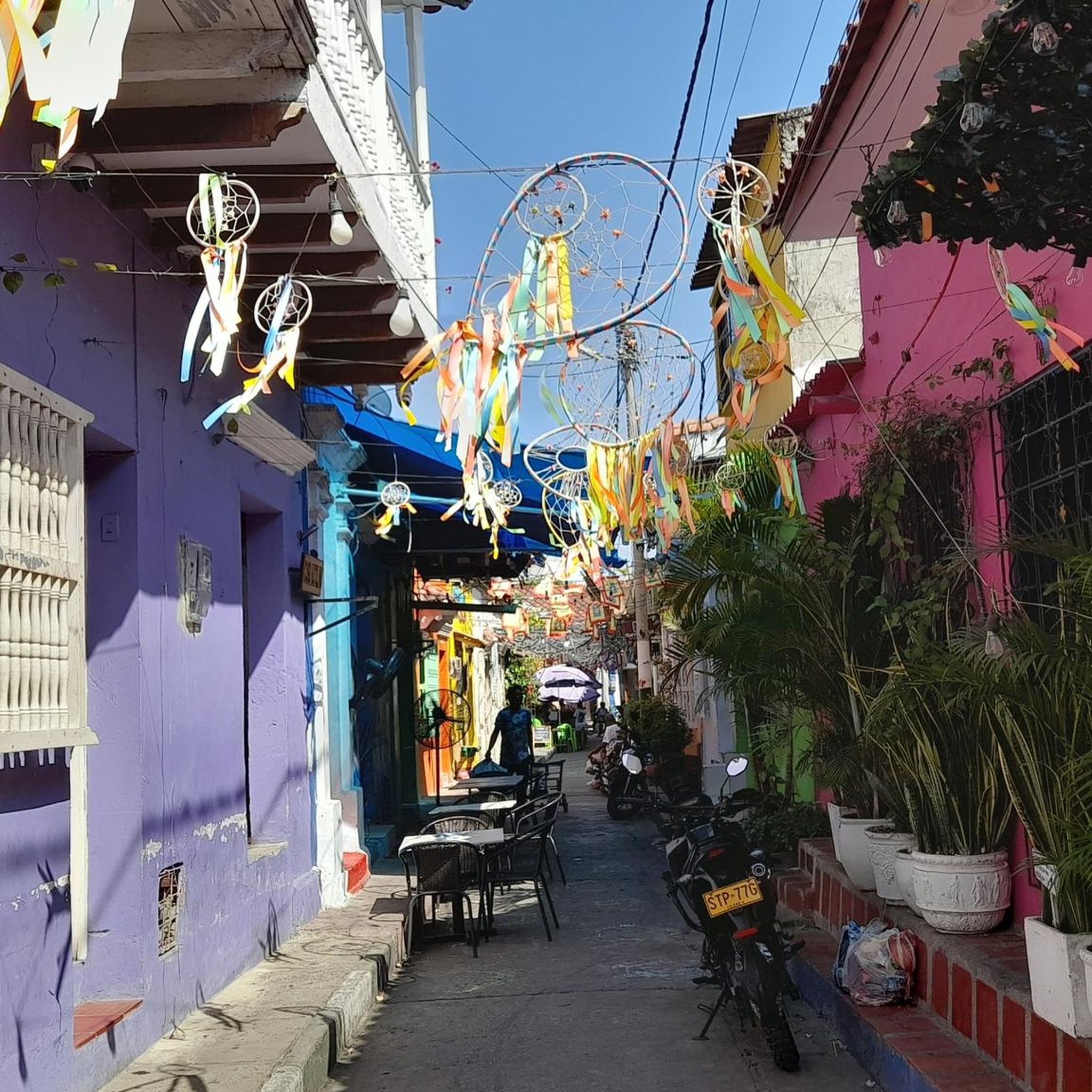
The Getsemaní Street-Art neighborhood is the artistic heart of Cartagena de Indias. Once a poorer working-class area, it has transformed into a vibrant open-air gallery, known for its colorful houses and profound murals. Neighborhood highlights: Plaza de la Trinidad: The cultural hub, where locals and travelers gather in the evenings to watch street performers or eat street food. Callejón Angosto (Umbrella Street): One of the most photographed alleys, famous for its colorful umbrellas hanging over the street. The murals tell stories about Afro-Colombian identity, resistance, social justice, and gentrification.
0
0

Initially, this park was called Plaza de la Iglesia because it borders the Santa Catalina de Alejandria Cathedral. Later, it was named Plaza Mayor because major military events of the time took place there. The park was inaugurated on November 11, 1896, and four years later, the sculpture of the Liberator Simón Bolívar was erected, after which it received its current name.
1
0
As in many other Colombian cities, there is of course also a reclining woman by Fernando Botero here. He designed some sculptures several times.
2
0

The area around the park is bustling, just like everywhere else in the city.
5
0
Frequently Asked Questions
What historical sites should I visit in Cartagena De Indias?
Cartagena is rich in history. Key historical sites include the iconic Walled City, a UNESCO World Heritage site with its colonial architecture and cobblestone streets. Don't miss the formidable San Felipe de Barajas Castle, the largest fortress built by the Spanish in their colonies, offering sweeping city views. Other significant sites are the Palace of the Inquisition, the San Pedro Claver Church and Convent, and the historic Cartagena Cathedral.
Are there any natural attractions or beaches near Cartagena De Indias?
Yes, Cartagena offers stunning natural beauty. The Rosario Islands, a protected national park, are ideal for snorkeling and diving with their pristine beaches and azure waters. Isla Barú, particularly Playa Blanca, is renowned for its white sands. For a unique experience, visit the El Totumo Mud Volcano, where you can bathe in mineral-rich mud. You can also explore the peaceful La Boquilla Mangroves by canoe or kayak for birdwatching.
What are some family-friendly activities in Cartagena De Indias?
Families can enjoy exploring the colorful Getsemaní Street Art District, admiring the La Gorda Gertrudis sculpture by Fernando Botero in Plaza Santo Domingo, and visiting the San Pedro Claver Church. The National Aviary of Colombia in Barú is home to 138 bird species, including pink flamingos, offering an engaging experience for all ages. Centenario Park also features various creatures like titi monkeys and iguanas.
Can I explore the historic center of Cartagena on foot?
Absolutely. The Walled City is best explored on foot, allowing you to wander through its charming cobblestone streets, admire colonial architecture, and discover hidden plazas. Many walking tours focus on the historic center, including areas around Plaza de Bolívar and the city walls, which are especially beautiful at sunset.
What outdoor activities or routes are available in Cartagena De Indias?
Beyond sightseeing, Cartagena offers various outdoor activities. For running, you can find several routes, such as the Bocagrande – El Laguito loop, ranging from 9 to 14 km. Mountain biking enthusiasts can explore trails like the Mirador de la cantera Asesina loop, while road cyclists have options like the Bocagrande loop. You can find more details on these routes in the Running Trails, MTB Trails, and Road Cycling Routes guides for Cartagena De Indias.
Where can I experience local culture and art in Cartagena De Indias?
The Getsemaní Street Art District is a vibrant hub for local culture and art, known for its colorful murals, street art, and lively plazas. The Gold Museum (Museo del Oro Zenú) showcases pre-Columbian gold and ceramic pieces, while the Museum of Modern Art Cartagena features Latin American paintings. You can also find live performances and salsa music venues in Getsemaní.
What is the best time of year to visit Cartagena De Indias?
The best time to visit Cartagena De Indias is generally during the dry season, which runs from December to April. During these months, the weather is typically sunny with lower humidity, making it ideal for exploring the city's attractions and enjoying outdoor activities. The rainy season occurs from May to November, with September and October being the wettest months.
Are there any unique experiences beyond the main historical sites?
Beyond the well-known historical sites, consider a visit to the El Totumo Mud Volcano for a therapeutic mud bath. Explore the La Boquilla Mangroves by canoe to observe local wildlife and fishing communities. For a different perspective, take a boat trip to the Rosario Islands for snorkeling or simply relaxing on pristine beaches. The vibrant street art and bohemian atmosphere of the Getsemaní neighborhood also offer a unique cultural experience.
What are some less crowded attractions in Cartagena De Indias?
While the Walled City can be busy, you can find quieter moments by visiting the Convent of Santa Cruz de la Popa, perched on the highest hill, offering panoramic views away from the city bustle. The Guillermo Piñeres Botanical Garden, located about an hour from the city, provides a peaceful escape to learn about Caribbean flora and fauna. Exploring the La Boquilla Mangroves also offers a serene experience away from the main tourist crowds.
Are there any free attractions to enjoy in Cartagena De Indias?
Yes, several attractions can be enjoyed for free. Walking through the Walled City and its various plazas, like Plaza de Bolívar and Plaza Santo Domingo, is free. Exploring the colorful murals and lively atmosphere of the Getsemaní Street Art District is also free. You can also walk along the old city walls, especially at sunset, for stunning views without an entrance fee. Centenario Park offers a chance to see local wildlife like monkeys and iguanas for free.
What are the best places for panoramic views of Cartagena De Indias?
For breathtaking panoramic views, head to the Convent of Santa Cruz de la Popa, located on the highest hill overlooking the city. The San Felipe de Barajas Castle also provides sweeping vistas of Cartagena and the Caribbean Sea. Additionally, walking along the ancient city walls, particularly around sunset, offers picturesque views of the Walled City and the bay.
How can I learn about the pre-Columbian history of the region?
To delve into the pre-Columbian history of Cartagena, visit the Gold Museum (Museo del Oro Zenú). Located opposite Plaza Bolívar, this museum features an impressive collection of gold and ceramic pieces from the Zenú culture, providing insight into the indigenous civilizations that inhabited the region before the Spanish conquest.
What is the Getsemaní neighborhood known for?
The Getsemaní neighborhood, just outside the Old Town, is renowned for its bohemian and vibrant atmosphere. It's famous for its colorful street art, murals, lively plazas like Trinity Square, and a thriving scene of cafes, bars, and salsa music venues. It offers a more local and contemporary cultural experience compared to the historic Walled City.
Are there opportunities for birdwatching or exploring local flora?
Yes, nature enthusiasts have several options. The National Aviary of Colombia, situated in nearby Barú, is a fantastic place for birdwatching, housing 138 species including harpy eagles and pink flamingos. For local flora, the Guillermo Piñeres Botanical Garden, about an hour from the city, offers a serene environment to learn about the plant life of the Colombian Caribbean. Additionally, the La Boquilla Mangroves are excellent for observing various bird species in their natural habitat.

Get inspired with the komoot mobile app


Explore more
Still not found the Highlight you’re looking for? See guides of the top attractions in other regions:
