Attractions and Places To See around Vale De Santarém - Top 20
Best attractions and places to see around Vale De Santarém include a rich blend of historical, cultural, and natural sites. The region is characterized by its Gothic architecture, historical significance, and picturesque landscapes overlooking the Tagus River. Visitors can explore ancient bridges, impressive religious buildings, and scenic viewpoints. This area offers diverse experiences for those interested in history and natural beauty.
Best attractions and places to see around Vale De Santarém
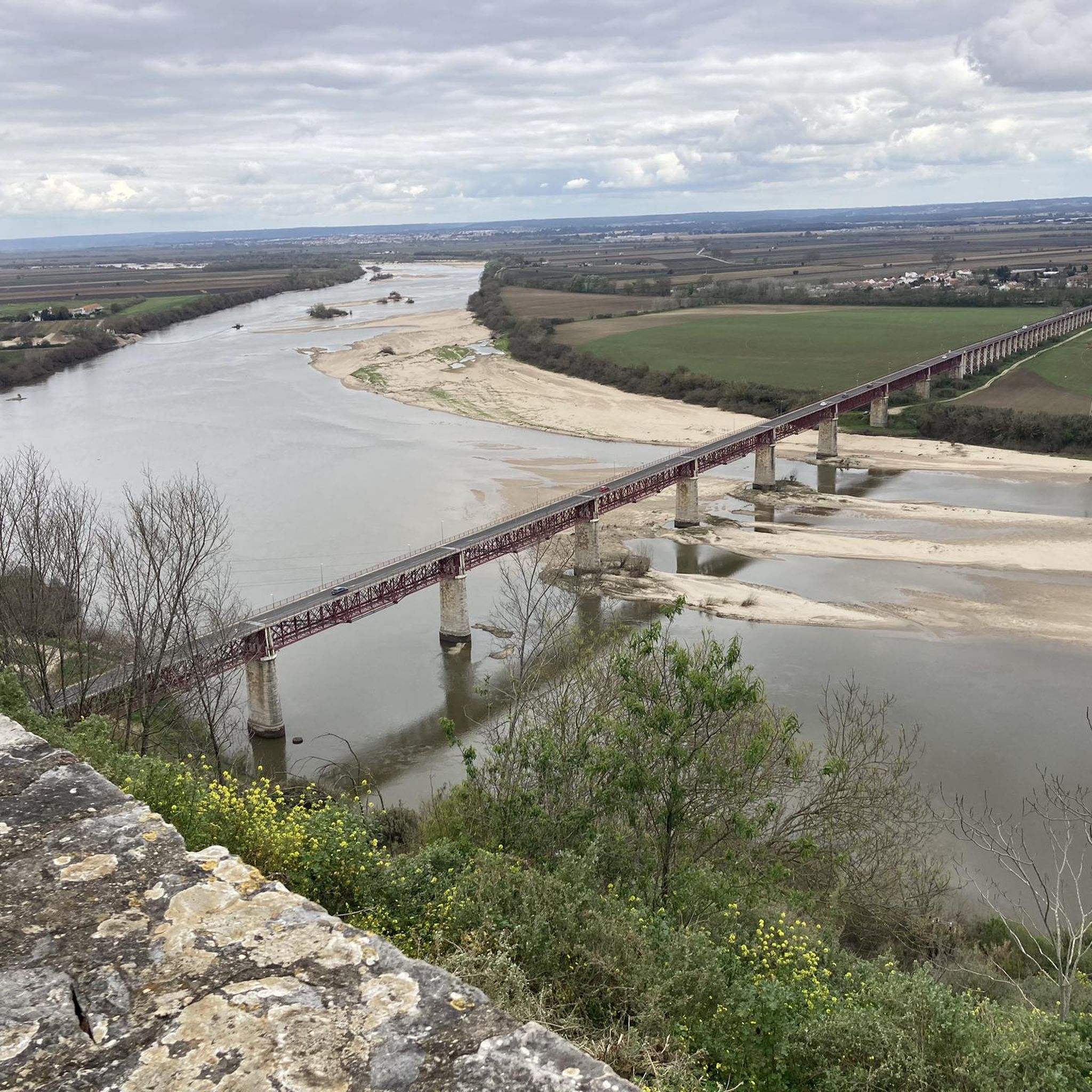
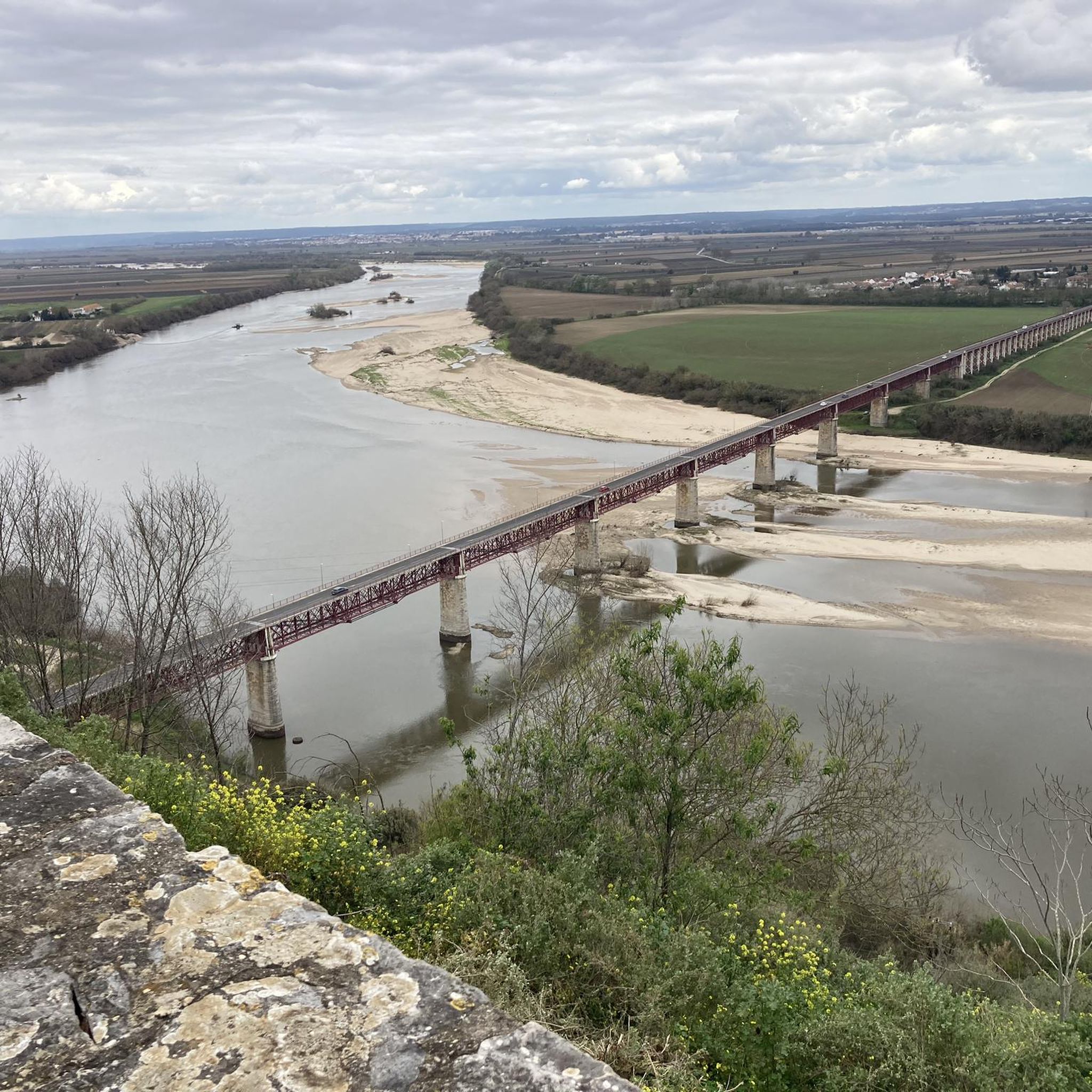
- The most popular attractions is Ponte Rainha D. Amélia, a bridge that offers superb views of the Tagus River. Inaugurated in 1904 as a railway bridge, it was later converted for road use.
- Another must-see spot is Ponte D. Luís I of Santarém, a bridge known for its iron architecture and historical significance. It was considered one of the largest bridges in the Iberian Peninsula at its inauguration in 1881.
- Visitors also love Roman Bridge of Muge, a historical site with Roman origins, later renovated in medieval times. This bridge crosses the Muge stream and served as a key crossing point connecting Muge to the interior and Santarém.
- Vale De Santarém is known for its historical sites, Gothic architecture, and natural landscapes. The area offers a variety of bridges, religious buildings, and viewpoints to explore.
- The attractions around Vale De Santarém are appreciated by the komoot community, with 32 upvotes and 16 photos shared by visitors.
Last updated: July 1, 2026
Roman Bridge of Muge
Highlight • Bridge
The Roman presence in the parish of Muge is clearly evident in the area of Porto de Sabugueiro. The most striking vestiges of this historical period are found here.
Porto de Sabugueiro, due to its proximity to the Tagus River, was an important river port during the Roman period. Excavations and published studies define this location as an important Roman village, with ceramic production, due to the existence of a ceramic kiln found here in the 1960s.
Approximately 400 meters from this location is the Roman Bridge, which crosses the Muge stream. The construction techniques used, especially in the larger arch, undoubtedly indicate a Roman origin; however, the two smaller arches, due to their typology, are attributable to the Middle Ages.
This bridge was one of the main crossing points connecting Muge to the interior of the country (Alentejo) and to the city of Santarém.
It possesses undeniable historical value, forming part of the memory and heritage identity of the municipality of Salvaterra de Magos.
(Source: salvaterrademagos.pt)
Translated by Google •
Tip by

Ponte D. Luís I of Santarém
Highlight • Bridge
It was inaugurated on September 17, 1881 and was considered at the time, the largest in the Iberian Peninsula, the third in Europe and the sixth in the World, remaining as one of the examples of iron architecture.
It had a total length of 1,213 meters, a width of 6 meters and a height of 22 meters
The bridge was enlarged in 1956 with an innovative project by Edgar Cardoso.
On a headstone it says:
And the iron bridge extends its musculature of an antediluvian animal at the service of progress, uniting Estremadura and Alto Alentejo.
Translated by Google •
Tip by

Sign up now to discover places like this
Get recommendations on the best single tracks, peaks, & plenty of other exciting outdoor places.
Sign up for free
Cathedral of Santarém
Highlight • Religious Site
Translated by Google •
Tip by

Ponte Rainha D. Amélia
Highlight • Bridge
Translated by Google •
Tip by
Hoopoe Mural by Bordalo II, Rua 1º de Novembro, Santarém
Highlight • Monument
Translated by Google •
Tip by
Sign up for free to discover even more attractions around Vale De Santarém.
Sign up for free
Already have an account?
Start today with a free account
Your next adventure awaits.
Login or Signup



Tips from the Community

Built during the Roman period, it is an important vestige of that people's presence in the municipality. The Roman presence in the parish of Muge is clearly evident in the area of Porto de Sabugueiro. The most striking vestiges of this historical period are found here. Porto de Sabugueiro, due to its proximity to the Tagus River, was an important river port during the Roman period. Excavations and published studies define this location as an important Roman village, with ceramic production, due to the existence of a ceramic kiln found here in the 1960s. Approximately 400 meters from this location is the Roman Bridge, which crosses the Muge stream. The construction techniques used, especially in the larger arch, undoubtedly indicate a Roman origin; however, the two smaller arches, due to their typology, are attributable to the Middle Ages. This bridge was one of the main crossing points connecting Muge to the interior of the country (Alentejo) and to the city of Santarém. It possesses undeniable historical value, forming part of the memory and heritage identity of the municipality of Salvaterra de Magos. (Source: www.salvaterrademagos.pt)
16
0

Ride on the path dedicated for bikes. The road isn’t suitable for bikes, rough and slippery.
1
0

Watch out it can be slippery
1
0

The city has a certain charm, but it has faded for many years... As if the city had its heyday in the 1980s. Unfortunately, many shops are empty and the houses are falling into disrepair. Here and there, restoration and new construction is taking place, after all, it has remained Portuguese since 1147 AD. What is still very well preserved is the market hall with its typical ceramic tiles.
10
2
I can only agree with Marian, it is really beautiful and impressive, and the location is well chosen. Along with the bee in Lisbon and the rabbit in Porto, this is another work of art made from rubbish.
23
2

Worth seeing cathedral on the main square of the city of Santarem. Headquarters of the diocese of Santarém. The gilded wood carvings in the side altars are beautiful.
2
9

The Rainha D. Amélia Bridge, also known as Ponte D. Amélia, is an old railway bridge inaugurated on January 14, 1904. It was later converted to road use, with alternating circulation in both directions. The bridge allows pedestrians or bicycles to cross it via two narrow side roads. Crossing it is always a strong emotion.
6
0
Roman bridge, renovated in medieval times, which crosses the Muge stream, with a pebble deck and guardrails opened through slits, resting on 3 unequal arches, with a perfect turn. From the construction apparatus used, especially the larger arch, it is undoubtedly Roman in origin, however the other two smaller arches, due to their typology, are attributable to the Middle Ages. This Bridge was once one of the main crossing points, which connected Muge, both to the interior of the country (Alentejo) and to the city of Santarém.
8
0
Frequently Asked Questions
What historical and architectural sites can I explore in Santarém?
Santarém, often called Portugal's "Gothic gem," offers a wealth of historical and architectural sites. You can visit the impressive Cathedral of Santarém, formerly a Jesuit college, which also houses a Diocesan Museum. Other notable sites include the Gothic Igreja da Graça, the Igreja Nossa Senhora de Marvila known for its 17th-century azulejos, the Santuário do Santíssimo Milagre, the 15th-century Torre das Cabaças, and the historic Convent of Saint Francis.
Are there any Roman historical sites near Vale de Santarém?
Yes, the region has remnants of its Roman past. The Roman Bridge of Muge is an important vestige of Roman presence, particularly in the area of Porto de Sabugueiro. Additionally, the Urbi Scallabis Interpretation Center, located within the old castle fortress at Jardim das Portas do Sol, provides insights into Santarém's Roman history.
Where can I find the best panoramic views of the Tagus River?
For breathtaking panoramic views, head to the Jardim das Portas do Sol, perched atop Santarém's ancient walls. The Miradouro de São Bento also offers sweeping views of the Tagus River and its extensive plain. The Ponte Rainha D. Amélia, a historic bridge, provides superb views of the river as well.
What kind of outdoor activities can I do near these attractions?
The area around Vale de Santarém is great for outdoor activities. You can find various routes for hiking, running, and cycling. For example, there are easy hikes like the 'From the Santarém Plateau to the Tejo River Trail'. If you enjoy running, explore running trails such as the 'Igreja de São João de Alporão – Jardim das Portas do Sol loop'. Cyclists can find cycling routes like the 'Ponte Rainha D. Amélia loop'.
Are there any family-friendly attractions in the area?
Yes, several attractions can be enjoyed by families. The Cathedral of Santarém is listed as family-friendly. The Jardim das Portas do Sol offers open spaces and beautiful views for a relaxing family outing. For a unique experience, consider a short drive to the Serras de Aire e Candeeiros Natural Park, which features natural wonders like the Mira de Aire Caves and dinosaur footprints at Vale de Meious.
What natural features are prominent in the Vale de Santarém region?
The region is characterized by its picturesque landscapes overlooking the Tagus River. Key natural features include the vast and fertile Tagus River Floodplains (Lezíria do Tejo), important for agriculture and wildlife. The Serras de Aire e Candeeiros Natural Park, a short drive away, showcases a limestone massif with caves and unique geological formations. The Mata Nacional dos Sete Montes is a beautiful park with woods and ancient olive trees.
What is the Hoopoe Mural by Bordalo II, and where can I find it?
The Hoopoe Mural by Bordalo II is a unique and beautiful work of art located on Rua 1º de Novembro in the historic center of Santarém. This six-meter-tall figure is made from recycled rubbish by the artist Bordalo II and was inaugurated in 2022. It is also wheelchair accessible.
What do visitors enjoy most about the bridges around Vale de Santarém?
Visitors particularly enjoy the historical significance and scenic views offered by the bridges. The Ponte Rainha D. Amélia is praised for its superb views of the Tagus. The Ponte D. Luís I of Santarém is admired for its iron architecture and its historical status as one of the largest bridges in the Iberian Peninsula at its inauguration. The Roman Bridge of Muge is valued for its ancient origins and its role as a key historical crossing point.
Are there any unique cultural experiences or traditions in the Santarém region?
Yes, the Ribatejo region, where Santarém is located, is known for popular Portuguese traditions. These include the Fandango dance and the art of bullfighting with *campinos* (peasant riders), bulls, and horses. You can also experience vibrant local life at the Mercado Municipal, where you can sample local produce and observe daily rhythms.
Can I visit local wineries in the Tejo region near Santarém?
Absolutely. The area around Santarém is part of the Tejo wine region, which is known for its excellent wines. Many local wineries offer opportunities for tours and wine tastings, allowing you to explore the local viticulture and sample regional varieties.
What is the significance of the Igreja Nossa Senhora de Marvila?
The Igreja Nossa Senhora de Marvila is a significant example of Manueline style in Santarém. It is particularly renowned for its stunning 17th-century *azulejos* (Portuguese tiles) that completely cover its interior from floor to ceiling, earning it the epithet "cathedral of the 17th century tiles" in Portugal.
Is there a place to learn about the local history of Santarém?
Beyond the specific historical sites, the Urbi Scallabis Interpretation Center offers an immersive experience into the Roman history of Santarém. Located within the old castle fortress at Jardim das Portas do Sol, it provides valuable context about the city's ancient past.

Get inspired with the komoot mobile app


Explore more
Still not found the Highlight you’re looking for? See guides of the top attractions in other regions:
