The best road cycling routes around Vale De Santarém
4.3
(23)
1,045
riders
89
rides
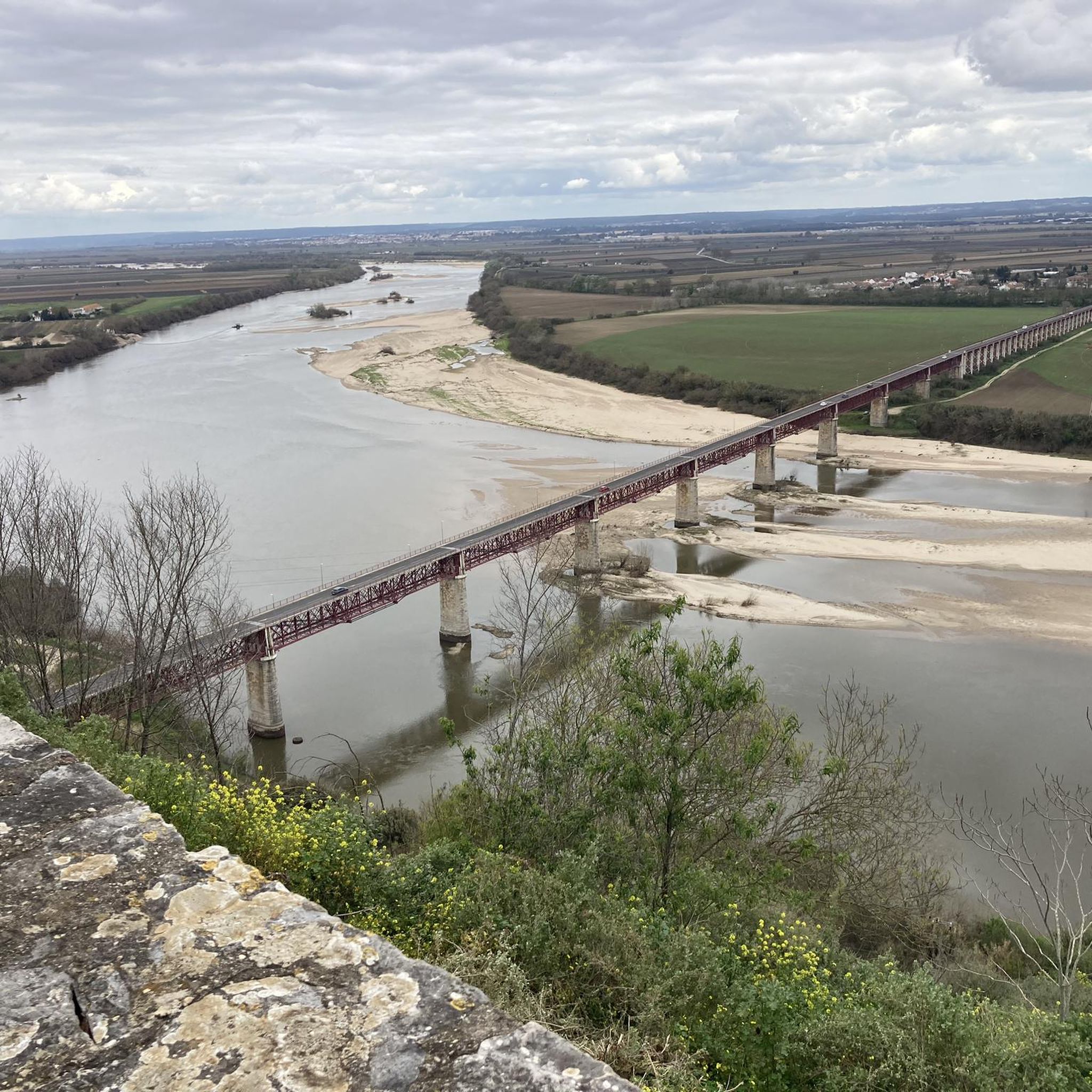
Road cycling around Vale De Santarém features routes that traverse the region's agricultural landscapes, including vineyards and olive groves, interspersed with historical towns. The terrain typically consists of rolling hills and river valleys, offering varied elevation profiles for cyclists. Routes often connect significant landmarks and bridges, indicating rides along waterways such as the Tagus River. The area provides a mix of moderate climbs and flatter sections, suitable for different cycling preferences.
Best road cycling routes around Vale De Santarém
- The…
Last updated: July 8, 2026
5.0
(2)
39
riders
Moderate road ride. Good fitness required. Mostly well-paved surfaces and easy to ride.
30
riders
Easy road ride. Great for any fitness level. Mostly well-paved surfaces and easy to ride.

Sign up for free
17
riders
111km
04:50
930m
930m
Hard road ride. Very good fitness required. Mostly well-paved surfaces and easy to ride.
14
riders
83.4km
03:44
790m
790m
Moderate road ride. Good fitness required. Mostly well-paved surfaces and easy to ride.
3.0
(1)
14
riders
Moderate road ride. Good fitness required. Mostly well-paved surfaces and easy to ride.
Get access to more routes and recommendations from other explorers.
Sign up for free
Already have an account?
Our route recommendations are based on thousands of hikes, rides, and runs completed by other people on komoot.
Start today with a free account
Your next adventure awaits.
Login or Signup



Tips from the Community

Ride on the path dedicated for bikes. The road isn’t suitable for bikes, rough and slippery.
1
0

I didn't go in, but I recommend it.
11
2

Watch out it can be slippery
1
0

publication of the royal charter of 26 July 1811, which, in order to mitigate the devastating effects of the French invasions, prescribed, among many other measures, the distribution of seeds to farmers in order to re-establish cereal production. The Real Celeiro was active for over sixty years, between 1812 and 1873, but, quoting Guilherme Henriques, “it died, like all good institutions, annihilated by abuses”. The City Council now holds the archive of the old Celeiro, which, although not very voluminous, nevertheless allows us to reconstruct almost the entire history of this important local institution of the 19th century. Commissioned to be rebuilt by the Municipality of Alenquer in 2002, it opened its doors as the Wine Museum and headquarters of the Lisbon Wine Route in 2006. Its interior was remodeled and its museology project renewed at the end of 2018, and it reopened its doors to visitors in February 2019. (Source: www.alenquer.pt)
10
0

Church of Santa Maria da Graça, where Pedro Álvares Cabral is buried. Today it is only used as a museum. For special occasions, such as a wedding, the church can still be used as such.
15
1
Santarem has been Portuguese since 1147 and, with an old town center of almost 2 square kilometers, is one of the largest in the country. The city may be a little old, but it is definitely worth a visit.
24
1

Founded in the year 970 of the Christian era (which is why it is currently considered an ancient town), during the reign of the Moorish king D. Ramiro III, it was first given the name of al-quniTrâ”, a diminutive of “al-qanTarâ”, or Alcântara, which means – the small bridge. Alcoentre received its first charter from D. Afonso Henriques in the city of Coimbra, in October 1174, and became the oldest administrative unit and local district in the municipality of Azambuja. Since Alcoentre was registered by the Crown, it remained “land of the king” (or land of the king) until D. Dinis. During this reign, it ceased to be land of the king, also known as Lavrador, and began a long journey as land of private manorial jurisdiction. This charter was reformulated by D. Manuel in Lisbon, on 26 September 1513.
3
0
Operating since April 2006 in a 19th-century building, the Wine Museum exhibits, offers tastings and allows the purchase of the best wines from the region. Around 20 producers from the Lisbon Wine Routes Association are represented.
5
0
Frequently Asked Questions
How many road cycling routes are available in Vale De Santarém?
There are over 90 road cycling routes around Vale De Santarém, offering a wide range of options for different skill levels and preferences. These routes traverse agricultural landscapes, river valleys, and historical towns.
Are there easy road cycling routes suitable for beginners in Vale De Santarém?
Yes, Vale De Santarém offers a good selection of routes suitable for beginners, with 13 routes classified as easy. These typically feature gentler terrain and shorter distances, allowing new cyclists to enjoy the region's scenery without excessive challenge.
What kind of terrain can I expect on road cycling routes in Vale De Santarém?
The terrain around Vale De Santarém is characterized by rolling hills and river valleys, offering a mix of moderate climbs and flatter sections. You'll cycle through agricultural areas, including vineyards and olive groves, often along waterways like the Tagus River.
Are there challenging routes for advanced road cyclists in Vale De Santarém?
Absolutely. For experienced cyclists seeking a challenge, there are 14 difficult routes available. An example is the 69.0-mile (111.1 km) Alenquer Wine Museum – Alenquer loop from Santana-Cartaxo, which features significant elevation gain through vineyard landscapes.
What are some scenic highlights or landmarks I can see along the road cycling routes?
Many routes offer views of historical bridges and significant landmarks. You can encounter structures like the Ponte Rainha D. Amélia, the Roman Bridge of Muge, and the Ponte D. Luís I of Santarém. The Cathedral of Santarém is another notable point of interest.
Are there any circular road cycling routes in Vale De Santarém?
Yes, many of the road cycling routes in Vale De Santarém are designed as loops, allowing you to start and finish at the same point. For instance, the popular Ponte D. Luís I of Santarém – Ponte Rainha D. Amélia loop from Santana-Cartaxo is a moderate 31.0-mile (49.8 km) circular path.
What is the best time of year for road cycling in Vale De Santarém?
The spring (March to May) and autumn (September to November) months are generally ideal for road cycling in Vale De Santarém. During these periods, the weather is typically mild and pleasant, avoiding the intense heat of summer and the wetter conditions of winter, making for more comfortable rides through the scenic landscapes.
What do other road cyclists enjoy most about the routes in Vale De Santarém?
The komoot community highly rates the road cycling experience in Vale De Santarém, with an average score of 4.2 stars from over 20 reviews. Cyclists often praise the varied terrain, the picturesque agricultural landscapes, and the historical points of interest along the routes.
Are there any routes that offer views of the Tagus River?
Yes, several routes in the region incorporate views of the Tagus River, often linking historic bridges that span its waters. The Ponte D. Luís I of Santarém – Ponte Rainha D. Amélia loop from Santana-Cartaxo is a good example, offering scenic river vistas.
Are there any road cycling routes that pass through wine regions?
Yes, the region is known for its agricultural landscapes, including vineyards. Routes like the Alenquer Wine Museum – Alenquer loop from Santana-Cartaxo specifically lead through vineyard areas, offering a unique cultural and scenic experience.
What is the longest road cycling route available in Vale De Santarém?
One of the longer routes is the Alenquer Wine Museum – Alenquer loop from Santana-Cartaxo, which spans 69.0 miles (111.1 km) and takes approximately 4 hours and 49 minutes to complete, offering an extensive exploration of the region.
Are there routes that connect different towns or villages in the area?
Many routes are designed to connect various towns and villages, allowing cyclists to experience the local culture and architecture. For example, the Cathedral of Santarém – Municipal Market of Santarém loop from Santana-Cartaxo connects key points within and around Santarém.
Most popular routes around Vale De Santarém
Most popular attractions around Vale De Santarém

Get inspired with the komoot mobile app


Explore more
Browse the best Road cycling routes in other regions.
