The best walks and hikes around Kapuzinerberg
4.6
(4789)
38,638
hikers
15
hikes
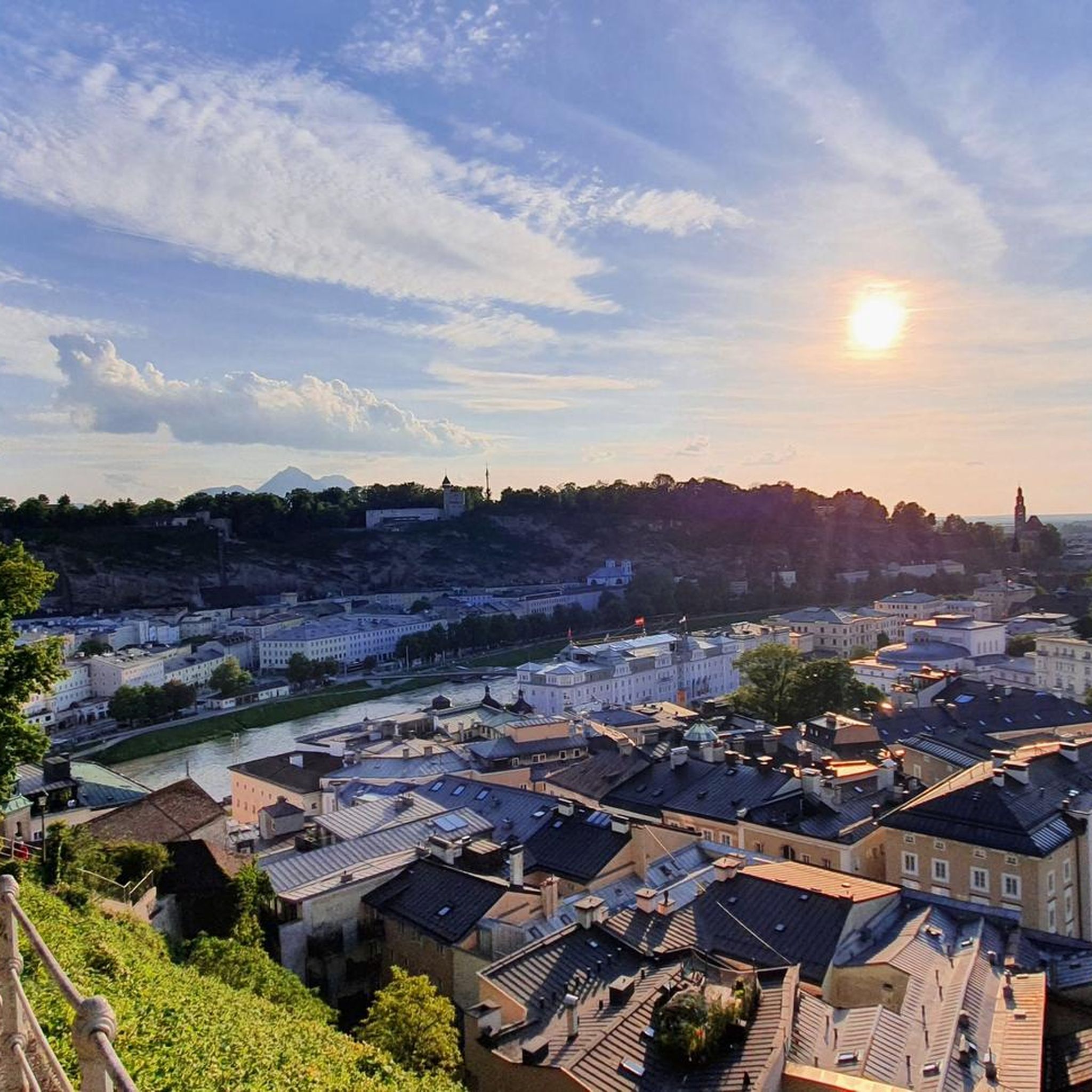
Hiking around Kapuzinerberg offers a blend of natural beauty and historical landmarks on a prominent hill rising to 2,100 feet (640 meters) on the eastern bank of the Salzach river. The area is characterized by dense forests and winding footpaths, providing a refreshing escape within Salzburg. Terrain varies from paved, moderate trails to rougher paths with stairs, offering diverse hiking experiences. Numerous viewpoints provide panoramic vistas of Salzburg's historic Old Town and the surrounding Alps.
Best hiking trails around Kapuzinerberg
- The most popular hiking route is Salzburger Bierkultur, a 3.2 miles (5.2 km) trail that takes 1 hour 28 minutes to complete. This easy route explores the city's cultural side with gentle elevation changes.
- Another top favourite among local hikers is Mirabell Palace – Mirabell Gardens loop from Salzburg, an easy 3.4 miles (5.5 km) path. This route offers scenic views of city landmarks and gardens.
- Local hikers also love the Linzer Gasse – Getreidegasse (Grain Lane) loop from Salzburg, a 1.9 miles (3.1 km) trail leading through historic city streets, often completed in about 51 minutes.
- Hiking around Kapuzinerberg is defined by dense forests, winding footpaths, panoramic city views, and historic fortifications. The network offers options for different ability levels, primarily focusing on easy routes.
- The routes in Kapuzinerberg are highly rated by the komoot community with an average score of 4.6 stars from over 3,800 reviews. More than 31,000 hikers have used komoot to explore Kapuzinerberg's varied terrain.
Last updated: July 9, 2026
4.8
(12)
66
hikers
5.20km
01:28
110m
110m
Easy hike. Great for any fitness level. Easily-accessible paths. Suitable for all skill levels.
4.6
(8)
143
hikers
5.51km
01:30
80m
80m
Easy hike. Great for any fitness level. Easily-accessible paths. Suitable for all skill levels.

Sign up for free
33
hikers
Easy hike. Great for any fitness level. Easily-accessible paths. Suitable for all skill levels.
10
hikers
Easy hike. Great for any fitness level. Easily-accessible paths. Suitable for all skill levels.
4.0
(1)
68
hikers
Easy hike. Great for any fitness level. Easily-accessible paths. Suitable for all skill levels.
Get access to more routes and recommendations from other explorers.
Sign up for free
Already have an account?
Our route recommendations are based on thousands of hikes, rides, and runs completed by other people on komoot.
Start today with a free account
Your next adventure awaits.
Login or Signup
Popular around Kapuzinerberg
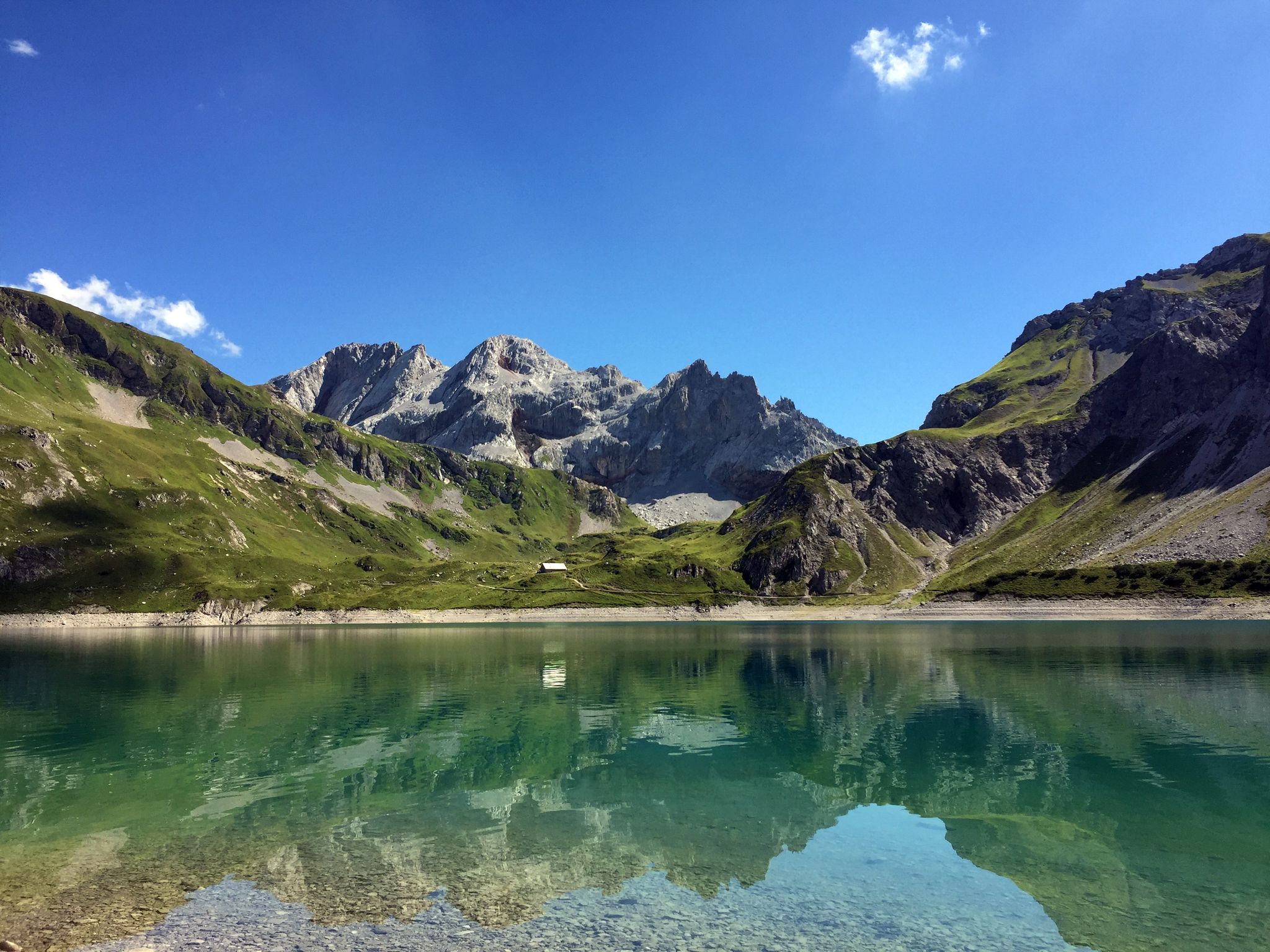
Mighty mountains and historic cities – hiking in Austria
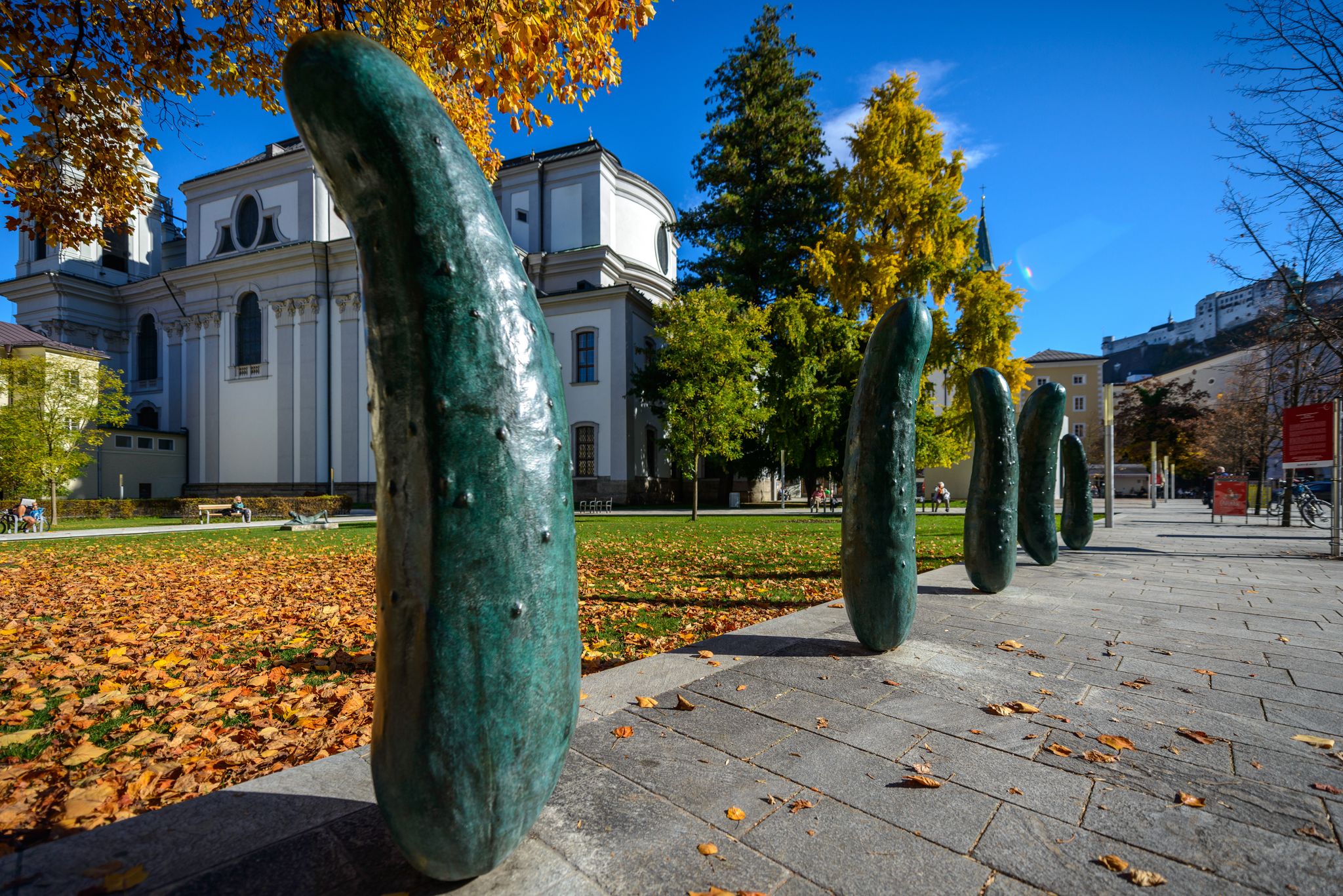
Something different – city walks through Salzburg
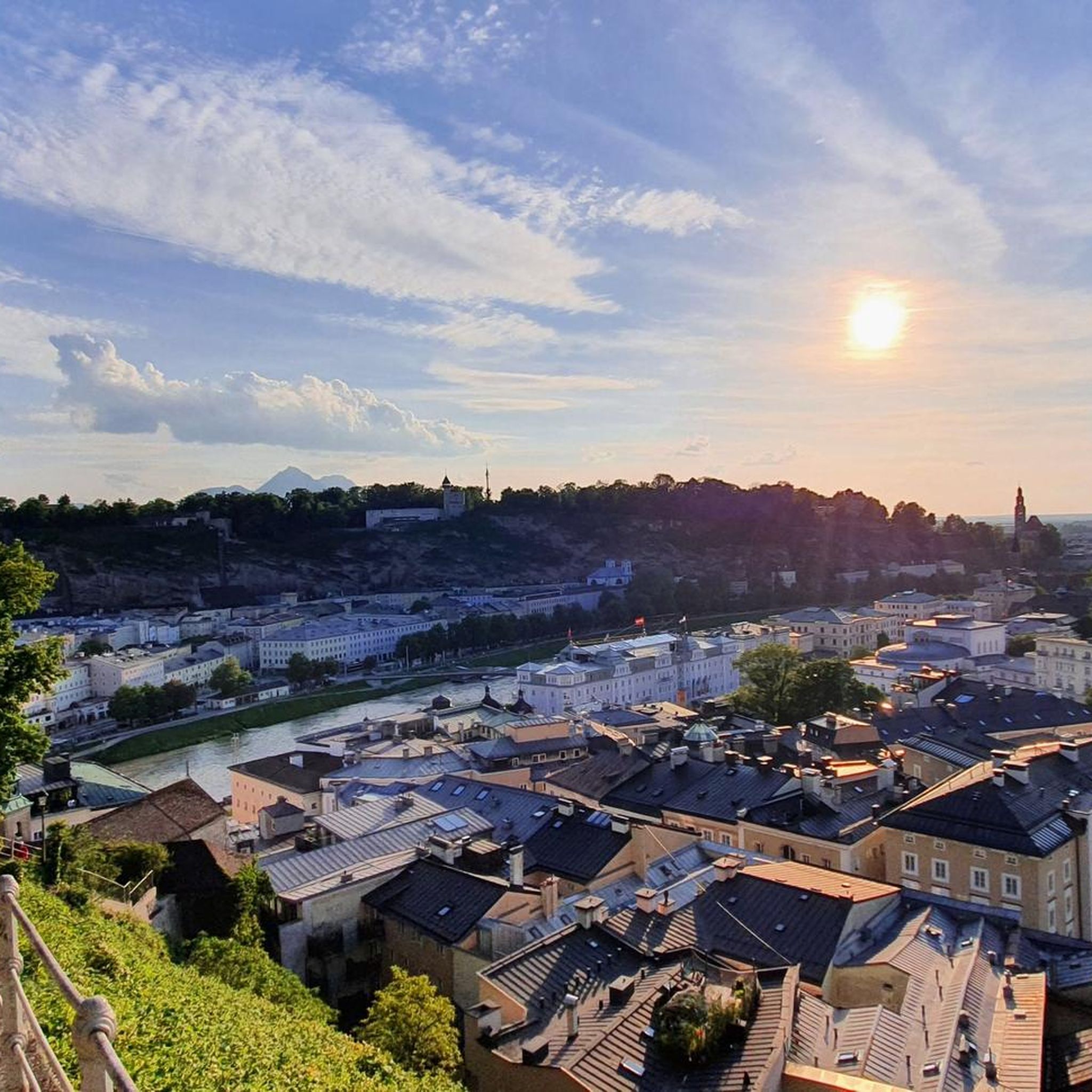
Cycling around Kapuzinerberg
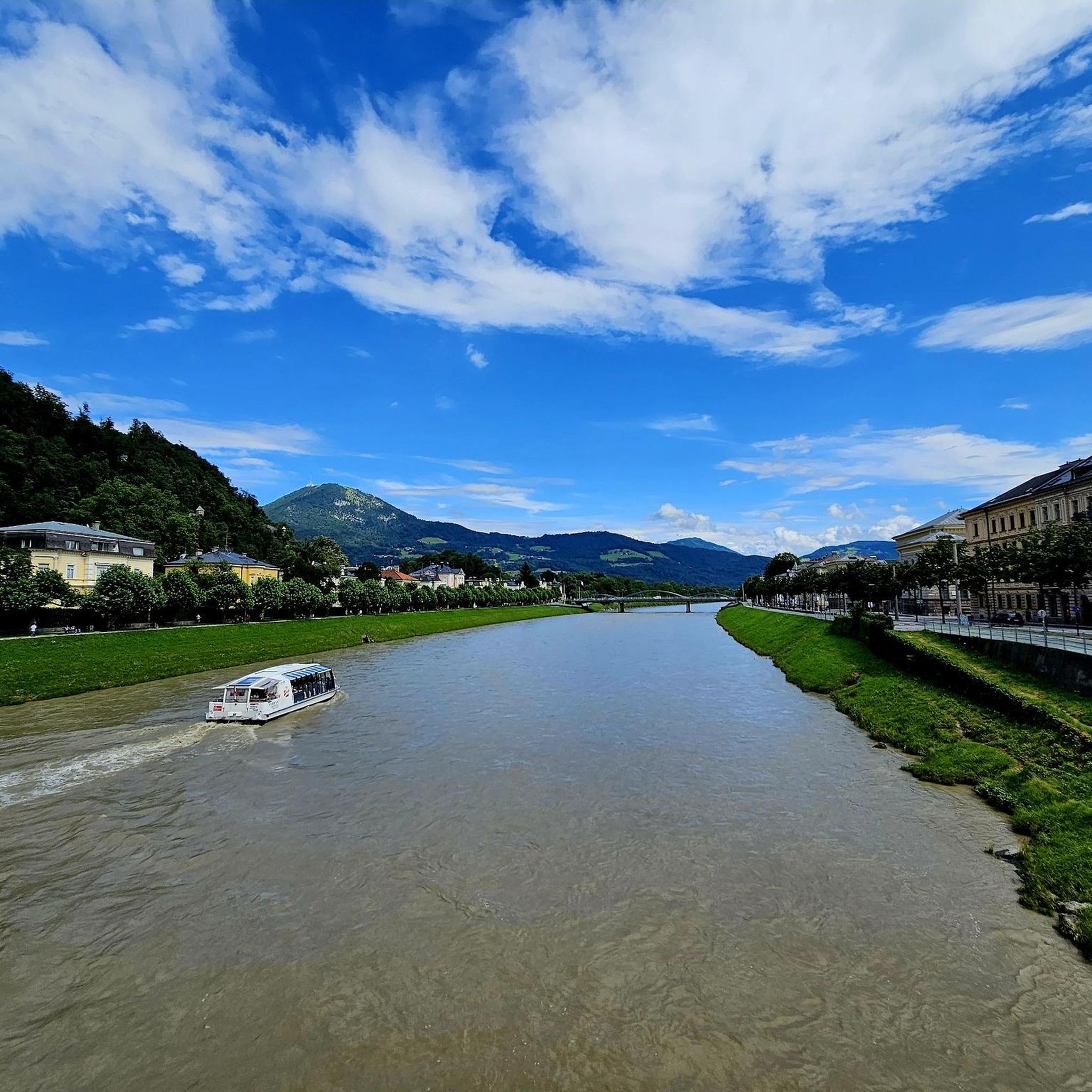
Running Trails around Kapuzinerberg
Road Cycling Routes around Kapuzinerberg
Gravel biking around Kapuzinerberg
MTB Trails around Kapuzinerberg
Mountain Hikes around Kapuzinerberg


Tips from the Community


A lovely, always lively little spot.
4
0

Beautiful view of the city and fortress
0
0

Anyone who isn't afraid of the path up the Mönchsberg and is lucky enough to walk it on a clear morning will sooner or later find themselves before it: the Müllner Schanze. A gate. A building. A relic. It stands there silently, roughly hewn, encircled by greenery, like a sentinel of past centuries. Three windows gaze sternly into the present, below a dark passage that doesn't open but draws you into what lies beyond – shadows, history, the city. Built in the days of the Thirty Years' War, when Salzburg still had prince-archbishops and walls were not picturesque but vital. Paris Lodron, it is said, had this St. Monica Gate built – as a complement to the St. Augustine Gate. They reinforced what seemed too weak, what couldn't suffice against what lurked outside. Today, nothing lurks. At most, there is the feeling that time moves a little slower here. The stone staircase behind the gate isn't an invitation, but a test. Every step up makes you realize that ascent here isn't just a topographical one. Up above, on the plateau, the view awaits—but also the realization that sometimes it's good to leave the city behind. From here, you see it differently. Smaller. Clearer. Perhaps even more peaceful.
1
0

Mozartplatz & Mozart Monument, Salzburg Mozartplatz is located in the center of Salzburg's old town, in the immediate vicinity of Residenzplatz and Salzburg Cathedral. While the buildings around the square tell many stories, the centerpiece is clearly the Mozart statue. The history of the Mozart statue In the center of Mozartplatz is the Mozart monument by Ludwig Schwanthaler. The statue was supposed to be erected in 1841 on the 50th anniversary of W. A. Mozart's death. However, the unveiling of the monument was delayed by a year because a Roman mosaic was found in the ground, which took a long time to recover. On September 4, 1842, the statue was ceremoniously unveiled in the presence of Mozart's sons. The Bavarian King Ludwig I was an important supporter of the Mozart statue and donated the marble base. A copy of the Roman mosaic can still be found at the feet of the statue today. Mozartplatz then and now Mozartplatz and its buildings are closely linked to the history of the city of Salzburg. On the north side, in the so-called Imhofstöckl (No. 5), is the tourist information office. Behind it is part of the old city wall, which dates back to the time of Prince Archbishop Paris Lodron. Opposite, on the south side, is the New Residence, which has been home to the Salzburg Museum since 2007. The house at Mozartplatz 8 was the home of Constanze Mozart-Nissen, Mozart's widow. On the west side, facing the cathedral, are the Salzburg Christmas Museum and the famous Café Glockenspiel. The poet Georg Trakl was born just a few steps away in 1887. Text / Source: TSG Tourismus Salzburg GmbH, Auerspergstraße 6, Salzburg https://www.salzburg.info/de/sehenswertes/plaetze-strassen/mozartplatz-mozartdenkmal
16
1
Orangery in the Mirabell Gardens, Mirabell Palace, Salzburg The Orangery in the Mirabell Gardens is more of an insider tip. It is located in the southern part of Mirabell Palace. The palm house was built around 1725 next to the large garden parterre. The name Orangery comes from the time when orange trees and exotic ornamental woods were still being cultivated. Precious, non-hardy plants were brought back to the Orangery to overwinter. Orange trees were seen as a metaphor for wealth in the Baroque period and for this reason were a must even then. The eastern part of the Orangery was used for other purposes after the Second World War and was not put back together again until 1980. The Baroque Museum is now located in the southern part of the Orangery. Today, in the northern part of the building, somewhat hidden, there is a small, beautiful tropical garden. A small pool with turtles and goldfish and for bird lovers there is a very large birdcage with numerous birds to marvel at. Opening hours of the Orangery in the Mirabell Gardens Open all year round, daily from 9 a.m. to 4 p.m. Text / Source: Salzburger Saalachtal. com https://www.salzburger-saalachtal.com/ausflugsziele/stadt-salzburg/mirabellgarten/orangerie-mirabellgarten
14
0
Mirabell Gardens & Mirabell Park (Mirabell Palace), Salzburg The world-famous Mirabell Gardens were laid out along a north-south axis and are oriented towards Salzburg Cathedral and Hohensalzburg Fortress. The original gardens were designed by Johann Bernhard Fischer von Erlach in 1689, commissioned by Prince-Archbishop Johann Ernst Count von Thun. In 1730, the gardens were significantly altered, with Franz Anton Danreiter responsible for the new plans. Even at this time, the "Mirabell Gardens" were known as one of the most beautiful parks in Europe. In the 19th century, the Mirabell Gardens underwent another major transformation, this time resulting in the destruction of parts of the garden. This included the original Dwarf Garden in its 18th-century form, some arcades facing Mirabellplatz, and the so-called Sala Terena northwest of Mirabell Palace. The "Grand Parterre" is not only the largest enclosed section of the Mirabell Gardens but is also one of its oldest parts. If you enter the Mirabell Gardens from the Market Square, you will encounter two pairs of Borghese swordsmen on the Grand Parterre. The inner pair is by A. Götzinger, the outer pair by M. B. Mandl; both pairs were created in the 17th century. Text / Source: TSG Tourismus Salzburg GmbH, Auerspergstraße 6, Salzburg https://visit-salzburg.net/deutsch/sehenswuerdig/mirabellgarten.htm
13
0
Mirabell Palace, Salzburg The Baroque Mirabell Palace was originally built as "Altenau Palace" under the reign of Prince Archbishop Wolf Dietrich von Raitenau in 1606. The palace was created as a gift for Salome Alt, the archbishop's concubine and mother of his children. Mirabell Palace is known for its gardens, which are discussed in a separate article. Wolf Dietrich's successor and adversary, Prince Archbishop Markus Sittikus, renamed the building Mirabell Palace. Prince Archbishop Franz Anton Harrach had large sections of the building demolished and rebuilt between 1721 and 1727 according to plans by Johann Lukas von Hildebrandt. Mirabell Palace was severely damaged by the great city fire of 1818 and rebuilt in the following years according to plans by Peter Nobile. The formerly dominant tower on the east wing of the palace was destroyed, and the facade was rebuilt in the Neoclassical style. Text / Source: TSG Tourismus Salzburg GmbH, Auerspergstraße 6, Salzburg https://www.visit-salzburg.net/deutsch/sehenswuerdig/schloss-mirabell.htm
14
0
Frequently Asked Questions
What kind of terrain can I expect on the hiking trails around Kapuzinerberg?
Kapuzinerberg offers a mix of terrain. You'll find shaded paths through dense forests, with some trails being paved and moderate, while others are rougher with stairs. The area provides natural trails and clear air, making it suitable for various preferences.
Are there any easy hiking routes suitable for beginners or casual walkers?
Yes, all 16 hiking routes around Kapuzinerberg are rated as easy. For example, the Salzburger Bierkultur trail is 5.2 km long with gentle elevation changes, and the Linzer Gasse – Getreidegasse (Grain Lane) loop from Salzburg is a shorter 3.1 km path through historic streets.
What are the best viewpoints on Kapuzinerberg for panoramic city views?
Kapuzinerberg is renowned for its stunning panoramic views. Key spots like the Hettwerbastei and the Franziskischlössl offer excellent lookout points over Salzburg's historic Old Town, the Hohensalzburg Fortress, and the surrounding Alps. You can also find great views from the View of Hohensalzburg Fortress and Salzburg's Old Town from the Salzach Cycle Path.
Are there any historical landmarks or attractions to see while hiking?
Absolutely. Kapuzinerberg is rich in history, featuring 400-year-old defensive walls, military towers like Felixpforte, and old artillery bastions. The Capuchin Abbey is a significant religious site, accessible via a pathway marked with chapels representing the Way of the Cross to the Capuchin Monastery. You can also find the St. Johannes am Imberg Church and the St. Sebastian's Cemetery (Mozart Family Graves) nearby.
Can I find circular hiking routes on Kapuzinerberg?
Yes, many routes on Kapuzinerberg are designed as loops. The main paved loop, known as the Stefan-Zweig-Weg, is about 4.8 km long. Several komoot routes are also loops, such as the Mirabell Palace – Mirabell Gardens loop from Salzburg, which offers scenic views of city landmarks and gardens.
Is Kapuzinerberg suitable for family hikes?
Yes, Kapuzinerberg is generally suitable for families, especially given that all 16 available routes are rated as easy. The varied terrain and historical points of interest can make for an engaging outing for children. The main paved loop is a good option for a family-friendly walk.
What unique wildlife might I encounter on Kapuzinerberg?
Kapuzinerberg is home to a unique colony of wild chamois, which can sometimes be spotted by hikers. You might also find rare alpine plants and animals, such as alpine auricula and rhododendron, and breeding common ravens in the colder, inaccessible northern rocks.
Are there places to eat or refresh after a hike on Kapuzinerberg?
Yes, the Franziskischlössl, originally a defensive structure, has been converted into a popular tavern. It serves as an excellent excursion destination and refreshment stop, particularly appealing after a hike, and offers fantastic views of Salzburg's New Town.
What do other hikers say about the trails in Kapuzinerberg?
The trails in Kapuzinerberg are highly rated by the komoot community, with an average score of 4.6 stars from over 3,800 reviews. Hikers often praise the blend of natural beauty, historical landmarks, and the stunning panoramic city views.
How long does it typically take to hike the trails on Kapuzinerberg?
Hiking durations vary depending on the specific route and your pace. For instance, the Salzburger Bierkultur route takes approximately 1 hour 28 minutes, while the Salzburg Cathedral – Historic Centre of Salzburg loop from Salzburg is a longer option at about 1 hour 55 minutes.
Is there public transport access to Kapuzinerberg for hikers?
Kapuzinerberg is conveniently located within Salzburg, making it accessible via public transport. The hill rises directly from the eastern bank of the Salzach river, close to the city center, allowing for easy access to trailheads from various bus stops.
Most popular routes around Kapuzinerberg
Most popular attractions around Kapuzinerberg

Get inspired with the komoot mobile app


Explore more
Browse the best Hikes in other regions.
