The best walks and hikes around Studland
4.7
(591)
8,206
hikers
62
hikes
Hikes around Studland explore a varied landscape on the Isle of Purbeck, part of the Jurassic Coast. The region is characterized by chalk sea stacks, sandy beaches, and the Studland and Godlingston Heath National Nature Reserve. Trails follow coastal paths along cliff tops and weave through lowland heath, offering a mix of terrains for walkers.
Best hiking trails around Studland
- The most popular hiking route is Old Harry Rocks Loop, a 4.0 mile (6.4 km) trail that takes about 1 hour 45 minutes to complete. This route leads to the iconic Old Harry Rocks chalk formations.
- Another top favourite among local hiking enthusiasts is Old Harry, Ballard Down & the Agglestone Rock loop from Studland — Isle of Purbeck, a moderate 6.5 mile (10.5 km) path. The trail combines coastal views with a journey across heathland to a notable sandstone rock.
- Local hiking enthusiasts also love the Old Harry & Ballard Down loop from Studland — Isle of Purbeck, a 5.9 mile (9.4 km) trail leading through coastal grassland, often completed in about 2 hours 40 minutes.
- Hiking around Studland is defined by coastal paths, chalk headlands, and expansive heathlands. The network of trails provides routes suitable for various fitness and experience levels.
- The routes in Studland are highly rated by the komoot community with an average score of 4.8 stars from over 400 reviews. More than 4,900 hikers have used komoot to explore Studland's varied terrain.
Last updated: August 17, 2026
4.9
(116)
1,079
hikers
6.36km
01:46
120m
120m
Easy hike. Great for any fitness level. Easily-accessible paths. Suitable for all skill levels.
4.6
(41)
350
hikers
10.5km
02:56
200m
210m
Embark on the Old Harry Rocks and Ballard Down Circular, a moderate hiking route that offers expansive coastal views. This trail covers 6.5 miles (10.5 km) with an elevation gain of 660 feet (201 metres), taking approximately 2 hours and 56 minutes to complete. As you hike, you will encounter the striking chalk sea stacks of Old Harry Rocks, a prominent landmark along the Jurassic Coast. The path then leads you across Ballard Down, where you can enjoy panoramic vistas stretching across Poole Bay towards Bournemouth and even the Isle of Wight. The terrain is varied, featuring uneven dirt paths, grassy tracks, and some country roads, providing a dynamic experience.
Before you set out, be aware that sections of this route can become quite muddy, particularly during the winter months, so appropriate footwear is advisable. You will find amenities such as pubs and cafes in nearby Studland, which are perfect for refueling after your hike. Consider starting your hike earlier in the day to fully appreciate the views and avoid larger crowds, especially during peak season. Parking information for the trailhead can typically be found in Studland or nearby National Trust car parks.
This trail is a highlight of the Jurassic Coast, a UNESCO World Heritage Site renowned for its geological significance. Ballard Down, in particular, is known for its vibrant wildflowers during the summer and features ancient Bronze Age earthworks, adding a layer of historical interest to your journey. The route offers splendid views of Swanage Bay, providing a different perspective of the coastline. It's a fantastic way to experience the natural beauty and rich history of this unique part of England.

Sign up for free
4.6
(40)
335
hikers
9.44km
02:38
180m
180m
Embark on a moderate 5.9-mile (9.4 km) loop from Studland, offering varied terrain including dirt paths, loose stones, and grassy tracks. This hike, which takes about 2 hours and 37 minutes to complete, features a steady 587 feet (179 metres) of elevation gain as you ascend Ballard Down. You will be treated to panoramic views of the Jurassic Coast, with the iconic Old Harry Rocks standing prominently against the sea, and chalk grasslands that bloom with wildflowers in warmer months.
Before you set out, be aware that some sections of the route follow country roads without pavements, and muddy patches can occur after wet weather. The loop typically begins and ends in Studland, often near the South Beach Car Park, where you can find public toilets and cafes. Always exercise caution near the sheer cliff edges around Old Harry Rocks.
This route is notable for showcasing Old Harry Rocks, the dramatic chalk sea stacks that mark the easternmost point of the Jurassic Coast UNESCO World Heritage Site. As you traverse Ballard Down, you will pass three Bronze Age earthworks, adding a layer of historical interest to the natural beauty. The trail consistently delivers expansive vistas, encompassing the coastline, sea, and countryside, making it a highlight of the Isle of Purbeck.
4.8
(40)
291
hikers
9.67km
02:40
170m
170m
Embark on the Old Harry Rocks Circular Walk, a moderate hiking route spanning 6.0 miles (9.7 km) with an elevation gain of 542 feet (165 metres), typically completed in 2 hours and 40 minutes. You will experience varied terrain, from sand and dirt trails to grassy paths, as you explore the iconic Jurassic Coast. The highlight is undoubtedly the distinctive white chalk cliffs and the famous Old Harry Rocks, towering formations carved by erosion. From viewpoints like the one offering a 'View of Old Harry Rocks and Christchurch Bay', you will enjoy panoramic vistas across Poole Bay, extending to Bournemouth and even the Isle of Wight on a clear day. In summer, the grasslands of Ballard Down burst with wildflowers, adding to the natural beauty of your journey.
When planning your visit, be aware that parts of the trail can become very muddy during winter months, so appropriate footwear is essential. While many paths are open year-round, some routes might be unsuitable during bad weather or high tides, so always check conditions before you go. Parking is conveniently available near Studland, offering a straightforward starting point for your adventure. Consider an early start to avoid crowds, especially during peak season, and to fully immerse yourself in the coastal scenery.
This popular trail offers a diverse and captivating experience for many hikers, showcasing a significant part of the Jurassic Coast, a UNESCO World Heritage Site. The unique geology of the Old Harry Rocks, formed by millennia of erosion, makes this a truly special destination. You will witness the dramatic interplay of land and sea, a testament to natural forces. The route provides an excellent opportunity to connect with the natural environment and appreciate the rich history embedded in the landscape.
5.0
(8)
114
hikers
6.81km
01:48
60m
60m
Embark on an easy 4.2-mile (6.8 km) hike around Brownsea Island, a captivating loop that takes about 1 hour and 47 minutes to complete, with a gentle 197 feet (60 metres) of elevation gain. You will wander through a diverse landscape, moving from peaceful pine-woods and heathland to sandy beaches, meadows, and lagoons. The paths are a mix of footpaths, woodland trails, and coastal routes, offering varied surfaces. Along the way, enjoy spectacular seascapes, including views of neighboring islands, the Purbeck Hills, and distant landmarks like Old Harry Rocks, with glimpses of Poole Harbour through the trees.
Access to Brownsea Island is typically via a ferry from Poole Quay or Sandbanks; plan your visit accordingly as this is the only way to reach the island. The trail is suitable for most fitness levels, making it a great option for a relaxed day out. Keep in mind that dogs are generally not permitted on the island, with the exception of assistance dogs, so make arrangements if you are traveling with pets. Allow extra time beyond the hiking duration to explore the island's features and enjoy the scenery.
Brownsea Island is a crucial haven for rare red squirrels in southern England, with over 200 living in its woodlands; you might spot them foraging, especially in autumn. Beyond squirrels, the island is home to peacocks, deer, and a wide array of coastal and marshland birds, making it a paradise for birdwatchers. Historically, it holds significance as the site where Lord Baden-Powell held the first experimental camp in 1907, laying the foundation for the worldwide Scouting movement, a fact marked by a commemorative stone.
Get access to more routes and recommendations from other explorers.
Sign up for free
Already have an account?
Our route recommendations are based on thousands of hikes, rides, and runs completed by other people on komoot.
Start today with a free account
Your next adventure awaits.
Login or Signup
Popular around Studland
Walk Britain – 90 car-free adventures in England, Wales and Scotland
Heaths, history, commons and coast – 5 beautiful Purbeck walks
Trust10 – Trail Runs. In nature, for nature.
Running Trails around Studland
MTB Trails around Studland
Cycling around Studland
Road Cycling Routes around Studland
Gravel biking around Studland
Other adventures around Studland


Tips from the Community


The "Why" Behind the Hill Burt didn't just put it there because it looked nice. He dedicated it to his uncle and mentor, John Mowlem (another massive figure in Swanage history). But there was a practical side, too: A Landmark: It served as a waypoint for ships navigating the tricky waters around Old Harry Rocks. The View: Burt was obsessed with showing off the beauty of his hometown. By placing it on the ridge, he essentially gave people a reason to climb the hill and look down at the town he was helping to build. The Great Disappearing Act (WWII) If you look closely at the obelisk today, it looks remarkably "clean." That’s because the one you see now is a reconstruction. During World War II, the original stone obelisk was considered a "navigational hazard." The British military was worried that German pilots would use the tall, white stone pillar as a landmark to help them find their bearings for bombing raids on nearby Bournemouth or Poole. So, in 1941, they knocked it down. For decades, it lay in pieces in the grass. It wasn't until 1973 that the Encombe Estate and local residents gathered the resources to rebuild it (using a mix of the original stone and some fresh Purbeck masonry) to celebrate "Plant a Tree in '73"—though ironic, as there isn't a tree in sight on that windy ridge!
0
0
If you’ve been hiking those ridges, that lone stone pillar standing guard over Swanage has likely caught your eye. It’s officially known as the Ballard Down Obelisk (or the Burt Memorial), and the story behind it is a classic tale of Victorian pride, a bit of eccentricity, and some very literal "re-gifting." The "Stolen" Monument The obelisk wasn't originally built for the Purbeck Hills. It actually started its life in London. In the mid-1800s, it served as a monument to a man named James Thompson, standing near the entrance to the Vauxhall Bridge. However, when the bridge was being rebuilt in the late 19th century, the obelisk became an "obstruction" and was destined for the scrap heap. Enter George Burt: The Man Who Moved London Swanage looks the way it does today largely because of George Burt, a local businessman who ran a massive masonry firm in London. He had a habit of taking "architectural leftovers" from London and shipping them back to Swanage as ballast on his empty stone boats. When he saw the obelisk was going to be demolished in 1892, he stepped in. He didn't just save it; he dismantled it, shipped it down the coast, and hauled it all the way to the top of Ballard Down.
0
0
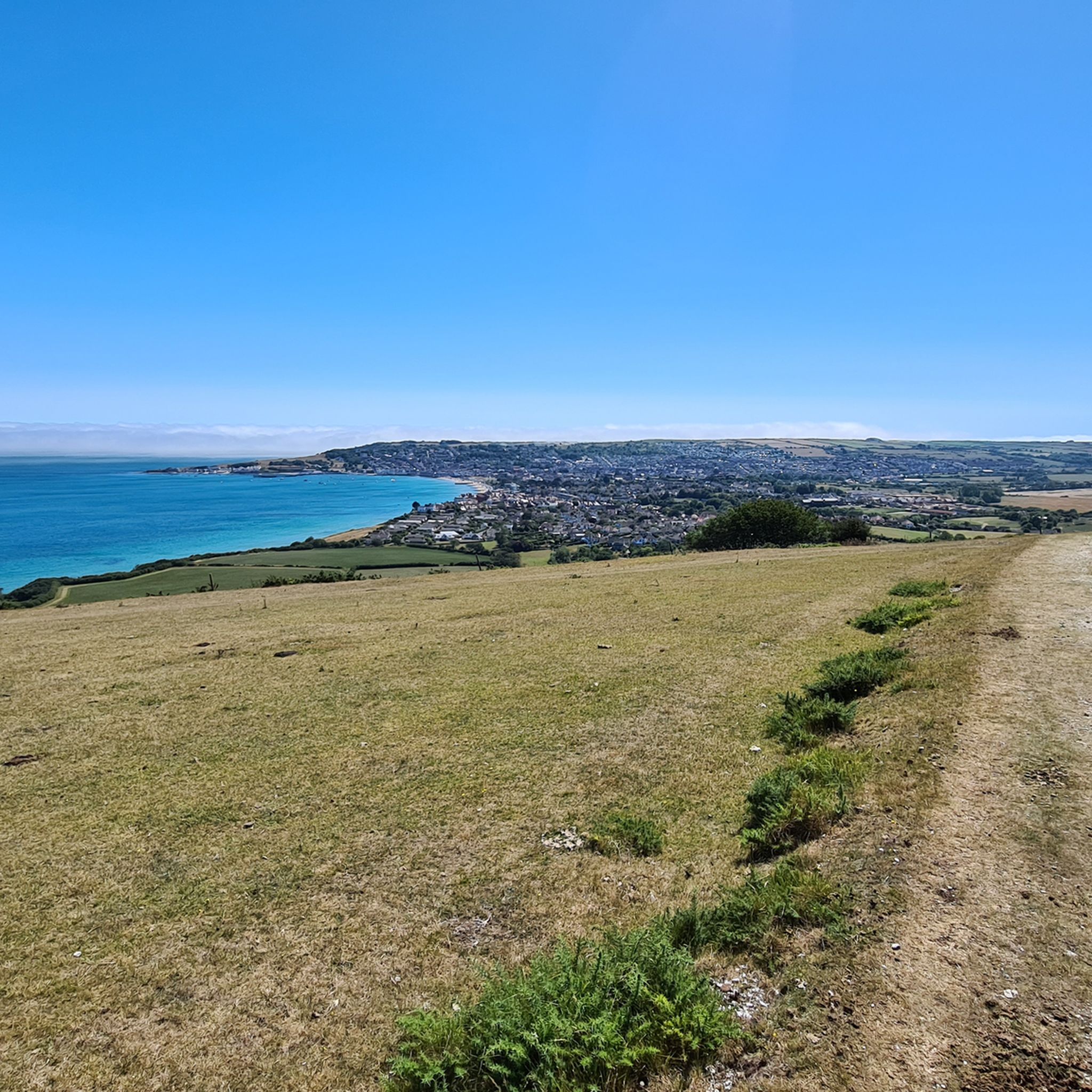
The Bay: You’ll see the curve of Swanage Bay, dotted with colorful buoys and the occasional fishing boat or yacht making its way toward the pier. The Steam Train: If you time it right, you’ll see a literal plume of white steam puffing across the valley. The Swanage Railway runs right through the landscape below, looking like a high-end model railway set from this height. Peveril Point: To the far left of the town, the land juts out into the sea. You can often see the "white water" where the tides churn around the ledge—it’s a great reminder of how powerful the coast is, even when it looks peaceful from your perch. The Isle of Wight: On a crisp day, look straight out past the cliffs. You’ll see the Needles rising out of the water like jagged white teeth in the distance.
0
0

Formerly an "anvil" shape with a flat top, in 1970 it fell on one end and one side, leaving the top at an angle of about 45°.
0
0
also known as the "Devil's Anvil," is a large, distinctive sandstone block located on a conical hill on Godlingston Heath near the village of Studland in south Dorset, England. This impressive rock, weighing approximately 400 tonnes, is a popular landmark and a local curiosity. Local legends offer a more dramatic explanation for the rock's existence. The most famous myth says the Devil, standing on The Needles on the Isle of Wight, hurled the massive rock with the intention of hitting Corfe Castle, Bindon Abbey, or Salisbury Cathedral. However, his aim was poor, and the rock landed short of its target, where it now sits. Before it toppled over in 1970, the rock had a flat top and an anvil-like shape, which led to its nickname "the Devil's Anvil." Some folklore also suggests that the rock was a holy stone or a Druidical altar.
0
0

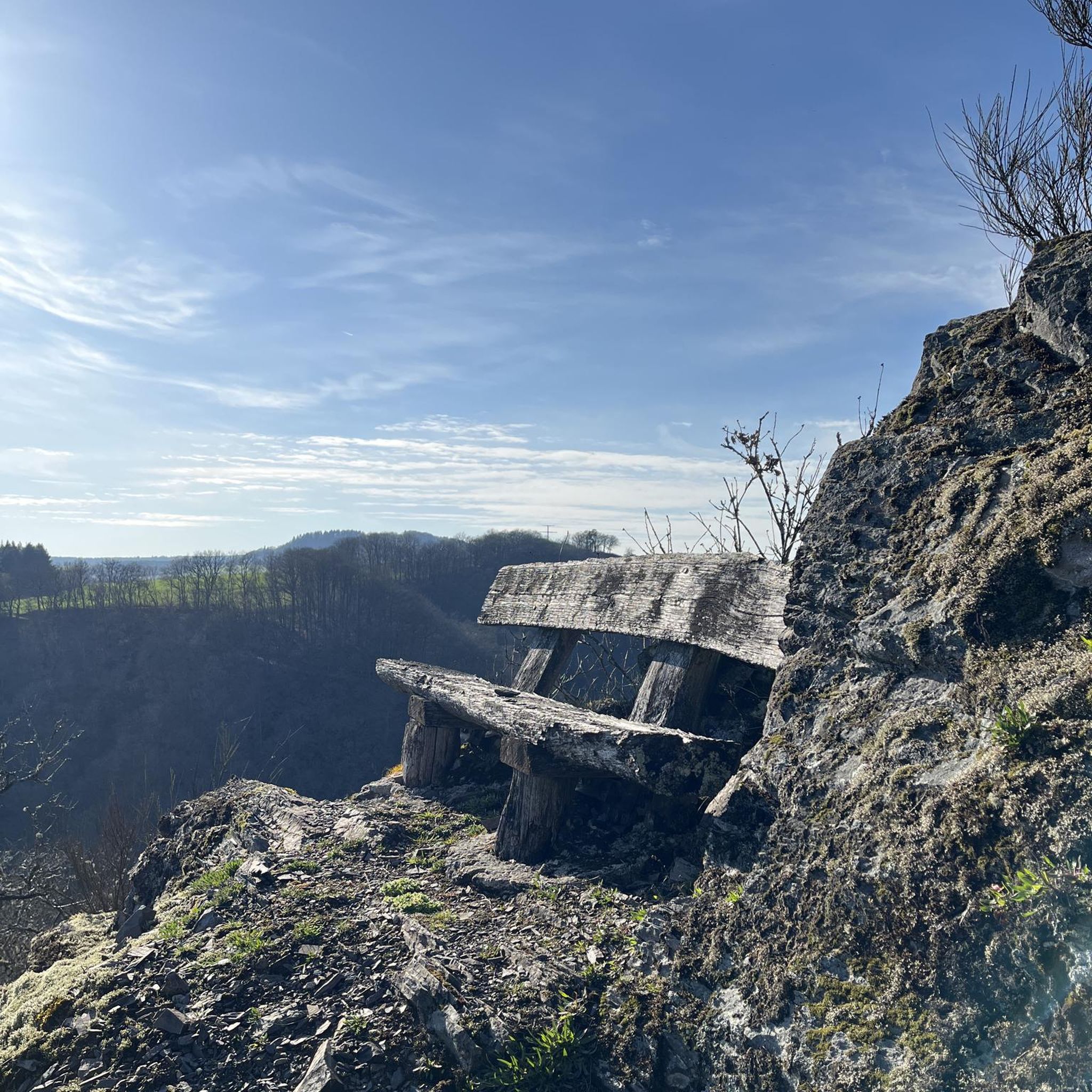
Don't stand too close to edge of cliff!
0
0

Frequently Asked Questions
Are dogs allowed on the trails around Studland?
Yes, Studland is generally dog-friendly. Dogs are welcome on most public footpaths, including the heathland and coastal paths. However, during bird nesting season (March to July) and when livestock are present, it's crucial to keep them on a short lead, especially within the Studland and Godlingston Heath National Nature Reserve. Always check local signage for any specific restrictions.
Are there any easy, family-friendly walks in the area?
Absolutely. The area offers many gentle walks suitable for families. A great option is the Brownsea Island loop — Dorset, which is a relatively flat and manageable trail. Strolls along the sandy beaches like Knoll Beach or Shell Bay are also perfect for a relaxed family day out.
Where is the best place to park for hikes around Studland?
The National Trust operates several car parks which are ideal starting points for many walks. The main car parks are at Knoll Beach, Middle Beach, and South Beach. For walks heading towards Old Harry Rocks, the South Beach car park is most convenient. Be aware that these are pay-and-display car parks, and they can get very busy, especially on sunny weekends, so arriving early is recommended.
How can I get to the Studland walking trails using public transport?
Studland is accessible by bus from Swanage, Wareham, and Bournemouth. The number 50 bus service runs regularly and stops at various points in the village and near the beaches, providing good access to trailheads. Additionally, a chain ferry connects Sandbanks (Poole) to Shell Bay, which is a convenient option for foot passengers and cyclists coming from the Bournemouth area.
What is the terrain like on the coastal path from Studland to Swanage?
The path from Studland to Swanage follows the South West Coast Path over Ballard Down. The terrain consists of grassy cliff-top paths with some moderate ascents and descents. The trail is well-trodden but can be uneven in places. It offers spectacular views of the chalk stacks of Old Harry Rocks and across Poole Bay and Swanage Bay. Sturdy footwear is recommended.
Can you recommend a good circular walk?
For a varied circular route that takes in both coast and countryside, the Old Harry Rocks & Studland Hill loop from Knoll Beach is an excellent choice. This moderate walk combines the iconic chalk cliffs with views from Studland Hill, offering a comprehensive experience of the landscape.
What kind of wildlife might I see while hiking in Studland?
The Studland and Godlingston Heath National Nature Reserve is a haven for wildlife. It's one of the few places in the UK home to all six native reptile species, including the sand lizard and smooth snake. The heath is also important for birdlife, such as the Dartford warbler and nightjar. Along the coast, you might spot seabirds, and the seagrass meadows in the bay are home to seahorses.
Are there any pubs or cafes on the walking routes?
Yes, there are several good options for refreshments. The Bankes Arms Inn in Studland is a popular 16th-century pub with a large beer garden overlooking the sea, located very close to the path to Old Harry Rocks. Additionally, the National Trust operates cafes at Knoll Beach and Middle Beach, which are perfect for a break during a coastal or heathland walk.
What can I expect on a walk across Godlingston Heath?
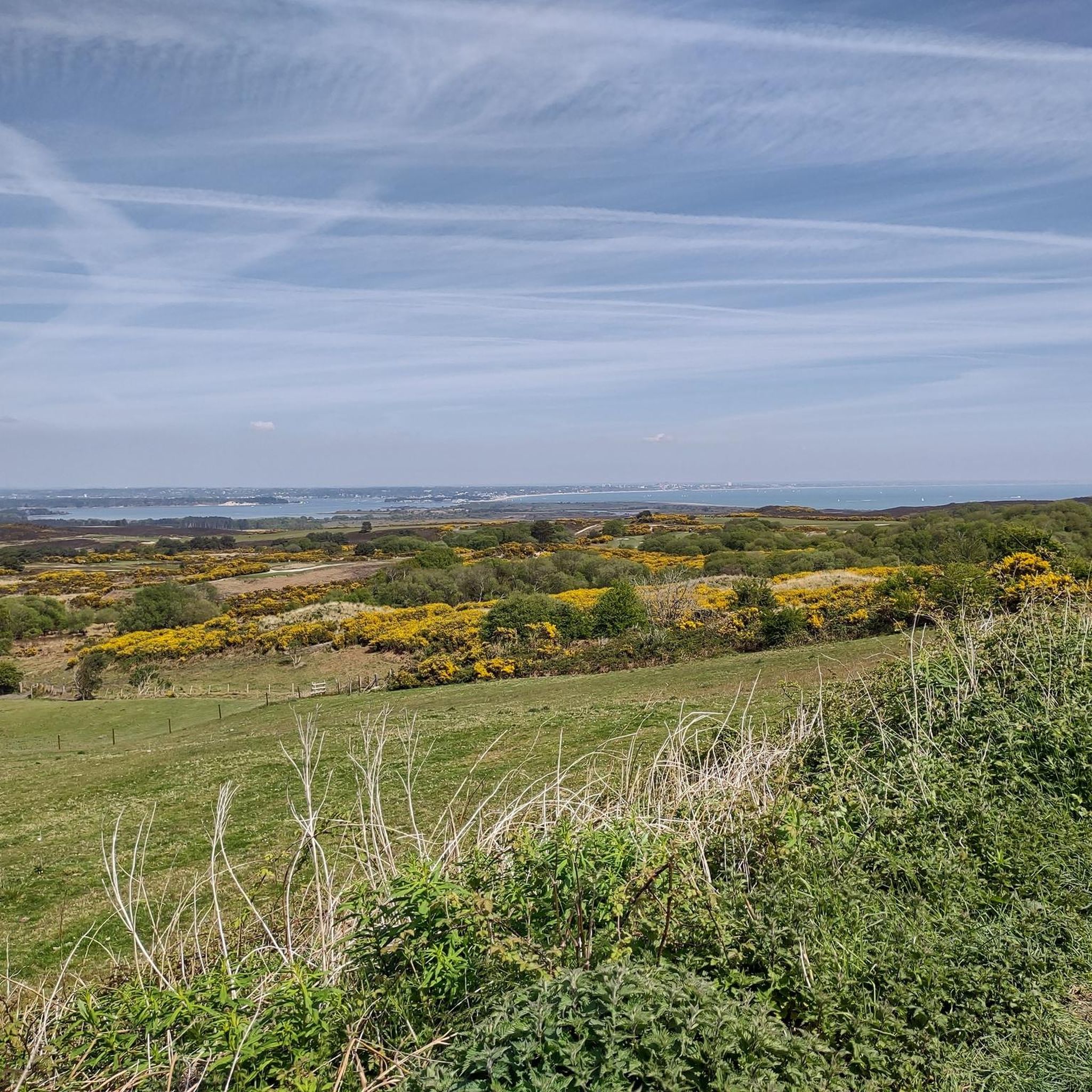
A walk on Godlingston Heath takes you through a rare and protected lowland heath habitat. The landscape is characterized by heather, gorse, and scattered woodland. Trails are often sandy and can be boggy in places after rain. A key landmark on the heath is Agglestone Rock, a large sandstone boulder. It's a quieter experience compared to the busy coastal path, offering peace and excellent opportunities for wildlife spotting.
How difficult are the hikes in Studland?
Studland offers a wide range of difficulties. There are many easy, relatively flat walks along the beaches and through the lower parts of the heath, suitable for all abilities. The coastal paths, like the route over Ballard Down, are more moderate with some sustained climbs that require a reasonable level of fitness. Overall, most trails are well-marked and accessible to the average walker.
What do other hikers like about the Studland area?
The area is highly rated by the komoot community, with an average score of 4.8 stars. Reviewers frequently praise the stunning coastal scenery, especially the dramatic views of Old Harry Rocks. The unique contrast between the sandy beaches, the chalk cliffs, and the wild expanse of the heathland is another highlight that walkers often mention.
How many hiking trails are there around Studland?
There are over 70 curated hiking routes around Studland available on komoot. These range from short, easy strolls along the beach to more challenging full-day hikes, covering the diverse landscapes of the coast, heathland, and downs.
Most popular routes around Studland
Most popular attractions around Studland

Get inspired with the komoot mobile app


Explore more
Browse the best Hikes in other regions.
