The best MTB trails around Nava De Roa
2.0
(2)
37
riders
14
rides
Mountain biking around Nava de Roa, situated in the Ribera del Duero region, offers diverse terrain for exploration. The area is characterized by its "flat land surrounded by hills" topography, providing a mix of vineyard paths and ascents into surrounding hills. The landscape is shaped by the Duero River valley and extensive vineyards, offering varied elevation for mountain bike trails.
Best mountain bike trails around Nava De Roa
- The most popular mountain bike trail is Road to Haza y Castillo…
Last updated: May 23, 2026
1
riders
40.8km
03:10
240m
240m
Moderate mountain bike ride. Good fitness required. Suitable for all skill levels.
1.0
(1)
9
riders
33.1km
02:24
160m
160m
Moderate mountain bike ride. Good fitness required. Suitable for all skill levels.

Sign up for free
3.0
(1)
5
riders
60.6km
04:45
410m
410m
Moderate mountain bike ride. Good fitness required. Advanced riding skills necessary.
6
riders
103km
08:11
510m
510m
Hard mountain bike ride. Very good fitness required. Suitable for all skill levels.
5.0
(5)
4
riders
42.2km
03:21
360m
360m
Moderate mountain bike ride. Good fitness required. Suitable for all skill levels.
Get access to more routes and recommendations from other explorers.
Sign up for free
Already have an account?
Our route recommendations are based on thousands of hikes, rides, and runs completed by other people on komoot.
Start today with a free account
Your next adventure awaits.
Login or Signup


Tips from the Community

The bridge is built of stone and is characterized by its semicircular arches; it originally had four, although today it retains three due to later renovations. Over the centuries it has undergone numerous restorations, especially due to the floods of the Duero, one of the most important being the expansion and widening in the 19th century. In addition to its architectural value, it has been a strategic point for the passage of people, goods and herds, and today it is a symbol of the city and a very pleasant place to walk and enjoy the views of the river and Aranda de Duero. [iglesiaslocales.com], [edadesdelh...ogspot.com]
2
0
The Aranda de Duero Bridge, also known as Puente Mayor, is one of the city's most important historical elements, as it crosses the Duero River and has been key to its development. Although often called "Roman", it is actually a bridge of medieval origin, with references from the 12th-14th centuries, when it served as a fundamental crossing point on trade routes and the old Royal Road that connected the center and north of Spain.
2
0
Castrillo de la Vega, in the heart of Ribera del Duero and very close to Aranda de Duero, is a charming small town ideal for a tranquil getaway, highlighting its wine tradition and medieval past; the most interesting aspects are strolling through its old town and Plaza Mayor, visiting the church of Santiago Apóstol and the hermitage of the Virgen de la Vega, and exploring the winery and cellar district, with numerous underground caves where wine was produced, one of the municipality's great attractions. It is also worth seeing historical remains such as the old Roque bridge and the Torre del Monte, and enjoying the natural environment along the Duero river and vineyards, with options for routes and tastings at nearby wineries, thus combining history, nature, and typical local gastronomy.
2
0

At the convent there is a drinking fountain & picnic tables. The nuns sell handmade chocolates & cakes from a little shop beside the San Pedro church
0
0

Aranda de Duero, in the province of Burgos, is the capital of the famous Ribera del Duero wine region. The city is known for its excellent wines and its network of underground wine cellars, medieval tunnels dug beneath the old town. It is also a top culinary destination, famous for its roast lamb and blood sausage. Its heritage includes Gothic churches such as Santa María la Real, which complement the cultural and culinary experience.
4
0
The Aranda de Duero Bridge, also known as the Puente Mayor, is a medieval stone bridge over the Duero River. It is a symbol of the city and its heritage, connecting the old town with the modern areas. Although it has been renovated over time, it retains its historic essence.
4
1
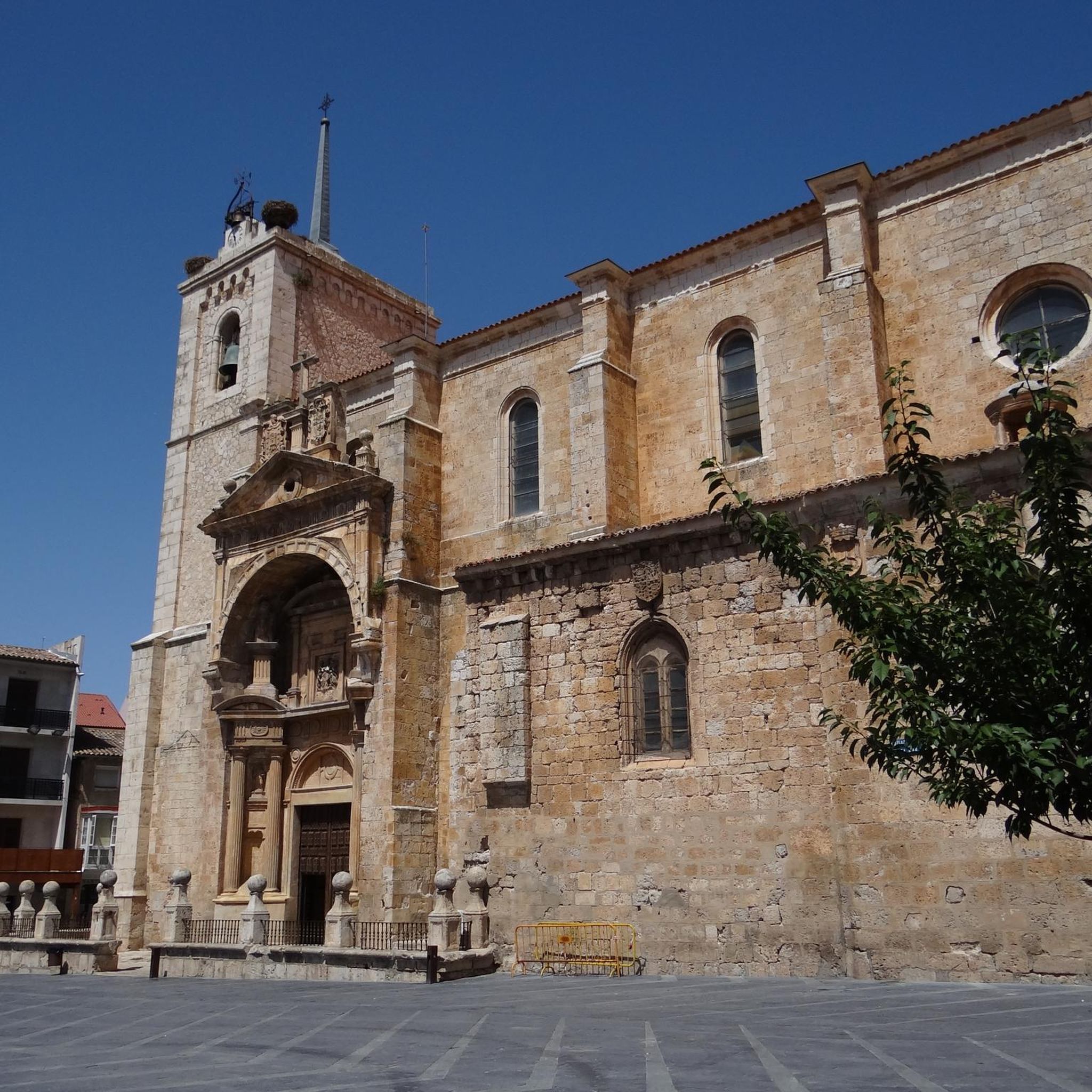
The Church of Santa María la Real is a prominent Gothic monument in Aranda de Duero, Spain. Its most notable feature is its main façade, a masterpiece of the 15th-century Isabelline Gothic style, richly decorated with detailed sculptures. It is a cultural and architectural landmark in the city.
4
0

The most used bridge to connect both areas of the river.
1
1
Frequently Asked Questions
How many mountain bike trails are available in Nava de Roa?
There are 9 mountain bike trails around Nava de Roa listed on komoot, offering a mix of challenges. This includes 6 moderate routes and 3 more difficult options for experienced riders.
What kind of terrain can I expect on the mountain bike trails in Nava de Roa?
The terrain around Nava de Roa is diverse, characterized by its 'flat land surrounded by hills' topography. You'll find routes winding through expansive vineyards in the Ribera del Duero Valley, along the Duero River, and ascending into surrounding hills like Monte Abellón. Many trails utilize ancient transhumance paths, offering a mix of surfaces through pine and holm oak trees.
Are there any easy mountain bike trails suitable for beginners or families?
While the listed routes are primarily moderate to difficult, the region's extensive vineyard paths and flatter sections along the Duero River can offer less strenuous riding. For a moderate option that provides varied terrain, consider the Road to Haza y Castillo de la Vega — circular route via the Duero Route, which is 25.3 miles long.
What natural features or landmarks can I see along the mountain bike trails?
Many trails offer scenic views of the Ribera del Duero vineyards and the Duero River valley. You can also encounter historical sites like Peñafiel Castle and Haza and its castle. The Peñafiel Castle – Duero Trail loop from Curiel de Duero specifically highlights the river valley and the castle.
Are there mountain bike routes that form a loop?
Yes, several routes are circular. For example, the Road to Haza y Castillo de la Vega — circular route via the Duero Route is a popular loop. Another option is the Path alongside the Duero – Aranda Bridge loop from Roa, which takes you through the Duero River valley.
What is the best time of year to go mountain biking in Nava de Roa?
The Ribera del Duero region generally experiences warm, dry summers and cold winters. Spring and autumn are typically the most pleasant seasons for mountain biking, offering milder temperatures and beautiful vineyard scenery. Always check local weather forecasts before heading out.
Is there parking available near the trailheads in Nava de Roa?
While specific parking areas for each trailhead are not detailed, Nava de Roa and surrounding villages are generally accessible by car. You can typically find parking in or near the starting points of routes within these towns. It's advisable to check maps or local information for specific parking facilities.
How accessible are the mountain bike trails by public transport?
Public transport options directly to specific trailheads in rural areas like Nava de Roa can be limited. It's generally recommended to use a car to reach the starting points of the mountain bike routes. Some larger towns in the Ribera del Duero region may have bus services, but connecting to specific trails might require further planning.
What do other mountain bikers say about the trails in Nava de Roa?
The mountain bike trails in Nava de Roa are rated by the komoot community with an average score of 2.0 stars. Over 30 mountain bikers have used komoot to explore the varied terrain, often appreciating the scenic vineyard landscapes and the blend of river valley and hill routes.
Are there any challenging routes for experienced mountain bikers?
Yes, there are 3 difficult mountain bike trails in the area. For a significant challenge, consider the Path alongside the Duero – Peñafiel Castle loop from Fuentecén, which is over 60 miles long and features substantial elevation changes, making it one of the most demanding routes.
Can I bring my dog on the mountain bike trails?
While many natural trails in Spain are dog-friendly, it's always best to check local regulations or specific trail signage. When riding with a dog, ensure they are well-behaved, under control, and that you carry water for them, especially during warmer months. Be mindful of livestock in agricultural areas like vineyards.
Are there places to eat or drink near the mountain bike routes?
Nava de Roa and the surrounding villages in the Ribera del Duero region are known for their gastronomy and wineries. You'll find local restaurants and cafes in towns like Roa, Peñafiel, and Curiel de Duero, which are often starting or passing points for many routes. These offer opportunities to refuel and experience local cuisine.
Most popular attractions around Nava De Roa

Get inspired with the komoot mobile app


Explore more
Browse the best MTB trails in other regions.
