Attractions and Places To See around Vaux-Sur-Mer - Top 20
Attractions and places to see around Vaux-Sur-Mer offer a blend of historical heritage, natural beauty, and coastal experiences on France's Côte de Beauté. The landscape features limestone cliffs, sandy beaches, and inland areas with woods and marshlands. This coastal town provides opportunities to explore Romanesque architecture, Belle Époque villas, and natural "conches" or beaches. It is a region where historical sites meet diverse natural environments.
Best attractions and places to see around Vaux-Sur-Mer
- The most popular attractions is Lighthouse of…
Last updated: August 26, 2026
Saint-Georges-de-Didonne Beach
Highlight • Beach
Translated by Google •
Tip by

Chay Beach
Highlight • Beach
Translated by Google •
Tip by

Sign up now to discover places like this
Get recommendations on the best single tracks, peaks, & plenty of other exciting outdoor places.
Sign up for free
Pointe de Grave
Highlight (Segment) • Beach
In Soulac very beautiful …
Translated by Google •
Tip by

Bunkers at Pointe de Suzac with a View of the Gironde Estuary
Highlight • Historical Site
Translated by Google •
Tip by
Carrelets of Saint Palais sur mer
Highlight • Other
🐟 Origin of the carrelets
Showing Translation
Tip by
Sign up for free to discover even more attractions around Vaux-Sur-Mer.
Sign up for free
Already have an account?
Start today with a free account
Your next adventure awaits.
Login or Signup

Tips from the Community

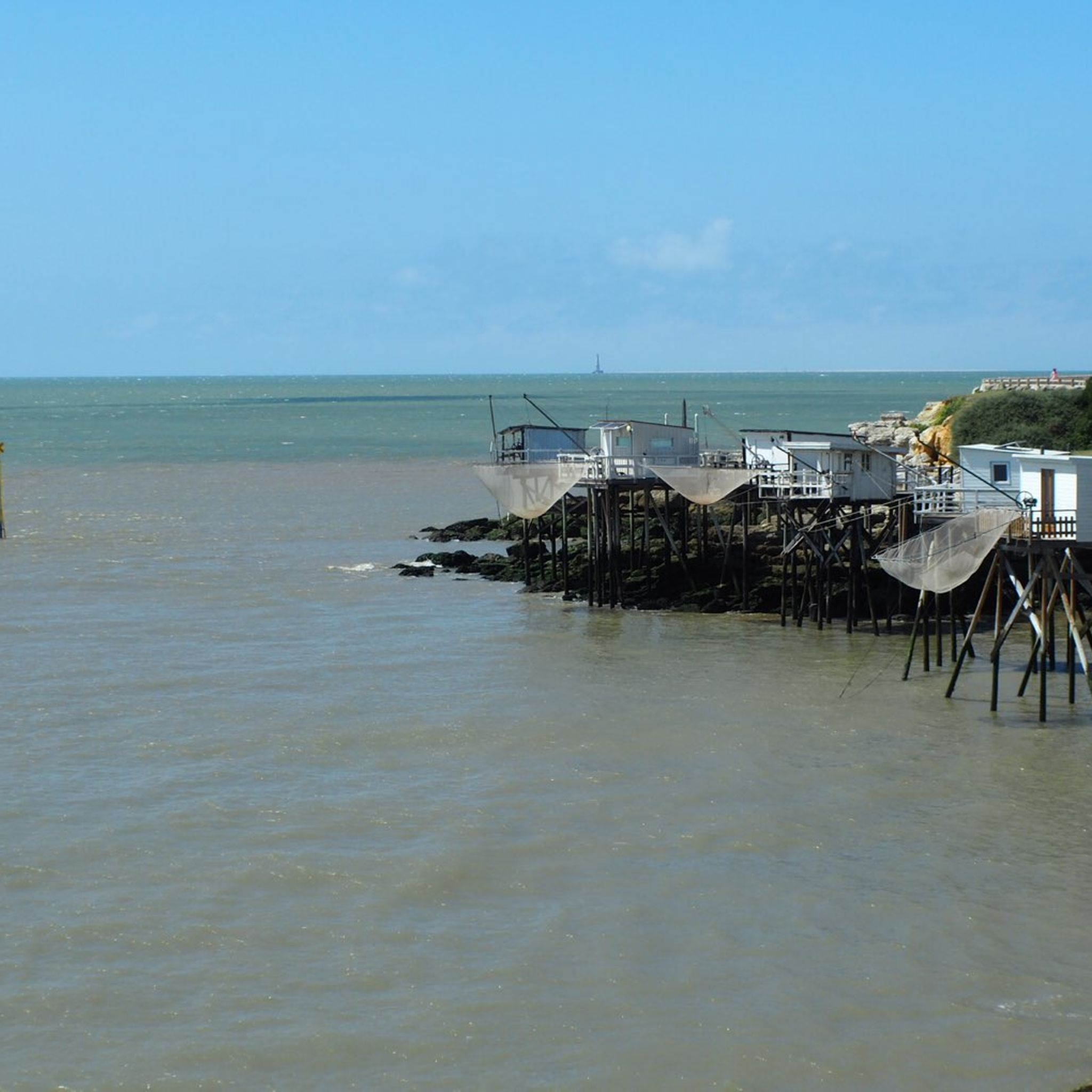
The carrelets of Saint-Palais-sur-Mer are among the most emblematic elements of the Charente coastline. Their history blends traditional fishing, tourist development, and local heritage. 🐟 Origin of the carrelets Originally, the word "carrelet" referred to a square fishing net used since the 17th century. A precise description can be found as early as 1769, in the writings of the scholar Henri-Louis Duhamel du Monceau, who mentioned this type of fishing on the Saintonge coast. 👉 At that time, these were not yet the current huts, but simply a net operated from rudimentary structures. ⚓ Artisanal fishing structures The first local carrelets were simple wooden platforms, built by the fishermen themselves to stand above the water. They were mainly used to catch shrimp, fish, and crabs near the shore, without going out to sea. 👉 It was a family and coastal fishery, less dangerous than sea fishing. 🏖️ 19th – early 20th century: transition to a leisure activity At the turn of the 20th century, with the rise of seaside resorts like Saint-Palais, the carrelets evolved. Holidaymakers and notable figures adopted this practice: construction of fixed jetties, appearance of huts on stilts. The carrelets then became places for relaxation as much as for fishing. 👉 They already contributed to the postcard image of the coast. 🪵 After 1945: democratization and multiplication After the Second World War, the number of carrelets increased sharply. They became a symbol of popular leisure and conviviality. The transition was gradually made from a means of subsistence to a recreational activity. 🌊 Storms and reconstruction The carrelets are fragile in the face of storms: 1999: massive destruction (up to 90% in some areas) 2010 (Xynthia storm): new damage Many have been rebuilt identically, respecting tradition. 🏛️ Today: protected heritage In Charente-Maritime, there are about 400 carrelets. They are: integrated into the public maritime domain allocated by administrative authorization (often renewed every 5 years) Since 2018, they have been recognized as cultural heritage of the department. 👉 In Saint-Palais, they can be observed in particular: at Pont du Diable at the conche du Concié at the Puits de l’Auture
0
0
🏖️ General Overview Chay Beach is a family-friendly, fine sandy beach located in Royan (Charente-Maritime), on the Côte d’Argent promenade between Pigeonnier Beach and Pointe du Chay. It stretches for approximately 200 meters and boasts a pleasant natural setting, with a cove bordered by rocks typical of the Charente coastline. 🏝️ Features • 🌊 Beach type: fine sand, sheltered cove. • 🏄♂️ Atmosphere: relatively calm and family-friendly, ideal for children and vacationers seeking relaxation away from the large urban beaches. • 🐾 Pets: prohibited from April 1st to September 30th. • 🫧 Water quality: excellent (Blue Flag label awarded for 2025). 🧭 Lifeguard and Safety • Swimming is supervised during the season (June to early September), with areas marked by red and yellow flags. • The area is classified as a Category 3 "Supervised Beach" and lifeguards are present during the indicated hours. 🪑 Amenities On-site, you can find: • 🏖️ Sun loungers, parasols, and mattresses for rent. • 🚿 Foot rinse and public restrooms. • 📶 Wi-Fi access, first aid station, and an area accessible to people with reduced mobility (assistance may be required depending on the slope). • 🍴 Beachfront restaurant ("Le Chay" bar-restaurant with sea views). 🚶♂️ Atmosphere and Activities • 🎈 Ideal for families and leisurely strolls. • 🌞 People come here for swimming, playing on the sand, flying kites, or simply relaxing by the ocean. • 🅿️ Parking is available nearby, and the beach is easily accessible on foot or by bike from Royan town center in just a few minutes. 🧭 Practical Tips • 📆 Best time to visit: summer for supervised swimming and full services, but also during the off-season for a more peaceful atmosphere. • ☀️ Arriving early in the morning makes parking easier during peak season. • 🐶 Dogs are not allowed during the summer season; check the signs on site during the off-season.
0
0
The Chay de Royan beach is a continuation of the Pigeonnier cove on the Côte d'Argent promenade and offers a larger area than the latter. This sandy beach is family-friendly with a restaurant on the beach. It is supervised during the summer season (mid-June to early September) and you can rent mattresses and cabins. The environment of this beach is very pleasant, there are fewer houses than on the other beaches in Royan. A large car park is available near this beach (left side). Access is possible for people with reduced mobility via an inclined plane with assistance (the slope is steep). Dogs are prohibited from April 1st to October 31st.
1
0

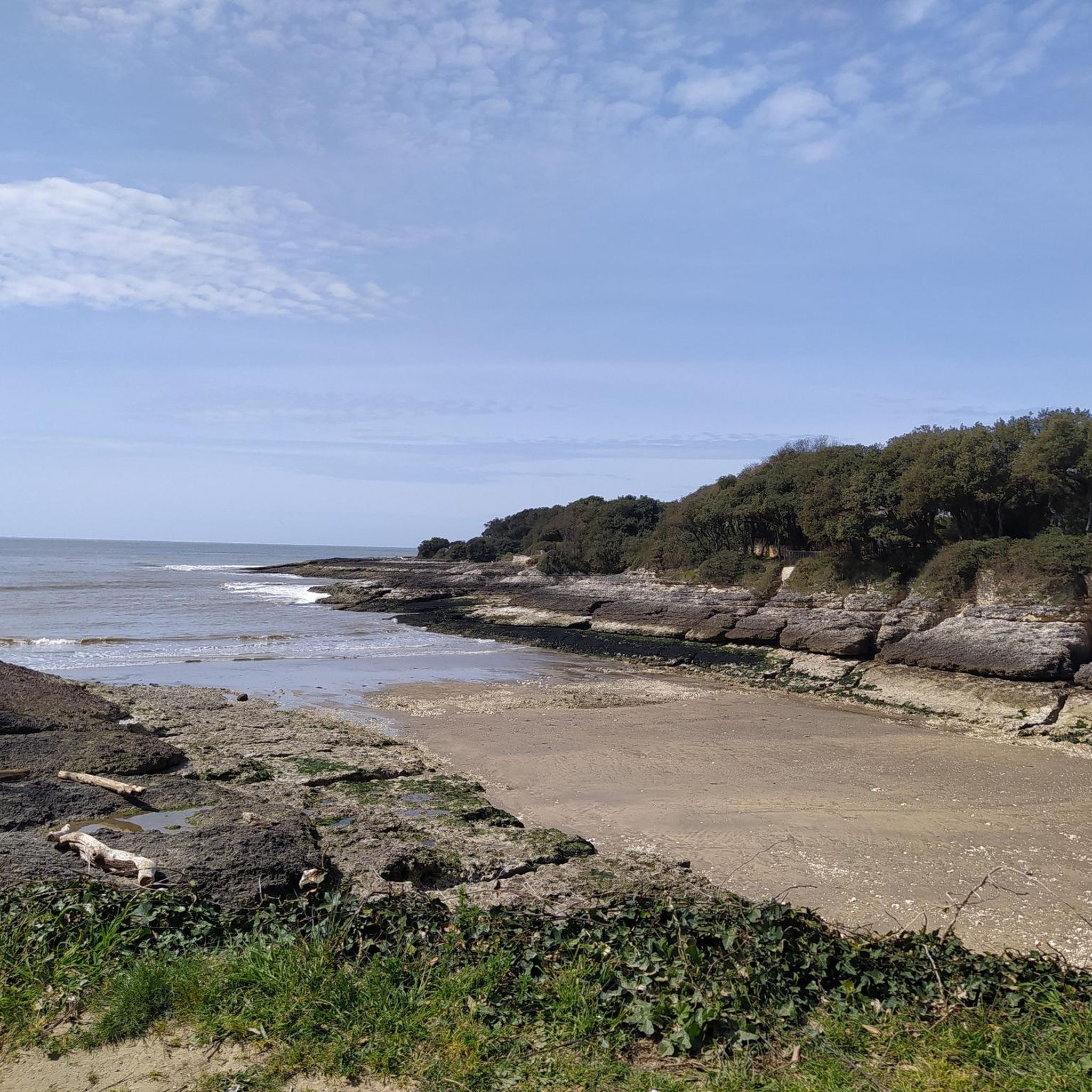
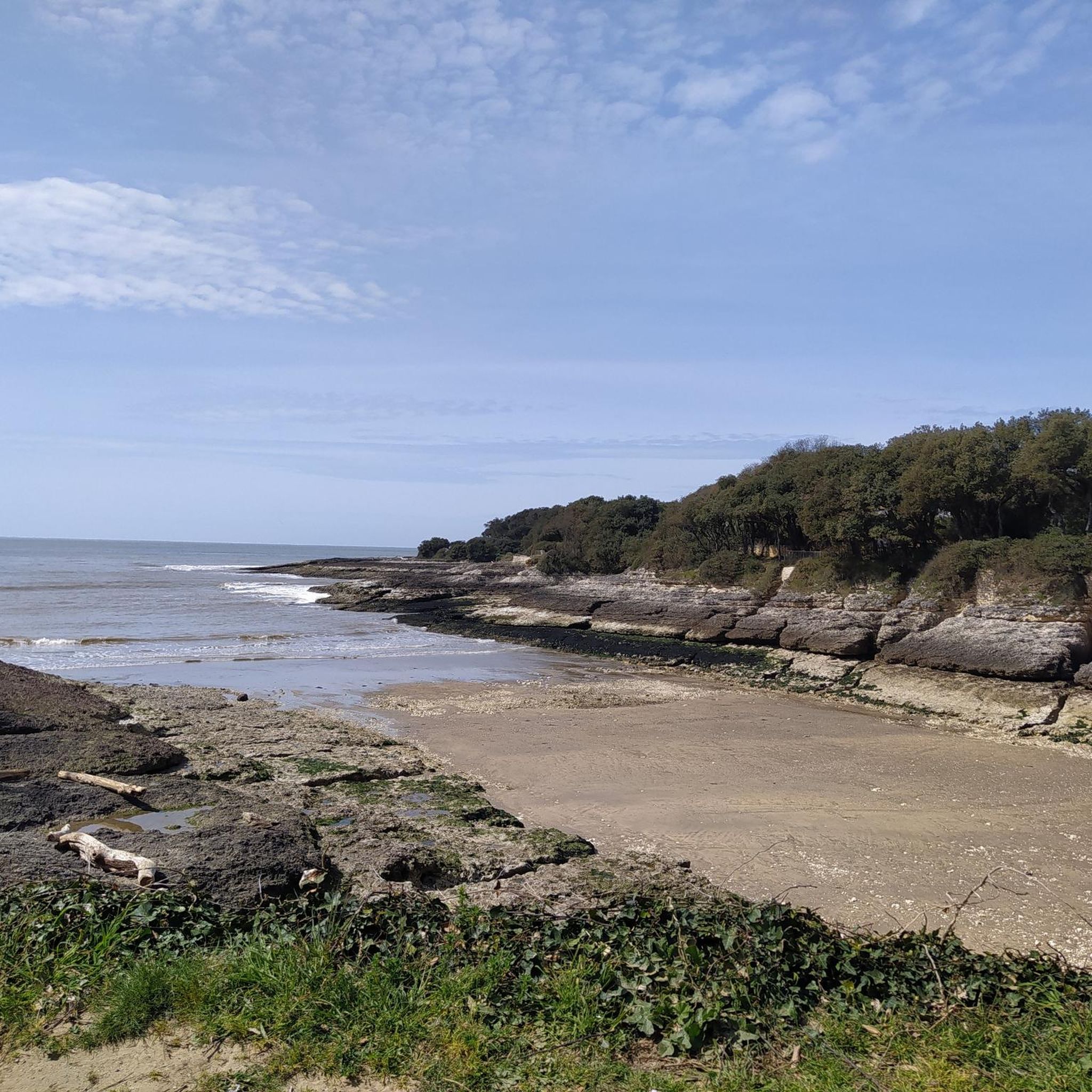
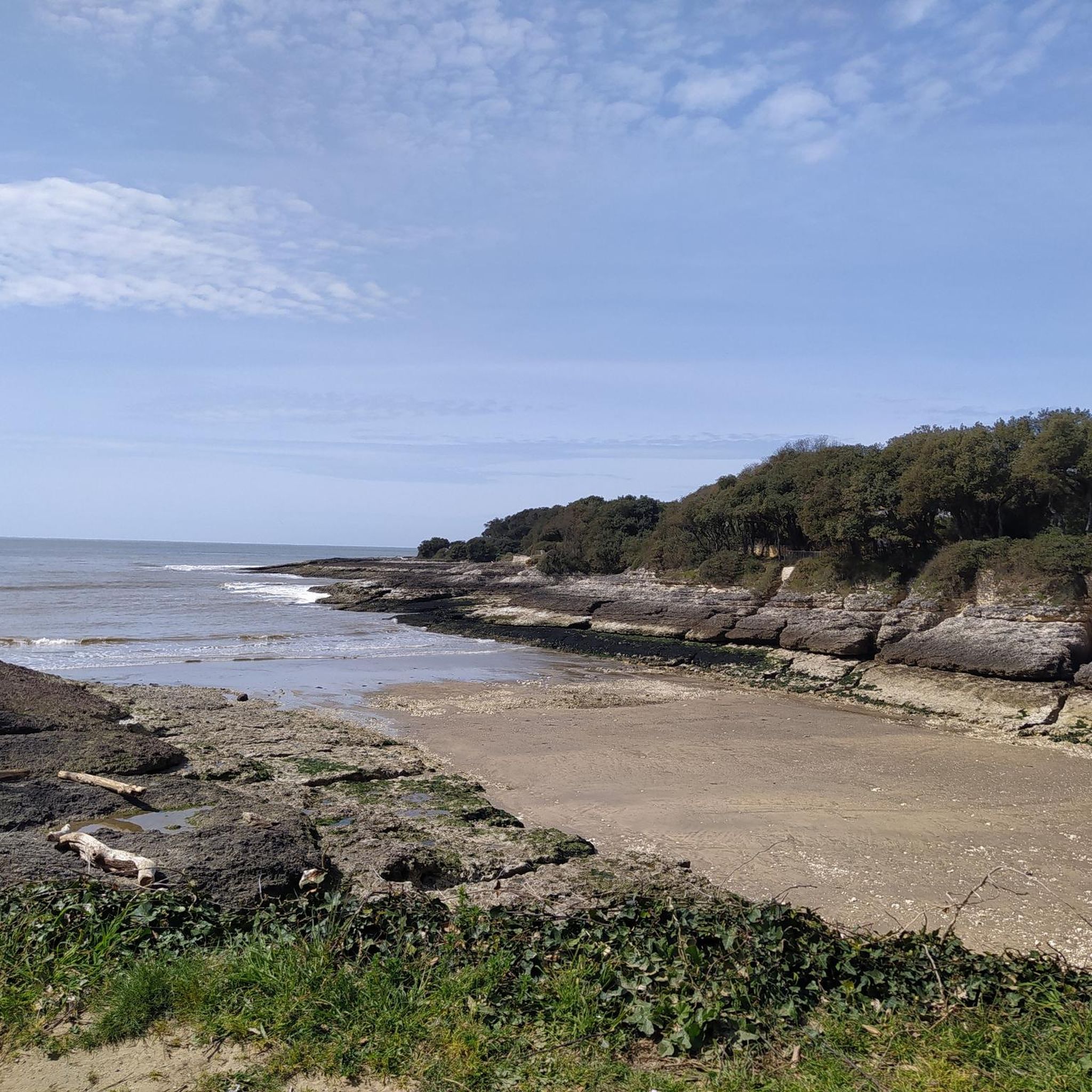
Chay Beach is a sandy beach that offers a breathtaking view of the Cordouan lighthouse. It is surrounded by rocky cliffs and, as such, is sheltered from the wind and is a pleasant place to do your hike.
4
0

It is the northernmost point of the Médoc. You can't go any further, except by swimming.
1
0
2 detachments of the 44th division of the Heer (land army) of the Wehrmacht arrived in Royan and its region on 06/23/1940. Their mission is to control the Gironde estuary which controls access to the port of Bordeaux. In December 1941, the Pio.Btl.327 of Oberstleutnant HUMBERT took part in the first work to build support points (the famous "Atlantic Wall") with the Fest.Pio.stab.28 of the Oberst SCHULTZ based in Royan and the Oberbauleitung PAULA of the Organization Todt. The work took on more scope from October 1942 thanks to the Todt Organization, and was supervised by the Pionere Führer of the AOK 7 (7th Army), Generalmajor Otto SCHAUM. In Charente Maritime, all the works will require the implementation of more than 4 million m3 of concrete. The TODT organization had a standardized fortification program "REGELBAUTEN" already used for the construction of the Siegfrid line. The Atlantic Wall required 300,000 French workers and nearly 3,000 companies. The Chay, Suzac and Coubre batteries were installed in March 1942. Southern limit of the "Festungen Gironde Nord", the Suzac B1 battery, which became S 30 HKAA 5/746 Köln, was equipped, in 1944, with 5 series firing pieces composed of 4 tubes of 76.2 GK 307 (r) horse-drawn installed under casemates at 120° firing H669 and four 105 K 331 Schneider cannons sheltered under structures at 60° firing H671, controlled from a post of fire direction PDT H636a., armament supplemented by support weapons of lower caliber (50 mm mortar, 20 machine gun, DCA) installed on platform, in tank or in tobruk, and by a concrete shelter for H128 personnel and an H134 block. A minefield protects access to the battery and concrete obstacles deter any attempt to land on the beaches. The Suzac battery, then the southern limit of La Poche de Royan, hit by bombing during Operation "Vénérable" on April 14 and 15, 1945, was largely destroyed by Allied aviation supported by "Lorraine" and the "Duquesne", two old ships built in 1913 and 1928 respectively. There remain on the ground 5 bunkers (in English) or blockhouses in German) under the command of a firing post (CP) and the ruins of a shelter buried under ivy. 2 other shelters are embedded in buildings where they serve as cellars. Finally a last bunker is exploded.
4
1
Grande Conche Beach (or Saint Georges de Didonne Beach) is set between two limestone cliffs: to the north, on the Royan side, by the Vallières cliff and to the south, towards Meschers, by the Suzac cliff. Long of more than 2 km, the beach of Saint-Georges is very arranged in its part close to the city center and more natural, wild towards the point of Suzac. On this immense expanse of fine sand, swimming is supervised in summer (several lifeguard stations). Many activities and services are offered: kindergarten, beach club, swimming school, beach volleyball, nautical base, rental of tents and parasols, restaurants. Outside the summer period, sand yachting sessions take place on the Grande Conche beach under the aegis of the St Georges de Didonne sailing club.
1
0

Pretty fine sand beach surrounded by imposing rocks.
2
0
Frequently Asked Questions
What historical sites can I explore around Vaux-sur-Mer?
Vaux-sur-Mer boasts a rich history. You can visit the 12th-century Saint-Étienne Church, a prime example of Romanesque architecture and a listed Historic Monument. The Protestant Temple, rebuilt in the 19th century, features a neoclassical facade and hosts exhibitions. Don't miss the Bunkers at Pointe de Suzac, which are remnants of the Atlantic Wall offering a glimpse into the region's wartime past and views of the Gironde Estuary.
Are there family-friendly attractions in Vaux-sur-Mer?
Yes, Vaux-sur-Mer is great for families. The Saint-Georges-de-Didonne Beach is ideal with its fine sand, clear waters, and supervised swimming during summer, along with various activities. The Town Hall park also offers a lake and green spaces for relaxed family strolls. Many of the local beaches, or 'conches', are suitable for children.
Where can I enjoy natural beauty and coastal views?
The region is renowned for its natural beauty. Explore the coastal paths, particularly the 'Sentier des Douaniers', which offer breathtaking ocean views amidst pines and oaks. The Bois des Fées provides serene walks through holm oak and pine woods. For stunning vistas, the Lighthouse of George de Didonne's port offers panoramic views of the Gironde estuary after climbing its 144 steps.
What outdoor activities are available near Vaux-sur-Mer attractions?
Vaux-sur-Mer is perfect for outdoor enthusiasts. You can enjoy various cycling routes, such as the 'Gironde Ferry to Royan – Dune landscape and EV1 loop' or the 'Chay Beach – Carrelets de Royan loop'. For hikers, popular trails include 'Chay Beach – Fort du Chay loop' and 'Conche de Nauzan – Chay Beach loop'. Find more routes on the Hiking around Vaux-Sur-Mer and Cycling around Vaux-Sur-Mer guide pages.
Which beaches are best for swimming and relaxation?
Vaux-sur-Mer is famous for its 'conches' or sandy beaches. Saint-Georges-de-Didonne Beach is a long, family-friendly option with supervised swimming. Chay Beach offers fine sand, is sheltered from the wind by rocky cliffs, and provides views of the Cordouan lighthouse. Nauzan Beach is the largest in Vaux-sur-Mer, shared with Saint-Palais-sur-Mer, and also features supervised swimming.
Are there any unique cultural events or markets in Vaux-sur-Mer?
Vaux-sur-Mer hosts several cultural events, especially during the summer. These include the annual Festi'Vaux music festival in July and the Jazz in Vaux festival in August. You can also enjoy free Musical Thursdays and Cinetoile open-air cinema sessions. For local produce and crafts, visit the covered market adjacent to the Protestant Temple, or the outdoor markets held on various days throughout the week.
What are the best viewpoints to capture scenic photos?
For stunning photographs, the top of the Lighthouse of George de Didonne's port offers a breathtaking panorama of the Gironde estuary. The coastal paths, particularly the 'Sentier des Douaniers', provide numerous spots with picturesque ocean views. Additionally, the Bunkers at Pointe de Suzac not only offer historical interest but also provide excellent vantage points over the estuary.
Can I find places for water sports in Vaux-sur-Mer?
Absolutely. The beautiful beaches of Vaux-sur-Mer, such as Nauzan Beach and Saint-Georges-de-Didonne Beach, are excellent for various water sports. You can enjoy swimming, surfing, paddleboarding, and sailing. During the summer, supervised swimming is available, and some beaches offer facilities for activities like sand yachting.
What do visitors enjoy most about the attractions in Vaux-sur-Mer?
Visitors particularly appreciate the blend of natural beauty and historical significance. The long, sandy beaches like Saint-Georges-de-Didonne Beach are loved for their family-friendly atmosphere and clear waters. The historical sites, such as the Lighthouse of George de Didonne's port and the Bunkers at Pointe de Suzac, are valued for their unique stories and panoramic views.
Are there any hidden gems or less-known spots worth visiting?
Beyond the main attractions, explore the quieter 'conches' like Plage du Conseil, Saint-Sordelin Beach, and Gilet Beach, which offer a more secluded experience. Gilet Beach, accessible by a staircase, features typical regional fishing shelters. The Old Washhouse and Abbey Fountain, connected by discreet paths, provide a charming glimpse into the town's rural past.
What is the best time of year to visit Vaux-sur-Mer for attractions?
The best time to visit Vaux-sur-Mer for its attractions is generally from spring to early autumn (April to October). During these months, the weather is pleasant for exploring coastal paths, enjoying the beaches, and participating in outdoor activities. Summer (July and August) offers the warmest temperatures and a vibrant atmosphere with various festivals and supervised swimming at the beaches.
Most popular routes around Vaux-Sur-Mer
Most popular attractions around Vaux-Sur-Mer

Get inspired with the komoot mobile app


Explore more
Still not found the Highlight you’re looking for? See guides of the top attractions in other regions:
