The best road cycling routes around Mittainvilliers-Vérigny
4.4
(57)
777
riders
273
rides
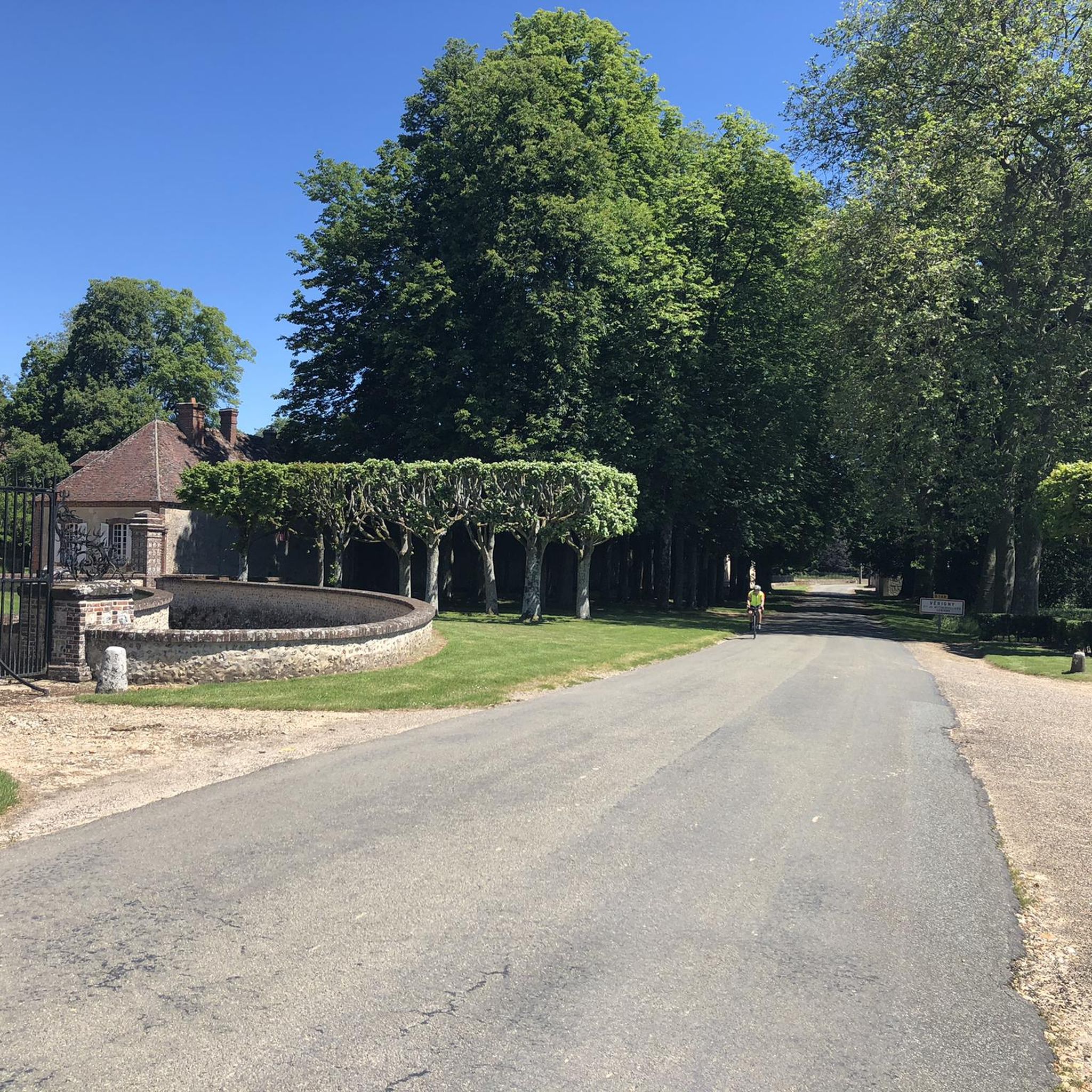
Road cycling routes around Mittainvilliers-Vérigny traverse a rural and agricultural landscape within the Eure-et-Loir department. The terrain features a gently undulating topography with a wooded environment and natural depressions on a clay plateau. Three valleys to the south, where the Couasnon river flows, add scenic variety to the green landscapes and rolling farmland. This region offers quiet countryside roads, ideal for road cycling.
Best road cycling routes around Mittainvilliers-Vérigny
- The most popular road cycling route is Château de Fontaine-la-Guyon loop…
Last updated: July 2, 2026
15
riders
25.3km
01:00
70m
70m
Easy road ride. Great for any fitness level. Mostly well-paved surfaces and easy to ride.
8
riders
43.5km
01:45
210m
210m
Moderate road ride. Great for any fitness level. Some segments of this route may be unpaved and difficult to ride.

Sign up for free
7
riders
Moderate road ride. Good fitness required. Mostly well-paved surfaces and easy to ride.
3.0
(1)
9
riders
44.9km
01:51
240m
240m
Easy road ride. Great for any fitness level. Mostly well-paved surfaces and easy to ride.
5
riders
Moderate road ride. Good fitness required. Mostly well-paved surfaces and easy to ride.
Get access to more routes and recommendations from other explorers.
Sign up for free
Already have an account?
Our route recommendations are based on thousands of hikes, rides, and runs completed by other people on komoot.
Start today with a free account
Your next adventure awaits.
Login or Signup



Tips from the Community

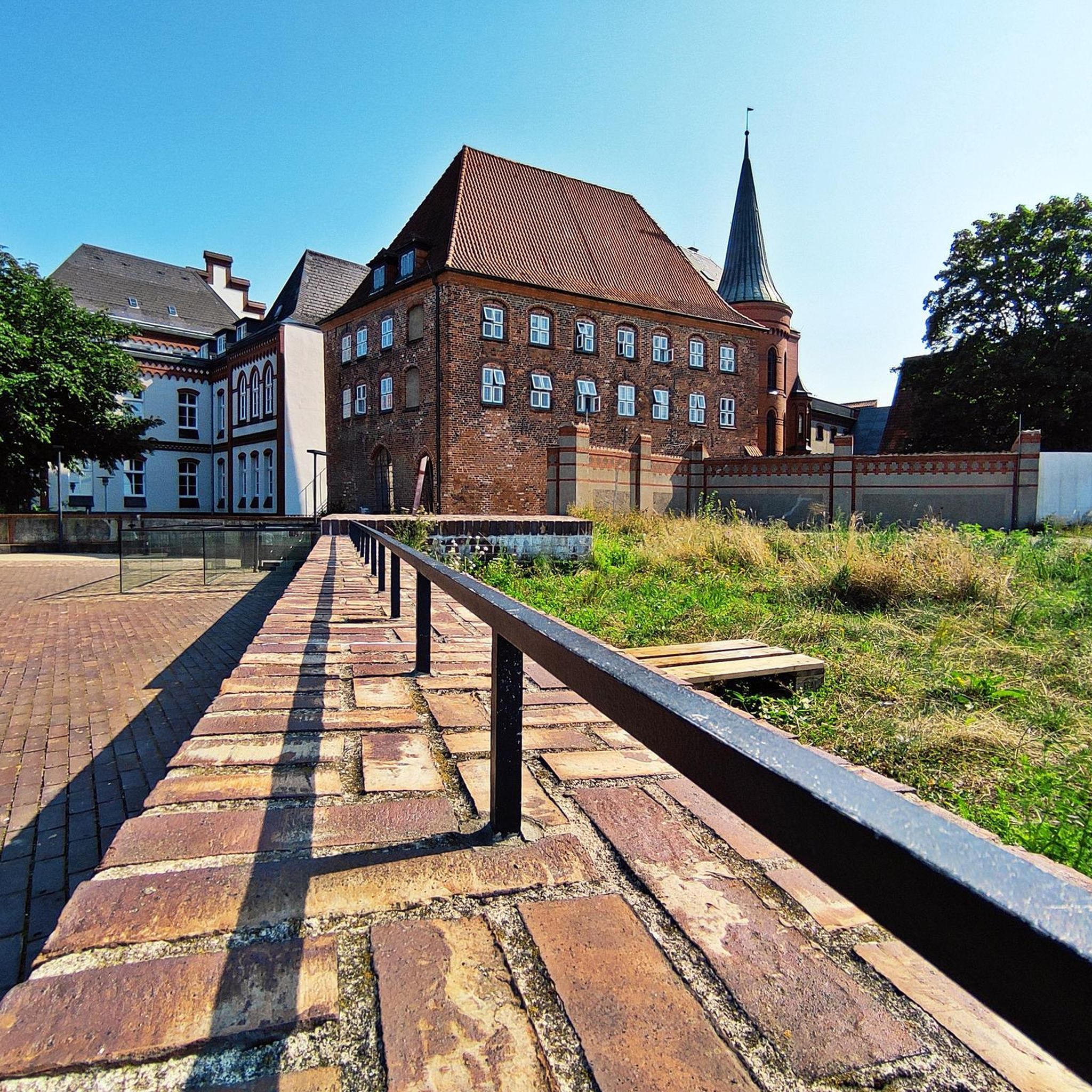
The parish church of Saint-Remy de Vérigny, located in the current new commune of Mittainvilliers-Vérigny, has been documented in the archives since 1126 as being dependent on the abbey of Saint-Père in Chartres. Its construction probably followed shortly after this date, as evidenced by the use of grison for both the buttresses and the frames of certain bays and the large west portal with a grison roller. The proximity of the manor and then the castle of Vérigny, owned by the prestigious families of O and Vieuville until the early years of the 18th century, encouraged donations and legacies in favor of the parish church. It is to Charles II of O that we owe the construction of the north aisle as well as the family chapel in the right bay of the choir, on the north side. The ribbed vaults and the hanging keystones sculpted with little angels evoke the creations of the second quarter of the 16th century such as those of the church of Bérou-la-Mulotière. If the only vestiges of stained glass windows preserved date from the
0
0
It resembles a Romanesque church, its pointed roof in local tiles, its four-sided bell tower is made of slate. The church of Poisvilliers has a nave whose base is from the 12th century, remodeled in the 16th century. The walls are made of various rubble blocks, the buttresses are made of cut stone. The west gable was redone in the 18th century. The date appears on the keystone of the door in the center (MDCCLXX /1770) The paneled vault is a simple vessel, the nave is widened to the south. The choir, narrower than the nave, dates from the 12th century and ends with a semicircular apse. It was transformed in the 16th century into a three-sided apse. The altarpiece is neoclassical in the Louis XVI style. It is made of fir. The pulpit is made of oak. In 1844, the high altar and the bell were repaired. A special tax is required. Thirty taxed forts are summoned. There are two stained glass windows in flamboyant Gothic style (the closest to the choir) on each side. There are three stained glass windows of Gothic inspiration and a Romanesque stained glass window. On the plan dating from 1852, we can see a porch that has now disappeared. The bell was installed in 1810. It was named Marie-Céléstine. Damaged, it was repaired in 1956 and named Louise-Simone. The Stations of the Cross were made by Mr Bernacchi in 2000. We discovered that Poisvilliers was a parish until 1807. It was then united with that of Berchères-la-Maingot. We found old plans attesting to the presence of a presbytery opposite the church.
0
0

The cathedral is the seat of the bishop of the Roman Catholic diocese of Chartres
6
0

A dream of a cathedral 🥰 you should definitely visit it at two different times of the day, as the glass windows look completely different depending on the position of the sun - phenomenal
4
0

Very beautiful church and the public toilets next to it are perfect, even for filling water bottles too large for the classic sinks.
0
0
Composed of a Romanesque nave with flat buttresses placed symmetrically on each side (typical of the end of the 11th century or the first half of the 12th century), it was completely remodeled in the 16th century and the end of the 20th century. The bays of the nave are from the 15th century, in flamboyant Gothic style, as is the rose window. The span of the bell tower and the choir, with ribbed vaults, date from the end of the 15th or beginning of the 16th century. As early as the 16th century, the bell tower had a clock, quite rare and expensive for the time. The pillars of the central bay are richly molded and crowned with thin bands of foliage serving as capitals. The windows are decorated with flamboyant tracery of varied designs. The Romanesque portal was also remodeled in the 16th century. The powerful central bell tower with buttresses [formerly had three bells named PIC DAN JON. There will only be one left after the Revolution, the other two having been melted down to make cannons and ammunition.
0
0
The Saint-Pierre church bears within itself the testimony of the centuries by the successive contribution of what they had the possibility of offering of the most truly sacred, it appears in its harmonious silhouette at the crossroads of two great natural regions, Beauce and the Perch. A living work, injured several times but restored, it is more beautiful now than it ever was. Rebuilt at the end of the 15th century, the Saint-Pierre church has been classified as a "Historic Monument" since 1907. It has two chapels, one of which, under the imposing bell tower bearing the date 1620, forms the Latin cross. A major restoration campaign has been carried out in recent years. The roof has been completely redone, preserving the original framework. The western window blocked at the beginning of the 19th century has been restored, a new stained glass window restores its nobility. The church offers a remarkable interior, in particular its imposing altarpiece and a statue of the Trinity, both listed as heritage sites.
0
0

The Fondation d'Aligre et Marie-Thérèse establishment, which is in fact an "Accommodation Establishment for Dependent Elderly People", has the possibility of offering pleasant accommodation for 144 elderly people. It is also an archaeological site, where some sculptures of ancient objects have been recovered.
0
0
Frequently Asked Questions
How many road cycling routes are available around Mittainvilliers-Vérigny?
There are over 290 road cycling routes around Mittainvilliers-Vérigny. This extensive network offers a variety of options for different skill levels, allowing you to explore the rural and agricultural landscapes of the Eure-et-Loir department.
What kind of terrain can I expect on road cycling routes in Mittainvilliers-Vérigny?
The terrain around Mittainvilliers-Vérigny is characterized by a gently undulating topography, featuring rolling farmland, wooded environments, and natural depressions on a clay plateau. You'll find quiet countryside roads, with some routes offering more challenging climbs due to significant elevation gains, particularly in the wider Eure-et-Loir region.
Are there road cycling routes suitable for beginners or those looking for an easy ride?
Yes, the area offers many easy road cycling routes. More than 150 routes are classified as easy, providing gentle elevation changes and manageable distances. An example is the Château de Fontaine-la-Guyon loop from Fontaine-la-Guyon, which is an easy 25.3 km trail.
Can I find more challenging road cycling routes in the Mittainvilliers-Vérigny area?
While the region is known for its gentle terrain, there are routes that offer more challenge. The Eure-et-Loir region includes some routes classified as 'hard road rides' due to significant elevation gains. Komoot lists 5 difficult routes and over 140 moderate routes, providing options for experienced cyclists seeking more strenuous rides.
What historical landmarks or points of interest can I see while road cycling here?
Road cycling routes often pass by historical landmarks. You can explore the Vérigny Castle, a prominent 18th-century landmark with a classic French park. The area also features historical villages with charming churches like the Saint-Remy church in Vérigny and the church of Madeleine in Mittainvilliers. Many routes also pass by the Orrouer Church or the Saint-Georges Church of Saint-Georges-sur-Eure.
Are there any circular road cycling routes around Mittainvilliers-Vérigny?
Yes, many road cycling routes in the area are designed as loops, allowing you to start and end at the same point. For instance, the Fontenay-sur-Eure Church – Château de Fontaine-la-Guyon loop from Saint-Arnoult-des-Bois is a moderate 57.0 km circular path, and the Château de Fontaine-la-Guyon – Church of Saint Stephen loop from Dangers offers a 24.8 km moderate ride.
What do other cyclists say about road cycling in Mittainvilliers-Vérigny?
The road cycling routes in Mittainvilliers-Vérigny are highly rated by the komoot community, with an average score of 4.3 stars from over 40 reviews. Cyclists often praise the tranquil rural setting, the blend of wooded areas and rolling farmland, and the quiet countryside roads that make for a peaceful cycling experience.
Is Mittainvilliers-Vérigny suitable for family-friendly road cycling?
Yes, the gently undulating topography and numerous easy routes make Mittainvilliers-Vérigny suitable for family-friendly road cycling. The quiet countryside roads, away from heavy traffic, provide a safe and enjoyable environment for cyclists of various ages and fitness levels. Many routes are on mostly paved surfaces, ideal for road bikes.
What is the best time of year for road cycling in Mittainvilliers-Vérigny?
The region's green landscapes and tranquil rural setting are enjoyable throughout the warmer months. Spring and autumn offer pleasant temperatures and beautiful scenery with changing foliage. Summer is also suitable, but it's advisable to cycle during cooler parts of the day to avoid peak heat.
Are there options for long-distance road cycling or connecting to larger networks?
Yes, Mittainvilliers-Vérigny is situated within a region that integrates into larger cycling networks. It's part of the broader Veloscenic route, which features dedicated greenways and quiet shared roads connecting Paris to Mont-Saint-Michel. This allows for longer rides and exploration of diverse landscapes beyond the immediate vicinity. For more information on regional cycling, you can visit tourisme28.com.
Are there places to stop for a break or refreshments along the routes?
While specific cafes or pubs directly on every route are not detailed, the historical villages like Mittainvilliers and Vérigny offer charming settings where you might find local establishments. The Château de Vérigny, for example, has a beautiful pond nearby noted as an ideal spot for a small break during a ride. Exploring these villages can provide opportunities for refreshments.
What are the typical road conditions like for cycling in this region?
The region generally offers mostly paved surfaces, making them accessible for road cyclists. The routes traverse quiet countryside roads through rolling farmland and wooded areas. While most roads are well-maintained, as with any rural area, cyclists should be mindful of agricultural traffic and potential debris.
Most popular routes around Mittainvilliers-Vérigny
Most popular attractions around Mittainvilliers-Vérigny

Get inspired with the komoot mobile app


Explore more
Browse the best Road cycling routes in other regions.
