Attractions and Places To See around Téteghem-Coudekerque-Village - Top 20
Best attractions and places to see around Téteghem-Coudekerque-Village include a blend of historical landmarks, natural reserves, and cultural sites. The commune, located in the Nord department of France, features typical Northern red brick architecture and is crisscrossed by canals like the Nieuwpoort–Dunkirk Canal. The surrounding area offers diverse landscapes, from extensive dune systems to planted forests, providing opportunities for outdoor activities. This region serves as a connection point between France and Belgium, showcasing both shared natural features and distinct cultural…
Last updated: May 25, 2026
Maerebrug (Maere Bridge) over the Nieuwpoort–Dunkirk Canal
Highlight • Bridge
Translated by Google •
Tip by

Belgium–France Border at Grenspad and 1819 Border Marker
Highlight • Monument
Translated by Google •
Tip by

Sign up now to discover places like this
Get recommendations on the best single tracks, peaks, & plenty of other exciting outdoor places.
Sign up for free
Nieuwpoort–Dunkirk Canal
Highlight (Segment) • River
Translated by Google •
Tip by

Dune Dewulf Nature Reserve
Highlight • Natural Monument
Translated by Google •
Tip by
Westerpunt
Highlight • Viewpoint
Translated by Google •
Tip by

Sign up for free to discover even more attractions around Téteghem-Coudekerque-Village.
Sign up for free
Already have an account?
Start today with a free account
Your next adventure awaits.
Login or Signup
Popular around Téteghem-Coudekerque-Village

Tips from the Community

The route contains many sections with cobblestones and a couple of sections of unpaved road. There were also two roadworks, where you had to walk past.
0
0

"Westerpunt" is a six-meter-high architectural gem on the promenade leading to France. Studio MOTO designed it as a symbolic connection between the sea, dunes, and humanity. From the top, you can enjoy a magnificent 360° view of the surroundings. At high tide, part of the structure is submerged, making it seem as if you are literally suspended "above" the sea.
0
0

Unfortunately, the bike path here is no longer paved. Still, the scenery is beautiful.
0
0

First of all, this boundary marker on the beach is completely new, as an earlier one was irreparably damaged in 2021. The date and initials refer to the brief period from 1814 to 1830 when France bordered the Netherlands. The former boundary marker was first erected in 1819. Now, this boundary marker 2.0 marks the border between Belgium and France. The point also indicates the westernmost point of Belgium combined with the northernmost point of mainland France.
5
0
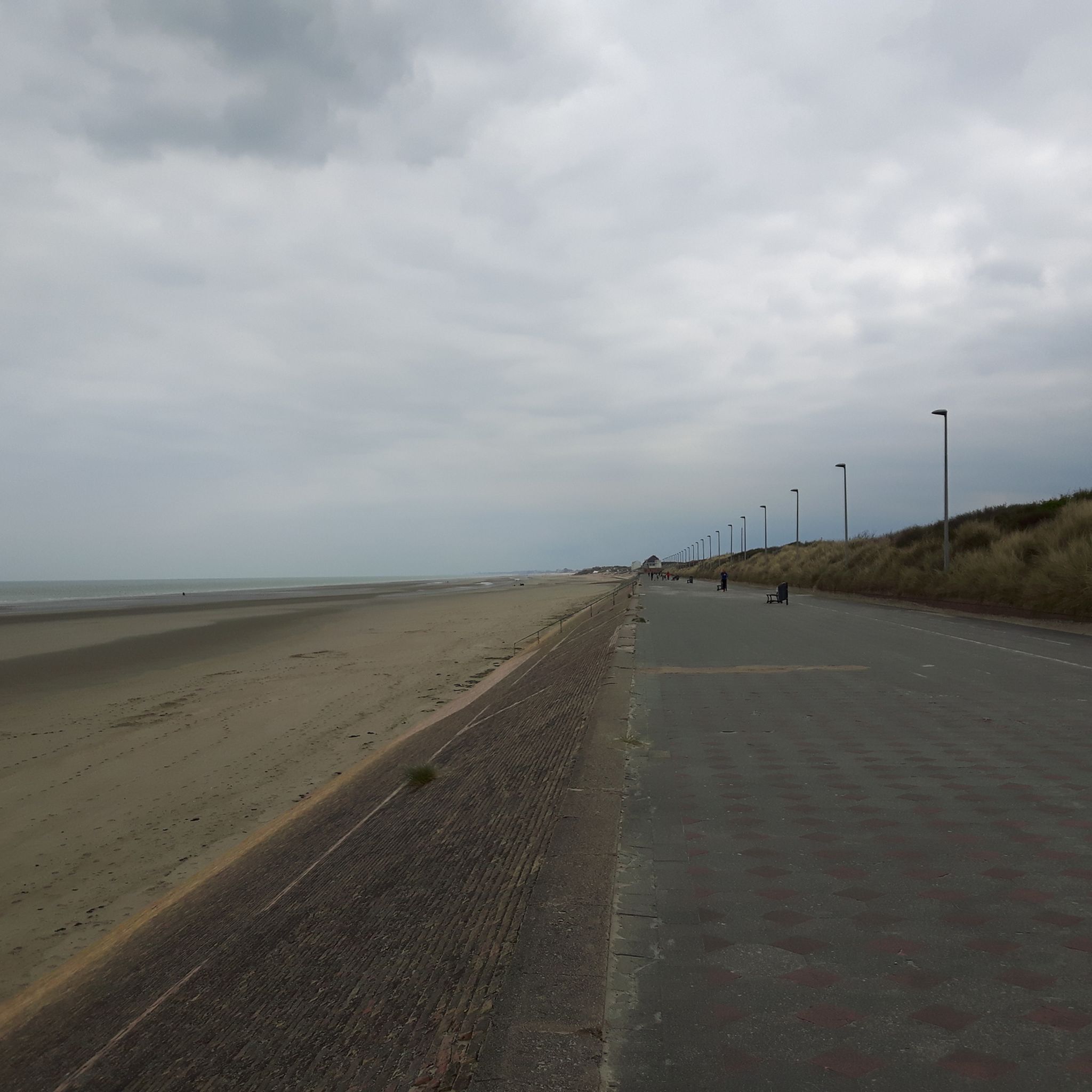
A magnificent viewpoint overlooking the southwesternmost point of Belgium. Westerpunt is a geometric, gentle staircase that takes you up from the promenade, towering over the beach, before descending further to the beach or the promenade below. It symbolically connects the sea with the dunes, nature with the coast, and the residents with each other. Its unique location next to the dunes and the Westhoek Nature Reserve makes it a real attraction. Experience breathtaking 360-degree views and discover the beautiful landscape.
4
0

The Maerebrug in De Panne is an elegant steel bridge spanning the Nieuwpoort–Dunkirk Canal and playing a vital role in the Westhoek recreational network. Designed with gentle slopes on both sides, it is easily accessible for cyclists, walkers, and horse riders. With a width of four meters and a span of 33 meters, the bridge offers safe and comfortable passage over the water and forms a link between Belgian and French nature reserves.
1
0

benches, toilets and drinking water + view of the dunes
1
0

Frequently Asked Questions
What natural areas can I explore around Téteghem-Coudekerque-Village?
The region offers several significant natural spaces. You can visit the Dune Dewulf Nature Reserve, which features both dry dunes and moist dune pans, and has military historical significance. Another notable area is the Bois des Forts, a large natural space with accessible paths, home to remarkable plant and animal species. The area is also crisscrossed by canals like the Nieuwpoort–Dunkirk Canal, offering unique landscapes.
Are there any historical landmarks or sites of interest in the area?
Yes, the region has several historical points. Téteghem itself is known for its typical Northern red brick architecture, including a church of notable interest. You can also find the Belgium–France Border at Grenspad and an 1819 Border Marker, which holds historical significance and old stories of smugglers. Fort Vallières is another important historical monument in the area.
What outdoor activities are available near Téteghem-Coudekerque-Village?
The area is excellent for various outdoor activities, especially cycling and walking. You can find numerous routes for gravel biking, road cycling, and general cycling. The Bois des Forts offers accessible asphalt and shale paths perfect for walking and hiking. The Maerebrug (Maere Bridge) is specifically designed for cyclists, pedestrians, and riders, connecting parts of the Maerestraat over the Nieuwpoort–Dunkirk Canal.
Are there family-friendly attractions or activities in the vicinity?
Absolutely. The Dune Dewulf Nature Reserve is considered family-friendly, offering opportunities to explore nature and history. For a dedicated family day out, Plopsaland De Panne, an amusement park in nearby Belgium, is a popular choice. The Westerpunt viewpoint is also family-friendly, providing magnificent 360-degree views.
Where can I find scenic viewpoints or unique architectural structures?
For stunning views, head to Westerpunt, a geometric staircase that offers a magnificent 360-degree viewpoint overlooking the southwesternmost point of Belgium, connecting the sea with the dunes. The Maerebrug (Maere Bridge) is also an interesting structure, a fixed steel bridge designed for cyclists and pedestrians, integrated into the rural environment.
What cultural sites or events can I experience in the area?
Téteghem-Coudekerque-Village hosts various local festivals and events, including an annual Christmas market, a majorettes festival in April, and the 'Rock in Téteghem' music festival in June. An Art and Culture Interpretation Center also features art installations by various artists, such as at the Téteghem lake and the Bois des Forts. Nearby Dunkerque offers the FRAC Grand Large Hauts-de-France, an art gallery with a distinctive building.
Are there any unique natural reserves or dune landscapes to visit?
Yes, the region is rich in dune landscapes. Besides the Dune Dewulf Nature Reserve, you can explore the De Westhoek Dune Reserve in nearby De Panne, Belgium, recognized as the most intact sea dune landscape on the Flemish coast. The Dune du Perroquet is also part of this significant contiguous dune massif. Additionally, the Réserve naturelle nationale Dune Marchand, east of Dunkerque, preserves 83 hectares of landscapes with over 400 animal and plant species.
What are some of the most popular activities enjoyed by visitors to this region?
Visitors particularly enjoy the blend of natural beauty and historical significance. Exploring the dune reserves, cycling along the canals like the Nieuwpoort–Dunkirk Canal, and discovering the unique border markers like the Belgium–France Border at Grenspad are highly appreciated. The scenic viewpoints, such as Westerpunt, also receive positive feedback for their breathtaking views.
Can I find museums or other points of interest related to Dunkerque's history nearby?
Yes, Dunkerque, being a significant port city, offers several museums. You can visit the Museum Dunkerque 1940 Operation Dynamo, dedicated to the historical evacuation, and the Port Museum of Dunkirk, which provides insights into the city's maritime history. The Bouée Sirène de Dunkerque, a unique siren buoy visible from afar, is also located at the entrance of the port.
Are there opportunities for wildlife spotting in the natural areas?
The natural reserves in the region are home to diverse flora and fauna. The Bois des Forts, for instance, hosts remarkable plant and animal species, some of which are regionally protected. The De Westhoek Dune Reserve supports over 400 plant species and diverse birdlife, making it an excellent spot for nature observation and wildlife spotting.
What is the best time of year to visit Téteghem-Coudekerque-Village for outdoor activities?
The region is generally pleasant for outdoor activities from spring through early autumn (April to October). During these months, the weather is typically milder, making it ideal for cycling, walking, and exploring the natural reserves. Summer offers local festivals and events, while the coastal areas can be enjoyed in warmer weather.
Are there any golf courses in the vicinity?
Yes, for those interested in golf, the Golf Course of Dunkerque is listed as a point of interest and is located conveniently close to Téteghem-Coudekerque-Village.
Most popular routes around Téteghem-Coudekerque-Village
Most popular attractions around Téteghem-Coudekerque-Village

Get inspired with the komoot mobile app


Explore more
Still not found the Highlight you’re looking for? See guides of the top attractions in other regions:
