Top 2 Castles around Dale Abbey
Best castles around Dale Abbey offers a journey through significant historical sites, even though traditional castles are not found directly within the village. Dale Abbey is home to the remains of a 13th-century Premonstratensian religious house, featuring the prominent 40-foot high east window arch. Nearby, the Hermit's Cave, a 12th-century sandstone carving, provides insight into medieval religious practices. These sites, along with other historical structures, offer a glimpse into the area's rich past and cultural significance.
Best castles around Dale Abbey
- The most popular castles is Elvaston Castle and Gardens, a historical site that includes a Gothic Revival castle and 321 acres of parkland. This site is a popular destination, known for its historical gardens and as a country park.
- Another must-see spot is Wollaton Hall, a man-made monument. This 16th-century Elizabethan country house now houses a natural history museum, surrounded by a park with wild deer.
- Visitors also love Codnor Castle Ruins, a historical site. These medieval castle ruins, once the seat of the De Grey family, offer views and the opportunity to explore most of the remains.
- Dale Abbey is known for its historical abbey ruins, a unique hermit's cave, and nearby castle estates. Visitors can explore medieval monastic remains, carved sandstone dwellings, and grand country houses categorized as castles.
- The castles around Dale Abbey are appreciated by the komoot community, with more than 120 upvotes and 70 photos shared by visitors.
Last updated: May 20, 2026
Elvaston Castle and Gardens
Highlight • Historical Site
Lots of secret areas of the park to explore.
Tip by

Codnor Castle Ruins
Highlight • Historical Site
Tip by

Sign up now to discover places like this
Get recommendations on the best single tracks, peaks, & plenty of other exciting outdoor places.
Sign up for free
Wollaton Hall
Highlight • Monument
The park that surrounds the hall is a lovely place for an afternoon ramble. Fallow deer roam the grounds, whilst its popular lake boasts a nature trail.
Tip by

Elvaston Castle Country Park
Highlight • Historical Site
Tip by

Horsley Castle
Highlight • Castle
The castle is ruined today, damaged by extensive quarrying. There are visible remains of the keep although this is now largely overgrown.
Tip by

Start today with a free account
Your next adventure awaits.
Login or Signup
Tips from the Community

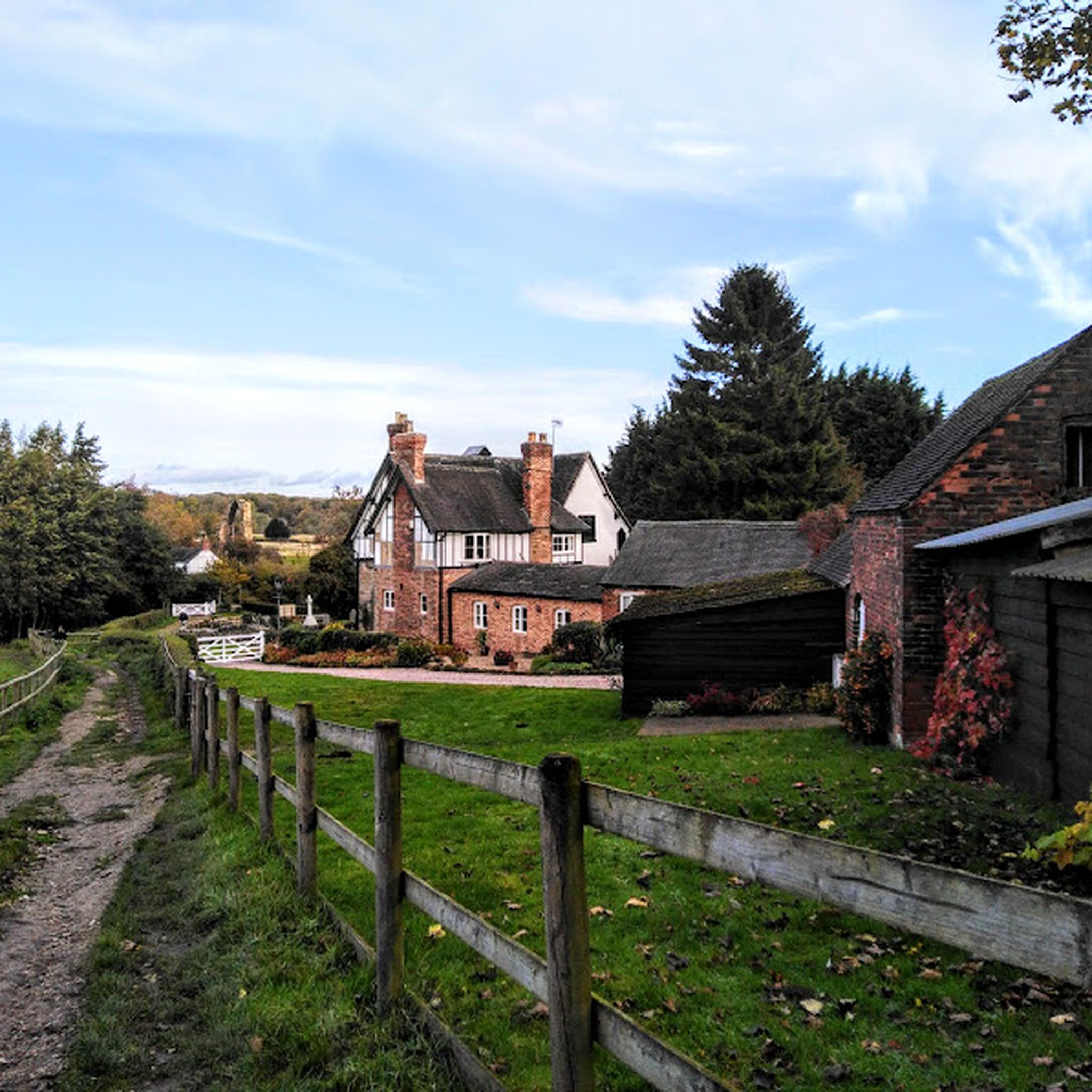
It was a Norman motte and bailey castle which was founded by Ralph de Buron. In the 13th century King John built a stone castle, adding a keep, a chapel, a gatehouse and a barbican. In 1514 it was granted by Henry VIII to the Duke of Norfolk as a reward for services against the Scots. Later it came into the possession of the Stanhope family. The castle is ruined today, damaged by extensive quarrying. There are visible remains of the keep although this is now largely overgrown.
0
0

A beautiful place to visit year-round. They updated the benches.
0
0

The church dates from the 13th century, and was completed in 1474 with funding from Walter Blount, 1st Baron Mountjoy. The chancel was restored and lengthened by 11 feet (3.4 m) in 1904 by George Frederick Bodley. Some of the tombs and memorials were moved to give a better view of the altar. The new chancel has no window at the east end, but a large reredos of carved white clunch filled the whole end, which was richly carved with subjects and figures, and effectively lit by two new traceried windows of three lights each in the north and south walls of the sanctuary. The pavements of the sanctuary and chancel were laid with black and white marble. The floor of the nave was laid with wooden blocks, and the aisles with slate and white stone. The plaster was removed from the walls. The roofs and various parts of the walls were decorated with gold and blue, with monograms of "B" for St Bartholomew.
0
0
A Gothic Revival castle in Elvaston, Derbyshire, is now part of Elvaston Castle Country Park, owned and managed by Derbyshire County Council, encompassing 321 acres of parkland, woodlands, and historical gardens. The castle, designed by James Wyatt in the early 1800s, replaced an older house dating back to 1633.
1
0

There's no entry to the castle, but you can look through some of the windows. It's in a run-down state, would cost a fortune to restore but nevertheless quite magnificent inside. Reminded me of buildings in Venice with the gilded ornate art decorated ceilings and golden pillars.
2
0

Updated 2024, access to the castle is now severely limited due to the new land owner, can only be viewed from a fenced path across the field. The Codnor castle heritage trust is no longer involved with on site activities.
0
0
Frequently Asked Questions
What historical sites can I visit near Dale Abbey?
While Dale Abbey itself is known for the significant ruins of a former Premonstratensian religious house, you can also explore other historical sites nearby. These include the medieval Codnor Castle Ruins, offering a glimpse into the De Grey family's past, and the grand Wollaton Hall, a 16th-century Elizabethan country house with a natural history museum and extensive parkland.
Are there family-friendly castle experiences around Dale Abbey?
Yes, Elvaston Castle and Gardens is a great family-friendly option. It features a country park with 321 acres of parkland, woodlands, and historical gardens, perfect for exploration. While you can't enter the castle itself, you can admire its Gothic Revival architecture and enjoy the surrounding grounds. Wollaton Hall also offers a family-friendly park with wild deer and a nature trail around its lake.
What unique historical features can be found at Dale Abbey?
Dale Abbey is home to the impressive East Window Arch, a 40-foot high remnant of its 13th-century abbey. You can also find footings of other abbey buildings and the remains of the Abbey Gatehouse. Additionally, the tiny All Saints' Church, part of which dates to 1150, is thought to have been the abbey's infirmary chapel and uniquely shares a roof with an adjoining farmhouse.
Where can I find information about the Hermit's Cave near Dale Abbey?
The Hermit's Cave is a Scheduled Ancient Monument tucked away in Hermit's Wood, south of Dale Abbey village. Carved out of a sandstone cliff in the 12th century, it's associated with the legend of Cornelius, a baker who sought a life of solitary prayer there. The cave features a doorway, windows, and a niche, believed to have served as both a chapel and living quarters. The walk to the cave through Hermit's Wood is also a pleasant natural experience.
What outdoor activities can I do near the castles around Dale Abbey?
The area around Dale Abbey offers various outdoor activities. You can find numerous hiking routes, such as the 'All Saints Church, Dale Abbey – Dale Abbey Arch loop' or routes around Locko Park Lake. For cycling, options include 'Manor Floods Nature Reserve – Shipley Country Park loop'. You can explore more routes in the Hiking around Dale Abbey guide or the Cycling around Dale Abbey guide.
What are the highlights of visiting <a href="https://www.komoot.com/highlight/7384379" target="_blank" rel="noopener">Elvaston Castle and Gardens</a>?
Elvaston Castle and Gardens is a popular destination, especially for cyclists, due to its flat, traffic-free routes from Derby. The country park spans 321 acres of parkland, woodlands, and historical gardens with many secret areas to explore. While the Gothic Revival castle itself is not open for entry, you can admire its exterior and the magnificent, albeit run-down, interior through its windows.
What should I know before visiting <a href="https://www.komoot.com/highlight/5143847" target="_blank" rel="noopener">Codnor Castle Ruins</a>?
Codnor Castle Ruins are the remains of a medieval castle dating from around 1200. It's unique because visitors can walk on most of the remains. The Codnor Castle Heritage Trust occasionally hosts reenactments, which are worth checking for. The site offers great views and is accessible by foot from the nearby road. If approaching via Ormonde Fields Golf Course, follow the pink markers.
Can I bring my dog to the castle sites near Dale Abbey?
Yes, some sites are dog-friendly. For instance, Codnor Castle Ruins are accessible with large dogs, as the stiles have gaps. Elvaston Castle Country Park is also generally dog-friendly, offering plenty of space for walks. Always ensure dogs are kept under control and any local signage regarding leads is followed.
What is the best time of year to visit the historical sites around Dale Abbey?
The historical sites and ruins around Dale Abbey, including the abbey remains, Hermit's Cave, and castle parks, are enjoyable year-round. Spring and summer offer lush greenery and pleasant weather for exploring the grounds and walking trails. Autumn provides beautiful foliage, while winter can offer a serene, stark beauty, especially around the ruins. Check specific site opening times, as some may vary seasonally.
What makes <a href="https://www.komoot.com/highlight/2866281" target="_blank" rel="noopener">Wollaton Hall</a> a notable visit?
Wollaton Hall is a magnificent 16th-century Elizabethan country house known for its striking symmetrical architecture. It houses a natural history museum and is set within a large park where fallow and red deer roam freely. The park features a lake with a nature trail, making it a lovely spot for an afternoon ramble. The hall and park were even used as a backdrop for the Batman film “The Dark Knight Rises”.
Are there any ruined castles to explore near Dale Abbey?
Yes, you can explore the ruins of Codnor Castle Ruins, a medieval site that was once the seat of the De Grey family. Another interesting ruin is Horsley Castle, a Norman motte and bailey castle later rebuilt in stone by King John. Today, it's largely overgrown but still shows visible remains of its keep, offering a glimpse into its past despite damage from quarrying.
Most popular routes around Dale Abbey
Most popular attractions around Dale Abbey

Get inspired with the komoot mobile app


Explore more
Looking for the best castles somewhere else? Discover other guides around Dale Abbey:
