Attractions and Places To See around Cadelbosco Di Sopra - Top 20
Best attractions and places to see around Cadelbosco Di Sopra include historical buildings, natural areas, and cycle paths within the fertile Po Valley. The region is characterized by its agricultural heritage, particularly Parmigiano Reggiano production, and serene green spaces. Visitors can explore historical sites, tranquil canals, and former railway lines transformed into scenic routes. The area offers a blend of cultural landmarks and natural features for exploration.
Best attractions and places to see around Cadelbosco Di Sopra
- The most popular…
Last updated: July 6, 2026
Po River Cycle Path – Guastalla to Luzzara
Highlight • Cycleway
Translated by Google •
Tip by

Bagnolo–Correggio Rail Trail
Highlight (Segment) • Cycleway
Translated by Google •
Tip by
Sign up now to discover places like this
Get recommendations on the best single tracks, peaks, & plenty of other exciting outdoor places.
Sign up for free
Basilica of Saint Prospero
Highlight • Religious Site
Old church consecrated in 997 and dedicated to Bishop Prospero, named Holy Protector of the city. It was completely rebuilt in the 16th century; The facade dates from the 16th century.
Translated by Google •
Tip by

Villa Levi
Highlight • Historical Site
Translated by Google •
Tip by

Reggio Emilia Cathedral
Highlight • Religious Site
Translated by Google •
Tip by
Sign up for free to discover even more attractions around Cadelbosco Di Sopra.
Sign up for free
Already have an account?
Start today with a free account
Your next adventure awaits.
Login or Signup

Tips from the Community

The bell tower of the Basilica of San Prospero is one of the most important and beloved architectural symbols of Reggio Emilia. Located in the square of the same name in the heart of the historic center, this imposing structure stands out for its characteristic octagonal shape and for being fascinatingly unfinished. Construction work on the bell tower began between 1535 and 1536. Its construction saw the collaboration of important master craftsmen and architects of the time. The builders: The construction site was initially directed by the local master builders Leonardo, Alberto, and Roberto Pacchioni. Design and consultation: The initial design is attributed to the sculptor Cristoforo Ricci (known as Il Rossino). In 1538, Ricci himself went to Mantua to submit the drawings to Giulio Romano, the famous pupil of Raphael, who supervised the project, introducing prominent elements (such as shell-shaped niches inspired by Palazzo Te). Partial completion: Upon Rossino's death in 1555, the sculptor Prospero Sogari (known as Il Clemente) took over, carrying forward the third order. Work definitively ceased around 1575, leaving the structure without the planned fourth level and covering dome. The tower is composed of three superimposed octagonal volumes, decorated according to the classical superposition of architectural orders: Doric on the lower floor, Ionic on the second, and Corinthian on the third. The nickname derives from its characteristic external cladding in local sandstone. Sandstone is sand naturally cemented over millennia; while providing a warm golden color, it is a friable material that tends to flake under the action of atmospheric agents.
0
0
The Basilica of San Prospero is one of the most important religious monuments in Reggio Emilia, located in the square of the same name in the heart of the historic center. Dedicated to the city's patron saint, the church represents an extraordinary testimony of the Emilian Renaissance, enriched with late Baroque elements. It houses the relics of the Saint under the high altar.
0
0
The Duomo of Reggio Emilia (Cathedral of Santa Maria Assunta) is the main religious building of the city and the mother church of the diocese of Reggio Emilia-Guastalla. Located in the very central Piazza Prampolini, the building has represented the historical and spiritual heart of the Reggio community since the 9th century. Entry to the structure is free.
1
0

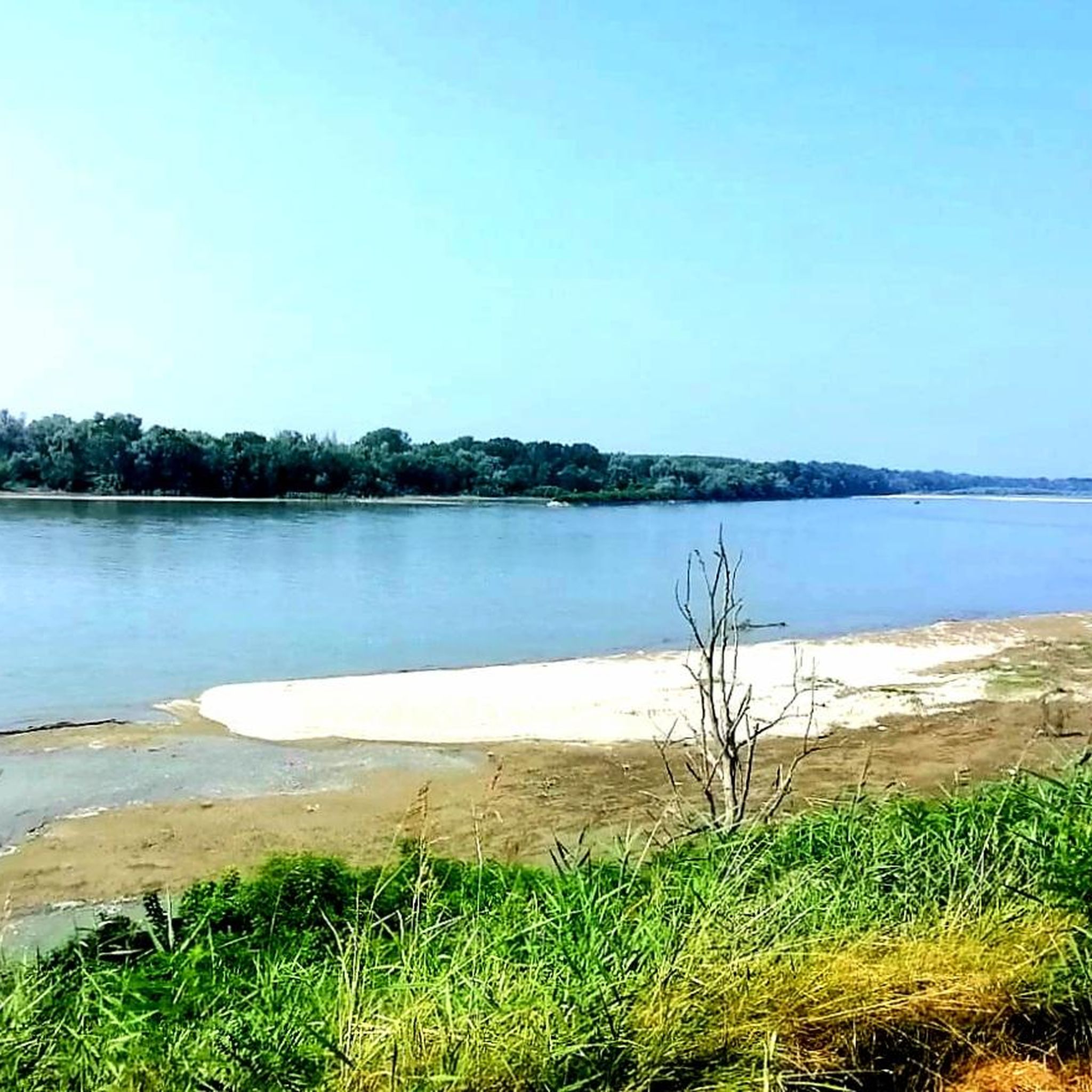
Avenue that leads to Lido Po'A Guastalla
1
0

The square in front of the Church of San Prospero is commonly called Little Square (Piasa Céca). Its origins date back to the end of the 10th century, when Bishop Teuzone had the new church dedicated to the Patron Saint built behind the Cathedral.
1
0

In the square dedicated to the well-known socialist politician and deputy from Reggio Prampolini, stands the Cathedral of Reggio Emilia which is built in Romanesque/Renaissance style.
5
0
Piazza San Prospero is also known as the small square due to its proximity to the larger Piazza Prampolini. It is surrounded by arcades
2
0

Villa Levi is one of the most singular villas in the Reggio countryside, characterized by the presence of the imposing metal dome and the giant colonnade on the southern front. Born as a summer residence probably around the first half of the 1600s but significantly remodeled between 1790 and 1810 commissioned by the Besenzis, the first owners. It was the architect Domenico Marchelli who took care of the renovation, introducing the tympanum which slightly overhangs the building. The arrangement of the vast "Italian-style" garden and the construction of the two service buildings, which served as the caretaker's house and stable, can also be traced back to the architect Marchelli. In the 1830s the architect Luigi Poletti added the dome supported by a giant circular colonnade and worked on the "new" south façade, with the creation of a colonnaded pronaos and a monumental staircase that connects the ground level to the main floor. The villa today has therefore acquired an imprint that refers to Palladian influences. The villa passed to the Levi family in 1874; The interior decorations in Art Nouveau style date back to the early 1900s. It was then acquired by the Pelosis in 1956 and by the University of Bologna in 1971, which used it as the location for the Animal Production Sciences course. In the mid-80s the University created a floor in the attic, where offices and laboratories were built. Today the villa is owned by the University of Bologna, which has only maintained laboratory activities and the management of the agricultural company. It is made available to Coviolo citizens' associations for the organization of events, such as Covioloinfesta. Source FAI environment fund.
3
0
Frequently Asked Questions
What natural attractions can I explore around Cadelbosco di Sopra?
The region offers several natural highlights. You can visit the Budrio Oasis, a rebalancing area of over 13 hectares with an abandoned clay pit now filled with water, providing refuge for numerous bird species. The area is also crisscrossed by canals, such as the Canalazzo Naviglio Tassone, which offer scenic journeys surrounded by native hedges. Additionally, the Park of the Old Railway provides another green space within the town.
Are there historical sites to visit in Cadelbosco di Sopra?
Yes, Cadelbosco di Sopra has a rich history reflected in its landmarks. A notable site is Villa Levi, a unique historical villa with an imposing metallic dome and a large colonnade. You can also explore the 17th-century Church of San Celestino, the Church of Annunciation built in 1513, and the Parish Church of Saint Thomas of Canterbury, which has Romanesque origins and has undergone many transformations over centuries.
What cycling paths are available near Cadelbosco di Sopra?
Cadelbosco di Sopra is well-suited for cycling enthusiasts. The Bagnolo–Correggio Rail Trail is a popular choice, a former railway transformed into a scenic cycle path connecting Bagnolo to Correggio. Another option is the Po River Cycle Path – Guastalla to Luzzara, which offers pleasant rides along the river. For more cycling adventures, you can find various Road Cycling Routes and MTB Trails around the area.
Are there family-friendly attractions in the area?
Absolutely! Several attractions are suitable for families. The Bagnolo–Correggio Rail Trail and the Po River Cycle Path are both excellent for family bike rides. The Villa Levi, with its unique architecture and historical significance, can also be an interesting visit for all ages. Additionally, the Budrio Oasis provides a peaceful natural setting for families to observe local wildlife.
What is the best time of year to visit Cadelbosco di Sopra?
Cadelbosco di Sopra can be visited in all seasons, but spring and early autumn are often preferred. During these times, the weather is generally mild and pleasant, making it ideal for exploring the outdoor attractions like the cycle paths and natural areas such as the Budrio Oasis.
What kind of outdoor activities can I do near Cadelbosco di Sopra?
Beyond cycling, the area around Cadelbosco di Sopra offers various outdoor activities. You can find numerous Running Trails, including loops from Cadelbosco di Sopra itself. The fertile Po Valley landscape is perfect for leisurely walks and exploring the agricultural countryside, which is characterized by crops, pastures, and vineyards.
What is the significance of the agricultural landscape in Cadelbosco di Sopra?
Cadelbosco di Sopra is deeply rooted in its agricultural heritage. The surrounding countryside is a vibrant tapestry of grains, wheat, pastures, vegetables, fruit trees, and vineyards. The town is particularly renowned for its extensive production of Parmigiano Reggiano cheese, with numerous cooperative dairies contributing to this important local industry.
Are there any unique engineering marvels to see in the vicinity?
Yes, approximately 5 kilometers away in Cadelbosco di Sotto, you can find the Botte Bentivoglio. Built in 1566, this impressive hydraulic engineering structure is a 77-meter-long duct that allows a reclamation canal's water to pass beneath the Crostolo Stream.
What cultural points of interest are there in Cadelbosco di Sopra?
Beyond historical buildings, Cadelbosco di Sopra hosts L'Altro Teatro, a venue that stages performances focused on contemporary art, youth, and the local territory. The town's strong connection to Parmigiano Reggiano production also forms a significant part of its cultural identity.
What do visitors enjoy most about the attractions around Cadelbosco di Sopra?
Visitors particularly appreciate the blend of historical charm and natural beauty. The cycle paths, like the Bagnolo–Correggio Rail Trail, are loved for their immersion in the countryside. Historical sites such as Villa Levi offer unique architectural insights, while natural spots like the Budrio Oasis are valued for their tranquility and wildlife. The overall serene green spaces and agricultural landscape also contribute to a pleasant visitor experience.
Can I find trails suitable for running in the area?
Yes, there are several trails around Cadelbosco di Sopra that are great for running. You can explore various Running Trails, including loops starting directly from Cadelbosco di Sopra, offering different distances and difficulty levels.
Most popular routes around Cadelbosco Di Sopra
Most popular attractions around Cadelbosco Di Sopra

Get inspired with the komoot mobile app


Explore more
Still not found the Highlight you’re looking for? See guides of the top attractions in other regions:
