The best traffic-free bike rides around Cadelbosco Di Sopra
4.3
(417)
3,473
riders
13
rides
No traffic touring cycling routes around Cadelbosco Di Sopra are characterized by the flat, fertile landscapes of Italy's Po Valley. The region's terrain, shaped by agricultural development and the Crostolo Stream, provides ideal conditions for leisurely cycling. Routes often follow waterways and former railway lines, offering car-free paths through the countryside. The area features minimal elevation changes, making it suitable for accessible touring cycling.
Best no traffic touring cycling routes around Cadelbosco Di Sopra
- The most popular no traffic touring cycling route is Lungonil Crostilo Cycle Path – Lido on the Po, Guastalla loop from Cadelbosco di Sopra, a 31.5 miles (50.7 km) trail that takes 3 hours 32 minutes to complete. This route follows the Crostolo Stream and connects to the Po River.
- Another top favourite among local touring cyclists is Corbelli Pond – Rivalta Royal Palace Park loop from Cadelbosco di Sopra, a moderate 22.3 miles (35.9 km) path. This route navigates through natural areas featuring ponds and parkland scenery.
- Local touring cyclists also love the Romolo Valli Municipal Theatre – Basilica of Saint Prospero loop from Cadelbosco di Sopra, a 14.9 miles (24.0 km) trail leading through urban and rural landscapes, often completed in about 1 hour 37 minutes.
- Touring cycling around Cadelbosco Di Sopra is defined by flat agricultural fields, the Crostolo Stream, and repurposed railway paths. The network offers options for various ability levels, from easy loops to moderate excursions.
- The routes in Cadelbosco Di Sopra are highly rated by the komoot community with an average score of 4.4 stars from more than 500 reviews. More than 6,000 touring cyclists have used komoot to explore Cadelbosco Di Sopra's varied terrain.
Last updated: June 30, 2026
4.4
(7)
66
riders
Moderate bike ride. Good fitness required. Mostly paved surfaces. Suitable for all skill levels.
4.4
(7)
14
riders
Easy bike ride. Great for any fitness level. Mostly paved surfaces. Suitable for all skill levels.

Sign up for free
2.5
(2)
14
riders
Moderate bike ride. Good fitness required. Mostly paved surfaces. Suitable for all skill levels.
10
riders
48.1km
03:02
170m
170m
Moderate bike ride. Good fitness required. Mostly paved surfaces. Suitable for all skill levels.
5
riders
Moderate bike ride. Good fitness required. Mostly paved surfaces. Suitable for all skill levels.
Get access to more routes and recommendations from other explorers.
Sign up for free
Already have an account?
Our route recommendations are based on thousands of hikes, rides, and runs completed by other people on komoot.
Start today with a free account
Your next adventure awaits.
Login or Signup
Popular around Cadelbosco Di Sopra

Tips from the Community

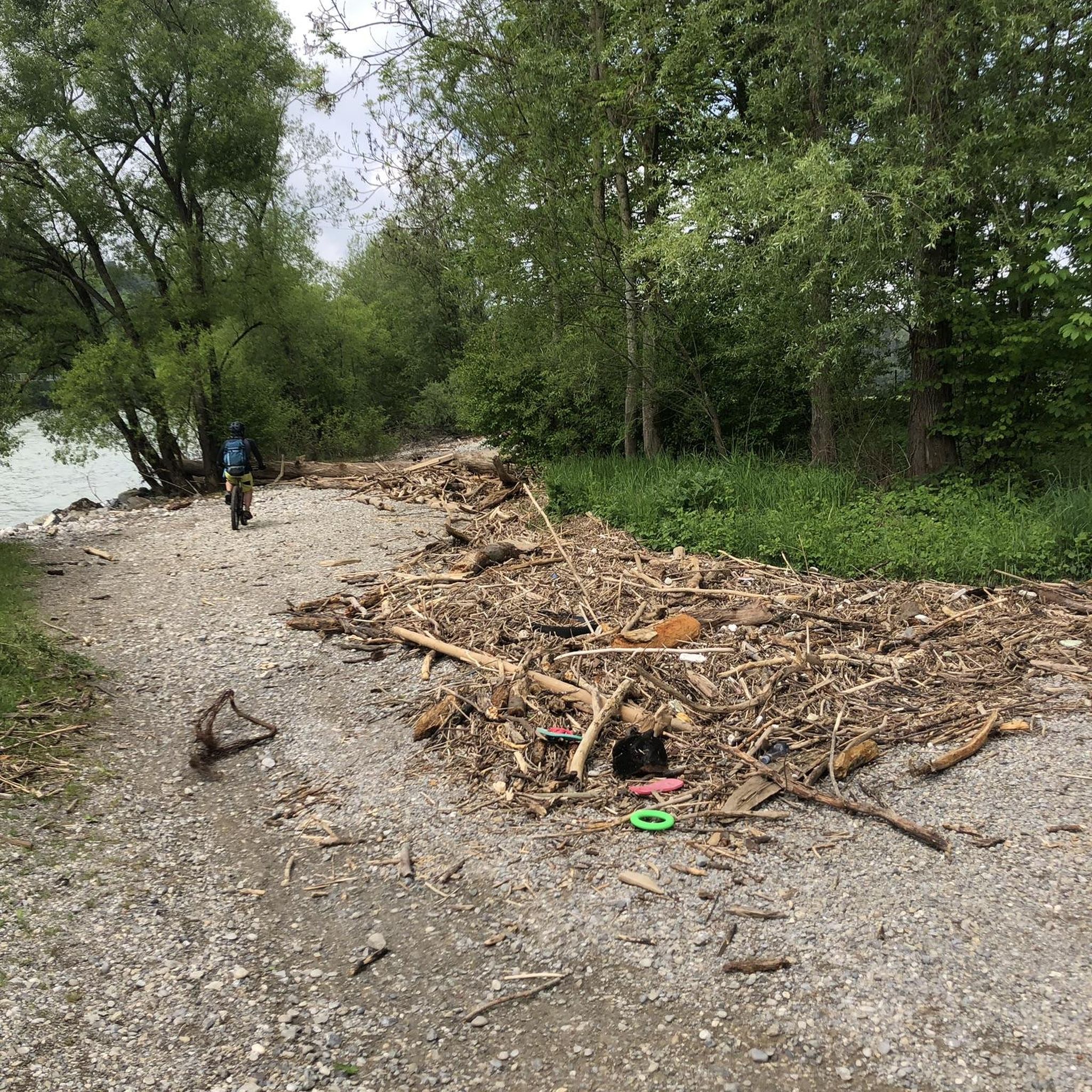
Very beautiful route in the floodplain of the Crostolo stream
0
0

The Parco della Reggia di Rivalta is a monumental green area of 26 hectares located in the hamlet of Rivalta, south of Reggio Emilia, recently restored and reopened to the public in June 2025. Historically known as the Emilian "Little Versailles", the 18th-century complex was created at the behest of Francesco III d’Este and Charlotte d’Orléans. Today, the park represents an important ecological, cultural, and historical hub for the local community.
0
0
The bell tower of the Basilica of San Prospero is one of the most important and beloved architectural symbols of Reggio Emilia. Located in the square of the same name in the heart of the historic center, this imposing structure stands out for its characteristic octagonal shape and for being fascinatingly unfinished. Construction work on the bell tower began between 1535 and 1536. Its construction saw the collaboration of important master craftsmen and architects of the time. The builders: The construction site was initially directed by the local master builders Leonardo, Alberto, and Roberto Pacchioni. Design and consultation: The initial design is attributed to the sculptor Cristoforo Ricci (known as Il Rossino). In 1538, Ricci himself went to Mantua to submit the drawings to Giulio Romano, the famous pupil of Raphael, who supervised the project, introducing prominent elements (such as shell-shaped niches inspired by Palazzo Te). Partial completion: Upon Rossino's death in 1555, the sculptor Prospero Sogari (known as Il Clemente) took over, carrying forward the third order. Work definitively ceased around 1575, leaving the structure without the planned fourth level and covering dome. The tower is composed of three superimposed octagonal volumes, decorated according to the classical superposition of architectural orders: Doric on the lower floor, Ionic on the second, and Corinthian on the third. The nickname derives from its characteristic external cladding in local sandstone. Sandstone is sand naturally cemented over millennia; while providing a warm golden color, it is a friable material that tends to flake under the action of atmospheric agents.
0
0
The former Caserma Zucchi is located at Viale Antonio Allegri 9 in the historic center of Reggio Emilia. It is an imposing neoclassical complex designed by the architect Pietro Marchelli. Born in the mid-nineteenth century as the Foro Boario (cattle market), the building was later converted into a military barracks and named after the Napoleonic general Carlo Zucchi. Today, the historic building is one of the main campuses of the University of Modena and Reggio Emilia (Palazzo Dossetti). The surrounding area gives its name to one of the most important and busiest stopping and interchange points in the city.
1
0
The Basilica of San Prospero is one of the most important religious monuments in Reggio Emilia, located in the square of the same name in the heart of the historic center. Dedicated to the city's patron saint, the church represents an extraordinary testimony of the Emilian Renaissance, enriched with late Baroque elements. It houses the relics of the Saint under the high altar.
0
0
The Duomo of Reggio Emilia (Cathedral of Santa Maria Assunta) is the main religious building of the city and the mother church of the diocese of Reggio Emilia-Guastalla. Located in the very central Piazza Prampolini, the building has represented the historical and spiritual heart of the Reggio community since the 9th century. Entry to the structure is free.
1
0
The Basilica della Beata Vergine della Ghiara is one of the most important Marian sanctuaries in Italy and an absolute masterpiece of Emilian Baroque and late Renaissance. Located in Reggio Emilia along Corso Garibaldi, the church was built between 1597 and 1619 to protect a miraculous image of the Madonna.
0
0
The Galleria Parmeggiani, a renowned museum located in Reggio Emilia, known for its neo-Gothic architecture. The complex houses collections of 19th-century paintings, furniture, and textiles, originally gathered by patron Luigi Parmeggiani. The building is characterized by distinctive elements such as a Gothic spire and decorations that include gargoyles along the facade. The palace features a particular neo-Gothic inspired architecture, with a spire and Gothic decorations, the result of the eclectic taste of the time. The palace facade is characterized by the presence of 7 monsters, some of these real gargoyles, hanging from the battlements. In the escutcheons decorating the windows, some objects from the collection are represented in bas-relief. Four busts of artists act as guardians of the building: Raffaello, Michelangelo, Leonardo, and Cellini. Currently, the Galleria Parmeggiani is part of the circuit of the Civic Museums of Reggio Emilia,
0
0
Frequently Asked Questions
How many no traffic touring cycling routes are available around Cadelbosco di Sopra?
There are over 200 dedicated no traffic touring cycling routes around Cadelbosco di Sopra, offering a wide variety of options for all skill levels. Approximately 112 of these are considered easy, 68 moderate, and 37 difficult.
What is the best season for no traffic touring cycling in Cadelbosco di Sopra?
The flat agricultural landscapes of the Po Valley make Cadelbosco di Sopra enjoyable for cycling throughout much of the year. Spring and autumn offer pleasant temperatures and beautiful scenery, while summer can be warm but still suitable for early morning or late afternoon rides. Winter rides are also possible, especially on clear days.
Are there easy, car-free touring cycling routes suitable for beginners?
Yes, Cadelbosco di Sopra offers numerous easy, car-free routes perfect for beginners. The region's flat terrain, shaped by centuries of land reclamation, provides ideal conditions for leisurely rides. An example of an easy route is the Romolo Valli Municipal Theatre – Basilica of Saint Prospero loop from Cadelbosco di Sopra, which is just over 24 km long.
Can I find circular no traffic touring cycling routes in the area?
Yes, many of the no traffic touring cycling routes around Cadelbosco di Sopra are circular, allowing you to start and end in the same location. A great example is the Lungonil Crostilo Cycle Path – Lido on the Po, Guastalla loop from Cadelbosco di Sopra, which offers a moderate road ride experience.
What do other touring cyclists say about the no traffic routes here?
The no traffic touring cycling routes around Cadelbosco di Sopra are highly rated by the komoot community, with an average score of 4.4 out of 5 stars from nearly 600 ratings. Reviewers often praise the tranquil experience, the flat and well-maintained paths, and the opportunity to explore the scenic Po Valley away from vehicle traffic.
Are the no traffic touring cycling routes in Cadelbosco di Sopra family-friendly?
Absolutely. The predominantly flat terrain and dedicated cycle paths, such as sections of the Crostolo Cycle Path and the Bagnolo–Correggio Railway Path, make many routes ideal for families with children. These car-free environments ensure a safer and more relaxed cycling experience for all ages.
What kind of scenery can I expect on these no traffic touring cycling routes?
You can expect classic Po Valley scenery: flat, fertile agricultural fields, charming waterways like the Crostolo Stream, and glimpses of historic architecture. The routes often wind through peaceful countryside, offering a tranquil escape and a chance to observe local rural life.
Are there any interesting historical or cultural landmarks along the no traffic routes?
Yes, the region is rich in history and culture. You might encounter historic buildings like the 17th-century Chiesa Parrocchiale di San Celestino, or the impressive Botte Bentivoglio, a 16th-century hydraulic engineering marvel. The Corbelli Pond – Rivalta Royal Palace Park loop from Cadelbosco di Sopra is another route that takes you past interesting local points.
Are there any natural attractions or points of interest near the cycling routes?
Yes, the area features several natural highlights. You can explore places like the Budrio Oasis or the Fontanili di Corte Valle Re Nature Reserve. These offer peaceful spots to pause and enjoy the local flora and fauna during your ride.
Can I find cafes or places to stop for refreshments along the no traffic bike trails?
While specific cafes directly on every car-free path might be limited, many routes pass through or near small towns and villages where you can find local eateries, cafes, and shops. The region is also famous for its Parmigiano Reggiano cheese, so look out for local dairies for a unique culinary stop.
Are there any longer no traffic touring routes for more experienced cyclists?
Yes, for those seeking longer rides, there are options like the Lungonil Crostilo Cycle Path – Lido on the Po, Guastalla loop from Cadelbosco di Sopra, which covers over 50 km. These routes allow for extended exploration of the Po Valley's tranquil landscapes without vehicle interference.
What are some hidden gems or less-known no traffic routes in the area?
Beyond the well-known Crostolo Cycle Path, exploring the network of smaller agricultural roads and reclaimed railway paths can reveal hidden gems. The Along the Crostolo, Molino Area – Crostolo Right-Bank Cycle Path loop from Cadelbosco di Sopra offers a pleasant, less-trafficked experience along the river.
Most popular routes around Cadelbosco Di Sopra
Most popular attractions around Cadelbosco Di Sopra

Get inspired with the komoot mobile app


Explore more
Browse the best Cycling routes in other regions.
