The best walks and hikes around Due Carrare
4.3
(6197)
26,689
hikers
21
hikes
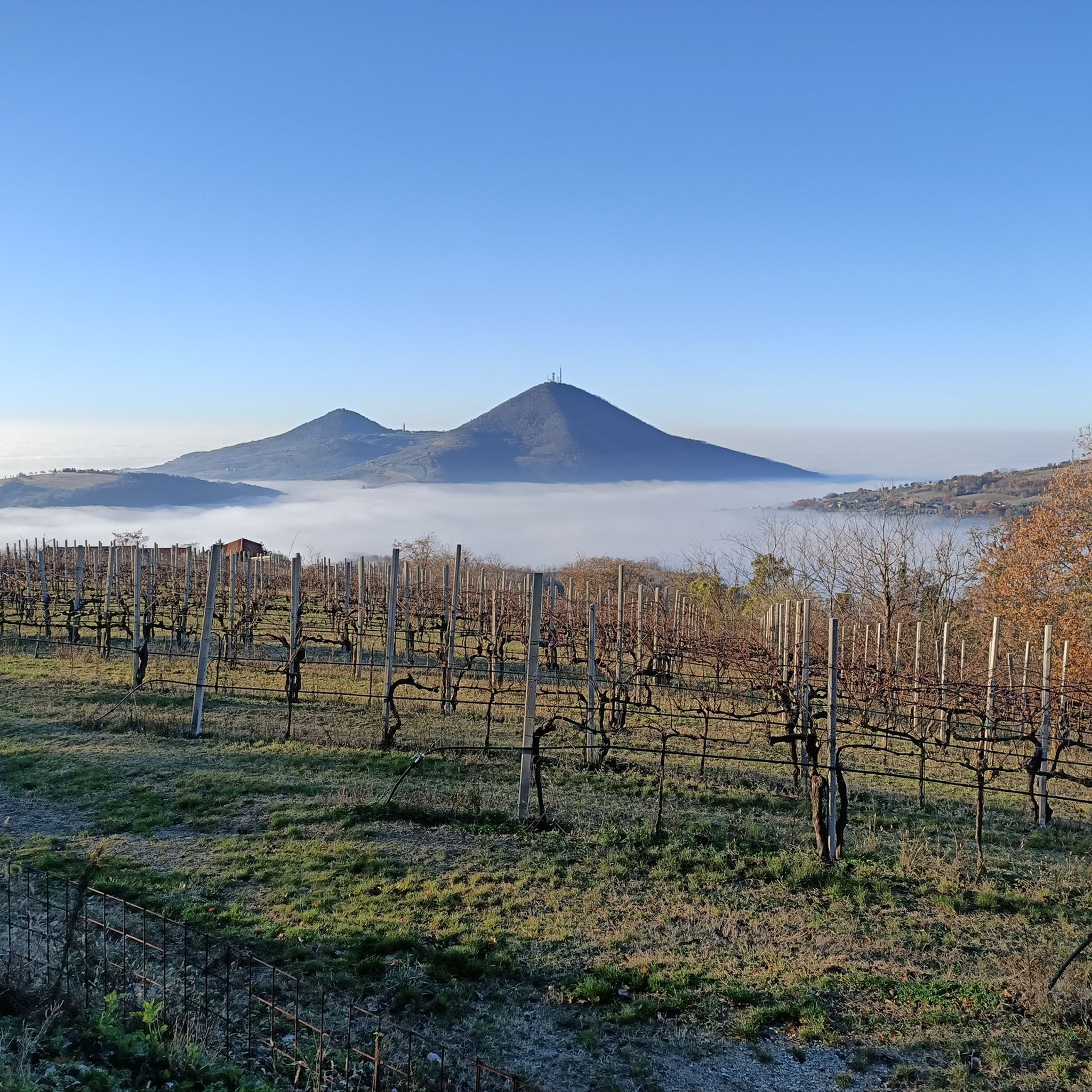
Hiking around Due Carrare offers access to the unique volcanic landscapes of the Euganean Hills, characterized by ancient volcanic formations and diverse flora. The region features varied terrain, from challenging ascents on hills like Monte Ceva to more gentle paths through valleys. Hikers can expect to encounter a rich sylvan environment with chestnut, walnut, beech, ash, and oak trees, alongside unique plant life such as native cacti and wild orchids in dry meadows. The area provides a network of trails…
Last updated: July 3, 2026
4.0
(4)
56
hikers
Easy hike. Great for any fitness level. Easily-accessible paths. Suitable for all skill levels.
3.8
(5)
20
hikers
14.4km
04:26
260m
260m
Hard hike. Good fitness required. Sure-footedness, sturdy shoes and alpine experience required.

Sign up for free
5.0
(1)
21
hikers
Moderate hike. Good fitness required. Easily-accessible paths. Suitable for all skill levels.
4.0
(2)
14
hikers
Moderate hike. Good fitness required. Easily-accessible paths. Suitable for all skill levels.
5
hikers
Moderate hike. Good fitness required. Easily-accessible paths. Suitable for all skill levels.
Get access to more routes and recommendations from other explorers.
Sign up for free
Already have an account?
Our route recommendations are based on thousands of hikes, rides, and runs completed by other people on komoot.
Start today with a free account
Your next adventure awaits.
Login or Signup

Tips from the Community

Tugboat Pavia
0
0

Oratory of the Black Madonna, Montegrotto Terme The Oratory of the Black Madonna in Montegrotto Terme owes its name to a beautiful wooden statue of the Black Madonna housed within. Also known as the "Lower Church" because of its cobblestone streets and its location at the foot of the small hill on which the Cathedral of San Pietro stands, the Oratory of the Black Madonna in Montegrotto Terme is situated in the town center and is the first parish church of the spa town. The ancient sanctuary, dedicated to Saints Peter and Elisha the Prophet (as the inscription above the side portal can still be seen), was actually built in 1724 with a single large nave in the Baroque style (and consecrated in 1777), on the remains of an earlier church dating from 1156. The demolished medieval building, of which only the 13th-century bell tower remains (according to legend, it was taken from the tower of an ancient, pre-existing medieval castle), was a "Selegiata" (paved with flint) and tavolata, 48 feet (16.80 m) long and 25 feet (8.75 m) wide, with three naves (each ending with an altar, but only the central one in a semicircular apse) in the Romanesque style. Due to the development that Montegrotto Terme experienced in the 20th century thanks to its thermal waters, it became necessary for the community to build a new parish church. St. Peter's Cathedral was built in 1949. The Oratory of the Black Madonna in Montegrotto Terme owes its name to a beautiful wooden statue of the Black Madonna, located inside (on the first altar on the left). This much-loved and venerated statue, according to tradition, was found around 1400 on a property in the village of Mezzavia. Every year on April 25th, the statue is carried in procession to the nearby Sanctuary of the Madonna della Salute in Abano Terme, commemorating the pilgrimage that took place in the seventeenth century and is said to have prevented a plague. On the high altar of the Oratory of Montegrotto Terme, one can also admire the altarpiece by the painter Luca Ferrari (1605–1654): Peter receiving the keys from Jesus. Text / Source: Thermae Abano Montegrotto https://www.visitabanomontegrotto.com/luoghi-di-culto/oratorio-della-modonna-nera-montegrotto-terme/
16
0
War Memorial, Piazza Roma, Montegrotto Terme A war memorial is a type of architectural and often sculptural work erected in many countries, particularly in individual local communities, to honor military personnel or sometimes even civilians who died in wars, especially in the two World Wars. It usually bears an inscription with the names of the fallen. Text / Source: wikipedia.org https://it.wikipedia.org/wiki/Monumento_ai_caduti
15
0
Cathedral of Saints Peter and Elise, Montegrotto Terme Part 2 Inside the Cathedral of San Pietro in Montegrotto Terme, all the frescoes were created by the local artist Armando Migliolaro (1915–1999). In the apse are the three major scenes from the life of Saint Peter (the Primacy of Saint Peter, the Apostle's Penance after his Triple Denial, and the Giving of the Keys). In the dome, or rather "dome," is the dogma of the Immaculate Conception. In the background is the Annunciation. On the side altars are the Virgin Mary, the Health of the Sick, and Saint Anthony, Proclaimer of the Word. Next to the side altars are the Deposition and the Resurrection. Galliano Migliolaro, Armando's brother and first teacher, created the frescoes of the two lunettes above the east and north portals, depicting Eliseo Profeta and Saint Mauro Abate. The high altar with its large crucifix is the work of the Paduan sculptor Luigi Strazzabosco (1895–1980). The front of the altar, made of Istrian stone, depicts Pentecost; on the marble dossal are seven embossed copper panels representing the seven sacraments. The Stations of the Cross on the altar of the Madonna are a wooden work by Augusto Murer (1922–1985). The altar of Saint Anthony, on the other hand, is the work of the Milani brothers, while the 14 paintings depicting the most significant moments in the saint's life are by Alberto Verza, who also designed the embossed copper door panels for Sandro Balbo, also a local artist. Finally, the facade railing, the portal, and the large statue of Saint Peter, the work of sculptor Menegazzo, date from 1990. Info: Viale Stazione 11, Montegrotto Terme (PD) Tel +39 049 793436 info@pietroapostolo.it / www.pietroapostolo.it Text / Source: Thermae Abano Montegrotto https://www.visitabanomontegrotto.com/luoghi-di-culto/duomo-di-san-pietro-montegrotto-terme/
15
0
Cathedral of Saints Peter and Elise, Montegrotto Terme Part 1 The Cathedral of San Pietro in Montegrotto Terme, dedicated to Saints Peter and Elise, rises imposingly above San Pietro Montagnon hill. The Cathedral of San Pietro in Montegrotto Terme, dedicated to Saints Peter and Elise, rises imposingly above the Colle di San Pietro Montagnon (or Colle Montagnone, part of the "Prebenda," or parish church) in the center of the spa town. It was built in the mid-20th century (1944–1949) to replace the remains of a vast Roman building, as the old parish church (now the Oratory of the Black Madonna) could no longer accommodate the growing population and tourists seeking spa treatments. The Colle Montagnone, which at the time boasted a vast and lush vineyard, was demolished thanks to the extensive use of cobblestones, and work continued even amidst the bombings of World War II. Among the various proposals, the design by Professors Galliano (a painter who had already frescoed the Villa Bugia in Abano Terme) and Armando Migliolaro was chosen, featuring three naves in a modernized Romanesque-Gothic style. The church was consecrated in 1963. Info: Viale Stazione 11, Montegrotto Terme (PD) Tel +39 049 793436 info@pietroapostolo.it / www.pietroapostolo.it Text / Source: Thermae Abano Montegrotto https://www.visitabanomontegrotto.com/luoghi-di-culto/duomo-di-san-pietro-montegrotto-terme/
15
0
Montegrotto Terme Thermal Complex / The Roman Excavations of Montegrotto Part 4 Theater or Odeon A small, perhaps roofed, theater built between the end of the first century BC and the beginning of the first century AD. It later underwent some significant modifications. The cavea must have had eleven steps, accessible via a central ladder and two side ladders. Spectators entered through two passageways flanking the stage. The stage itself has a brick slab (hyposcenic) and five recesses with lead linings for the wooden curtain rods. Within the picturesque backdrop of semicircular and rectangular niches were three doors leading to the postscaenium; on either side were two symmetrical rooms (the present-day foyers). At the top of the cavea, there must have been a gallery or small temple, with adjoining rooms, of which only the foundations remain. Double-Sided Building The structure has a complex ground plan, organized around a rectangular room that extends into two large apses, symmetrically arranged on either side, with a circular pool in the center. On the other two sides are two rows of rooms, some of which are distinguished by small rectangular niches. The building's function remains uncertain for now, although it may have been associated with individual baths or washing facilities. The Hydraulic System The buildings located in the center of the area represent the remains of the complex hydraulic system for the conveyance and drainage of thermal waters, connected to the pools. The network of channels, connected to the main collector, extends for a total of more than 200 meters. In the immediate vicinity of the theater, the remains of residential buildings with two waterwheels for raising and moving water are visible. The Thermal Baths There are three interconnected pools, but only one is fully visible, while the other two extend beyond the current boundaries of the archaeological area. The complete development is known, as the ruins were excavated and drawn as early as the eighteenth century. Text / Source: Thermae Abano Montegrotto https://www.visitabanomontegrotto.com/aree-archeologiche/area-archeologica-via-scavi-romani-montegrotto-terme/
15
0
Montegrotto Terme Roman Thermal Complex / The Roman Excavations of Montegrotto Part 3 The excavation led to the discovery of three large, interconnected pools, all paved with precious marble and in excellent condition, dating from the first century BC. The marble slabs covering the complex were recovered and exported; some were used to pave the bathrooms of the "Orologio" hotel in Abano Terme. The recovered material, including mosaic fragments, coins, ceramics, votive and epigraphic vases, and stamped bricks, was dispersed, and the numerous lead pipes found intact during the excavation were removed. Also during this campaign, the complex hydraulic system that regulated the flow of cold and hot water, as well as the main collector for removing wastewater, were uncovered. In 1953, further ancient structures were uncovered during construction work, initially enclosing the area (Ministerial Decree of April 3, 1954, Ministerial Decree of February 4, 1967, Ministerial Decree of August 20, 1968) and subsequently taking it over by the state. Today, three pools of the Roman baths on Via degli Scavi, along with their water supply system, are preserved: the two rectangular pools are only partially visible, while the round one is fully visible. Also preserved are the small Roman theater for the entertainment of bathers, the foundations of the recreation building that completed the thermal complex (with a central plan and two side apses), and the foundations of the presumed changing rooms of the baths, with a separate entrance for men and women. Outside the pools, which were connected to a waterwheel by a dense network of channels, buttresses are still visible, suggesting that the complex was partially roofed. The small theater, of which only the foundations and the concrete steps of the cavea remain today, was covered with precious marble and decorated with valuable paintings and fine stucco work. The cavea could accommodate one hundred people, and at the top, structures are still visible that may have supported a reliquary or a small temple. Text / Source: Thermae Abano Montegrotto https://www.visitabanomontegrotto.com/aree-archeologiche/area-archeologica-via-scavi-romani-montegrotto-terme/
15
0
The Roman Thermal Complex of Montegrotto Terme / The Roman Excavations of Montegrotto Part 2 While it is no longer possible to obtain precise archaeological documentation of the baths near Montagnone Hill, which were frequented at least until the mid-17th century, the situation is quite different for the imposing complex at the foot of Bortolone Hill, which was fully unearthed during regular excavations in the second half of the 18th century. We have already reported on the presence of a thermal complex in Montegrotto in a document from before 1236 and in the chronicle of Giovanni Ongarello, which refers to a manuscript by Giovanni da Nono from the late fourteenth century. It is also found in the works of writers and physicians such as Isaac and Jacopo Dondi, who studied the extraction of salt from boiling water in the 14th century, and especially among the scholars of the 16th and 17th centuries. Around the middle of the 18th century, the scholar Zanetti was commissioned by the municipality of Padua to survey and document the antiquities found in the area of Abano, Montegrotto, and Montagnone. Zanetti left an account of this exploration in a short treatise, which focused particularly on illustrating the "male statue in white marble" unearthed in 1766 and other finds near the hill, including the large marble base. All these discoveries prompted the landowner in Montegrotto, the Marquis Giovanni Dondi dell'Orologio, to launch a major excavation campaign in 1781, which was followed with enthusiasm by local scholars and concluded in 1788. Text / Source: Thermae Abano Montegrotto https://www.visitabanomontegrotto.com/aree-archeologiche/area-archeologica-via-scavi-romani-montegrotto-terme/
15
0
Frequently Asked Questions
How many hiking trails are available around Due Carrare?
There are over 690 hiking routes available around Due Carrare, offering a wide range of options for different skill levels and preferences within the Euganean Hills.
What kind of terrain can I expect on hikes in the Euganean Hills?
The Euganean Hills feature unique volcanic landscapes, so you can expect varied terrain. Trails range from challenging ascents on hills like Monte Ceva to more gentle paths through valleys. The environment is rich with chestnut, walnut, beech, ash, and oak trees, and some areas even feature unique plant life such as native cacti and wild orchids in dry meadows.
Are there any family-friendly hiking options near Due Carrare?
Yes, the Euganean Hills offer many trails suitable for families. While specific routes are not detailed as 'family-friendly' in the data, the region has a good number of easy and moderate trails. With nearly 300 easy routes and over 340 moderate routes, you can find paths that are less strenuous and enjoyable for all ages. Consider exploring the less steep sections of the trails around Arquà Petrarca for a gentler experience.
Can I bring my dog on the hiking trails in Due Carrare?
The Euganean Hills Regional Park generally allows dogs on trails, often requiring them to be on a leash. It's always best to check specific trail regulations or local signage, especially in nature reserves or protected areas, to ensure a pleasant experience for you and your pet.
Are there circular hiking routes available?
Yes, many of the trails in the Euganean Hills are designed as circular routes, allowing you to start and end at the same point. An example is the Cross on Mount Ceva – Monte Ceva Summit Cross loop from Battaglia Terme, which takes you through volcanic hills and back.
What are some notable historical or cultural attractions I can visit while hiking?
The region is rich in history and culture. You can hike past the historic Castello del Catajo, which offers a mix of natural beauty and historical interest. The charming medieval village of Arquà Petrarca, where the poet Francesco Petrarca spent his final years, is also an excellent starting point for exploring the southern Euganean Hills and offers historical architecture. Additionally, the imposing Benedictine Praglia Abbey can be viewed and visited, adding a cultural dimension to your outdoor excursions.
Are there good viewpoints on the trails around Due Carrare?
Yes, many trails in the Euganean Hills offer breathtaking panoramic views. Trails ascending peaks like Monte Ceva, such as the Monte Ceva Crests Trail, provide stunning vistas of the surrounding hills and valleys. The Mottolone Plateau and the Monte Ceva Summit Cross are also notable viewpoints.
What is the best time of year to go hiking in the Euganean Hills?
The Euganean Hills are beautiful throughout much of the year. Spring and autumn generally offer the most pleasant temperatures for hiking, with vibrant flora in spring and rich colors in autumn. Winter hiking is also possible, though some trails might be more challenging due to weather conditions. Summer can be warm, so early morning or late afternoon hikes are recommended.
How can I get to the trailheads, and is parking available?
Access to trailheads in the Euganean Hills often involves driving, and parking is typically available in or near the villages that serve as starting points, such as Battaglia Terme or Arquà Petrarca. Public transport options might be limited for direct trailhead access, so checking local bus schedules to key villages is advisable if you plan to rely on it. For more detailed information on specific trail access, local tourist information centers can provide guidance.
What do other hikers say about the trails in Due Carrare?
The trails in Due Carrare are highly rated by the komoot community, with an average score of 4.4 stars from over 6,000 reviews. Hikers often praise the diverse terrain, the unique volcanic landscapes, and the blend of natural beauty with historical points of interest. Many appreciate the variety of options, from challenging ascents to more leisurely walks.
Are there any challenging hikes for experienced hikers?
Yes, for experienced hikers seeking a challenge, the Euganean Hills offer several difficult routes. The Monte Ceva Crests Trail is a prime example, showcasing the region's volcanic origins with demanding paths. Another challenging option is the Trail with Prickly Pear Cacti – Monte Ceva Summit Cross loop from Battaglia Terme, which covers a longer distance and significant elevation gain.
Where can I find unique flora, like cacti, on the trails?
The Euganean Hills are known for their diverse plant life, including native cacti and wild orchids found in the 'vegri' (dry, uncultivated meadows). Trails around Monte Ceva, such as the Trail with Prickly Pear Cacti – Monte Ceva Summit Cross loop from Battaglia Terme, are particularly noted for offering the chance to observe these unique species.
Can I combine hiking with exploring charming villages?
Absolutely. The region is dotted with picturesque villages that make excellent starting points or destinations for hikes. Arquà Petrarca, a charming medieval village, is an ideal base for exploring the southern Euganean Hills and offers a rich historical atmosphere to complement your outdoor adventures. You can find more information about trails in the area at visitarquapetrarca.com.
Most popular routes around Due Carrare
Most popular attractions around Due Carrare

Get inspired with the komoot mobile app


Explore more
Browse the best Hikes in other regions.
