Attractions and Places To See around Seurgus Donigala/Siurgus Donigala - Top 20
Best attractions and places to see around Seurgus Donigala/Siurgus Donigala include a mix of ancient history, natural features, and modern scientific landmarks. This municipality in southern Sardinia is rich in Nuragic archaeological sites, reflecting a long human presence. The landscape features artificial lakes and extensive forests, providing diverse environments. The region offers a variety of attractions for those interested in history, nature, and cultural exploration.
Best attractions and places to see around Seurgus Donigala/Siurgus Donigala
- The most popular attractions is…
Last updated: July 1, 2026
Sardinia Radio Telescope
Highlight • Monument
It was officially opened in 2013.
Translated by Google •
Tip by

Lake Mulargia
Highlight • Lake
Translated by Google •
Tip by

Sign up now to discover places like this
Get recommendations on the best single tracks, peaks, & plenty of other exciting outdoor places.
Sign up for free
Sacred Well of Funtana Coberta
Highlight • Historical Site
Translated by Google •
Tip by

Mining-Themed Mural in Silius
Highlight • Monument
Translated by Google •
Tip by

Roman Baths and Romanesque Church of San Basilio
Highlight • Historical Site
Translated by Google •
Tip by
Sign up for free to discover even more attractions around Seurgus Donigala/Siurgus Donigala.
Sign up for free
Already have an account?
Start today with a free account
Your next adventure awaits.
Login or Signup
Popular around Seurgus Donigala/Siurgus Donigala
Tips from the Community

It is one of the most famous, interesting, and intact of the approximately thirty Nuragic well-temples where the water cult was practiced: the name "covered well" itself expresses its function and excellent state of preservation. Three kilometers from Ballao, a town in the historic region of Gerrei – along Provincial Road 13, which leads from the town to Escalaplano – lies the sacred well of Funtana Coberta, nestled in a green valley floor, enclosed to the east by a small hill. The entire building, ten and a half meters long, was constructed from irregular, roughly hewn limestone blocks of uniform thickness, carved on the exposed side. The floor plan is unusual: two wings of different lengths create an atrium whose original flooring is still visible. As is common with sacred wells, the monument is divided into three parts: on the surface, the small outdoor atrium (or vestibule), rectangular and almost two meters wide; an access staircase with twelve narrow steps, well crafted and covered with a stepped ceiling composed of twelve sloping architraves that fit into the walls and echo the shape of the underlying steps leading down to the floor of the tholos chamber; more precisely, the tholos chamber was built in the shape of a small nuragic: it is a semi-subterranean chamber with an almost circular plan, three and a half meters wide at the bottom and covered by a false dome five and a half meters high. Noteworthy is the construction of the dome, surrounded by a drum wall, to which a projecting body is attached that delimits the access staircase and the two wings of the atrium in antis. Also noteworthy is the slight curvature of the walls, almost as if to 'invite' the faithful into the interior of the temple. The floor is made of limestone slabs carefully arranged in a radial pattern. Here is the well shaft, dug into the rock, five meters deep, and covered with 36 rows of stones, with an average opening of one meter wide, from which the water spring flows. Source and further information: https://www.sardegnaturismo.it/it/esplora/funtana-coberta
0
0

A very large and striking radio telescope!
1
0
Here are many remains of masonry
1
0

Of the three present in Italy, the SRT is the most advanced and modern. It mainly carries out research in the scientific field, and to a lesser extent control tasks for space exploration and artificial satellite missions around the Earth.
2
0
Silius has an ancient mining history, with its mines in the Genna Tres Montis area from which fluorite, barite and quartz were extracted
1
0
Remains of wall structures that enclose rooms and ducts of what was once the San Basilio spa complex. The tanks and cisterns that were part of the hydraulic operating system are still visible, which exploited the slope of the level curves to convey the water and channel it into the cisterns and from these into the tanks. The Romanesque church of San Basilio, dating back to around the 12th century, is also located in front.
3
0

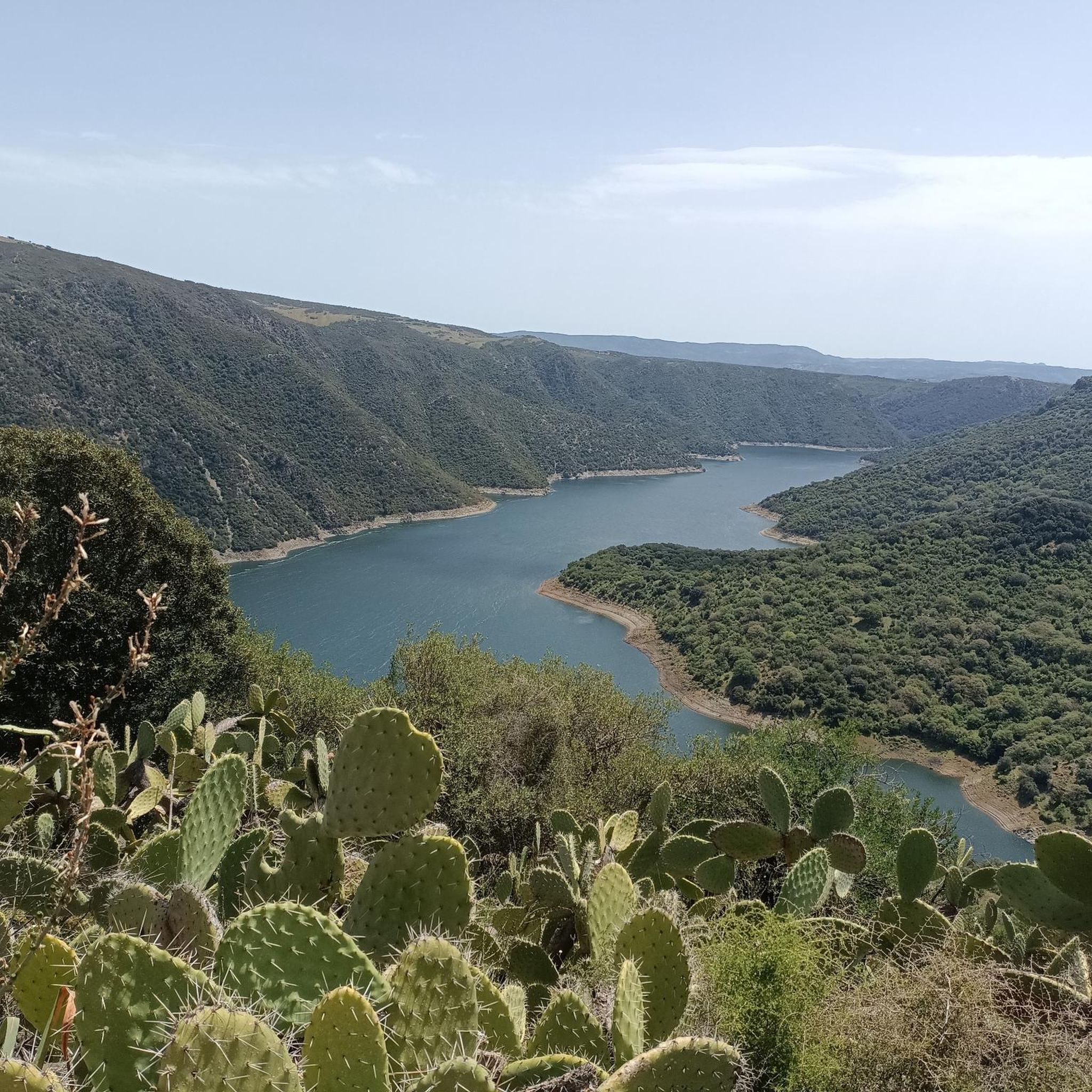
Nice artificial lake dating back to the 1950s. It is located not far from Sanluri, about 40km and is generated by the dam of the Rio Mulargia.
1
0

Lake created in the 50s which draws mainly from the Fiumendosa. Of fundamental importance to ensure water in Cagliari and neighboring cities. It is possible to make excursions by boat with scheduled departures from both Siurgus Donigala and Orroli
3
0
Frequently Asked Questions
What ancient historical sites can I explore in Siurgus Donigala?
Siurgus Donigala is rich in ancient history, particularly Nuragic sites. You can visit approximately 40 nuraghe, including the significant Su Nuraxi within the village center and the ancient Arcei Nuraghe. Other megalithic complexes are found at Funtana 'e figu, Monte Antas, and Monte Eranu, some featuring stone circles and menhirs. The Domus de janas of Zraghi also offers a glimpse into the region's prehistoric past. Additionally, the Sacred Well of Funtana Coberta is a well-preserved Nuragic well-temple dedicated to water worship.
Are there any Roman-era remains or structures to visit?
Yes, Siurgus Donigala was a significant Roman center. You can explore the remains of villages, garrisons, and necropolises from that era. Nearby, you'll find the Roman Baths and Romanesque Church of San Basilio, where you can see the remains of a Roman thermal complex with visible tanks and cisterns.
What natural attractions are there for visitors?
The region offers beautiful natural features, most notably Lake Mulargia, a large artificial lake perfect for boat trips, cycling, horseback riding, and canoeing. The area also boasts extensive forests like S'Abioi, known for its thousand-year-old holm oaks, and the Cavanatzu Municipal Forest, which is being enhanced for recreational use and trails.
What kind of outdoor activities can I do around Siurgus Donigala?
The diverse landscape of Siurgus Donigala provides ample opportunities for outdoor activities. You can enjoy hiking, mountain biking, horse riding, climbing, photography, biowatching, speleology, guided tours, snorkeling, and kayaking, especially around Lake Mulargia.
Are there cycling routes available near the attractions?
Yes, there are several cycling routes around Siurgus Donigala. For road cycling, you can explore routes like the 'Lago di Mulargia Loop' or 'La Giara and Laconi Loop'. If you prefer touring, options include the 'View of Seulo – Sadali Waterfall loop from Orroli' or 'Covered fountain – Domus de janas loop from Silius'. You can find more details on these and other routes in the Cycling around Seurgus Donigala/Siurgus Donigala guide.
Are there mountain biking trails in the area?
Absolutely. Mountain biking enthusiasts can find trails such as the 'Lake Mulargia Loop' or the 'Sa Trona Rock Formation loop from Scalepranu/Escalaplano'. For more options and detailed information, refer to the MTB Trails around Seurgus Donigala/Siurgus Donigala guide.
What religious buildings or churches can I visit?
Siurgus Donigala features several historic churches. In Siurgus, you can find the splendid Parish of San Teodoro, Santa Susanna, and San Francesco. In Donigala, visit the churches of Nostra Signora di Monserrato and the Sanctuary of San Sebastiano. Additionally, the Romanesque Church of San Basilio, dating back to the 12th century, is also nearby.
Is there anything unique or modern to see in the region?
Yes, the Sardinia Radio Telescope is a highly sophisticated and modern scientific instrument. It's one of only three of its kind in Italy, used for scientific research and satellite observation, and was officially opened in 2013.
Are there any family-friendly activities or attractions?
Many of the natural attractions are suitable for families. Lake Mulargia offers boat trips and recreational activities that families can enjoy together. Exploring the forests and green areas like the Cavanatzu Municipal Forest also provides opportunities for family outings.
What cultural events or traditions are unique to Siurgus Donigala?
Siurgus Donigala hosts unique cultural events. The 'Is Bagadius' (Festival of Bachelors) is a traditional communal banquet celebrated in the second week of October. The town also participates in 'Saboris Antigus,' a regional event, and is known for its traditional masks, 'Is Scruzzonis'.
What do visitors enjoy most about the attractions around Siurgus Donigala?
Visitors appreciate the blend of ancient history, natural beauty, and unique modern landmarks. The Sardinia Radio Telescope is noted for being an 'extremely sophisticated instrument' and 'very large and striking'. Lake Mulargia is valued for its 'fundamental importance to ensure water in Cagliari' and the possibility of 'excursions by boat'. The Sacred Well of Funtana Coberta is highlighted as one of the 'most famous, interesting, and intact' Nuragic well-temples.
Most popular routes around Seurgus Donigala/Siurgus Donigala
Most popular attractions around Seurgus Donigala/Siurgus Donigala

Get inspired with the komoot mobile app


Explore more
Still not found the Highlight you’re looking for? See guides of the top attractions in other regions:
