The 6 Most Amazing Peaks around Forano
Best mountain peaks around Forano are located within Italy's Sabine Hills, an area defined by olive-clad slopes and forested terrain. This region combines scenic beauty with historical significance, featuring numerous peaks and hilltowns often adorned with medieval structures. These locations provide opportunities for outdoor activities and exploration of natural and cultural sites. Forano is known for its summits, historical sites, and viewpoints, offering diverse experiences for visitors.
Best mountain peaks around Forano
- The most popular mountain peaks is Hermitage of…
Last updated: July 1, 2026
Hermitage of Saint Sylvester
Highlight • Religious Site
Translated by Google •
Tip by

Monte Pizzuto Summit
Highlight • Summit
Translated by Google •
Tip by

Sign up now to discover places like this
Get recommendations on the best single tracks, peaks, & plenty of other exciting outdoor places.
Sign up for free
Ruins of San Martino Abbey on Mount Acuziano
Highlight • Historical Site
Translated by Google •
Tip by

Southern summit of Monte Tancia
Highlight • Summit
Translated by Google •
Tip by

Monte San Cosimo
Highlight • Summit
Translated by Google •
Tip by
Sign up for free to discover even more peaks around Forano.
Sign up for free
Already have an account?
Start today with a free account
Your next adventure awaits.
Login or Signup

Tips from the Community

Laying of the Summit Book together with the CAI Subsection of Guidonia and the CAI Section of Monterotondo
0
0
View with Mount Terminillo and Gran Sasso in the background
0
0

On the way to the top of Soratte, just before the San Silvestro hermitage, you can take the path on the left that leads to the small San Sebastiano hermitage, of which modest wall traces remain. The latter was home to hermits in the 16th and 17th centuries, after which it began to be abandoned and fell into ruin. In the rock there is a cavity used to collect water. Short trail but to be followed with care.
0
1

This hermitage has a patronal name that is truly on everyone's lips, but only a few will know the person behind it: the feast day of Saint Sylvester (San Silvestro) is December 31st. He lived at the end of the third or beginning of the fourth century and was Bishop of Rome when Emperor Constantine - later generations gave him the nickname "the Great" - recognized Christianity as a religion with the so-called "Edict of Toleration" of Milan, thus ending - at least temporarily - the period of bloody persecution of Christians.
1
2

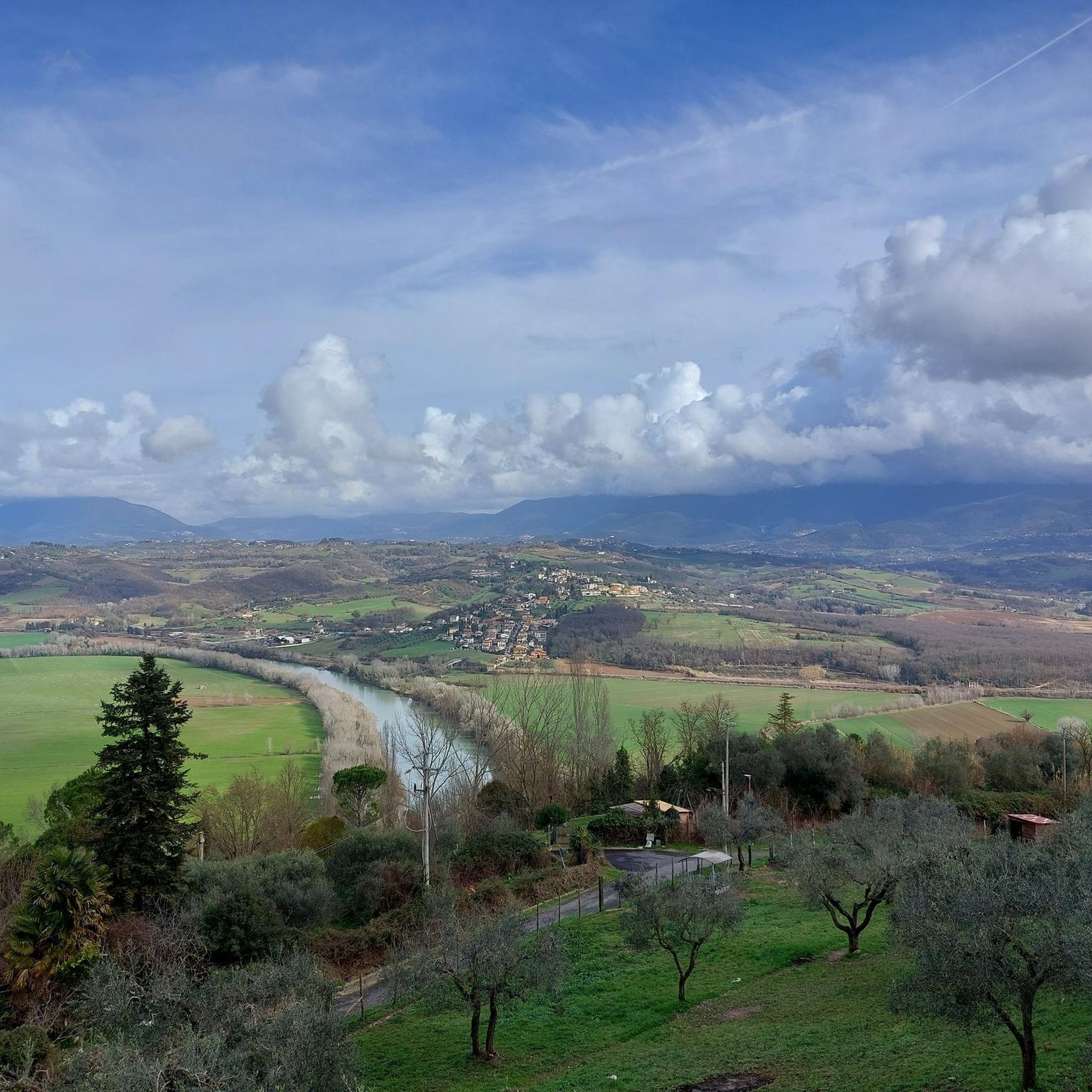
The Eremo di San Silvestro, located at the top of Mount Soratte, offers a stunning panoramic view of the surrounding valleys. This hermitage, one of the numerous hermitages scattered in the Sabina region, stands in a clearing overlooking the beautiful Tiber Valley. Its isolated location far from the town of Sant'Oreste gives it a suggestive atmosphere.
4
0

A wonderful place still well preserved, it is worth booking a guided tour
3
0

Monte Pizzuto, with its 1288 metres, is the second peak of the Monti Sabini after the nearby Monte Tancia. Unlike the latter, it enjoys a much wider panoramic view. On one side on the Tiber Valley and Mount Soratte and on the other on the Central Apennines with the clearly visible massifs of Terminillo and Gran Sasso.
2
0

It is not the official summit but it is the most beautiful panoramic point of the small Tancia complex. From here the view spans 360° from the Gran San Sasso to the Lazio coast.
1
0
Frequently Asked Questions
What are some notable mountain peaks to explore around Forano?
Beyond the most popular summits, you can explore Monte Acuziano, which hosts the ruins of San Martino Abbey and offers panoramic views. Another significant peak is Monte Tancia Summit (1,292 m), the highest peak of the Sabine mountains, known for its incredible panorama. Also, consider Monte San Cosimo, part of the Sabine Hills, offering moderate hikes and scenic views, often paired with the charming hilltown of Poggio Catino.
Are there hiking trails suitable for different skill levels near Forano's peaks?
Yes, the region offers a variety of hiking trails. For example, the 'Poggio Mirteto, Monte San Cosimo, and Poggio Catino Loop' is a moderate 14 km hike. You can find more options, including easy and difficult routes, by exploring the dedicated Hiking around Forano guide.
What unique natural features can I discover in the Sabine Hills?
The Sabine Hills are home to several unique natural features. A standout is the Revotano Abyss near Roccantica, a spectacular karst sinkhole measuring 250-300 meters in diameter and 130-140 meters deep. Its humid microclimate fosters unusually lush vegetation, and local legends add to its mysterious aura. You can find viewpoints to appreciate its enormity, and a marked trail leads to it from Roccantica.
What historical and cultural sites are located on or near these mountain peaks?
The region is rich in history. On Monte Acuziano, you'll find the ruins of San Martino Abbey, an imposing 11th-century structure. The charming hilltown of Poggio Catino, often associated with Monte San Cosimo, features well-preserved architectural elements, including the picturesque ruins of the Rocca of Catino and the atmospheric Hermitage of Saint Michael, hidden within a cavern.
What is the best time of year to visit the mountain peaks around Forano?
The Sabine Hills, including the peaks around Forano, are generally best visited during spring (April to June) and autumn (September to October). During these seasons, the weather is mild and pleasant for hiking, and the landscapes are particularly beautiful with blooming flowers or vibrant fall foliage. Summers can be hot, and winters can bring colder temperatures, though some trails remain accessible.
Are there family-friendly mountain peaks or trails suitable for children?
While specific 'family-friendly' categories aren't always explicitly listed for peaks, many moderate hiking trails in the Sabine Hills can be suitable for families with active children. For example, the 'Selci – The Old Oak loop from Selci' is an easy 4.9 km hike. Always check the difficulty and length of a route before heading out with children. You can explore more options in the Hiking around Forano guide.
What kind of views can I expect from the mountain peaks around Forano?
From peaks like Monte Pizzuto Summit, you can expect wide panoramic views extending to the Tiber Valley, Mount Soratte, and the Central Apennines, including massifs like Terminillo and Gran Sasso. The Hermitage of Saint Sylvester on Mount Soratte also offers stunning views of the surrounding valleys and the Tiber Valley. The Southern summit of Monte Tancia provides a 360° view from Gran Sasso to the Lazio coast.
What other outdoor activities can I do near these mountain peaks?
Besides hiking, the area around Forano offers excellent opportunities for cycling. You can find numerous road cycling routes, such as the 'View of Fara in Sabina – Abbey of Farfa loop from Gavignano Sabino,' and touring bicycle routes like the 'Ancient Portal – Castello di Nazzano loop from Stimigliano.' Explore these options in the Road Cycling Routes around Forano and Cycling around Forano guides.
Is parking available near the trailheads for mountain peaks?
While specific parking details for every trailhead are not always available, many popular hiking areas and hilltowns like Poggio Catino or those serving Monte San Cosimo typically have designated parking areas. It's advisable to check local information or maps for parking options when planning your visit to specific trailheads.
Do I need permits to hike the mountain peaks in the Sabine Hills?
Generally, permits are not required for hiking on public trails in the Sabine Hills or to access the mountain peaks around Forano. Most trails are freely accessible. However, it's always a good practice to respect local regulations and private property signs, especially if venturing off marked paths.
What do visitors enjoy most about the mountain peaks around Forano?
Visitors frequently highlight the breathtaking panoramic views from summits like Monte Pizzuto Summit and Monte Tancia Summit (1,292 m). The blend of natural beauty with historical sites, such as the ruins of San Martino Abbey, also receives high praise. The peaceful atmosphere and the opportunity for a simple excursion to reach rewarding viewpoints are often mentioned as key attractions.
Are there any hidden gem mountain hikes near Forano?
While not explicitly 'hidden,' the hike to the Hermitage of Saint Michael near Poggio Catino offers a unique and atmospheric experience. This hermitage is tucked away in a cavern and is steeped in local legend. The journey to the Revotano Abyss also provides a distinctive adventure into a remarkable natural phenomenon that might be less known to casual visitors.
Most popular attractions around Forano

Get inspired with the komoot mobile app


Explore more
See even more amazing summits around Forano with these guides:
