Attractions and Places To See around Latiano - Top 20
Best attractions and places to see around Latiano include a blend of historical landmarks, cultural institutions, and religious sites within the province of Brindisi, Apulia. The town's rich history is reflected in its architecture and museums, while its agricultural surroundings highlight the natural landscape. Latiano offers various points of interest, from ancient churches to castles and archaeological centers.
Best attractions and places to see around Latiano
- The most popular attractions is Rock Church of San Biagio, a religious building…
Last updated: May 11, 2026
Rock Church of San Biagio
Highlight • Religious Site
Translated by Google •
Tip by

Sanctuary of Saints Cosmas and Damian
Highlight • Religious Site
Translated by Google •
Tip by

Sign up now to discover places like this
Get recommendations on the best single tracks, peaks, & plenty of other exciting outdoor places.
Sign up for free
Carovigno Castle
Highlight • Castle
Translated by Google •
Tip by

Historic Center of Oria
Highlight • Historical Site
Translated by Google •
Tip by
Dentice di Frasso Castle
Highlight • Castle
Translated by Google •
Tip by

Sign up for free to discover even more attractions around Latiano.
Sign up for free
Already have an account?
Start today with a free account
Your next adventure awaits.
Login or Signup



Tips from the Community

A pleasant medieval village. In addition to the historic center and the very characteristic Jewish quarter, the Castello Svevo and the Cathedral of S. Maria Assunta are definitely worth a visit.
2
0

The rock church of San Biagio is located in a rock village built along the rocky walls of the depression created by the course of the Canale Reale. It is one of the main rock settlements in the region: an intact and well-preserved pictorial cycle adorns the church. A community of Italian-Byzantine monks settled here before the 12th century and used the caves which had probably already been used in previous times.
1
0
Built on a hill, the historic village dominates the entire city and the valley. With its winding, uphill streets, old houses with faded paintwork and huge castle, Oria has the look and feel of a true medieval village.
1
0

Really beautiful. Very neat and clean. Enchanting glimpses are discovered at every corner! Watch out for fines!
2
0
Medieval historic center with remarkable Renaissance and Baroque architecture high above the plain, very beautiful and well-kept. Enchanting glimpses. White and articulated medieval district that recalls the white villages of Andalusia.
2
0

only one road where 30km/h is allowed - but who would stick to it here. Not recommendable!
2
0

The Castle of Carovigno rises in an eccentric position, on the highest point of the town and, for this reason, strategically more suitable for defense. It has a triangular plan, with a square tower on the eastern vertex, a circular one on the western vertex and a "almond-shaped" one on the northern vertex. From the top of the towers it dominates the entire coastal strip that extends from Torre Canne to Brindisi. The first nucleus of the Castle, probably of Norman origin, is to be identified in the square tower with a strong counter-scarp adjacent to Porta Ostuni. On the south side, close to this tower, the "palatium" described in the Inventory of Maria d'Enghien of 1440 must have developed. The buildings after this date insist on the north area, incorporating both the square Norman tower both the circular one, perhaps Aragonese. The almond-shaped tower on the north-east corner was built between the fifteenth and sixteenth centuries by the Loffreda, feuders of Carovigno in this period, as evidenced by the presence of the marriage weapon of Pirro Loffreda, walled up in the same tower. It seems that the builders of the almond-shaped tower of Carovigno were influenced by the Sienese architect Francesco di Giorgio Martini, whose presence in Puglia is attested in 1492 to supervise the construction of the strongholds of Taranto, Otranto, Gallipoli and Brindisi.
0
0

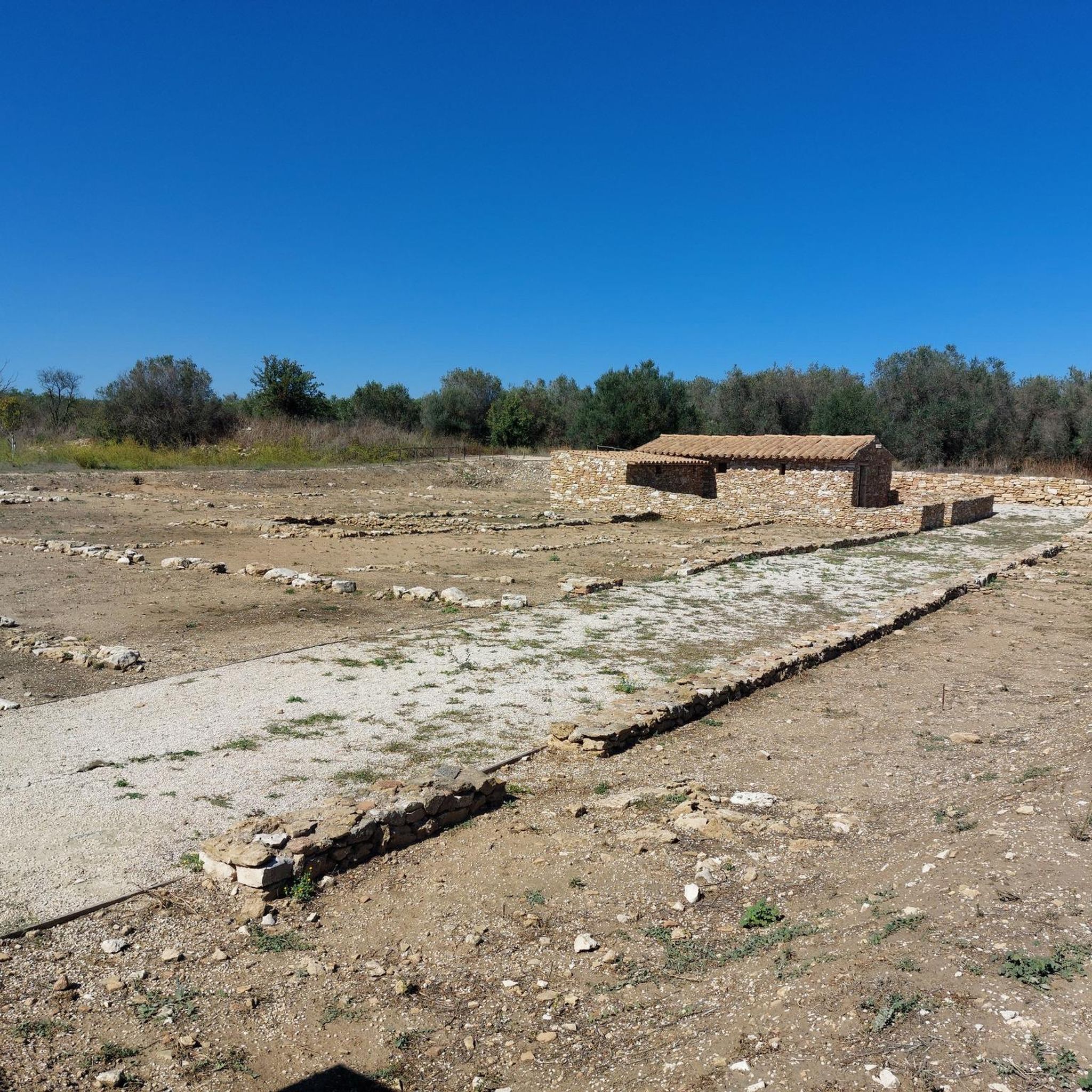
The first building in the area, a tower, dates back to the 12th century. At that time this area was wooded and rich in fauna and that is why it is believed that the tower was a hunting lodge. The town of San Vito dei Normanni developed around this tower. Over the centuries, various families have taken turns to control the territory, each of which has brought changes and additions to the original structure of the building. Around the seventeenth century the Dentice family settled there, still owner of the castle, from which the building takes its current name. On the entrance portal of the chapel the heraldic coat of arms of the family, a snapper, and the motto reciting "Noli me tangere" are clearly visible.
0
0
Frequently Asked Questions
What historical landmarks can I explore within Latiano itself?
In Latiano, you can visit the impressive Castello Imperiali, originally a 12th-century fortress transformed into a stately residence. The Mother Church (Parrocchia Collegiata Santa Maria della Neve), with its Baroque facade, is another significant historical site. Additionally, the Solise Tower and the Church of Sant'Antonio are notable historical structures.
Are there any museums or cultural sites in Latiano?
Yes, Latiano offers several cultural sites. You can explore the Ribezzi Petrosillo House Museum, which displays Messapic finds, and the Underground Museum (Museo del Sottosuolo). The former Dominican Convent now hosts a Museum Hub, including the Museum of Arts and Popular Traditions of Puglia and the Museum of the History of Pharmacy. The Archaeological Documentation Centre of Latiano - Marseglia Collection and the Municipal Art Gallery are also available.
What religious sites are notable around Latiano?
Beyond Latiano's Mother Church, you can visit the Sanctuary of S.S. Maria di Cotrino, located amidst olive groves, which houses an ancient 17th-century church with a miraculous fresco. Further afield, the Rock Church of San Biagio is a unique religious building in a rock village, featuring an intact pictorial cycle. The Sanctuary of Saints Cosmas and Damian, located in the open countryside, is also a significant religious center.
Can I visit any castles near Latiano?
Yes, there are several castles in the vicinity of Latiano. You can explore Carovigno Castle, known for its triangular plan and strategic position overlooking the coast. Another option is Dentice di Frasso Castle, which has evolved from a 12th-century hunting lodge and is still owned by the Dentice family.
What is the <a href="https://www.komoot.com/highlight/2740224" target="_blank" rel="noopener">Historic Center of Oria</a> known for?
The Historic Center of Oria is renowned for its medieval charm. Built on a hill, it features winding, uphill streets, old houses, and a large castle, giving it the authentic feel of a medieval village. It showcases remarkable Renaissance and Baroque architecture, offering enchanting glimpses into the past.
What outdoor activities are available near Latiano?
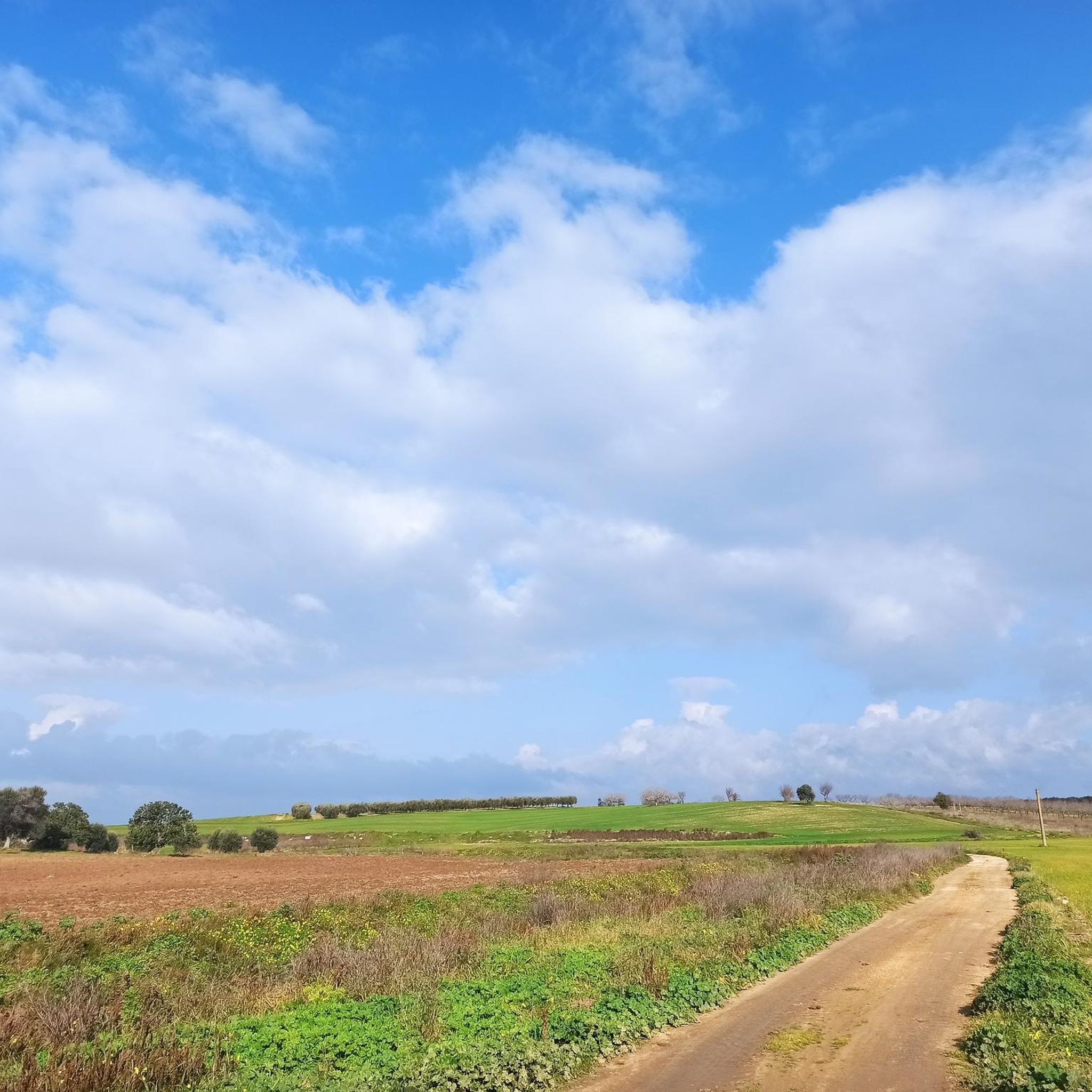
The agricultural landscape around Latiano, with its olive groves and vineyards, provides a picturesque setting for outdoor activities. You can find various routes for mountain biking, running, and hiking. For specific trails, you can explore options like those listed in the MTB Trails around Latiano, Running Trails around Latiano, and Hiking around Latiano guides.
Are there hiking trails suitable for different skill levels around Latiano?
Yes, the area offers hiking trails ranging from easy to moderate difficulty. For instance, the Hiking around Latiano guide includes easy loops like the "Villa Amore Bianco loop from Monte Casarone" (3.8 km) and moderate options such as the "Castello Dentice di Frasso loop from San Vito dei Normanni" (10.9 km).
Can I find cycling routes near Latiano's attractions?
Absolutely. The region around Latiano is suitable for cycling, particularly mountain biking. The MTB Trails around Latiano guide features routes like the "Dentice di Frasso Castle – San Vito dei Normanni loop from Latiano" (30.7 km, easy) and more challenging options such as the "Ostuni – The White City – Dentice di Frasso Castle loop from Latiano" (76.5 km, moderate).
Are there family-friendly attractions in and around Latiano?
Many of the historical and cultural sites can be enjoyed by families. The Sanctuary of Saints Cosmas and Damian and the Historic Center of Oria are noted as family-friendly. Exploring the castles like Dentice di Frasso Castle can also be an engaging experience for children.
What is the best time of year to visit Latiano?
The best time to visit Latiano and the Apulia region is typically during the spring (April to June) and early autumn (September to October). During these months, the weather is pleasant for exploring historical sites and enjoying outdoor activities, avoiding the intense heat of mid-summer.
What do visitors enjoy most about the attractions around Latiano?
Visitors appreciate the rich historical and artistic value of sites like the Rock Church of San Biagio, particularly its well-preserved pictorial cycle. The Historic Center of Oria is loved for its authentic medieval atmosphere, winding streets, and remarkable architecture. The overall blend of ancient churches, castles, and cultural institutions reflecting the region's heritage is highly valued.
Most popular routes around Latiano
Most popular attractions around Latiano

Get inspired with the komoot mobile app


Explore more
Still not found the Highlight you’re looking for? See guides of the top attractions in other regions:
