The best walks and hikes around Latiano
5.0
(3)
27
hikers
4
hikes
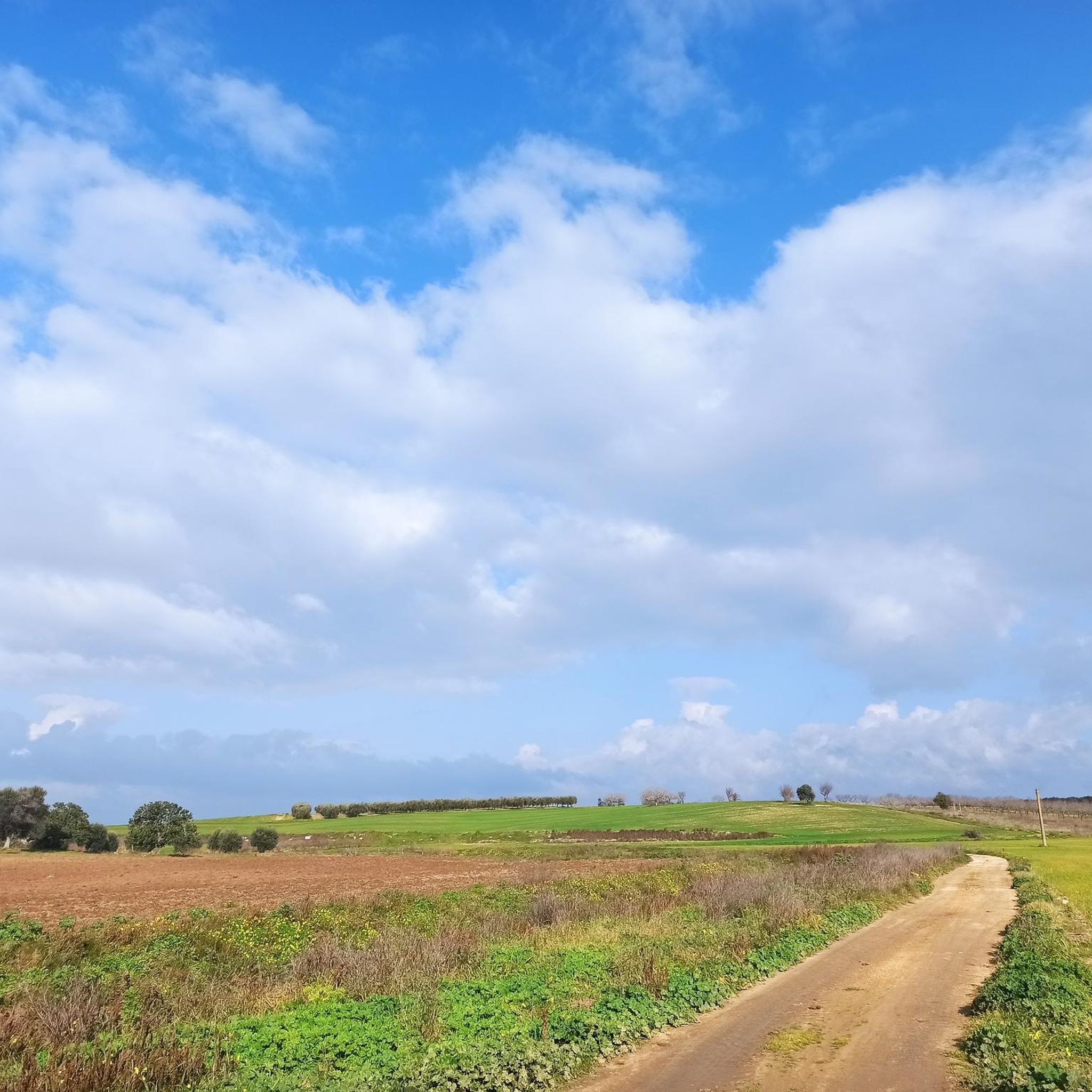
Hiking around Latiano offers access to diverse natural and historical landscapes in Puglia. The region is characterized by extensive ancient olive groves, Mediterranean vegetation, and rural paths. While Latiano itself is a small town, its location provides opportunities to explore nearby coastal dunes, marshlands, and protected forest areas. The terrain generally features gentle elevation changes, making it suitable for various hiking abilities.
Best hiking trails around Latiano
- The most popular hiking route is Villa Amore Bianco loop from Monte Casarone…
Last updated: May 14, 2026
5.0
(1)
5
hikers
3.86km
00:59
20m
20m
Easy hike. Great for any fitness level. Easily-accessible paths. Suitable for all skill levels.
4
hikers
8.54km
02:10
20m
20m
Moderate hike. Good fitness required. Easily-accessible paths. Suitable for all skill levels.

Sign up for free
4
hikers
9.55km
02:29
60m
60m
Moderate hike. Good fitness required. Easily-accessible paths. Suitable for all skill levels.
5.0
(1)
4
hikers
Moderate hike. Good fitness required. Easily-accessible paths. Suitable for all skill levels.
5.0
(1)
5
hikers
3.86km
00:59
20m
20m
Easy hike. Great for any fitness level. Easily-accessible paths. Suitable for all skill levels.
Our route recommendations are based on thousands of hikes, rides, and runs completed by other people on komoot.
Start today with a free account
Your next adventure awaits.
Login or Signup


Tips from the Community

The Castle is located in the historic center of Carovigno. From the portal, walking along narrow streets, you reach Corso Vittorio Emanuele
0
0

Romanesque basilica dedicated to the Madonna del Carmine.
1
0
Romanesque basilica dedicated to the Madonna del Carmine
2
0

The Dentici di Frasso Castle in Carovigno is a medieval castle whose construction dates back to the 12th century. Over time, the castle has undergone several expansion works including the addition of the massive almond tower in the fifteenth century.
1
0

San Vito dei Normanni is a city in northern Salento dating back to the Norman period, with a great historical, artistic and cultural heritage. There are in fact numerous Baroque churches, rock crypts and museums, as well as the 12th century Dentice di Frasso Castle around which the town developed.
4
0
Carovigno is a town in northern Salento located on a hill in the south-eastern Murgia, a few kilometers from the Adriatic Sea and with ancient origins dating back to the Messapian civilization. It is known for the production of high quality olive oil and for its castle of the Dentice di Frasso, which dominates the historic centre.
0
0

The Castle of Carovigno rises in an eccentric position, on the highest point of the town and, for this reason, strategically more suitable for defense. It has a triangular plan, with a square tower on the eastern vertex, a circular one on the western vertex and a "almond-shaped" one on the northern vertex. From the top of the towers it dominates the entire coastal strip that extends from Torre Canne to Brindisi. The first nucleus of the Castle, probably of Norman origin, is to be identified in the square tower with a strong counter-scarp adjacent to Porta Ostuni. On the south side, close to this tower, the "palatium" described in the Inventory of Maria d'Enghien of 1440 must have developed. The buildings after this date insist on the north area, incorporating both the square Norman tower both the circular one, perhaps Aragonese. The almond-shaped tower on the north-east corner was built between the fifteenth and sixteenth centuries by the Loffreda, feuders of Carovigno in this period, as evidenced by the presence of the marriage weapon of Pirro Loffreda, walled up in the same tower. It seems that the builders of the almond-shaped tower of Carovigno were influenced by the Sienese architect Francesco di Giorgio Martini, whose presence in Puglia is attested in 1492 to supervise the construction of the strongholds of Taranto, Otranto, Gallipoli and Brindisi.
0
0

The first building in the area, a tower, dates back to the 12th century. At that time this area was wooded and rich in fauna and that is why it is believed that the tower was a hunting lodge. The town of San Vito dei Normanni developed around this tower. Over the centuries, various families have taken turns to control the territory, each of which has brought changes and additions to the original structure of the building. Around the seventeenth century the Dentice family settled there, still owner of the castle, from which the building takes its current name. On the entrance portal of the chapel the heraldic coat of arms of the family, a snapper, and the motto reciting "Noli me tangere" are clearly visible.
0
0
Frequently Asked Questions
How many hiking trails are available around Latiano?
This guide features 5 distinct hiking routes around Latiano, offering a variety of experiences through ancient olive groves and rural landscapes. These routes are generally easy to moderate in difficulty.
What is the best time of year to go hiking near Latiano?
The Mediterranean climate of Puglia makes spring (April-May) and autumn (September-October) ideal for hiking around Latiano, with pleasant temperatures and blooming flora or vibrant autumn colors. Winter can also be suitable for walks, though some coastal areas might be windy. Summers can be very hot, so early morning or late afternoon hikes are recommended if visiting during July and August.
Are there any family-friendly hiking routes around Latiano?
Yes, several routes are suitable for families. The Villa Amore Bianco loop from Monte Casarone is an easy 2.4-mile (3.9 km) trail that takes about an hour, perfect for a leisurely family outing. Another easy option is the Villa Amore Bianco loop from Chiesa Masseria Santo Scalone, which is similar in length and difficulty.
Can I bring my dog on the hiking trails near Latiano?
Many of the rural paths and olive groves around Latiano are suitable for walking with dogs, provided they are kept under control. The Villa Amore Bianco loop from Monte Casarone and the Villa Amore Bianco loop from Chiesa Masseria Santo Scalone are good options for a walk with your canine companion through tranquil landscapes.
Are there any circular hiking routes in the Latiano area?
Yes, all the routes featured in this guide are circular, allowing you to start and end at the same point. Examples include the Villa Amore Bianco loop from Carovigno, which takes you through ancient olive groves, and the Basilica Madonna del Carmine loop from Mesagne, exploring the countryside.
What kind of landscapes can I expect to see while hiking around Latiano?
Hiking around Latiano offers a glimpse into Puglia's characteristic landscapes. You'll primarily encounter vast ancient olive groves, some with trees centuries old, and lush Mediterranean vegetation. The routes often follow rural paths, providing a tranquil experience. While Latiano itself is inland, its strategic location allows access to coastal dunes and marshlands in the wider region, such as the Torre Guaceto Nature Reserve.
What interesting landmarks or attractions can I explore near the hiking trails?
The region around Latiano is rich in history and culture. You can visit the unique Rock Church of San Biagio, a fascinating rock village. Other nearby attractions include the impressive Dentice di Frasso Castle and the charming Historic Center of Oria, which can be combined with scenic walks.
Are there any easy hiking routes for beginners near Latiano?
Absolutely. The Villa Amore Bianco loop from Monte Casarone is an easy 2.4-mile (3.9 km) trail with minimal elevation gain, making it perfect for beginners or those looking for a relaxed stroll. Similarly, the Villa Amore Bianco loop from Chiesa Masseria Santo Scalone offers another accessible option.
What do other hikers say about the trails around Latiano?
The routes in Latiano are highly rated by the komoot community, with an average score of 5.0 stars from 4 reviews. Hikers often praise the tranquil rural landscapes and the opportunity to immerse themselves in the region's natural beauty, particularly the ancient olive groves.
Is parking available at the trailheads around Latiano?
While specific parking information for each trailhead isn't always detailed, routes often start from villages or rural areas where street parking is typically available. For example, the Castello Dentice di Frasso loop from San Vito dei Normanni would likely have parking options within or near San Vito dei Normanni.
Are there any cafes or restaurants near the hiking trails in Latiano?
Latiano and surrounding towns like Mesagne, Carovigno, and Oria offer various cafes and restaurants where you can refuel after your hike. While trails themselves might not have direct access, you'll find options in the nearby settlements where many routes begin or end.
What should I wear for hiking in Latiano?
Given the Mediterranean climate and rural paths, comfortable walking shoes or light hiking boots are recommended. During warmer months, light, breathable clothing, a hat, and sunscreen are essential. In cooler seasons, layers are advisable. Always carry enough water, especially as some routes might not have frequent access to refreshments.
Most popular attractions around Latiano

Get inspired with the komoot mobile app


Explore more
Browse the best Hikes in other regions.
