Attractions and Places To See in Guadiato-Bembezar - Top 20
Best attractions and places to see in Guadiato-Bembezar are located in the northwest of the province of Cordoba, Spain. This region features a landscape of mountains, pastures, and rivers, including the Guadiato and Bembézar. It offers a mix of natural beauty, historical landmarks, and cultural sites. Visitors can explore ancient watchtowers, industrial heritage, and areas known for stargazing.
Best attractions and places to see in Guadiato-Bembezar
- The most popular attractions is Elephant Fountain, a man-made monument that was part…
Last updated: July 6, 2026
Baños de Popea Waterfalls
Highlight • Waterfall
Translated by Google •
Tip by

Elephant Fountain
Highlight • Monument
Translated by Google •
Tip by

Sign up now to discover places like this
Get recommendations on the best single tracks, peaks, & plenty of other exciting outdoor places.
Sign up for free
Molino del Molinillo
Highlight • Historical Site
Translated by Google •
Tip by

Tower of the Seven Corners
Highlight • Historical Site
Translated by Google •
Tip by

Beato Tower
Highlight • Monument
Translated by Google •
Tip by
Sign up for free to discover even more attractions in Guadiato-Bembezar.
Sign up for free
Already have an account?
Start today with a free account
Your next adventure awaits.
Login or Signup

Tips from the Community

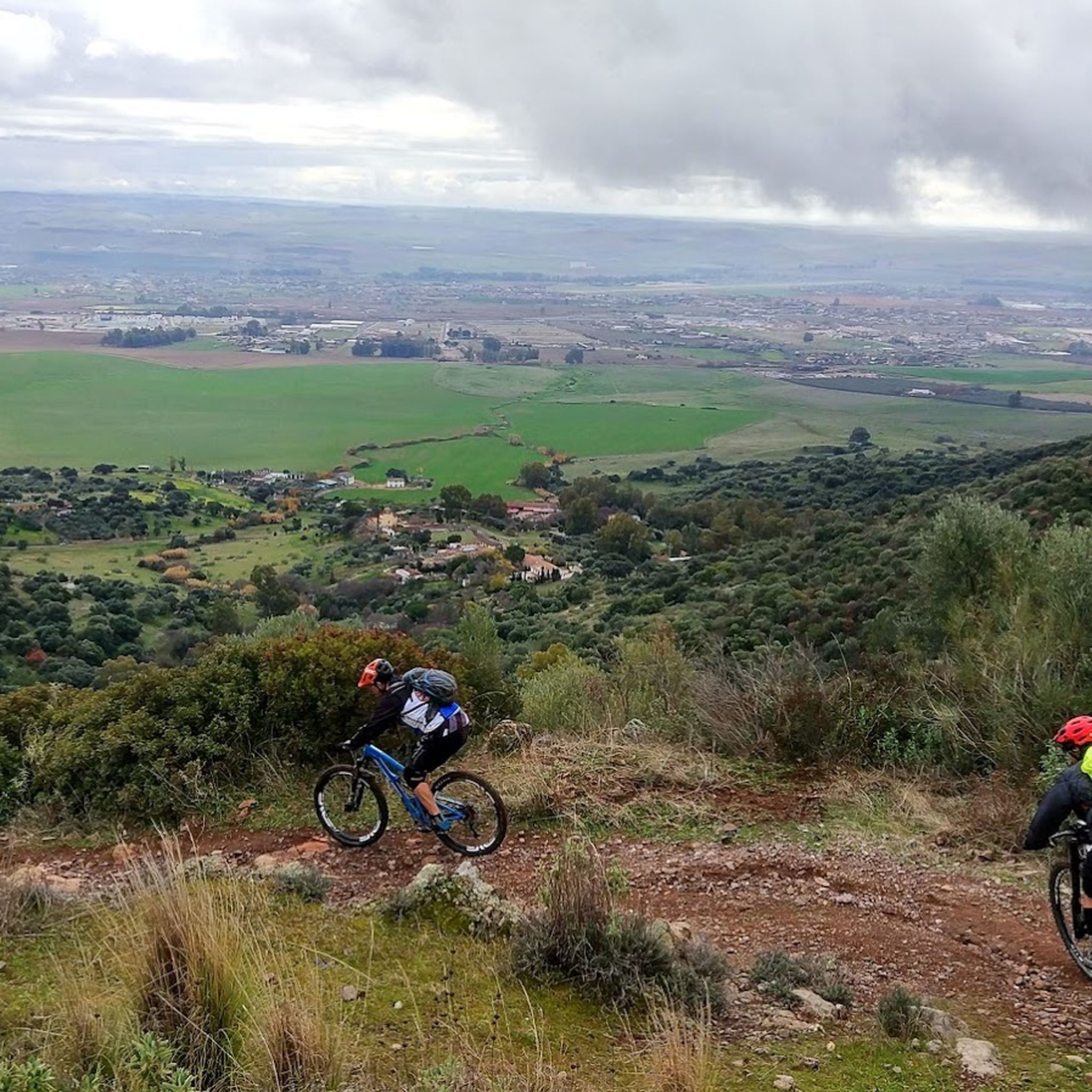
In the era of Islamic domination, Córdoba had a defensive belt made up of watchtowers with the capacity to communicate with each other by means of smoke during the day and light signals at night. One of the most impressive is the so-called Torre del Beato, in the Sierra Morena. Near the Cortijo de la Soledad we find a path that goes unnoticed by those who don't know its location. If we follow it, after walking for a few minutes we are overwhelmed by the imposing sight of a 9-meter-high tower preserved as if time had stood still. It is an almost square tower built with rubble stones plastered with lime and sand mortar and reinforced with well-carved ashlars at its outer vertices. Its crowning of Syrian battlements is surprising, allowing us to relate it to other buildings from the emirate period, such as the Great Mosque of Córdoba. Inside, the tower is divided into two floors, in addition to the roof terrace crowned by the battlements. The first room is covered by a brick vault, with access to the second floor via a staircase attached to the wall. From the top, sheltered between battlements (some of which lie scattered on the ground, already surrendered to the passage of time), the lookouts could make out nearby towers such as the Palomas or the Siete Esquinas and keep an eye on the routes taken by the minerals extracted from the very bowels of the mountain. This treasure still has the capacity to surprise many hikers, the curious, cyclists and people seeking the peace of nature among the many paths that criss-cross the Sierra Morena. (Source: https://eventourcordoba.es/blog/la-torre-del-beato/)
0
1
One of the vestiges of the Caliphate period can be found in the mountains of Córdoba, less than 15 minutes by car from the capital. It is an ancient watchtower, a lookout from where you can enjoy one of the most impressive views of Córdoba and the Guadalquivir valley. Despite its name, it is actually an octagonal tower, meaning it has eight corners. However, inside it has a square floor plan, with each side measuring approximately 3.40 meters. Built of masonry, a construction method in which irregular stones are joined with mortar, a conglomeration of lime, sand and water without any order of courses. Originally, this tower was part of a network of watchtowers that surrounded the Caliphate of Córdoba and was visually connected to other towers. The Tower of the Seven Corners, despite its poor condition, is a popular destination for cyclists and hikers. A visit to this place can be combined with a visit to the Hermitages of Cordoba, the Baths of Poppaea and the Fountain of the Elephant. (Source: https://www.cordoba24.info/html/torre_siete_esquinas.html)
1
0
Located in the district of Santa Maria de Trassierra, next to the Arroyo del Molino, a tributary of the river Guadiato. It is a mill of Arab origin, probably from the 10th or 11th centuries, whose purpose was to grind flour. These medieval mills made it possible to produce flour in large quantities for 10th-century Caliphal Córdoba. (Source: https://www.conocetusfuentes.com/datos_elemento_884.html)
1
0
Located on the Caño Escaravita estate, just beyond the outlying neighborhood of Santa María de Trassierra. We found it in the western Sierra peri-urban district, next to the crossroads leading to the Ermitas and the Mirador de las Niñas, about fifteen kilometers from Córdoba. This is a zoomorphic water fountain on a pedestal from the Caliphate period, dating back to the 10th century. The sculpture represents a small elephant. Made of gray limestone from the Sierra Morena, it served as a support for the spout. The fountain is made up of three components: a water collection basin, a masonry pillar attached to it on its north side (which leads to a masonry irrigation ditch), and a rectangular pool located to the west of the canal. https://amedinacordoba.com/fuente-del-elefante/
1
0
The Baths of Poppaea are a natural stretch of small waterfalls alternating with small pools that follow the course of the Molino stream, near the mouth of the Guadiato River. This area was visited by Christopher Columbus. Its name comes from the place where the Cordoba poets of the Cántico Group used to visit, as during the Franco regime it was a safe place, away from the scrutiny of this intellectual group, as well as the homosexuality of some of them. One day, three members of the group, Pablo García Baena, Juan Bernier, and Ricardo Molina, were walking when they saw some girls bathing in the stream. The latter exclaimed, "Look, like Poppaea in the bath," referring to the Roman Empress Poppaea Sabina, a prominent figure at the time due to the film The Sign of the Cross (1932), in which actress Claudette Colbert appeared bathing in donkey's milk, just as the Empress did. The girls told the residents of Trassierra about this incident, and from then on, the story spread and became known as the Baths of Poppea. https://es.wikipedia.org/wiki/Ba%C3%B1os_de_Popea
2
0

An incredible place, a structure and construction that transports you to the Roman era. It is worth taking the route and spending some time enjoying the site.
2
0

Please note that this highlight is also listed in the description as a parking spot. However, we found that it is not allowed to drive up to the indicated parking spot/start of the route with a car. Just park near the jardin de popea and start the hike from there, it will add 2.5 km to the distance but is not too bad.
1
0

Clear water where you can take a dip before continuing the walk, wear quick-drying shoes
1
0
Frequently Asked Questions
What natural attractions can I explore in Guadiato-Bembezar?
The region boasts diverse natural beauty. A must-see is the Baños de Popea Waterfalls, a unique natural spectacle with small waterfalls and pools along the Molino stream. You can also visit the Embalse de Bembézar, an artificial lake suitable for paddling, or explore the extensive woodlands and diverse birdlife within the Sierra de Hornachuelos Natural Park.
Are there any ancient historical sites or watchtowers to visit?
Yes, the region is rich in history. You can discover the Elephant Fountain, a 10th-century Caliphate monument that was part of a Roman aqueduct. Explore the Molino del Molinillo, an ancient mill with Roman and Arab origins. Additionally, the Tower of the Seven Corners and the Beato Tower are beautiful medieval Islamic watchtowers offering historical insights and scenic views.
What outdoor activities can I do near these attractions?
The Guadiato-Bembezar region offers various outdoor activities. For hiking, consider routes like the 'Baños de Popea Waterfalls loop' or the 'Arroyo Bejarano – Elephant Fountain loop'. Mountain biking enthusiasts can explore trails such as 'Sierra Morena: GR 48 and Elephant Fountain Loop'. You can find more options for waterfall hikes, MTB trails, and running trails in the area.
Where can I experience stargazing in Guadiato-Bembezar?
The Alto Guadiato Valley is recognized as a Community Starlight Destination, offering exceptional conditions for stargazing due to minimal light pollution. The village of Piconcillo, within Fuente Obejuna, even hosts an Astronomical Society with an observatory, highlighting the region's dedication to astrotourism.
Are there any family-friendly attractions in the region?
Many natural and historical sites are suitable for families. The Elephant Fountain is a unique monument that can spark children's imagination. The Molino del Molinillo offers clear waters for a refreshing dip, which can be a fun activity during a walk. Exploring the easy sections of trails leading to natural features like the Baños de Popea Waterfalls can also be enjoyable for families.
What is the best time to visit Guadiato-Bembezar for outdoor activities?
The region generally enjoys a Mediterranean climate. Spring (April-May) and autumn (September-October) are often ideal for outdoor activities, offering pleasant temperatures for hiking, cycling, and exploring historical sites without the intense heat of summer. Winter can also be mild, suitable for walks, while summer is best for water-based activities at reservoirs.
Can I learn about the region's industrial heritage?
Yes, the Cerco Industrial in Peñarroya-Pueblonuevo is a vast complex showcasing the area's rich mining-industrial heritage, representing the largest industrial enclosure in Andalusia. The Museo Histórico in Belmez further explores the history of mining and local traditions, providing deeper insights into this significant aspect of the region's past.
Are there opportunities for swimming or dipping in natural waters?
Absolutely. The Molino del Molinillo, located near the Molino stream, offers clear waters where you can take a refreshing dip. The Baños de Popea Waterfalls also feature small pools along the Molino stream, perfect for cooling off during a hike. Additionally, the Sierra Boyera Reservoir is used for recreational purposes, including water activities.
What is the Vía Verde de la Maquinilla?
The Vía Verde de la Maquinilla is a former railway line that has been transformed into a scenic cycling and walking route. It traverses the old mining landscape, offering a unique way to experience the region's industrial past while enjoying the outdoors.
What do visitors enjoy most about the Baños de Popea Waterfalls?
Visitors are captivated by the unique natural spectacle of small waterfalls alternating with pools along the Molino stream. Many appreciate the opportunity for a refreshing dip in the clear waters and the scenic, vegetated route leading to them. The historical anecdotes associated with the site also add to its charm.
Is there a significant river in the Guadiato-Bembezar region?
The Guadiato River is the most significant waterway in the region. It originates at Calaveruela and flows for 45 km through the Sierra, eventually reaching the Puente Nuevo reservoir and the Guadalquivir River. Its course contributes to the natural beauty and ecological diversity of the area.
Can I find any Roman-era structures in the area?
Yes, the region has Roman connections. The Elephant Fountain was part of the Aqua Vetus, a Roman aqueduct. The Molino del Molinillo features structures and constructions that transport visitors back to the Roman era. Additionally, the Roman Bridge of Córdoba, an ancient and striking landmark, is nearby, connecting the old and new city across the Guadalquivir River.
Most popular routes in Guadiato-Bembezar
Most popular attractions in Guadiato-Bembezar

Get inspired with the komoot mobile app


Explore more
Still not found the Highlight you’re looking for? See guides of the top attractions in other regions:
