The best walks and hikes in Guadiato-Bembezar
4.5
(1014)
6,350
hikers
50
hikes
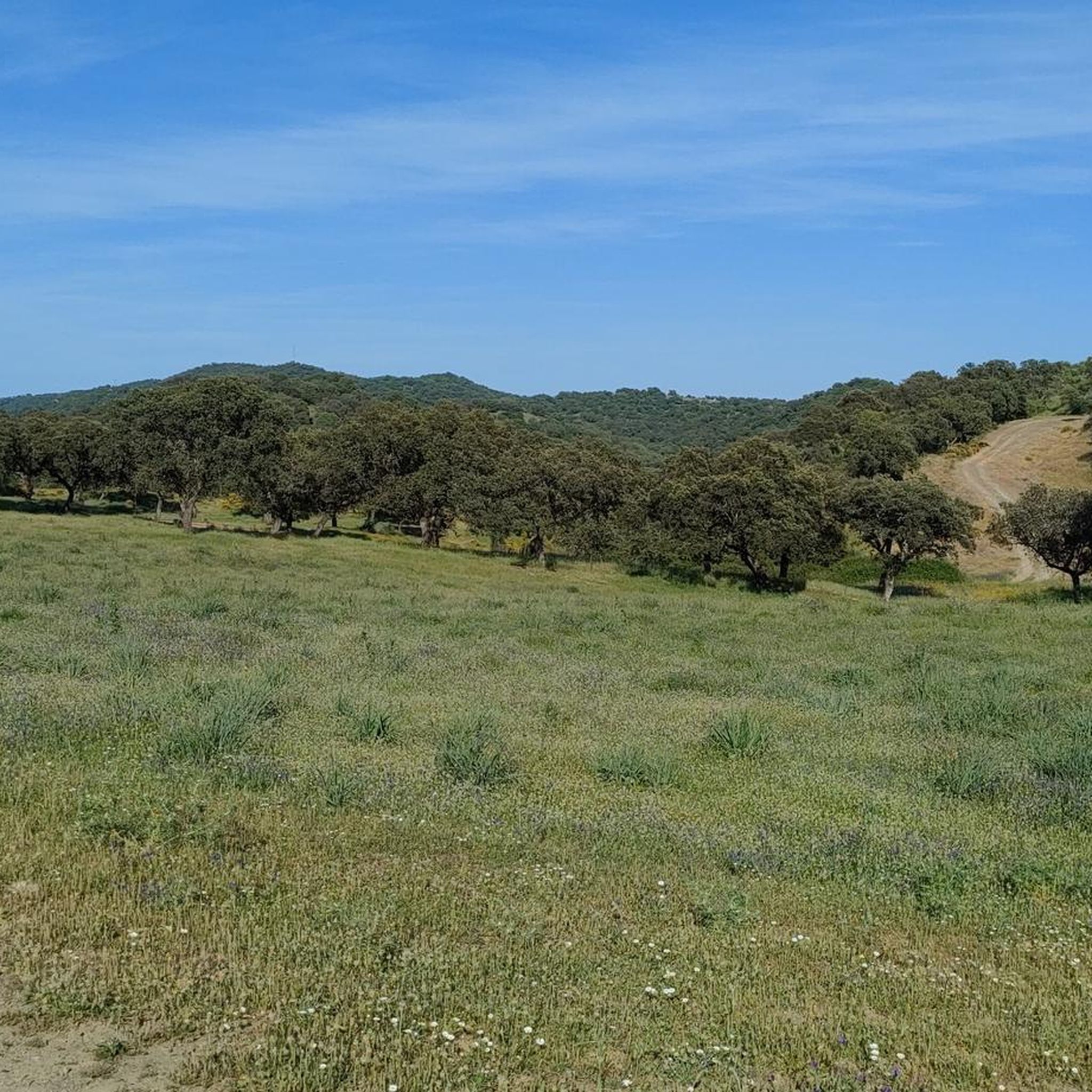
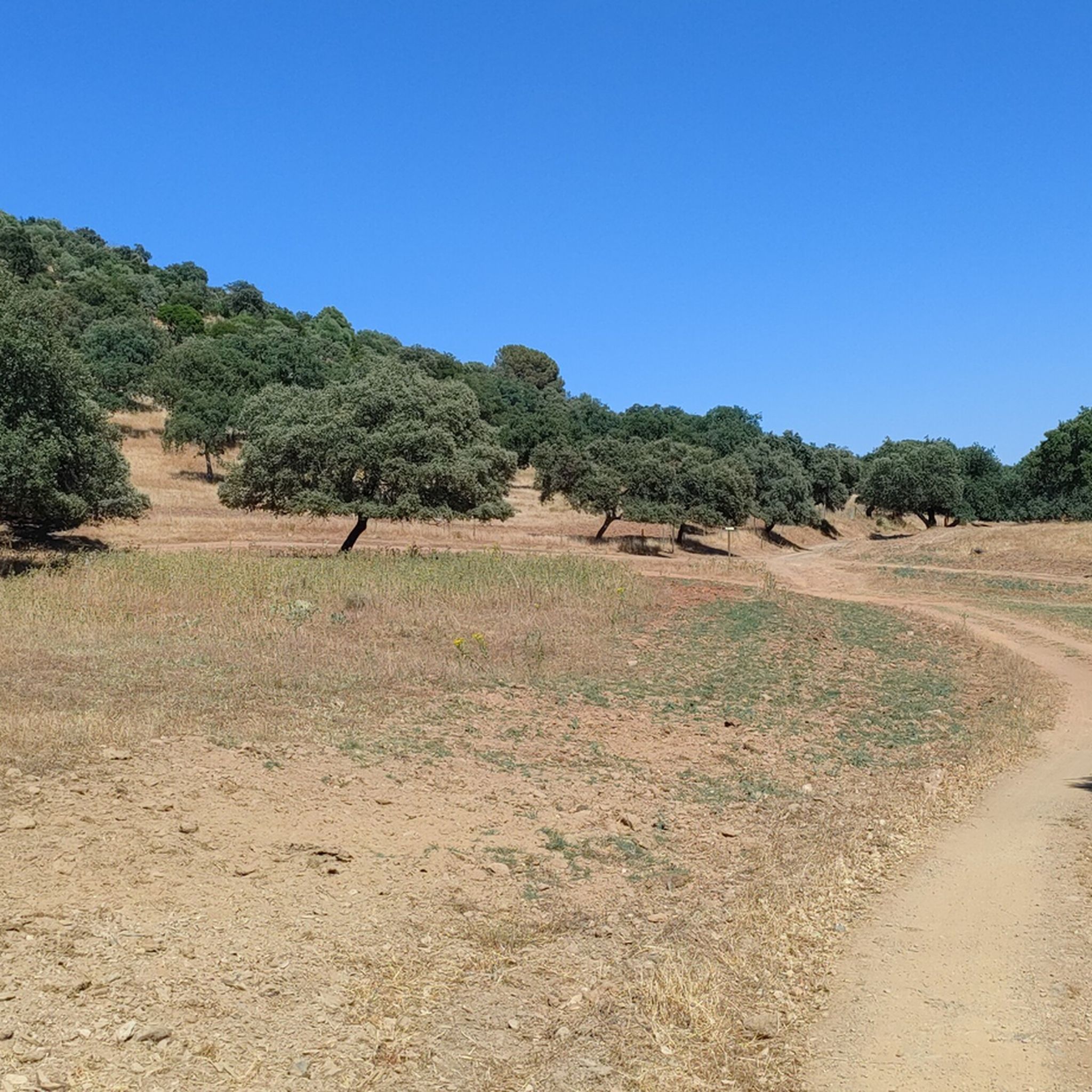
Hiking in Guadiato-Bembezar offers diverse landscapes within the southern foothills of the Sierra Morena mountains. The region features extensive Mediterranean forests, including holm oaks and cork oaks, often forming dehesas. Riverine ecosystems along the Guadiato and Bembézar rivers are notable, supporting varied aquatic life. The terrain includes metamorphic rocks like quartzites and slates, providing varied elevation for hiking trails.
Best hiking trails in Guadiato-Bembezar
- The most popular hiking route is Arroyo Bejarano – Elephant Fountain loop from Torrehoria, an…
Last updated: June 27, 2026
4.7
(59)
213
hikers
13.7km
03:44
200m
200m
Moderate hike. Good fitness required. Easily-accessible paths. Suitable for all skill levels.
4.6
(11)
53
hikers
14.3km
04:03
320m
320m
Moderate hike. Good fitness required. Easily-accessible paths. Suitable for all skill levels.

Sign up for free
4.7
(7)
39
hikers
7.87km
02:10
130m
130m
Moderate hike. Good fitness required. Easily-accessible paths. Suitable for all skill levels.
4.5
(8)
29
hikers
9.65km
02:41
180m
170m
Moderate hike. Good fitness required. Easily-accessible paths. Suitable for all skill levels.
4.3
(4)
97
hikers
4.50km
01:24
170m
170m
Easy hike. Great for any fitness level. Easily-accessible paths. Suitable for all skill levels.
Get access to more routes and recommendations from other explorers.
Sign up for free
Already have an account?
Our route recommendations are based on thousands of hikes, rides, and runs completed by other people on komoot.
Start today with a free account
Your next adventure awaits.
Login or Signup
Tips from the Community

Located in the district of Santa Maria de Trassierra, next to the Arroyo del Molino, a tributary of the river Guadiato. It is a mill of Arab origin, probably from the 10th or 11th centuries, whose purpose was to grind flour. These medieval mills made it possible to produce flour in large quantities for 10th-century Caliphal Córdoba. (Source: https://www.conocetusfuentes.com/datos_elemento_884.html)
1
0
Located on the Caño Escaravita estate, just beyond the outlying neighborhood of Santa María de Trassierra. We found it in the western Sierra peri-urban district, next to the crossroads leading to the Ermitas and the Mirador de las Niñas, about fifteen kilometers from Córdoba. This is a zoomorphic water fountain on a pedestal from the Caliphate period, dating back to the 10th century. The sculpture represents a small elephant. Made of gray limestone from the Sierra Morena, it served as a support for the spout. The fountain is made up of three components: a water collection basin, a masonry pillar attached to it on its north side (which leads to a masonry irrigation ditch), and a rectangular pool located to the west of the canal. https://amedinacordoba.com/fuente-del-elefante/
1
0
The Baths of Poppaea are a natural stretch of small waterfalls alternating with small pools that follow the course of the Molino stream, near the mouth of the Guadiato River. This area was visited by Christopher Columbus. Its name comes from the place where the Cordoba poets of the Cántico Group used to visit, as during the Franco regime it was a safe place, away from the scrutiny of this intellectual group, as well as the homosexuality of some of them. One day, three members of the group, Pablo García Baena, Juan Bernier, and Ricardo Molina, were walking when they saw some girls bathing in the stream. The latter exclaimed, "Look, like Poppaea in the bath," referring to the Roman Empress Poppaea Sabina, a prominent figure at the time due to the film The Sign of the Cross (1932), in which actress Claudette Colbert appeared bathing in donkey's milk, just as the Empress did. The girls told the residents of Trassierra about this incident, and from then on, the story spread and became known as the Baths of Poppea. https://es.wikipedia.org/wiki/Ba%C3%B1os_de_Popea
2
0
A waterfall known as the "first spring of the Bejarano," whose water flow has always been active. There are few remains of an ancient structure from which the water flows: the aquifer catchment. The Romans knew how to harness this important spring, unique in these mountains, due to the large amount of water it provides every season (estimated at 20,000 to 35,000 m3/day). (Source: https://www.conocetusfuentes.com/ficha_detalle.php?id_fuente=10057)
1
0

I like to do the shorter and steeper climb here and the softer and longer descent through Reventon.
1
0

An incredible place, a structure and construction that transports you to the Roman era. It is worth taking the route and spending some time enjoying the site.
2
0

A closed gate prevents you from continuing along this route.
1
0

Please note that this highlight is also listed in the description as a parking spot. However, we found that it is not allowed to drive up to the indicated parking spot/start of the route with a car. Just park near the jardin de popea and start the hike from there, it will add 2.5 km to the distance but is not too bad.
1
0
Frequently Asked Questions
How many hiking trails are available in Guadiato-Bembezar?
Guadiato-Bembezar offers a wide array of hiking opportunities, with over 50 trails available. These routes cater to various preferences, ranging from easy strolls to more challenging expeditions through the diverse landscapes of the Sierra Morena.
What is the best time of year to go hiking in Guadiato-Bembezar?
The best time for hiking in Guadiato-Bembezar is typically during spring (March to May) and autumn (September to November). During these seasons, temperatures are milder, and the natural landscapes, including the Mediterranean forests and dehesas, are particularly vibrant. Summers can be very hot, making early mornings or late afternoons preferable if hiking during that period.
What kind of terrain can I expect on hikes in Guadiato-Bembezar?
Hikers in Guadiato-Bembezar will encounter diverse terrain, from extensive Mediterranean forests of holm oaks and cork oaks, often forming dehesas, to well-preserved riverine ecosystems along the Guadiato and Bembézar rivers. The region is part of the Sierra Morena, featuring rugged landscapes with metamorphic rocks like quartzites and slates, providing varied elevation and scenic views.
Are there options for different hiking skill levels?
Yes, Guadiato-Bembezar offers routes for all skill levels. You'll find 17 easy trails perfect for a relaxed walk, 32 moderate routes for those seeking a bit more challenge, and 2 difficult trails for experienced hikers looking for a strenuous adventure.
Are there any waterfalls to see on the trails?
Yes, the region is home to the unique Baños de Popea Waterfalls. This natural spectacle features a series of small waterfalls nestled within the Sierra Morena, offering a refreshing sight during your hike.
What historical landmarks can I discover while hiking?
Several historical landmarks are integrated into the landscape. You can visit the ancient Elephant Fountain, part of the Roman aqueduct Aqua Vetus, or explore the Molino del Molinillo, a structure with Roman origins. The medieval Islamic Beato Tower is also a notable sight along some trails.
What do other hikers say about the trails in Guadiato-Bembezar?
The trails in Guadiato-Bembezar are highly regarded by the komoot community, boasting an average rating of 4.4 stars from over 300 reviews. Hikers often praise the region's diverse landscapes, well-maintained paths, and the opportunity to connect with nature and history.
Are there family-friendly hiking routes in Guadiato-Bembezar?
Yes, Guadiato-Bembezar has several family-friendly options, particularly among its 17 easy trails. These routes are generally shorter and have less elevation gain, making them suitable for families with children. For example, the Scenic Viewpoint – Cuesta de los Pobres loop from San Rafael de la Albaida is an easy option that offers pleasant views.
Can I bring my dog on the hiking trails?
Many trails in Guadiato-Bembezar are suitable for dogs, especially those within the natural parks and rural areas. It's generally recommended to keep dogs on a leash to protect local wildlife, particularly in areas with high biodiversity like the Sierra de Hornachuelos Natural Park, which is home to species such as the Iberian lynx and various raptors.
Are there any circular hiking routes available?
Yes, many of the routes in Guadiato-Bembezar are circular, offering convenient starting and ending points. A popular example is the Elephant Fountain – Roman Mine and Pools loop from Torrehoria, which allows you to explore historical sites and natural beauty without retracing your steps.
What kind of wildlife might I encounter while hiking?
Guadiato-Bembezar is rich in biodiversity. Birdwatchers can spot numerous raptors like the Imperial Eagle, Golden Eagle, and Black Vulture, as well as the Black Stork. The region is also one of the last refuges for the endangered Iberian lynx, and populations of wolves are present. Keep an eye out for various amphibians, reptiles, and fish in the riverine areas.
Are there any trails that feature riverine ecosystems?
Absolutely. The Guadiato and Bembézar rivers are central to the area's natural appeal, and many trails follow their courses. These riverine ecosystems are recognized for their well-preserved forests and support a rich diversity of aquatic life. The Arroyo Bejarano – Elephant Fountain loop from Torrehoria, for instance, features the Arroyo Bejarano, a significant riverine highlight.
Most popular routes in Guadiato-Bembezar
Most popular attractions in Guadiato-Bembezar

Get inspired with the komoot mobile app


Explore more
Browse the best Hikes in other regions.
