The best traffic-free bike rides around Voerendaal
4.5
(138)
952
riders
24
rides
No traffic touring cycling routes around Voerendaal traverse an undulating landscape in the southeastern Netherlands, often called the "green lung of Parkstad." The region is characterized by its exceptionally green terrain, offering panoramic views from its plateaus and winding through verdant brook valleys. This area, part of the "Land van Kalk," features chalk-rich soil that supports diverse ecosystems including fruit orchards, vineyards, and orchid meadows. Cyclists can explore routes that pass through green fields and along hollow roads, providing a…
Last updated: October 10, 2026
5.0
(1)
98
riders
Hard bike ride. Very good fitness required. You may need to push your bike for some segments of this route.
4.8
(16)
48
riders
27.8km
01:43
190m
190m
Hard bike ride. Good fitness required. You may need to push your bike for some segments of this route.

4.2
(12)
84
riders
47.9km
02:50
270m
270m
Moderate bike ride. Good fitness required. Mostly paved surfaces. Suitable for all skill levels.
4.3
(7)
31
riders
39.1km
02:21
290m
290m
Moderate bike ride. Good fitness required. Mostly paved surfaces. Suitable for all skill levels.
5.0
(3)
17
riders
41.3km
02:29
270m
270m
Moderate bike ride. Good fitness required. Mostly paved surfaces. Suitable for all skill levels.
Get access to more routes and recommendations from other explorers.
Already have an account?
Our route recommendations are based on thousands of hikes, rides, and runs completed by other people on komoot.
Start today with a free account
Your next adventure awaits.

Other adventures around Voerendaal


Tips from the Community

The kiln originated during the lime shortage in World War I, when imports from abroad were lacking. Local entrepreneurs in Limburg burned local limestone into quicklime (CaO) for building mortar, plaster, and construction purposes – a simple process at 900–1200 °C. (Cement: Needs rotary kilns at >1400 °C for clinker formation). Today, the dilapidated kiln is an industrial monument at the foot of the Curfsgroeve and part of the Mergel history.
0
0


Haven't been to the restaurant yet, but the surroundings are nice.
0
0

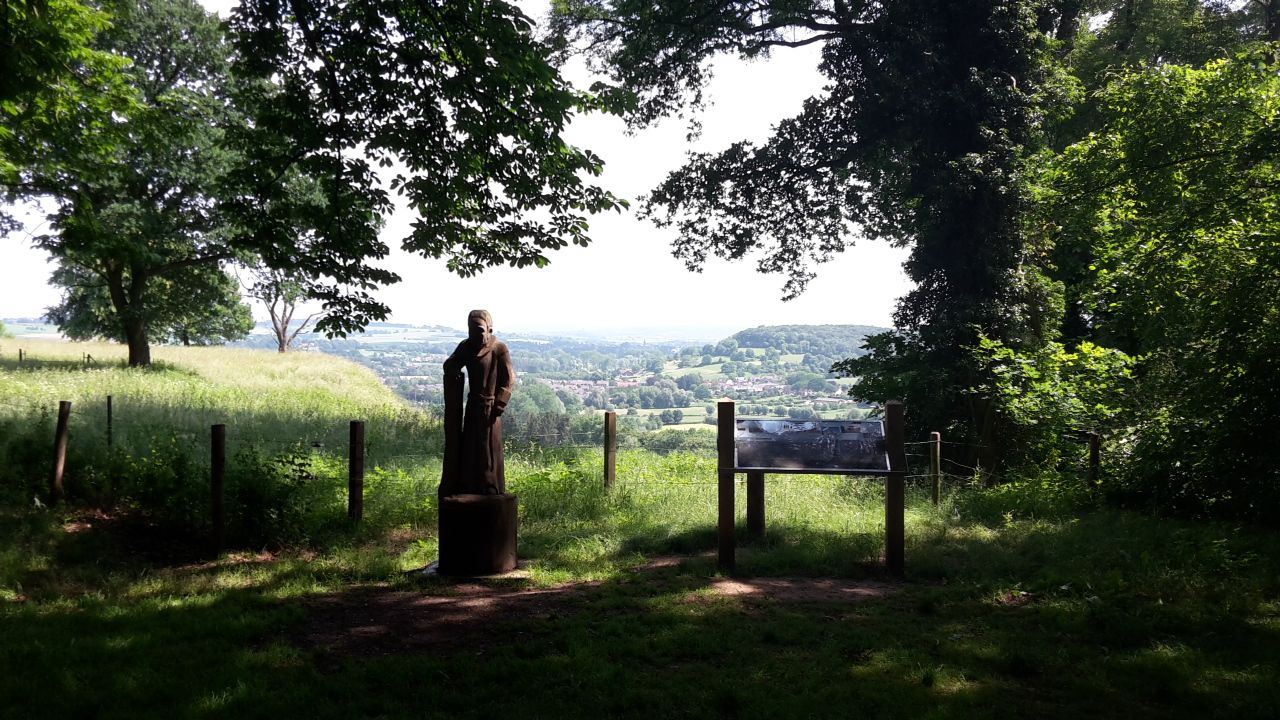
Father Karel, born Joannes Andreas Houben on December 11, 1821, in Munstergeleen, grew from an ordinary Limburg boy into a special figure for many. His life path led him via Belgium to England and Ireland. Because he spoke poor English, he could not preach, but with his listening ear and involvement, he offered comfort to the sick and those in need. According to tradition, he even healed some people. He was seen as a source of hope, and even after his death, his influence remained great. In Ireland, many people gathered to bid him farewell. In his native region, his memory lives on. Near his parental home on the Geleenbeek, a barn was converted into a Mary chapel, where visitors still come for peace, prayer, or a moment of reflection.
0
0

The parish of St. Martin was founded before or around the year 1000. It is not known when the first and second churches were built. The first church is said to have been made of wood and the second church of marl. The west tower was built in the 14th century. The Gothic choir was built in 1626. In the period 1664-1806/1820 (depending on the source), the church was used by the Roman Catholic parish of H. Martinus and the then Reformed (Protestant) community of Geul. It was also a refuge for Protestants living on the other side of the Maas in the land of Rekem. In the years 1919-1920, a part was demolished and rebuilt. The church at the time, which was demolished, would have been the third church. From this church, after a cross enlargement, only the priest's choir, which is now used as a daily chapel, and the tower remain. The new nave was rebuilt through the existing church and is based on the design of the Maastricht architect Hubert van Groenendael. This gave the church its typical cross shape.
7
0
The stables of the old moated castle Schloss Geulle, demolished in 1850, have been converted into comfortable accommodation with elegantly landscaped gardens within the moat. Guest rooms with fireplace, fully equipped kitchen, bicycles and free Wi-Fi. Numerous golf courses and excellent Michelin-starred restaurants in the surrounding area.
7
0

Wasserschloss Geulle, beautiful photo motif. B&B as well as delicious cakes and coffee.
1
0

A small chapel in the middle of a crossroads
3
0
Frequently Asked Questions
How many no-traffic touring cycling routes are available in Voerendaal?
There are nearly 30 dedicated no-traffic touring cycling routes around Voerendaal. These routes offer a variety of distances and elevations, ensuring options for different skill levels.
What kind of terrain can I expect on no-traffic touring cycling routes in Voerendaal?
Voerendaal is known for its undulating landscapes, often referred to as the 'green lung of Parkstad' and a gateway to the Heuvelland (hill country). You'll encounter routes winding through green fields, along hollow roads, and through verdant brook valleys. The region's 'Land van Kalk' plateau also offers unique chalk-rich soil, supporting diverse ecosystems like fruit orchards and vineyards.
Are there any easy no-traffic touring cycling routes suitable for beginners in Voerendaal?
Yes, Voerendaal offers several easy no-traffic touring cycling routes perfect for beginners or those seeking a relaxed ride. While specific easy routes are not highlighted here, you can find 3 easy routes among the nearly 30 available on komoot.
What attractions can I see along the no-traffic touring cycling routes in Voerendaal?
Many routes pass by historic castles and natural features. You can explore areas near Schutterspark Pond, the expansive Brunssummerheide Nature Reserve, or the Teverener Heide Nature Reserve with its Teverener Heide Lakes. Historic castles like Cortenbach and Schaloen are also often incorporated into tours, adding a cultural dimension to your ride.
Are there any circular no-traffic touring cycling routes in Voerendaal?
Yes, many of the no-traffic touring cycling routes in Voerendaal are designed as circular loops, allowing you to start and end at the same point. An example is the moderate Terborgh Castle – Father Karel House and Garden loop from Hoensbroek.
What is the best time of year to go touring cycling in Voerendaal?
The spring and summer months are generally ideal for touring cycling in Voerendaal, when the fruit orchards are in bloom and the vineyards are lush. The mild weather and vibrant natural scenery enhance the cycling experience through the region's green fields and valleys.
Are there any challenging no-traffic touring cycling routes for experienced cyclists?
Absolutely. For experienced cyclists seeking a challenge, Voerendaal offers several difficult routes. One such route is the Gulpenerberg Viewpoint – Forest Café 't Hijgend Hert loop from Klimmen-Ransdaal, which covers over 62 km with significant elevation gain.
Can I find places to eat and drink along the no-traffic touring cycling routes?
Yes, the region is well-equipped with amenities for cyclists. You'll find various cafes, pubs, and restaurants in the villages and towns along the routes. The presence of vineyards also means opportunities for wine tastings and farm shops offering local produce, perfect for a mid-ride break.
What do other touring cyclists enjoy most about the no-traffic routes in Voerendaal?
The no-traffic touring cycling routes in Voerendaal are highly rated by the komoot community, with an average score of 4.5 out of 5 stars from over 100 ratings. Reviewers often praise the tranquil, picturesque landscapes, the well-maintained paths, and the opportunity to explore the region's unique natural features and historic sites away from busy roads.
Are there any routes that highlight the region's vineyards or local products?
Yes, the chalk-rich soil of the 'Land van Kalk' supports vineyards, and there are routes specifically designed to showcase this. While not explicitly listed here, routes like the 'Route des Vins Land van Kalk' are known to highlight the region's wine culture, offering opportunities for wine-related activities and visits to places like Wijngoed Fromberg.
How can I access the starting points of these no-traffic cycling routes?
Voerendaal is accessible by public transport, and many routes start near train stations or bus stops in the municipality and surrounding areas. For those traveling by car, parking facilities are generally available in the villages and near popular starting points. It's advisable to check specific route details for parking information.
Most popular routes around Voerendaal
Most popular attractions around Voerendaal

Get inspired with the komoot mobile app


Explore more
Browse the best Cycling routes in other regions.
