The best traffic-free bike rides around Salies-De-Béarn
4.3
(62)
1,934
riders
47
rides
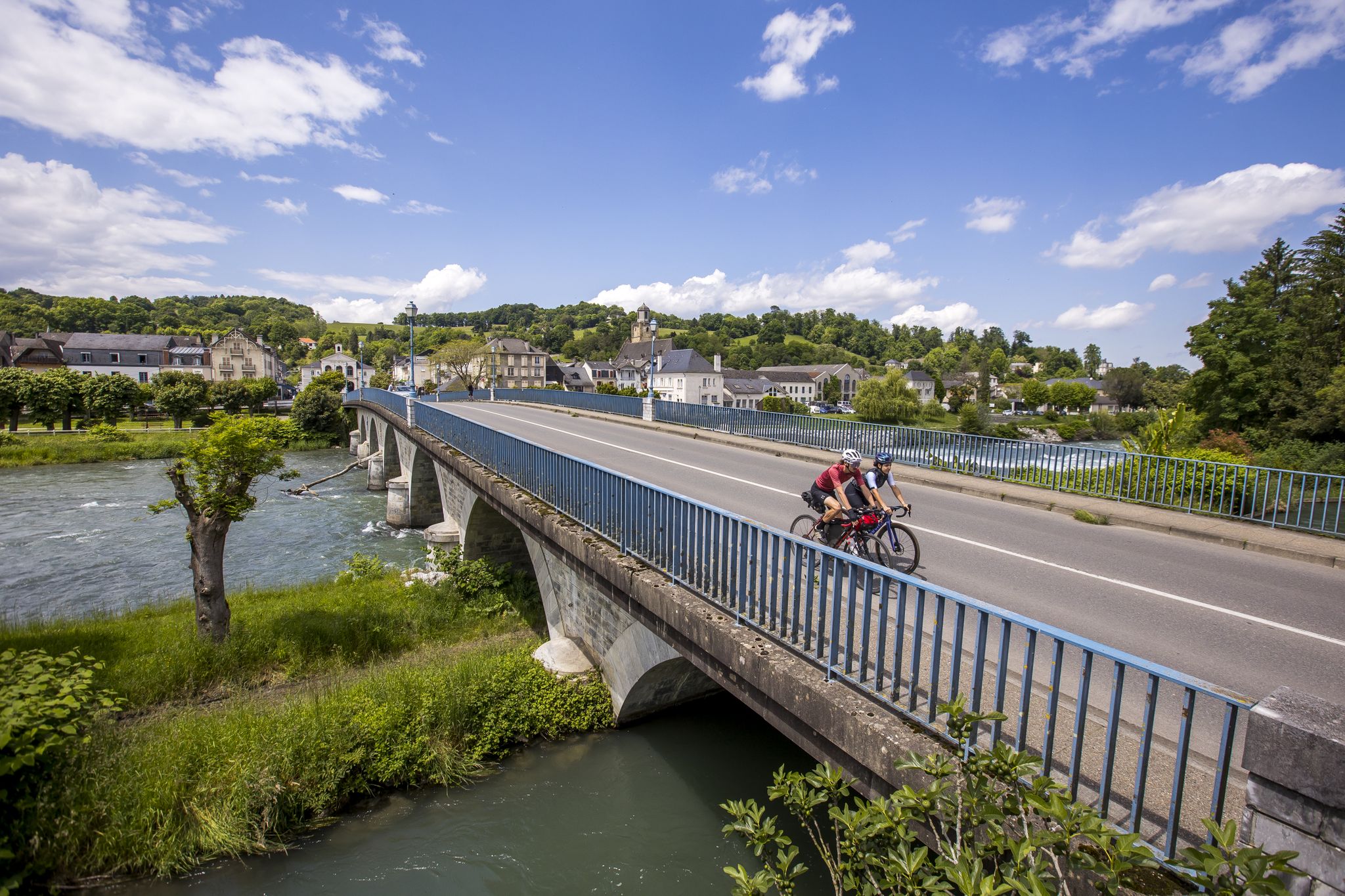
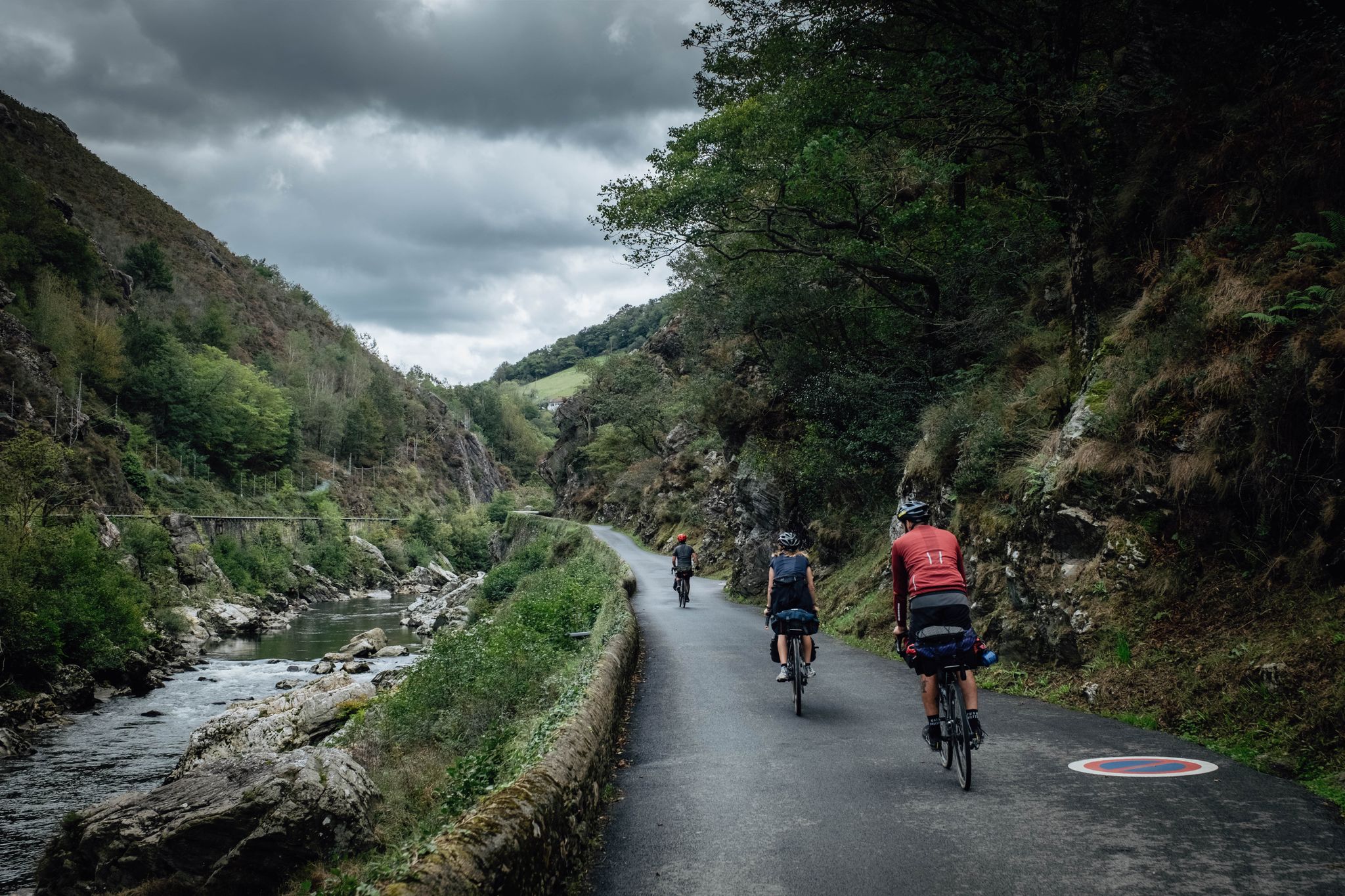
No traffic road cycling routes around Salies-De-Béarn are set within the Pyrénées-Atlantiques department, characterized by the picturesque foothills of the Pyrenees mountains. The terrain offers a diverse range of cycling experiences, from gentle, undulating country lanes to more challenging ascents. Cyclists can explore quiet roads that often follow scenic river valleys, passing through agricultural landscapes and ancient forests. This region provides a network of routes suitable for various skill levels, with distant views of the Pyrenees forming a dramatic backdrop.
…Last updated: May 20, 2026
5.0
(1)
12
riders
42.5km
02:01
570m
570m
Moderate road ride. Good fitness required. Mostly well-paved surfaces and easy to ride.
4.0
(1)
11
riders
42.1km
01:54
390m
390m
Moderate road ride. Good fitness required. Mostly well-paved surfaces and easy to ride.

Sign up for free
10
riders
103km
04:36
820m
820m
Moderate road ride. Good fitness required. Mostly well-paved surfaces and easy to ride.
8
riders
Moderate road ride. Good fitness required. Mostly well-paved surfaces and easy to ride.
4.0
(1)
7
riders
81.3km
03:42
670m
670m
Moderate road ride. Good fitness required. Mostly well-paved surfaces and easy to ride.
Get access to more routes and recommendations from other explorers.
Sign up for free
Already have an account?
Our route recommendations are based on thousands of hikes, rides, and runs completed by other people on komoot.
Start today with a free account
Your next adventure awaits.
Login or Signup



Tips from the Community

Considered the little Béarn Venice, Salies-de-Béarn is mainly known for its saltwater spring. The town reveals an old centre with narrow streets and atypical houses.
0
0

Saint Bartholomew's Church The old church, built on the same site as the new one, was the castle chapel and previously the seigneurial chapel. The first stone was solemnly blessed on March 19, 1868. It was consecrated in 1869. The church plan is the work of Mr. Ozanne, the departmental architect. Mr. Fraglon, a public works contractor in Villandraut, won the contract for 80,000 francs. The total cost, including furniture and the architect's fees, reached 100,000 francs (€15,244). The church of Poyanne could be considered at the time one of the most impeccable new churches in the diocese: for its size, the height of its vaults, the boldness of the arcades, the harmonious proportions, the unity of style, the regularity of the whole, and the harmony of the details. The church is built in the shape of a parallelogram and without transepts. Its nave consists of a vestibule, a central nave, two side aisles, and a choir with a polygonal chevet flanked on the right and left by a small square chapel. It measures 35m long, 19m wide, and 13m high. The 10m deep choir receives light from the chevet through three long lancet windows. The main nave connects with its side aisles through five large arches that provide as many bays, supported by eight isolated pilasters. The vault rests on real capitals. The gallery is in perfect taste. The porch is very simple, displaying its decoration only at the main door. The patron saint of the church of Poyanne is Saint Bartholomew. Source: https://notredamedechalosse.diocese40.fr/2025/02/09/poyanne/
1
0

17th century castle surrounded by a very pleasant park, in the heart of Chalosse.
0
0


Vincent de Paul, born here in 1581 (later a saint), was a priest and founder of an order. His memorial day in the calendar of saints is September 27, the date of his death in 1660. In addition to his spiritual commitment as a pastor, he is known above all for his charitable work, for which he also founded communities dedicated to caring in various places.
4
0

San Vincenti de Paul, place of origin of Saint Vincent de Paul. Worth seeing is the church dedicated to Notre Dames.
5
0

Poyanne small village of Chalosse in the Landes and its castle https://fr.wikipedia.org/wiki/Château_de_Poyanne. In summer you will find a little coolness under the oaks and plane trees of the park located in front of the church and the castle, a suitable place for a picnic or a simple stopover.
0
0

Frequently Asked Questions
How many no-traffic road cycling routes are available around Salies-De-Béarn?
There are over 40 dedicated no-traffic road cycling routes around Salies-De-Béarn, offering a variety of distances and elevations. This includes 7 easy routes, 35 moderate routes, and 1 difficult route, ensuring options for all skill levels.
Are there any easy, family-friendly no-traffic routes suitable for beginners?
Yes, Salies-De-Béarn is well-suited for family-friendly cycling, especially with its network of greenways. An accessible 16 km round-trip greenway starts directly from Salies-de-Béarn, providing a smooth, asphalted path ideal for all skill levels. The Vélosud route also features a 5.5km cycle path on a converted railway line towards Orthez, which includes a well-lit tunnel, perfect for a relaxed ride. For a slightly longer, easy road route, consider the Salies de Béarn - Saint Martin – Eiffel Bridge loop from Salies-de-Béarn, which covers about 26 km with minimal elevation gain.
What is the best time of year to enjoy no-traffic road cycling in Salies-De-Béarn?
The region's climate, nestled in the Pyrenean foothills, makes it suitable for cycling as early as April. However, late summer and early autumn generally offer the most ideal temperatures and stable weather conditions for a cycling holiday, allowing you to fully enjoy the quiet country lanes and scenic views.
What kind of landscapes and attractions can I expect to see along these routes?
The no-traffic routes around Salies-De-Béarn offer diverse scenery, from gentle river valleys to the picturesque foothills of the Pyrenees. You'll encounter quiet country lanes, greenways, and paths along rivers like the Gave de Pau. The area is rich in cultural sights too; you can pass by landmarks such as The Bridge of the Legend or the Saint Peter's Church. The town itself, known as the 'Cité du Sel' (Salt City), features charming 17th and 18th-century houses and a thermal spa.
Are there any longer, more challenging no-traffic road cycling routes?
Yes, for those seeking a greater challenge, there are several moderate to difficult routes that venture further into the varied terrain. An example is the Pont Vieux of Orthez – Le Pont-Vieux (Orthez) loop from Puyoô, which covers over 67 km with significant elevation gain. Another option is the Pont Vieux of Orthez loop from Puyoô, a longer route exceeding 100 km with over 800 meters of ascent.
Where can I find parking for these quiet cycling routes?
Salies-De-Béarn and its surrounding villages typically offer public parking options. For routes starting directly from Salies-De-Béarn, you can usually find parking within the town. For routes that begin in smaller villages like Puyoô or Athos-Aspis, look for designated village parking areas, often near the town hall or church. Always check local signage for specific parking regulations.
Can I access these routes using public transport?
While Salies-De-Béarn is accessible by regional bus services, public transport options for reaching specific route starting points in smaller, more rural areas can be limited. It's advisable to check local bus schedules in advance if you plan to rely on public transport to access the quieter, more remote starting points of some routes. Bringing your bike on public transport may also have restrictions.
What do other road cyclists enjoy most about cycling in Salies-De-Béarn?
The area is highly rated by the komoot community, with an average score of 4.5 stars. Reviewers often praise the region for its blissfully traffic-free country lanes, the stunning distant views of the Pyrenees, and the charming, picturesque villages encountered along the way. The varied terrain, from gentle river paths to undulating foothills, also receives high marks for catering to different cycling preferences.
Are there any circular no-traffic road cycling routes?
Yes, many of the no-traffic road cycling routes around Salies-De-Béarn are designed as loops, allowing you to start and end in the same location. For example, the Navarrenx – Pretty fortified village loop from Athos-Aspis offers a moderate 51 km circular ride. The Roadbike loop from Lanneplaà is another excellent circular option, covering around 41 km.
Are there places to stop for refreshments or accommodation along the routes?
Salies-De-Béarn itself offers a good selection of cafes, restaurants, and accommodation options, including its famous thermal spa. While many of the no-traffic routes pass through quiet rural areas, you'll often find opportunities for refreshments in the charming villages along the way. It's always a good idea to plan your stops in advance, especially on longer routes, to ensure you have access to water and food.
What makes the Salies-De-Béarn region particularly good for no-traffic road cycling?
The region is ideal due to its extensive network of quiet country lanes and dedicated greenways, which are often converted old railway lines. This provides a safe and serene cycling environment away from heavy vehicle traffic. The diverse terrain, ranging from flat river paths to gentle ascents into the Pyrenean foothills, combined with scenic views of vineyards, forests, and distant mountains, creates a truly enjoyable experience for cyclists seeking tranquility.
Most popular attractions around Salies-De-Béarn

Get inspired with the komoot mobile app


Explore more
Browse the best Road cycling routes in other regions.
