The best traffic-free bike rides around Salies-De-Béarn
4.4
(133)
901
riders
95
rides
No traffic touring cycling routes around Salies-De-Béarn traverse a landscape shaped by river valleys and former railway lines, offering diverse terrain for cyclists. The region is situated between the Pyrenees mountains and the Basque coast, featuring meandering rivers like the Le Saley, Gave de Pau, and Adour. Many routes utilize converted railway paths, such as sections of the Vélosud, providing smooth rides through valleys and "barthes" (Aquitaine's polders).
Best no traffic touring cycling routes around Salies-De-Béarn
- The most popular no…
Last updated: May 25, 2026
5.0
(4)
35
riders
14.9km
00:52
70m
70m
Easy bike ride. Great for any fitness level. Mostly paved surfaces. Suitable for all skill levels.
5.0
(1)
17
riders
54.9km
04:05
620m
620m
Hard bike ride. Very good fitness required. Mostly paved surfaces. Suitable for all skill levels.

Sign up for free
4.5
(2)
10
riders
43.5km
02:45
460m
460m
Hard bike ride. Very good fitness required. Mostly paved surfaces. Suitable for all skill levels.
4
riders
Moderate bike ride. Good fitness required. Mostly paved surfaces. Suitable for all skill levels.
5.0
(1)
5
riders
53.9km
03:23
560m
560m
Hard bike ride. Very good fitness required. Mostly paved surfaces. Suitable for all skill levels.
Get access to more routes and recommendations from other explorers.
Sign up for free
Already have an account?
Our route recommendations are based on thousands of hikes, rides, and runs completed by other people on komoot.
Start today with a free account
Your next adventure awaits.
Login or Signup


Tips from the Community

Built between 1250 and 1280 by Gaston VII, Viscount of Béarn, on a rocky outcrop overlooking the gave. Gaston Fébus had the castle reinforced in 1370.
0
0

Considered the little Béarn Venice, Salies-de-Béarn is mainly known for its saltwater spring. The town reveals an old centre with narrow streets and atypical houses.
0
0

## The tunnel The tunnel, located between the Puyoô and Salies-de-Béarn stations, is one of the significant structures on line n° 662.000 connecting Puyoô to Mauléon. It is a single-track tunnel 848.5 m long and 5.00 m wide between the abutments. The height under the crown is 6.00 m. It is a multi-radius arch. The structure is generally oriented North-South, with a curve of R400 m for the first 250 meters on the North side, then a straight section to the South end. The longitudinal profile has a constant gradient of 0.01 m/m from the North. A central aqueduct equips the structure along its entire route. The maximum cover is 49 m. The tunnel is built in the Campanian flysch (Upper Cretaceous). The construction of the tunnel (1879-1883) was carried out from two headings via shafts approximately 35 m deep, located at PM219 and PM632. The shafts were retained as ventilation shafts. The masonry thicknesses (limestone rubble set in lime mortar) vary from 0.50 m to 1.20 m. The length of the tunnel, initially projected at 400 m, was increased to 787 m following the decision to lower the profile (from 20‰ to 16‰). During construction, ground instabilities encountered during the excavation of access trenches led to a further extension of the structure, which finally reached a length of 848.5 m. Numerous ground instabilities (landslides) caused significant delays in the progress of the work. The tunnel was electrified in 1930 and the overhead line equipment was removed in 1971.
0
0


Gaston Fébus, Jeanne d'Albret and Henri IV lived there.
1
0

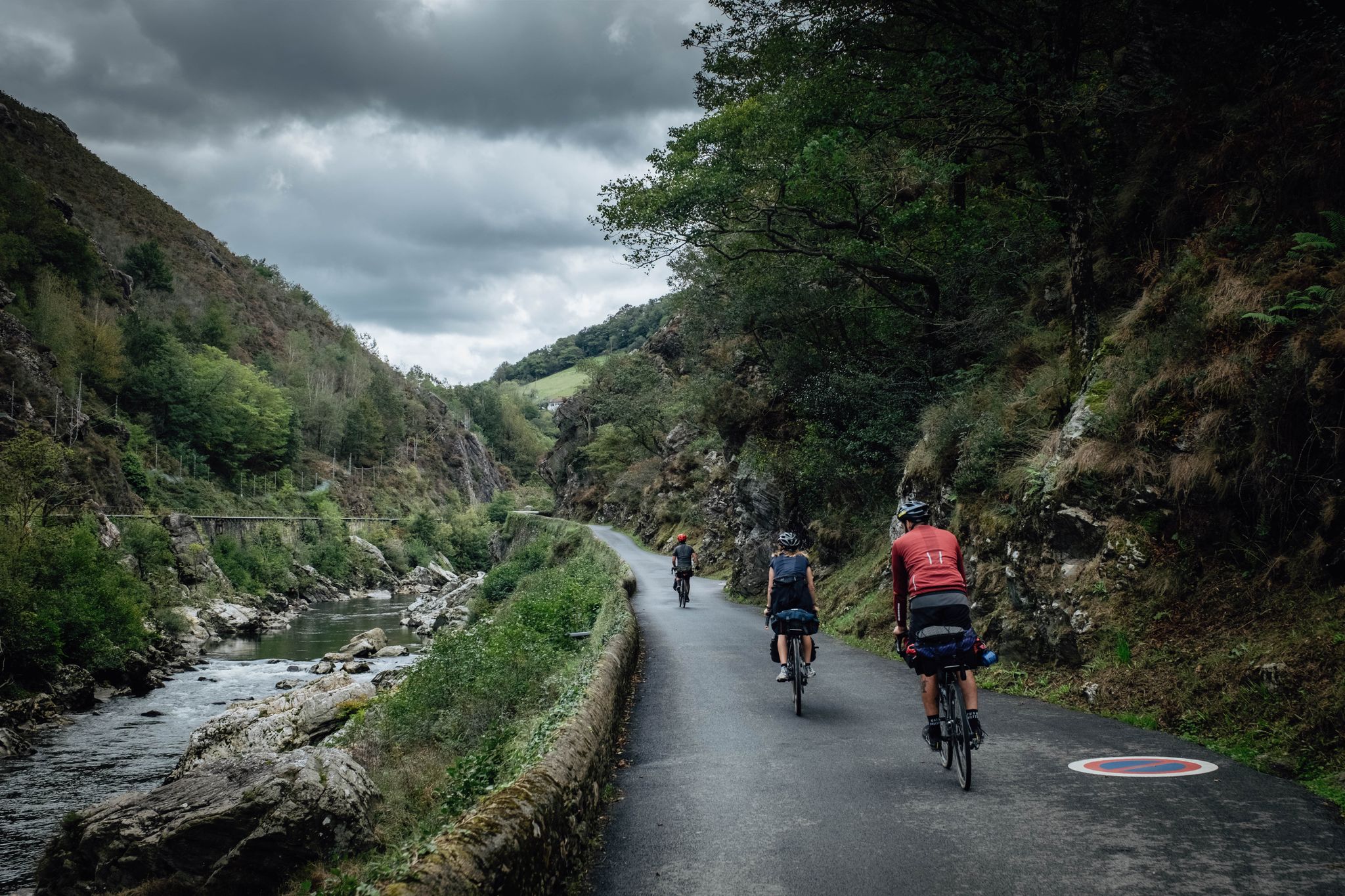
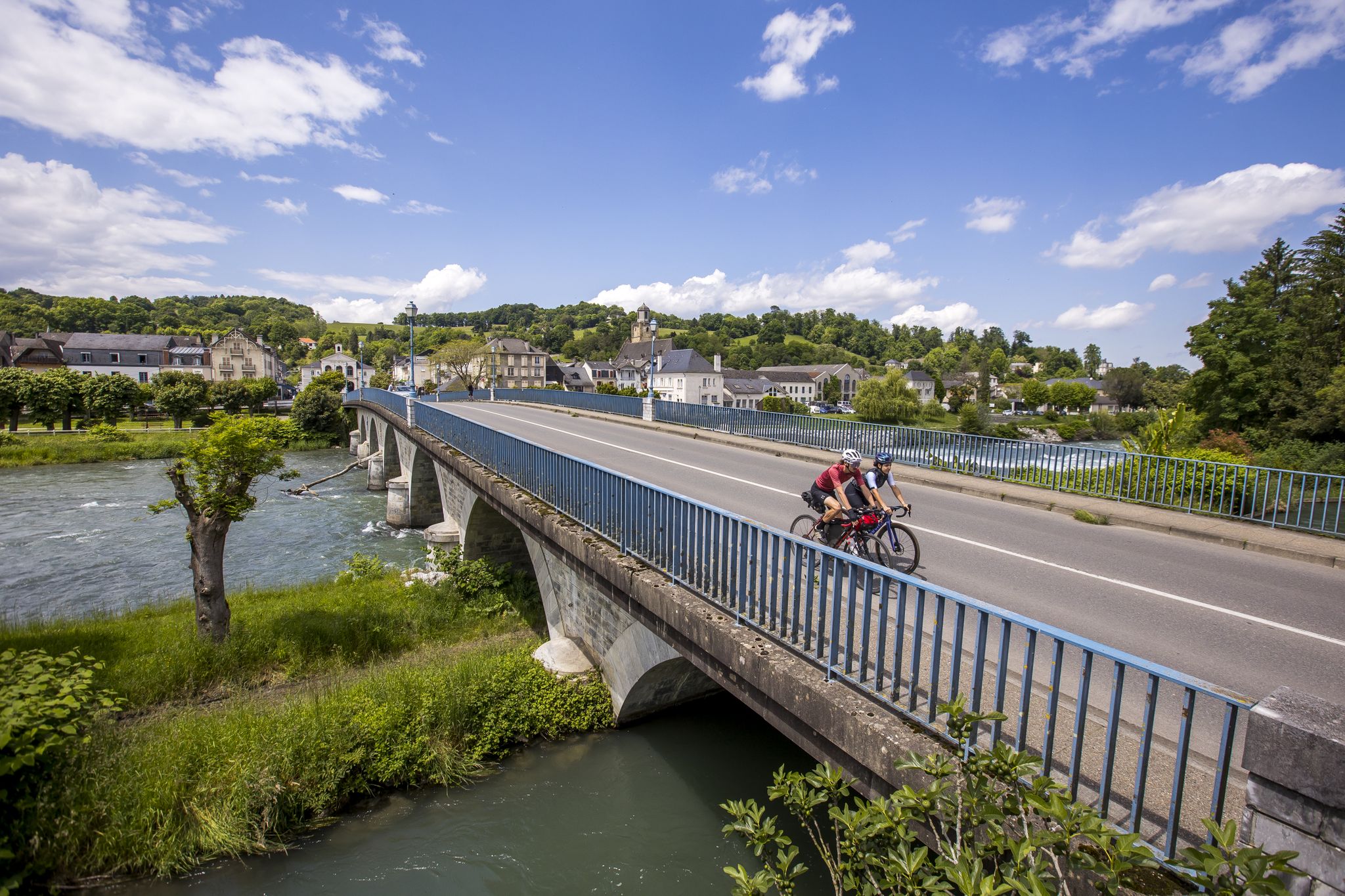
A really beautiful cycle path on an old railway line. It is completely asphalted and is therefore a wonderful ride and there are one or two bridge highlights to admire along the way.
2
0

"the Bastide of Béarn", created in 1338. We cannot visit it.
2
0
Frequently Asked Questions
How many no-traffic touring cycling routes are available around Salies-de-Béarn?
There are over 80 dedicated no-traffic touring cycling routes around Salies-de-Béarn. These routes cater to various skill levels, with 8 easy, 44 moderate, and 32 difficult options, ensuring a suitable ride for everyone.
What types of landscapes can I expect on these traffic-free routes?
The routes around Salies-de-Béarn offer a diverse landscape, from the meandering Le Saley river within the town, often called 'The Venice of Béarn,' to the broader Gave de Pau and Gave d'Oloron valleys. You'll cycle through fertile agricultural lands, including kiwi orchards, and experience picturesque 'barthes' (Aquitaine's polders) along the Adour River, ideal for bird-watching. The region sits between the Pyrenees mountains and the Basque coast, offering varied scenery.
Are there any easy, family-friendly no-traffic routes suitable for beginners?
Yes, Salies-de-Béarn offers several easy, traffic-free routes perfect for families and beginners. A great option is the Place of the muse – Voie Verte loop from Salies-de-Béarn, which is nearly 15 km long with minimal elevation gain. Another excellent choice is the Wonderful, quiet bike path – Voie Verte loop from Salies-de-Béarn, offering a slightly longer 27 km ride on a dedicated cycle path.
What are the best times of year to cycle in Salies-de-Béarn?
The best times to enjoy traffic-free cycling in Salies-de-Béarn are generally spring (April to June) and autumn (September to October). During these seasons, the weather is typically mild and pleasant, with fewer crowds than in peak summer. Summer can also be enjoyable, but it's advisable to start rides early in the morning to avoid the midday heat.
What interesting landmarks or attractions can I see along the routes?
Many routes pass by or offer easy detours to historical and natural attractions. You might encounter medieval villages, bastides, and the unique architecture of Salies-de-Béarn itself. Notable highlights include the The Bridge of the Legend and the Pont de la Légende and Monréal Tower in Sauveterre-de-Béarn. The Salies‑de‑Béarn Greenway itself is a key feature, often leading to other points of interest like the Bourg-Neuf Washhouse Fountain.
Are there any circular no-traffic routes available?
Yes, many of the traffic-free routes around Salies-de-Béarn are designed as loops, allowing you to start and finish in the same location. For instance, the Voie Verte – Salies-de-Béarn loop from Salies-de-Béarn offers a challenging 55 km circular ride, while the Essos Church and Shaded Square – Salies-de-Béarn loop from Salies-de-Béarn provides a moderate 41 km option.
What is the Vélosud, and how does it relate to cycling in Salies-de-Béarn?
The Vélosud is a significant long-distance cycle route that includes sections near Salies-de-Béarn. A notable part is the former railway line converted into a cycle path from Salies-de-Béarn to Orthez, featuring a well-lit tunnel that bypasses slopes. This section provides a smooth, traffic-free ride through the Gave de Pau Valley. Another stage follows the Adour River, offering scenic views of the 'barthes.' You can find more information about these sections on France Vélo Tourisme.
What do other touring cyclists enjoy most about cycling in Salies-de-Béarn?
The komoot community highly rates the cycling experience in Salies-de-Béarn, with an average score of 4.4 stars from 56 ratings. Reviewers often praise the tranquility of the dedicated cycle paths, the diverse landscapes ranging from river valleys to agricultural fields, and the charm of passing through historic towns and villages without vehicle traffic.
Are there any routes that offer views of the unique saltwater springs or thermal baths?
While the routes themselves might not directly pass through the thermal baths, Salies-de-Béarn is famous for its underground saltwater springs and the magnificent Moorish-style Thermal Baths. Many cycling routes start or end in Salies-de-Béarn, allowing you to easily visit these unique attractions before or after your ride. The town's rich history of salt production, including the Salt Museum and the Crypt of Bayaà, is also easily accessible.
Are there any challenging no-traffic routes for experienced touring cyclists?
Yes, for experienced touring cyclists seeking a challenge, there are several difficult no-traffic routes. The Voie Verte – Salies-de-Béarn loop from Salies-de-Béarn, at over 55 km with significant elevation gain, is a good option. Another demanding route is the Voie Verte – Salies-de-Béarn loop from Carresse, covering over 43 km with similar elevation changes.
Is public transport available to access the starting points of these routes?
Salies-de-Béarn is accessible by public transport, though options might be more limited than in larger cities. Regional bus services connect Salies-de-Béarn with nearby towns and train stations, which can help you reach various starting points for the cycling routes. It's advisable to check local bus schedules and bike carriage policies in advance.
Most popular attractions around Salies-De-Béarn

Get inspired with the komoot mobile app


Explore more
Browse the best Cycling routes in other regions.
