The best traffic-free bike rides around La Boissière-De-Montaigu
4.3
(226)
1,249
riders
151
rides
No traffic touring cycling routes around La Boissière-De-Montaigu are situated in the Haut-Bocage Vendéen region of France, characterized by a mosaic of woodlands, hedgerows, and pastures. The area features diverse landscapes, including the tranquil Lac de la Bultière and the peaceful Valley of the Three Provinces. Gentle ascents and descents are common, with routes often following local rivers and streams.
Best no traffic touring cycling routes around La Boissière-De-Montaigu
- The most popular no traffic touring cycling route is Lac de…
Last updated: May 23, 2026
4.0
(6)
41
riders
16.2km
01:29
130m
130m
Easy bike ride. Great for any fitness level. Mostly paved surfaces. Suitable for all skill levels.
3.8
(5)
40
riders
16.5km
01:28
110m
110m
Easy bike ride. Great for any fitness level. Mostly paved surfaces. Suitable for all skill levels.

Sign up for free
5.0
(1)
28
riders
52.0km
03:57
370m
370m
Moderate bike ride. Good fitness required. Mostly paved surfaces. Suitable for all skill levels.
14
riders
31.3km
02:19
160m
160m
Moderate bike ride. Good fitness required. Mostly paved surfaces. Suitable for all skill levels.
13
riders
43.0km
03:17
280m
280m
Moderate bike ride. Good fitness required. Mostly paved surfaces. Suitable for all skill levels.
Get access to more routes and recommendations from other explorers.
Sign up for free
Already have an account?
Our route recommendations are based on thousands of hikes, rides, and runs completed by other people on komoot.
Start today with a free account
Your next adventure awaits.
Login or Signup
Popular around La Boissière-De-Montaigu

Tips from the Community

Clisson Castle has quite a story to tell: first an impregnable fortress overlooking the Sèvre, then a ducal residence, and finally a romantic ruin. In the 12th century, the powerful lordship of Clisson built this stone castle with highly elaborate defensive architectural systems: arrow slits, gun ports, and slits. A strategic point protecting the border of the Duchy of Brittany in the 15th century, it was abandoned by its owners from the second half of the 17th century onward before being burned down by Republican troops in 1793. But, beyond its grand history, this castle also has a more historic significance! In 1807, François-Frédéric Lemot, creator of the Garenne Lemot estate (a picturesque landscape located on the other side of the river), was captivated by these ruins and purchased it to turn it into an ornamental factory. The château was declared a historic monument in 1924, before being acquired by the Loire-Atlantique department in 1962. Today, visitors can visit it, take a guided tour, or simply experience its history. A stop on the Journey through the Vineyard, it's a stopover during the wine tourism tour of Nantes' wine country, featuring natural sites, heritage features, characterful villages, and unique cellars.
1
0
The unmissable annual event for extreme music in France. Founded in 2006 and based in the small town of Clisson for 13 years, Hellfest has established itself as one of the leading European festivals offering extreme music. A veritable marathon of hardcore, punk, grind, death metal, and trash, accessible just a few minutes from Nantes by train. More than 160 artists from all over the world perform on six stages for four days of fury! Every June, Clisson becomes the international center of metal culture, attracting more than 100,000 festival-goers to a dedicated venue. In 2014, the Hellfest Festival presented "its" town with a symbolic guitar over 10 meters high (the work of artist J.-F. Buisson), comfortably installed on the Looksor roundabout near the grounds, which welcome more than 100,000 festival-goers each year. Visible from the road, we can see the permanent installations emblematic of the metal aesthetic
0
0
Bultière Lake is an artificial reservoir. The Bultière Dam was built in 1994. It is located in the commune of Chavagne en paillers. It supplies the drinking water network. Its surface area is 72 hectares and contains 5.2 million cubic meters of water. It is possible to walk around the lake via a 15-km trail. This lake, with its exceptionally rich fish population, awaits you with almost every type of fish (perch, pike, zander, catfish, carp, roach, bream, tench, etc.). You can go predator fishing from the shore or from a boat to catch zander, pike, and catfish. It is, of course, possible to still fish for roach, bleak, or bream. Carp are also present in this lake. A night carp fishing route located on the right bank in the Maurosière sector will delight those who love a good catch.
0
0

It spans the Sèvre Nantaise at a height of almost 30 metres, ensuring the passage of the Clisson Cholet railway line. The two roadways supported a wheat mill and a fulling mill, replaced by an electric plant in 1915.
1
0
Typical village with its old stone mill and its footbridge. Rousselin takes its name from the fact that flax was retted here.
3
0

Using the power of moving water to drive a mill wheel is an ancient invention that dates back to pre-Christian times. Thanks to such a construction, human or animal muscle power could be easily replaced by a watercourse - natural or artificially created - in order to grind grain into corn, for example. There are essentially two different ways of driving watermills: either the water simply hits the blades of the water wheel from below to set it in motion; or the water is guided above the wheel and falls onto the blades; this type of construction is more efficient due to natural gravity.
1
0
This chapel is the remaining remnant of a commandery (a branch of the order) of the community often referred to as the "Order of the Templars" or "Knights Templar", whose full name is "Poor Knights of Christ and of Solomon's Temple in Jerusalem". The association gained notoriety due to the fact that in 1312 this order was dissolved by the French king and the pope and many members were burned at the stake as alleged heretics. The main reason for the dissolution was not the human and religious misconduct/heresy of the members, which was claimed as the motive, but the legendary wealth of this order. With his meticulously planned approach, King Philip IV of France primarily wanted to secure their possessions in order to improve his coffers.
4
0

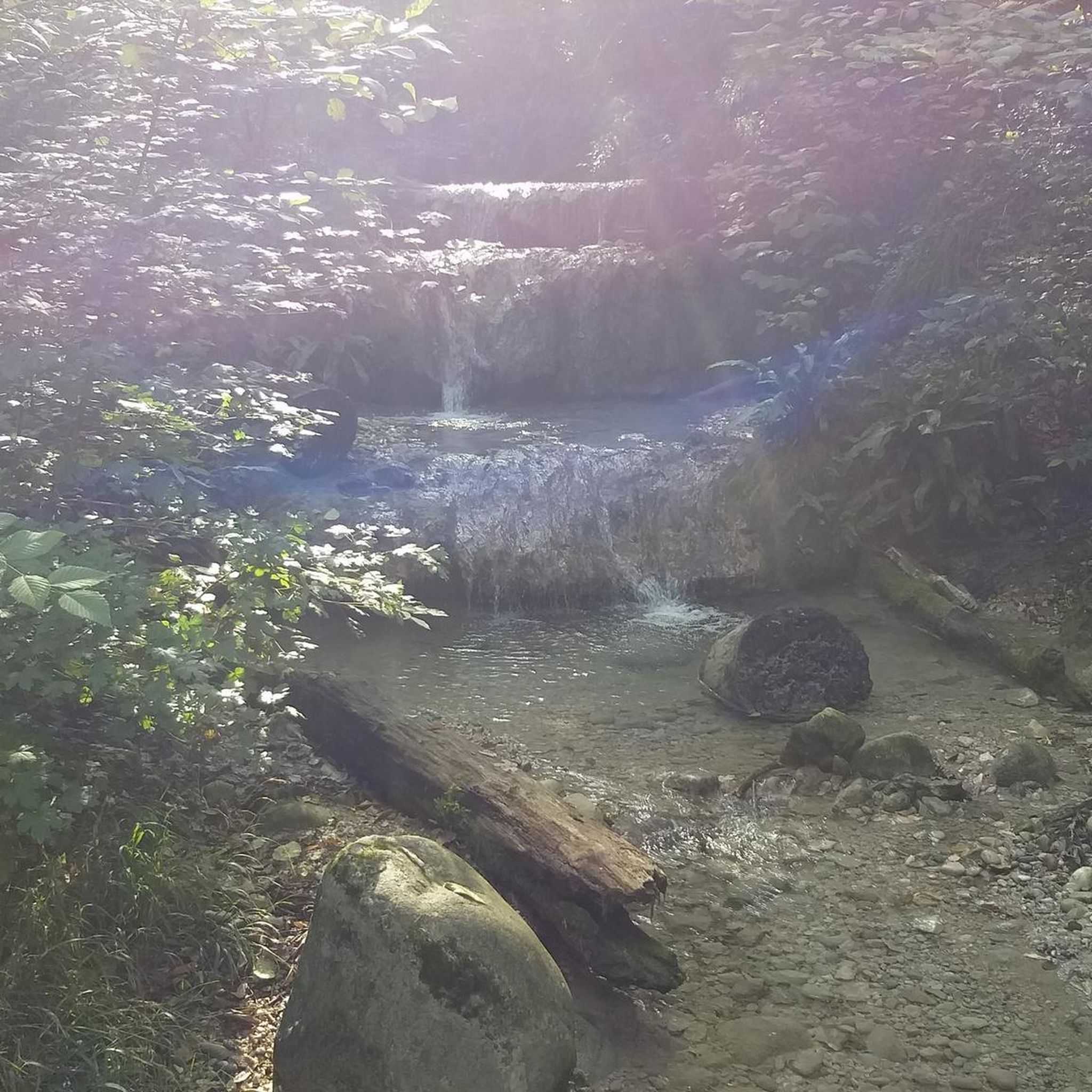
This vast body of water, popular for fishing and nature walks, offers an ideal setting for a bike ride along its banks. The trails surrounding the lake reveal superb views of the calm water and the surrounding hills.
0
0
Frequently Asked Questions
How many no-traffic touring cycling routes are available around La Boissière-De-Montaigu?
There are over 145 no-traffic touring cycling routes in the La Boissière-De-Montaigu area. These routes offer a variety of distances and difficulty levels, ensuring options for different preferences.
What are the typical difficulty levels for these routes?
The routes around La Boissière-De-Montaigu cater to various skill levels. You'll find approximately 62 easy routes, 71 moderate routes, and 12 more challenging options. This diversity allows cyclists to choose paths that match their experience and fitness.
What natural features can I expect to see along these routes?
Many routes traverse the tranquil landscapes of the Haut-Bocage Vendéen, characterized by woodlands and hedgerows. A prominent feature is the beautiful Lac de la Bultière, which offers serene views and a dedicated path. You might also encounter the peaceful Valley of the Three Provinces, known for its unique geographical confluence.
Are there any historical or cultural sites accessible from the no-traffic cycling routes?
Yes, the region offers several historical points of interest. Cyclists can explore the remains of Montaigu Castle, a 9th-century fortress, or visit the impressive Tiffauges Castle. The Sanctuary of La Salette of La Rabatelière also provides a spiritual and historical attraction nearby.
What do other touring cyclists say about the routes in La Boissière-De-Montaigu?
The komoot community highly rates the touring cycling experience in this area, with an average score of 4.28 stars from over 230 ratings. Cyclists often praise the quiet, scenic nature of the routes and the diverse landscapes of the Bocage Vendéen.
Are there family-friendly no-traffic cycling routes suitable for children?
Yes, many of the easy and moderate routes are suitable for families. The region's extensive network of cycle paths and greenways, particularly around natural sites like the Lac de la Bultière, offers safe and enjoyable options. The Lac de la Bultière loop from Le Grand Sepe is an easy, shorter option that families might enjoy.
Can I find circular no-traffic touring cycling routes in the area?
Absolutely. Many routes are designed as loops, allowing you to start and end at the same point without retracing your path. For example, the Lac de la Bultière loop from La Boissière-de-Montaigu offers a moderate 43 km circuit, while the Château de Clisson – Valley Bridge loop from Treize-Septiers is a longer, moderate option.
What is the best time of year for touring cycling in La Boissière-De-Montaigu?
Spring and early autumn generally offer the most pleasant conditions for touring cycling. The weather is typically mild, and the landscapes are vibrant. Summer can also be enjoyable, but it's advisable to start earlier in the day to avoid the midday heat.
Are there any routes that pass by lakes or offer water views?
Yes, the region is home to several beautiful lakes. The Lac de la Bultière is a central feature, with routes like the Lac de la Bultière loop from Le Grand Sepe offering continuous water views. The Beau Soleil natural site also features a lake, which can be explored on routes such as the Beau Soleil natural site – The Arsenal loop from Treize-Septiers.
Where can I find parking for these no-traffic cycling routes?
Many routes start from villages or natural sites that offer designated parking areas. For routes around the Lac de la Bultière, parking is typically available near the lake access points. For routes starting from towns like Treize-Septiers, public parking facilities are usually available in the town center or near local amenities.
Are there longer, more challenging no-traffic routes for experienced touring cyclists?
Yes, for experienced cyclists seeking a greater challenge, there are routes with more significant elevation changes and longer distances. The The Three Provinces – Tiffauges Castle loop from Treize-Septiers is a difficult 44.5 km route with over 380 meters of elevation gain, offering a more demanding experience through varied terrain.
Most popular routes around La Boissière-De-Montaigu
Most popular attractions around La Boissière-De-Montaigu

Get inspired with the komoot mobile app


Explore more
Browse the best Cycling routes in other regions.
