The best traffic-free bike rides around Saint-Rome-De-Cernon
4.3
(334)
3,697
riders
43
rides
No traffic touring cycling routes around Saint-Rome-De-Cernon traverse a diverse landscape, situated in the Cernon valley between the Larzac and Lévézou massifs. The region is characterized by limestone plateaus, wooded hills, and the Cernon river, all within the Grands Causses Natural Park. This varied terrain provides a range of cycling experiences, from valley routes to elevated viewpoints.
Best no traffic touring cycling routes around Saint-Rome-De-Cernon
- The most popular no traffic touring cycling route is Le Phare du Larzac – gravel…
Last updated: November 2, 2026
Easy bike ride. Mostly paved surfaces.
5.0
(3)
30
riders
Hard bike ride. Very good fitness required. Mostly paved surfaces.

5.0
(2)
11
riders
45.1km
02:54
600m
610m
Hard bike ride. Very good fitness required. Mostly paved surfaces.
4.5
(2)
8
riders
Hard bike ride. Very good fitness required. Mostly paved surfaces.
9
riders
51.9km
03:41
970m
970m
Hard bike ride. Very good fitness required. Mostly paved surfaces.
Get access to more routes and recommendations from other explorers.
Already have an account?
Our route recommendations are based on thousands of hikes, rides, and runs completed by other people on komoot.
Start today with a free account
Your next adventure awaits.
Popular around Saint-Rome-De-Cernon

Tips from the Community

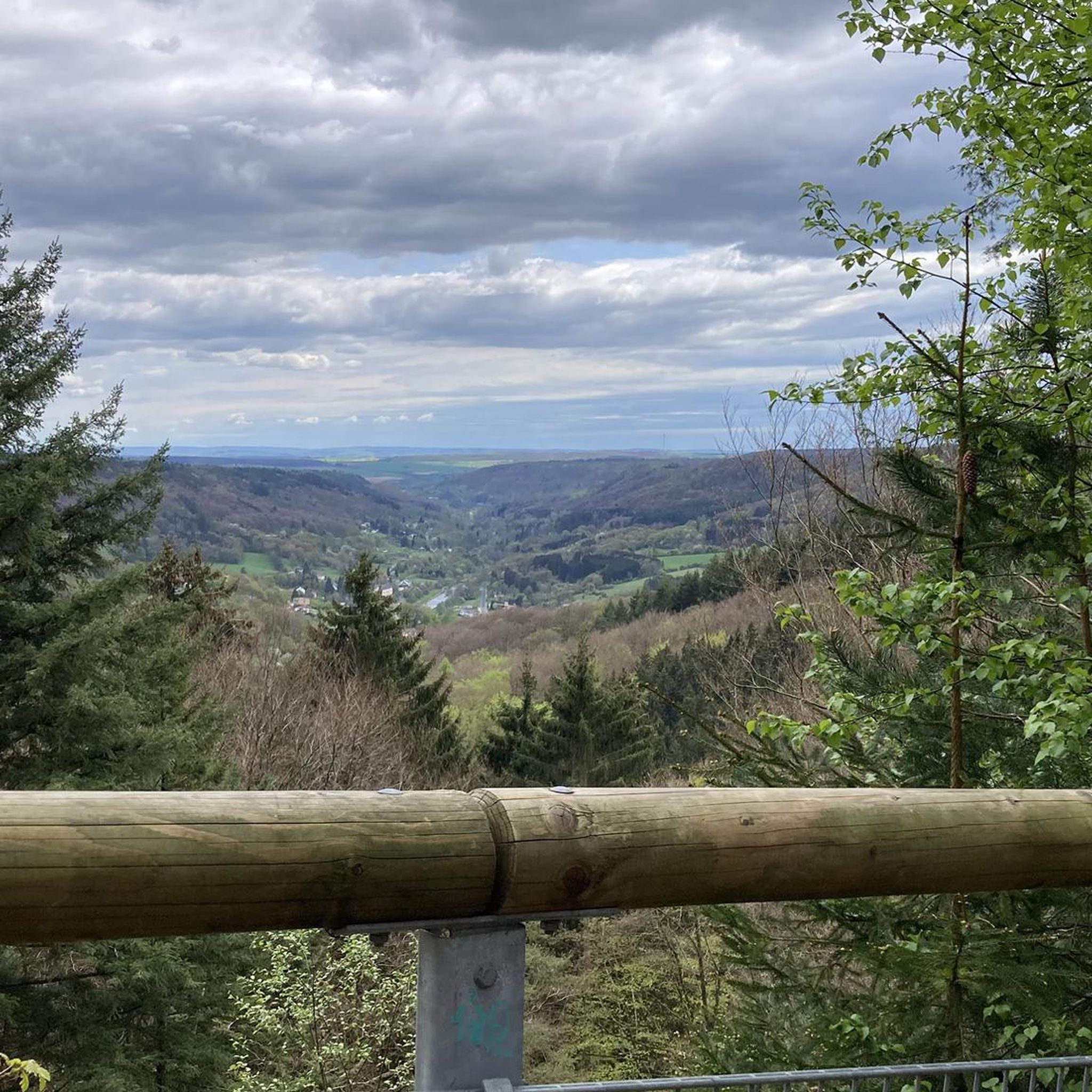
Perched at an altitude of about 730 meters, the Cap de Coste viewpoint overlooks the eastern end of the Boundoulaou cirque. It reveals a vast panorama of the Millau basin and its surrounding massifs. To the left, the easily recognizable Millau Viaduct spans the Tarn valley to connect the Larzac to the Causse Rouge. Further to the right stretches the latter: a large limestone plateau whose undulations dominate the valley. Then, the Puech d’Andan stands out with its wooded silhouette, cut in two by a clear central notch. Finally, further away, the Pouncho d’Agast, an emblematic relief of the Causse Noir, is easily recognized by its profile like a true limestone pyramid.
3
0
Perché at an altitude of approximately 730 meters, the Cap de Coste viewpoint overlooks the eastern end of the Boundoulaou cirque. It reveals a vast panorama of the Millau basin and its surrounding massifs. To the left, the easily recognizable Millau Viaduct spans the Tarn valley, connecting the Larzac to the Causse Rouge. Further to the right stretches the latter: a large limestone plateau whose undulations dominate the valley. Then, the Puech d’Andan stands out with its wooded silhouette, cut in two by a clear central notch. Finally, further away, the Pouncho d’Agast, an emblematic relief of the Causse Noir, is easily recognized by its profile like a true limestone pyramid.
3
0
From this switchback on the road to Labro, the Larzac plateau suddenly opens up to reveal the spectacular cirque of Saint-Geniez-de-Bertrand. This has been progressively formed by the erosion of the limestone series that make up the Larzac. The water, by infiltrating the fractures in the limestone, gradually dissolves the rock and circulates at depth before emerging at the foot of the slopes. This underground action, associated with runoff and valley erosion, causes a progressive retreat of the cliffs and slopes: this is the phenomenon of regressive erosion. Over time, the limestone reliefs recede towards the interior of the plateau and a vast indentation forms, giving birth to the cirque.
3
0
A small cultivated garden, a mini-greenhouse and two donkeys at liberty: a bucolic and unexpected scene by the greenway.
3
0
From this point at the foot of the structure, the regular succession of piers and guyed pylons can be particularly well distinguished. The deck, 2,460 m long, crosses the valley at a height of approximately 270 m above the Tarn. Pier P2, the tallest, culminates at 245 m, while the assembly formed by the pier and its pylon reaches 343 m: a height greater than that of the Eiffel Tower. This perspective also recalls the technical feat that the construction of the viaduct represented. The metal deck was assembled in sections from either side of the valley, then progressively launched across the void. The joining of the two parts was carried out on May 28, 2004, 268 m above the Tarn, before the official inauguration a few months later. An interesting detail can be discerned here: despite its exceptional dimensions, the structure appears remarkably light. This impression is not accidental. The viaduct was specifically designed to blend into the valley by limiting the visual impact of its structure, with a very slender deck and piers that branch out in a "Y" shape.
3
0
From the greenway, the Millau Viaduct is revealed from a particularly spectacular angle! One becomes aware of the extraordinary dimensions of the structure. Built between 2001 and 2004, the viaduct crosses the Tarn valley over 2,460 m and connects the Causse Rouge to the north with the Causse du Larzac to the south. Its metal deck, approximately 32 m wide, rests on seven concrete piers extended by seven cable-stayed pylons. At its highest point, the entire structure reaches 343 m above the ground; the deck is up to about 270 m above the Tarn. Designed by engineer Michel Virlogeux and British architect Sir Norman Foster, the viaduct combines a very slender metal structure with piers whose "Y" shape helps to visually lighten the whole. The deck was manufactured in metal elements and then gradually launched from both ends of the valley. The joining of the two parts was finally carried out on May 28, 2004, at 268 m above the Tarn.
3
0

Absolutely worth seeing - view it from below and definitely join the architecture tour.
0
0
Behind its perfectly preserved ramparts lies an astonishing Templar heritage. Founded in the 12th century, the commandery of Saint-Eulalie-de-Cernon was a strategic center of the Order of the Temple on the Larzac. A remarkably preserved village!
3
0
Frequently Asked Questions
How many no-traffic touring cycling routes are available around Saint-Rome-De-Cernon?
There are over 40 dedicated no-traffic touring cycling routes around Saint-Rome-De-Cernon. These routes offer a peaceful way to explore the diverse landscapes of the Cernon valley and the surrounding plateaus.
Are there easy, no-traffic touring cycling routes suitable for beginners or families?
Yes, there are easy no-traffic touring cycling routes available. For instance, the Le Phare du Larzac – gravel loop in the Grands Causses Regional Natural Park offers a gentle introduction to the region's beauty, perfect for those seeking a less strenuous ride.
What kind of challenges can advanced touring cyclists expect on the no-traffic routes in this region?
Advanced touring cyclists will find plenty of challenging no-traffic routes, with 25 routes rated as difficult. These often feature significant elevation gains, such as the Saint-Jean-d'Alcapiès – At the foot of Larzac loop from Saint-Rome-de-Tarn, which includes nearly 1000 meters of ascent, providing a rewarding experience through varied terrain.
Are there any circular no-traffic touring cycling routes around Saint-Rome-De-Cernon?
Yes, many of the no-traffic touring routes are circular, allowing you to start and end your journey in the same location. Examples include the Tour du Viala-du-Pas-de-Jaux – Sainte-Eulalie-de-Cernon loop from Lauras, which offers a comprehensive exploration of the area's plateaus and valleys.
What scenic viewpoints or natural attractions can I discover on these no-traffic touring routes?
The region is rich in scenic beauty. You can cycle to breathtaking spots like the Pas Destrech Cross, offering a dizzying panorama over Millau, or the Cap de Coste Viewpoint. The routes also pass through the diverse landscapes of the Grands Causses Natural Park, with its limestone plateaus and wooded hills.
Are there historical sites or cultural landmarks accessible via no-traffic touring cycling routes?
Absolutely. The area around Saint-Rome-De-Cernon is dotted with historical gems. You can explore medieval castles like Château de Mélac, or discover ancient dolmens. The old village of Saint-Rome-De-Cernon itself, with its stone houses, offers charming stops along your ride. While not directly on a route, the iconic Millau Viaduct is a significant nearby landmark, with viewpoints like the Millau Viaduct Viewpoint accessible by bike.
What is the best season for no-traffic touring cycling in Saint-Rome-De-Cernon?
The spring and autumn months generally offer the most pleasant conditions for touring cycling in Saint-Rome-De-Cernon. The weather is typically mild, and the natural landscapes are vibrant with spring blooms or rich autumn colors. Summer can be warm, but the Cernon valley's 'oasis of greenery' provides some respite.
Where can I find parking for accessing these no-traffic touring cycling routes?
Parking is generally available in and around Saint-Rome-De-Cernon, particularly near the village center or designated starting points for popular routes. Many routes also begin from nearby towns like Saint-Georges-de-Luzençon, Lauras, or Tournemire - Roquefort, which offer parking facilities to access the trails.
What do other touring cyclists enjoy most about touring cycling in Saint-Rome-De-Cernon?
The area is highly rated by the komoot community, with an average score of 4.39 stars. Reviewers often praise the tranquility of the no-traffic routes, the stunning panoramic views from the plateaus, and the rich historical and natural features encountered along the way. The diverse landscapes, from the Cernon river valley to the Grands Causses, are frequently highlighted.
Are there any routes that offer views of the Millau Viaduct?
Yes, several routes provide opportunities to see the magnificent Millau Viaduct. For example, the Cap de Coste Viewpoint – Millau Viaduct loop from Saint-Georges-de-Luzençon is a challenging route that brings you to viewpoints offering spectacular vistas of this architectural marvel and the Tarn valley.
Can I find less crowded no-traffic touring cycling routes in the area?
Given the rural nature of the Aveyron department and the focus on no-traffic routes, many trails offer a peaceful and less crowded cycling experience. Exploring routes that venture deeper into the Grands Causses Natural Park, away from major towns, will typically provide more solitude and a serene environment.
Most popular routes around Saint-Rome-De-Cernon
Most popular attractions around Saint-Rome-De-Cernon

Get inspired with the komoot mobile app


Explore more
Browse the best Cycling routes in other regions.
