The best traffic-free bike rides around Josa I Tuixén
73
riders
4
rides
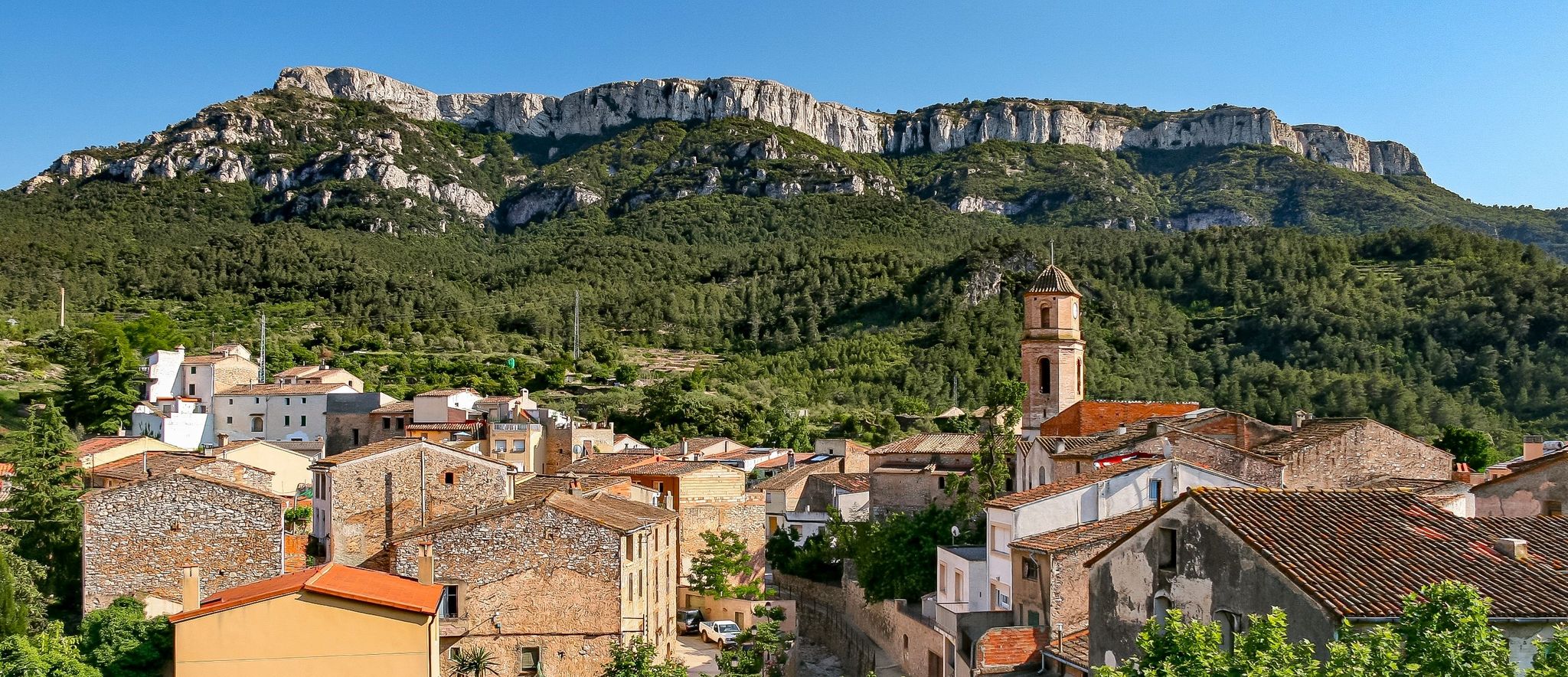
Gravel biking around Josa I Tuixén offers routes through the tranquil environment of the Catalan Pyrenees, nestled within the largely undiscovered valleys. The region is situated on the southern slope of the Cadí Moixeró Natural Park, bordered by peaks such as Pedraforca and the Sierra del Cadí. Diverse terrain includes rugged landscapes traversed by the Josa and Mola rivers, which converge to form the Vansa river. This mountainous setting provides a rich tapestry of geological features for gravel cyclists.
Best…
Last updated: May 21, 2026
5.0
(2)
34
riders
50.6km
04:23
1,400m
1,400m
Hard gravel ride. Very good fitness required. Mostly paved surfaces. Suitable for all skill levels.
11
riders
Hard gravel ride. Very good fitness required. Mostly paved surfaces. Suitable for all skill levels.

Sign up for free
3
riders
32.2km
02:39
890m
890m
Hard gravel ride. Very good fitness required. Mostly paved surfaces. Suitable for all skill levels.
6
riders
101km
07:55
3,080m
3,080m
Hard gravel ride. Very good fitness required. Mostly paved surfaces. Suitable for all skill levels.
5
riders
26.3km
02:03
650m
650m
Hard gravel ride. Very good fitness required. Mostly paved surfaces. Suitable for all skill levels.
Our route recommendations are based on thousands of hikes, rides, and runs completed by other people on komoot.
Start today with a free account
Your next adventure awaits.
Login or Signup

Other adventures around Josa I Tuixén

Tips from the Community

Stone town perched above the Cadí valley, with narrow streets, slate roofs and impressive views of Pedraforca. It maintains an authentic charm, far from mass tourism, and invites you to stroll around without rushing. By mountain bike, access from Gósol or Tuixent is demanding but spectacular, with tracks that wind through forests and ravines. Tip: stop at the viewpoint before entering the town — the views of Cadí are postcard-perfect — and secure your brakes well for the descent, which is fast and technical.
0
0
Aransa Station Parking (Lles de Cerdanya). The perfect starting point for mountain biking and hiking routes through the Cadí-Moixeró Natural Park. Located at approximately 1,550 meters, the parking area offers ample space, nearby water fountains, and open views of the valley. In summer, it's quiet and ideal for starting climbs towards the Pradell Refuge or the Estanys de la Pera lakes. For mountain biking, the start is direct and somewhat demanding: a wide track with a continuous incline. Tip: warm up well before leaving the pavement, pace yourself, and conserve energy, as the initial climbs can be punishing if you start too fast.
0
0
Located at an altitude of 1,960 meters, this refuge is a key point for cyclists and hikers heading towards the Tossa Plana de Lles or the Nordic ski slopes. The refuge combines a mountain atmosphere with comfortable amenities: a bar, a dining room, and a terrace with open views of the Cadí mountain range. It's a good place to stop, have a hot meal, or adjust your bike before continuing the climb. For mountain biking, the track from Lles has an uneven surface and rocky sections; tires with good grip are recommended, as is maintaining a constant cadence, especially on the final bends where the gradient is noticeable.
0
0
Font de Viliella (Lles de Cerdanya). A small hidden gem in the heart of the village, under a stone porch with a tiled roof, so typical of the Cerdanya region. Fresh water flows between ancient walls, with a half-erased inscription that hints at its history. Ideal for filling your water bottle and taking a breath of fresh air before continuing your ride up the slopes of the Pyrenees. If you're on a mountain bike, be careful on the uphill section from Prullans: it's short but steep and has loose stones; it's best to take it easy and at a leisurely pace, as the spring deserves to be enjoyed when you arrive with plenty of breath.
0
0
Aransa is a small town in the municipality of Lles de Cerdanya, located at an altitude of about 1,550 meters at the foot of the Cadí massif. Known for its natural environment and Nordic ski slopes, the town maintains its mountain architecture with stone houses and open views over the valley. It is a point of passage for hiking, mountain biking and e-bike routes, with paths that connect to the Fornell refuge, the Pera lakes or the Trava pass. The accesses have unevenness and sections of forest track, but are cycleable with adequate preparation. Good place to take a break, fill up with water and enjoy the Pyrenean landscape before continuing the route.
0
0
Sant Llorenç de Morunys is a town in the Solsonès region located at 925 metres above sea level, surrounded by the Port del Comte, Busa and Verd mountain ranges. It has a well-preserved medieval centre, with walls, cobbled streets and the 11th-century Romanesque church of Sant Llorenç, as the centre of the complex. It is a key point of passage and stop for mountain routes, cycle tours and crossings through the Pre-Pyrenees. The entrance and exit of the town can be done via roads with demanding slopes or forest tracks depending on the itinerary, but it is always worth stopping there to recover energy, fill up water bottles or take a quality break. A good place to charge batteries, both physical and e-bike.
1
0
Prat de Bacies is a grassy plateau located in the Port del Comte massif, between the municipalities of Odèn and La Coma i la Pedra, in Solsonès. With altitudes exceeding 2,000 meters, it is an open space, surrounded by black pine forests and reliefs of glacial origin such as sinkholes and depressions. The landscape is open, silent and with a feeling of spaciousness that is unusual in the Pre-Pyrenees. Access is via forest tracks that may have stony or eroded sections, especially during the rainy season. It is a good point to stop, observe and rest in an authentic mountain environment, away from crowded routes. If you do it with an e-bike, it is advisable to bring a full battery, as there are no services or assistance points in the area.
0
0

Stopping at the Hotel Fonts del Cardener for a coffee, a snack, or a chat is always a pleasure. The surroundings of the Vall de Lord are well worth the time.
0
0
Frequently Asked Questions
What kind of terrain can I expect on no-traffic gravel bike trails in Josa I Tuixén?
The no-traffic gravel bike trails in Josa I Tuixén primarily feature unpaved roads and tracks, offering a mix of surfaces ideal for gravel bikes. You'll traverse the pristine and serene landscapes of the Catalan Pyrenees, often along the shady sides of mountains, avoiding asphalt. The region's historical isolation has preserved its natural surroundings, ensuring a true wilderness experience.
Are there any circular no-traffic gravel routes available in Josa I Tuixén?
Yes, several of the no-traffic gravel routes in Josa I Tuixén are designed as loops. For example, you can explore the Coll de Jou Churro Shop – Fountain at Coll de Jou loop from Coll de Jou, which offers a challenging ride through the area. Another option is the Fountain at Coll de Jou – Coll de Jou Churro Shop loop from la Coma i la Pedra, providing a similar circular experience.
What is the typical difficulty level for no-traffic gravel biking in Josa I Tuixén?
The no-traffic gravel bike trails in Josa I Tuixén are generally considered difficult. They involve significant elevation gains and cover substantial distances, making them suitable for experienced gravel cyclists looking for a challenging adventure in the mountains. Prepare for demanding climbs and descents.
Can I find any long-distance no-traffic gravel routes in the region?
Absolutely. For those seeking a longer adventure, the Coll de Port – Coll de Jou Churro Shop loop from Sant Llorenç de Morunys is an excellent choice. This route spans over 100 kilometers with more than 3000 meters of elevation gain, offering an epic no-traffic gravel biking experience through the stunning Pyrenean landscape.
Are there any scenic viewpoints or natural features to look out for on these trails?
Josa I Tuixén is rich in natural beauty. The trails often provide stunning views of the Cadí Moixeró Natural Park, bordered by iconic peaks like Pedraforca and the Sierra del Cadí. You'll also encounter the Josa and Mola rivers, which converge to form the Vansa river. For specific scenic points, consider the View of Josa de Cadí – Cornellana loop from Tuixent, which offers expansive vistas.
What kind of landmarks or attractions can I explore near the gravel routes?
Beyond the trails, the region offers cultural and natural attractions. You can visit Romanesque churches in Tuixent and Josa del Cadí, or the interesting Museum of the Trementinaires. For natural landmarks, explore nearby gorges like Canal of Canalda or Canal Baridana. The area is also home to several mountain passes, including Coll de Port and Coll de Josa (1620 m), which offer breathtaking views.
Is Josa I Tuixén suitable for family-friendly gravel biking?
Given that all listed no-traffic gravel routes in Josa I Tuixén are rated as difficult with significant elevation changes and distances, they are generally not recommended for young children or families seeking easy, leisurely rides. These trails are better suited for experienced adult riders.
What is the best time of year for gravel biking in Josa I Tuixén?
The best time for gravel biking in Josa I Tuixén is typically during the spring, summer, and early autumn months. During these periods, the weather is generally more stable, and the trails are free from snow and ice, which can affect higher elevations in winter. Always check local weather forecasts before heading out.
Are there any options for parking near the no-traffic gravel trailheads?
Yes, you can typically find parking in or near the villages that serve as starting points for these routes. For example, routes like the Fountain at Coll de Jou – Coll de Jou Churro Shop loop can be accessed from la Coma i la Pedra, and the View of Josa de Cadí – Cornellana loop starts from Tuixent, where parking facilities are usually available.
What kind of elevation gain should I expect on these no-traffic gravel routes?
The no-traffic gravel routes in Josa I Tuixén feature significant elevation gains, reflecting the mountainous terrain of the Catalan Pyrenees. You can expect climbs ranging from approximately 650 meters to over 3000 meters on a single route, such as the challenging Coll de Port – Coll de Jou Churro Shop loop.
Are there any less demanding no-traffic gravel routes for beginners?
The current selection of no-traffic gravel routes in Josa I Tuixén are all rated as difficult. While they offer incredible scenery and a true wilderness experience, they are best suited for riders with a good level of fitness and gravel biking experience. Beginners might find the elevation gains and distances quite challenging.
Most popular routes around Josa I Tuixén
Most popular attractions around Josa I Tuixén

Get inspired with the komoot mobile app


Explore more
Browse the best Gravel rides in other regions.
