The best traffic-free bike rides around Villanueva Del Río Y Minas
4.5
(16)
215
riders
11
rides
No traffic touring cycling routes around Villanueva Del Río y Minas traverse a varied landscape, transitioning from the foothills of Sierra Morena to the fertile plains of the Vega del Guadalquivir. The region is characterized by olive groves, dehesas, and holm oaks in the north, giving way to irrigated plains in the south. The Rivera del Huéznar river diagonally crosses the territory, creating riverine environments and features like the Huéznar Reservoir and Lago Azul. This diverse terrain offers a range…
Last updated: July 2, 2026
5.0
(1)
13
riders
Moderate bike ride. Good fitness required. Mostly paved surfaces. Suitable for all skill levels.
3.0
(1)
11
riders
69.7km
06:01
670m
670m
Hard bike ride. Very good fitness required. Mostly paved surfaces. Suitable for all skill levels.

Sign up for free
4.6
(5)
11
riders
34.8km
02:34
250m
250m
Moderate bike ride. Good fitness required. Mostly paved surfaces. Suitable for all skill levels.
5
riders
86.4km
07:07
890m
890m
Hard bike ride. Very good fitness required. Mostly paved surfaces. Suitable for all skill levels.
5.0
(1)
6
riders
69.1km
04:32
780m
780m
Hard bike ride. Very good fitness required. Mostly paved surfaces. Suitable for all skill levels.
Get access to more routes and recommendations from other explorers.
Sign up for free
Already have an account?
Our route recommendations are based on thousands of hikes, rides, and runs completed by other people on komoot.
Start today with a free account
Your next adventure awaits.
Login or Signup




Tips from the Community

The hermitage of the Divina Pastora is a contemporary building in Andalusian style, crowned by an artistic bell tower. Construction began in 1956 according to plans by the Sevillian architect Aurelio Gómez Millán. Its popular brick and tile festivals stand out, in which the devotees collaborated by providing these materials for their construction. The works were completed on September 30, 1960. Inside, it contains an altarpiece with a painting of the Divine Shepherdess by the Sevillian painter Juan Antonio Rodríguez. On the façade there is a ceramic altarpiece of 1.20 x 2 m, a work from the mid-twentieth century by Alfonso Chaves Tejada, made by Ramos Rejano in Seville.
6
0
The Ermita de Nuestra Señora de la Soledad in Cantillana is a beautiful chapel dedicated to the Virgen de la Soledad, the patron saint of the village. The chapel is in Baroque style and consists of a single, spacious nave closed by a beautiful plaster cross vault. The front of the chapel is adintel and is flanked by pilasters that crown a pediment with a pinnacle. The facade is decorated with azulejería. Inside the chapel is a neoclassical altarpiece in which the Virgen de la Soledad is venerated, together with portal altarpieces of Santa Rita and San Sebastián, the patron saint of the village. The chapel is approximately 20 metres wide and 35 metres long, and is well preserved. The church has a plaque with a text confirming the canonical patronage of the Virgen de la Soledad over Cantillana. This plaque is decorated with Baroque style and was made by local artist Luís Manuel López Hernández in 2005.
6
0
Cantillana is a charming village in the province of Seville, in the heart of Andalusia, Spain. It is located on the banks of the Guadalquivir River, giving it a picturesque location with rich vegetation and beautiful views. Cantillana has a rich history dating back to Roman times and offers several historical sites, such as the Piedra del Moro and the remains of the old city walls. The Torre del Reloj is an impressive building that forms part of the historical heritage of the village. The village is also known for its religious monuments, such as the Iglesia del Dulce Nombre de Jesús y Santa Misericordia and the Ermita de San Bartolomé. These churches and chapels are beautifully preserved and offer a glimpse into the religious and cultural traditions of the region.
6
0
The Ermita de San Bartolomé in Cantillana is a historic chapel originally built in the 15th century. The chapel is located in the Plaza de Llano, a central square in Cantillana. It has a basilica plan with three naves, separated by brick columns supporting pointed arches. The roof is wooden, with a central coffered ceiling and hanging on the sides. The exterior has been intensely transformed, highlighting the main entrance of the eighteenth century. The chapel has a beautiful main door from the 18th century and contains several altarpieces and statues, including the image of Jesus of Nazareth and Saint Bartholomew. Currently the hermitage of San Bartolomé houses the images of Our Lady of the Assumption, Saint Bartholomew, Our Father Jesus and Our Lady of Consolation, from the Baroque period, and the painting of Saint Catherine of Alexandria, from the eighteenth century, with some interest in the wall paintings with themes of angels with inscriptions between rock formations, datable to very late dates in the eighteenth century
6
0
Here too there is a stork's nest on the tower.
7
0
The Iglesia del Dulce Nombre de Jesús y Santa Misericordia in Cantillana is a beautiful historic building originally built in the 16th century. This church has a rich history and was once used as a hospital, probably run by a brotherhood. Originally the church had one nave, but later another was added on the side of the epistle. The facade of the church is made of exposed brick and is topped with an artistic tower with a tiled facade. Inside the church, the ceilings are made of wooden beams, with a gable roof in the main naves and simple chapel floors in the side aisles. The entrance to the church is in a typical Mudéjar style, with an oculus formed by bricks surrounded by blue, white and honey-coloured tiles. The tower has a semicircular arch with alfiz and is topped with a mixtilinear pediment and a cast iron weathercock. The church houses an 18th century altarpiece, on which there is an image of the Holy Jesus of the School of Seville, together with a painting of the Virgin of Mercy. Another special feature of the church is the simpecado of the Virgin of Belén, a precious plate with an embroidery of silver on red velvet. The church is also the seat of the brotherhood of San Benito Abad of Cantillana, and from the last weekend of August a pilgrimage to the hermitage of the Saint in Castilblanco de los Arroyos starts from this church.
7
0
Note that on top of the tower you can also find a stork's nest. The valley of the Río Guadalquivir is also popular with storks.
6
0
The Torre del Reloj in Cantillana is a historic tower originally built in the 12th century during the Almohad period. This tower was part of the city wall that surrounded Cantillana, and was an important defensive structure. The tower is made of tapial (a type of mortar) on a foundation of stones that may have come from an older Roman construction. In the 18th century, the tower was given a sundial on the south wall, which gave it its name "Torre del Reloj" (Tower of the Clock). Later, in the 19th century, a clock tower was added. The tower also has a coat of arms on the front with an eagle and a castle, the arms of the Counts of Cantillana, the Vicentelos de Leca
6
0
Frequently Asked Questions
How many no-traffic touring cycling routes are available in Villanueva Del Río Y Minas?
There are 13 dedicated no-traffic touring cycling routes around Villanueva Del Río Y Minas, offering a variety of distances and difficulty levels to explore the region's diverse landscapes.
Are there any easy, car-free touring cycling routes suitable for beginners or families?
Yes, there is one easy, car-free touring cycling route. The Cantillana – Ermita de San Bartolomé loop from Cantillana is a great option, covering approximately 20 km with minimal elevation gain, making it ideal for a relaxed ride.
What kind of attractions can I see along the no-traffic touring cycling routes?
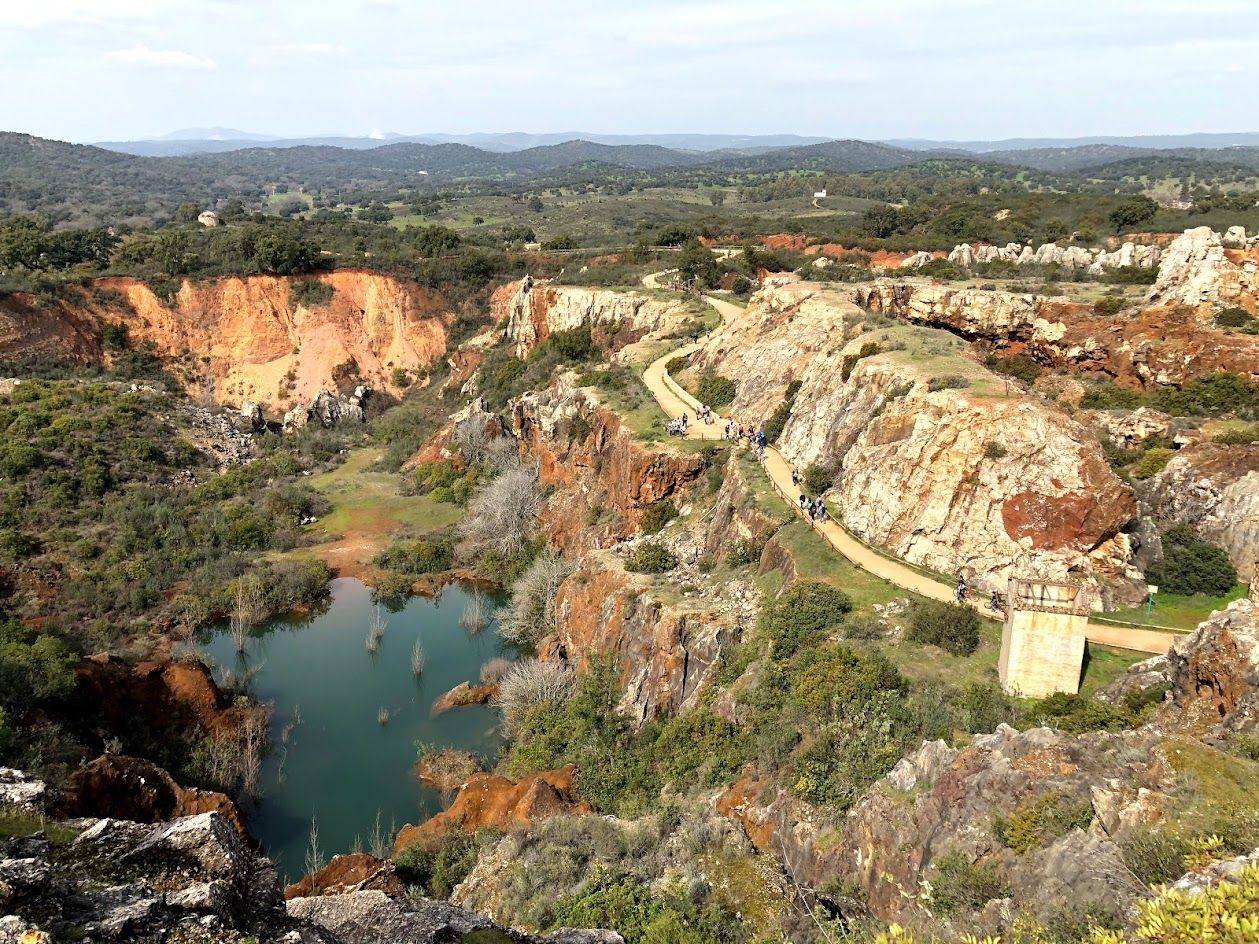
The routes often pass by significant natural and historical landmarks. You can explore the ancient Archaeological Site of Mulva-Munigua, enjoy views of the Huéznar Reservoir, or discover the unique Lago Azul, a lake formed from an old coal mine. The Villanueva del Río y Minas Bridge is another notable sight.
Are there any circular no-traffic cycling routes?
Yes, many of the no-traffic routes are circular. For example, the moderate Munigua, South necropolis – Lago Azul loop from Villanueva del Río y Minas offers a scenic round trip of about 26 km, combining historical sites with natural beauty.
What is the best time of year for no-traffic touring cycling in Villanueva Del Río Y Minas?
The spring and autumn seasons are ideal for touring cycling in Villanueva Del Río Y Minas. The temperatures are milder and more comfortable for outdoor activities, allowing you to fully enjoy the landscapes without the intense heat of summer.
Can I access these no-traffic cycling routes using public transport?
Villanueva del Río y Minas has public transport connections, including a train station, which can facilitate access to the area. For specific route starting points, it's advisable to check local bus or train schedules to see how close they get you to your desired cycling path.
Are there any longer, more challenging no-traffic touring routes?
Yes, for experienced cyclists seeking a challenge, there are difficult no-traffic routes. The Old locomotive – Huéznar Reservoir loop from Los Rosales is a demanding option, covering over 71 km with significant elevation changes, offering a rewarding long-distance ride.
What do other touring cyclists enjoy most about the no-traffic routes here?
The no-traffic touring cycling routes in Villanueva Del Río Y Minas are highly rated by the komoot community, with an average score of 4.5 stars. Reviewers often praise the tranquility of the paths, the blend of natural beauty with historical sites like the Roman ruins, and the well-maintained surfaces that make for an enjoyable ride away from cars.
Are there opportunities for wildlife spotting along the car-free cycling paths?
Yes, the region's diverse ecosystems, particularly in areas bordering the Sierra Morena foothills and the Rivera del Huéznar, provide opportunities for wildlife spotting. Keep an eye out for local bird species and other fauna, especially in the more secluded sections of the routes.
Where can I find parking for the no-traffic touring cycling routes?
Parking is generally available in and around Villanueva del Río y Minas, as well as in nearby towns like Cantillana or Los Rosales, which serve as common starting points for many routes. Look for designated parking areas within these towns to begin your car-free cycling adventure.
Are there any routes that combine cycling with cultural exploration?
Absolutely. The region is rich in history. A route like the Munigua, South necropolis – Lago Azul loop from Villanueva del Río y Minas allows you to cycle to the Roman Archaeological Site of Munigua, offering a unique blend of physical activity and cultural immersion.
What kind of landscapes will I encounter on these routes?
You'll experience a varied landscape, transitioning from the piedmont mountains of Sierra Morena with its olive groves and holm oaks to the fertile plains of the Vega del Guadalquivir. The Rivera del Huéznar river also diagonally traverses the territory, creating scenic contrasts and riverine environments.
Most popular routes around Villanueva Del Río Y Minas
Most popular attractions around Villanueva Del Río Y Minas

Get inspired with the komoot mobile app


Explore more
Browse the best Cycling routes in other regions.
