The best traffic-free bike rides around Alfarnatejo
4.7
(16)
474
riders
32
rides
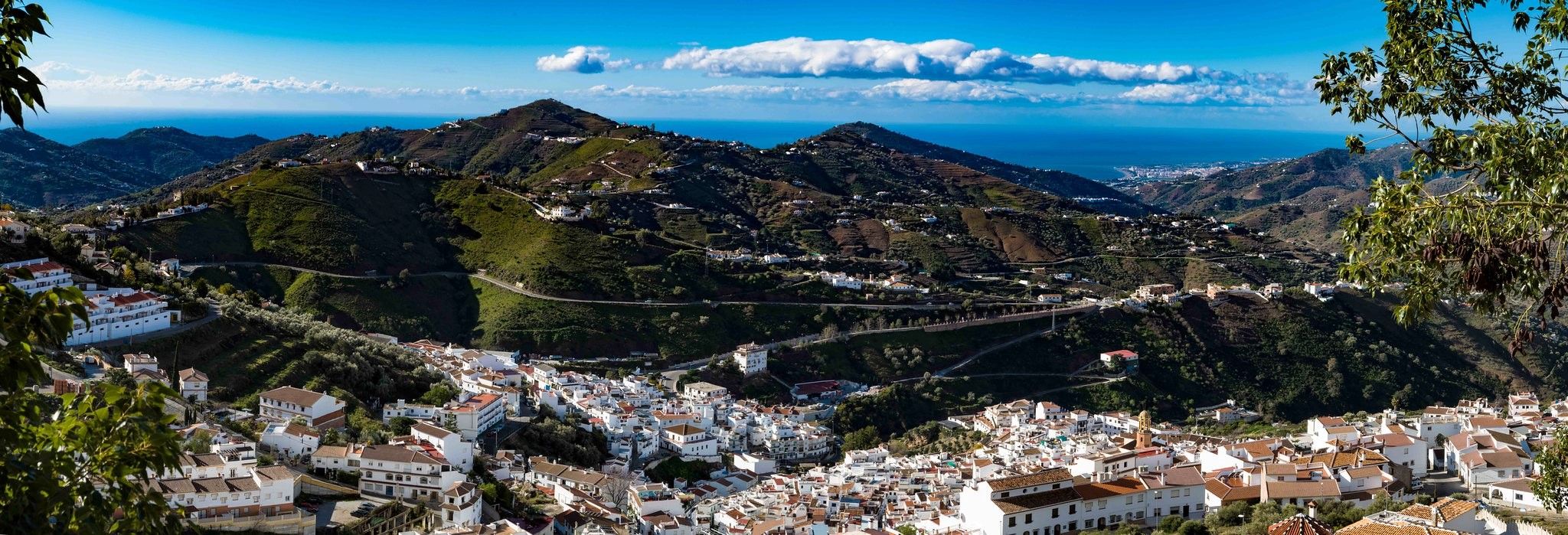
No traffic touring cycling routes around Alfarnatejo traverse a rugged and mountainous landscape, often referred to as "the Pyrenees of the South." The region features imposing peaks such as Sierra de Camarolos and Pico Chamizo, with altitudes exceeding 1,600 meters, providing significant elevation changes for cyclists. Gorges, ravines, and the winding Sabar River contribute to the area's natural beauty, alongside extensive olive groves. This terrain offers both challenging climbs and scenic paths through varied natural features.
Best no traffic touring cycling routes around Alfarnatejo
- The most popular no traffic touring cycling route is Puerto de Sábar – View of Vélez-Málaga loop from Riogordo, a 52.0 miles (83.7 km) trail that takes 5 hours 27 minutes to complete. This difficult route offers expansive mountain and sea views.
- Another top favourite among local touring cyclists is Monument to Peace – Torre del Mar Beach loop from Moya, a difficult 58.6 miles (94.4 km) path. This route features significant elevation gain through varied terrain.
- Local touring cyclists also love the Puerto de Sábar – Puerto del Sol (1085 m) loop from Riogordo, a 28.4 miles (45.7 km) trail leading through mountainous terrain with views of the Axarquía valley, often completed in about 3 hours 15 minutes.
- Touring cycling around Alfarnatejo is defined by dramatic mountainous terrain, deep gorges, and extensive olive groves. The network offers options for different ability levels, though many routes feature substantial climbs.
- The routes in Alfarnatejo are highly rated by the komoot community with an average score of 5.0 stars from over 8 reviews. More than 400 touring cyclists have used komoot to explore Alfarnatejo's varied terrain.
Last updated: August 25, 2026
5.0
(3)
58
riders
84.3km
05:29
1,070m
1,070m
Hard bike ride. Very good fitness required. Mostly paved surfaces. Suitable for all skill levels.
5.0
(2)
20
riders
46.3km
03:17
920m
920m
Hard bike ride. Very good fitness required. Mostly paved surfaces. Suitable for all skill levels.

Sign up for free
20
riders
Hard bike ride. Very good fitness required. Mostly paved surfaces. Suitable for all skill levels.
12
riders
13.7km
01:29
580m
580m
Hard bike ride. Very good fitness required. Mostly paved surfaces. Suitable for all skill levels.
10
riders
74.9km
05:11
1,380m
1,380m
Hard bike ride. Very good fitness required. Mostly paved surfaces. Suitable for all skill levels.
Get access to more routes and recommendations from other explorers.
Sign up for free
Already have an account?
Our route recommendations are based on thousands of hikes, rides, and runs completed by other people on komoot.
Start today with a free account
Your next adventure awaits.
Login or Signup
Other adventures around Alfarnatejo

Tips from the Community

Sounds like a very interesting and worthwhile initiative! Thanks for the information! https://circoescuelafantasia.es
0
0

The Puerto de los Alazores is a mountain pass in the Sierra de San Jorge, in the province of Granada, close to the border with Málaga. This pass is located in the Cordillera Penibética and is approximately 1040 metres high. This pass was an important route in the past, especially during the journeys between Granada and Málaga. According to some sources, Ferdinand II of Aragon crossed here in 1487 to conquer Vélez-Málaga. In the area around the pass there are different types of trees, such as the pino carrasco, elms and pino resinero. It is also the place where the Guadalhorce River rises.
7
0
In Alfarnate, La Venta de Alfarnate dates back to the 13th century, and is considered the oldest in Andalusia. Due to the numerous stories and legends surrounding it, it is considered a true popular monument, and it is not for nothing that it now houses the Museum of Andalusian Banditry. All kinds of people and all social classes have passed through here: muleteers, black marketeers, bandits, even King Alfonso XIII and Saint Joseph of Calasanz, not to mention artists, painters, and more. La Venta de Alfarnate remains faithful to its principles, its mystery, and its romantic magic. Its cuisine is fundamentally based on Andalusian mountain and country cuisine, with notable dishes including Alfarnate crumbs, eggs a lo bestia (roasted eggs), garlic goat, fried lamb blood sausage with tomatoes, and scrambled eggs with anise porridge.
7
0
Circo Escuela is a charming family business founded by Gregorio Sánchez, a retired teacher who, during his youth, combined his teaching work with the management of the Zanquilandia Parade and Show Group. With a deep love for teaching and a passion for the circus world, Gregorio decided to merge these two great passions into a unique project, created from scratch with all the dedication and affection possible. Circo Escuela is the result of her efforts to offer children a space where learning and dreaming become the same experience.
8
0

The 9.6-meter-high old lighthouse, built in 1929, and the new, approximately 24.7-meter-high lighthouse, built in 1974, are still in operation. It is located directly on the promenade and is visible from afar. Its automatic signal has a range of approximately 13 nautical miles. Inside, 106 steps of an iron staircase lead up to the top. The small, 9-meter-high lighthouse, which stands next to the new "large" one, was built in 1969 but did not meet modern requirements.
4
0

The Playa de Torre del Mar is a beautiful, spacious beach, with a wide promenade and many chiringuitos where you can take a break and enjoy the sea view. The Paseo Marítimo de Torre del Mar is very well developed, relatively wide and ideal for cyclists and pedestrians. There is a designated cycle path that stretches along the coast, so you can cycle along the sea in a relaxed manner.
7
0
The name “Puente Don Manuel” refers to the bridge that spans the Río de Alcaucín. The town of Puente Don Manuel is a small hamlet in the municipality of Alcaucín. If you want to get there, you have to cross the bridge and go through the town, then turn left at the church towards the mountains. The settlement is about forty kilometres from Málaga and fourteen kilometres from the coast.
2
0
The Ermita de Jesús en el Calvario is a historic chapel in the area of Puente de Don Manuel, a district of the municipality of Alcaucín. The chapel was built in the mid-17th century and served as a religious retreat for the local population. It is an example of the religious architecture of the period and reflects the deep spiritual connection of the municipality. Puente de Don Manuel itself is known for its strategic location as a crossroads between the coast and the surrounding villages such as Periana, Alcaucín and Zafarraya. For visitors interested in history and culture, the area around Puente de Don Manuel and Alcaucín offers numerous opportunities for exploring by bike.
2
0
Frequently Asked Questions
How many no-traffic touring cycling routes are available around Alfarnatejo?
There are 26 dedicated no-traffic touring cycling routes around Alfarnatejo. These routes offer a variety of experiences, from challenging climbs to scenic loops through the Axarquía region.
What is the typical difficulty level for touring cycling routes in Alfarnatejo?
The routes around Alfarnatejo are generally quite challenging, reflecting the region's mountainous terrain. Out of the 26 available routes, 21 are classified as difficult, with significant elevation gains. There are 5 moderate routes, but no easy options, so a good level of fitness is recommended.
Are there any circular no-traffic touring cycling routes in Alfarnatejo?
Yes, many of the no-traffic touring cycling routes around Alfarnatejo are circular. For example, you can explore the Puerto de Sábar – View of Vélez-Málaga loop from Riogordo or the challenging Puerto de Sábar – Puerto del Sol (1085 m) loop from Alfarnatejo, both offering rewarding circular journeys.
What natural features and landmarks can I expect to see along the routes?
The routes offer stunning views of the Sierra de Camarolos, Gallo-Vilo, and Pico Chamizo. You'll encounter dramatic gorges like the Tajo de Gomer, and the Sabar River winds through the landscape. Notable viewpoints include View of the Gomer and Doña Ana cliffs and Mirador de la Corona de la Axarquía. You might also pass by the historic Hundred‑Spout Fountain.
What is the best time of year to go touring cycling in Alfarnatejo?
Alfarnatejo is often referred to as 'the Pyrenees of the South,' suggesting a climate suitable for cycling outside of the hottest summer months. Spring and autumn generally offer pleasant temperatures for tackling the region's challenging climbs and enjoying the scenic views without extreme heat.
Are there any family-friendly no-traffic cycling routes in the area?
Given the mountainous terrain and the classification of most routes as difficult, the no-traffic touring cycling routes directly around Alfarnatejo are generally not suitable for young children or beginners. They require a good level of fitness and cycling experience.
Where can I find parking when starting a touring cycling route in Alfarnatejo?
Alfarnatejo is a small village, and parking is typically available within the village itself. For routes starting from nearby towns like Riogordo, you can usually find parking in the town centers. It's advisable to check local parking regulations upon arrival.
Are there any cafes or places to stop for refreshments along the routes?
While the routes themselves are designed to be traffic-free, they often connect or pass through small villages and towns in the Axarquía region. These villages, including Alfarnatejo, will have local cafes and restaurants where you can stop for refreshments. It's always a good idea to carry sufficient water and snacks, especially on longer, more remote sections.
What do other touring cyclists enjoy most about cycling in Alfarnatejo?
The komoot community rates the touring cycling experience in Alfarnatejo highly, with an average score of 5.0 stars. Reviewers often praise the dramatic mountainous landscapes, the rewarding climbs with stunning panoramic views, and the quiet, traffic-free nature of the routes, which allows for an immersive outdoor experience.
Are there any routes that offer views of the sea?
Yes, some of the more extensive routes, particularly those with significant elevation, can offer glimpses of the Mediterranean Sea in the distance. The 'Puerto de Sabar and Axarquía Villages Loop' mentioned in regional research is known for providing impressive mountain and sea views, showcasing the diverse scenery of the Axarquía region.
Can I access these routes using public transport?
Public transport options to Alfarnatejo and surrounding villages are limited. While there might be local bus services, they may not always be convenient for cyclists with bikes. Driving to a starting point and parking is generally the most practical option for accessing these touring cycling routes.
Most popular routes around Alfarnatejo
Most popular attractions around Alfarnatejo

Get inspired with the komoot mobile app


Explore more
Browse the best Cycling routes in other regions.
