The best family-friendly hikes and walks around Bishops Itchington
4.6
(472)
3,840
hikers
13
hikes
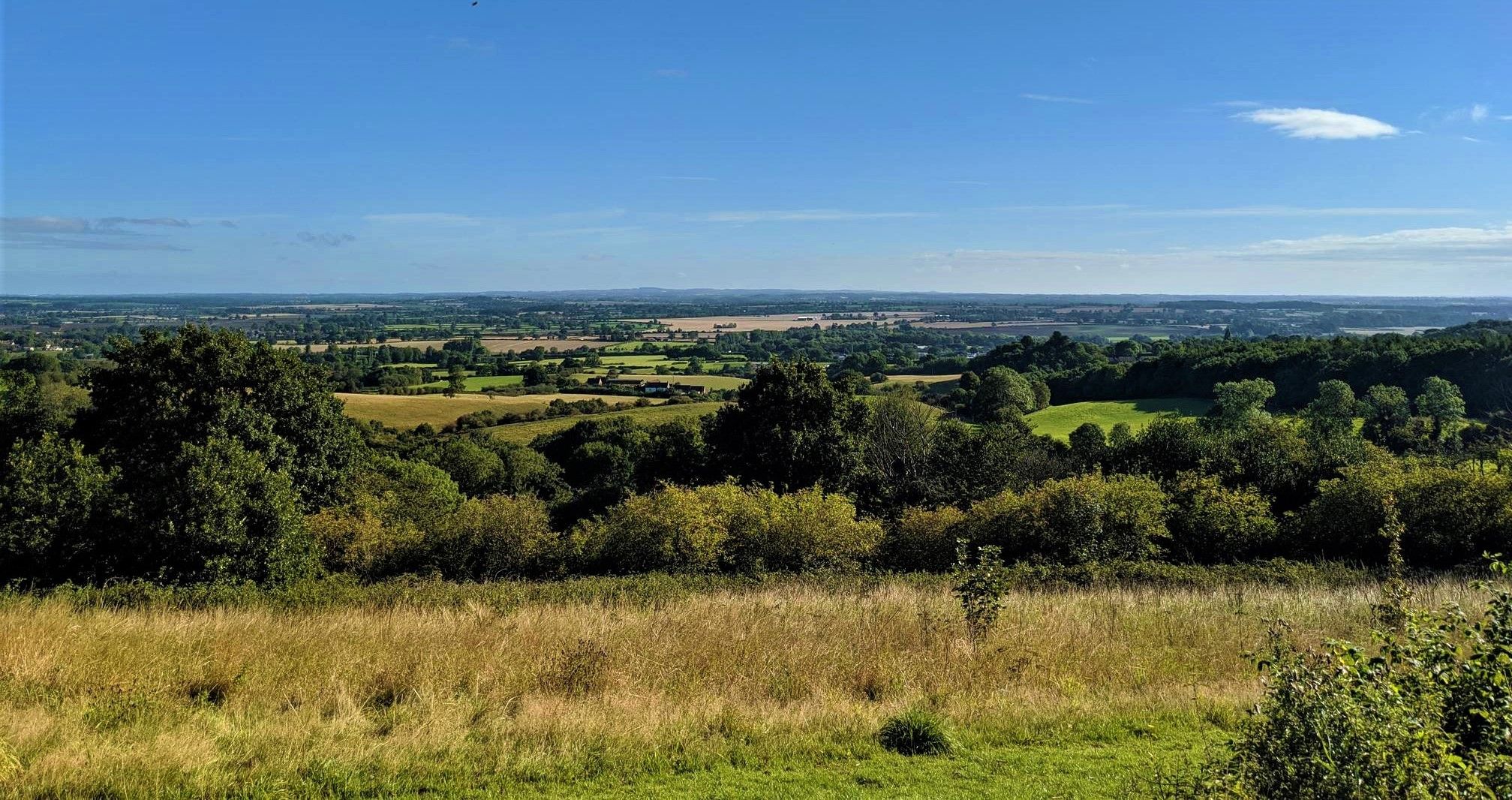
Family friendly hiking trails around Bishops Itchington offer a diverse landscape shaped by its industrial past and natural beauty. The region features rolling hills, open countryside, and former quarry sites now reclaimed by nature, providing varied terrain for outdoor activities. River valleys, such as the River Itchen, and sections of the Grand Union Canal also contribute to the area's network of footpaths. These features combine to create a rich environment for exploring, with trails ranging from easy strolls to moderate excursions.
Best family friendly hiking trails around Bishops Itchington
- The most popular family friendly hiking route is Bishops Bowl Lakes – St. Giles Church, Chesterton loop from Bishops Itchington, a 6.1 miles (9.9 km) trail that takes 2 hours 35 minutes to complete. This route passes by tranquil lakes and offers expansive countryside views.
- Another top favourite among local hikers is Bishops Bowl Lakes – Harbury Windmill loop from Bishops Itchington, a moderate 4.8 miles (7.7 km) path. This trail features the Bishops Bowl Lakes and views towards Harbury Windmill across open fields.
- Local hikers also love the Burton Dassett War Memorial – Windmill Hill Beacon loop from Gaydon, a 7.3 miles (11.7 km) trail leading through rolling hills and offering views towards the Burton Dassett Hills, often completed in about 3 hours 6 minutes.
- Hiking around Bishops Itchington is defined by former quarry sites, nature reserves, and river valleys, providing a mix of ecological interest and scenic routes. The network offers options for different ability levels, from easy family walks to more moderate excursions.
- The routes in Bishops Itchington are highly rated by the komoot community with an average score of 4.6 stars from over 400 reviews. More than 3,900 hikers have used komoot to explore Bishops Itchington's varied terrain.
Last updated: July 1, 2026
5.0
(1)
6
hikers
Moderate hike. Good fitness required. Easily-accessible paths. Suitable for all skill levels.
5.0
(2)
11
hikers
Moderate hike. Good fitness required. Easily-accessible paths. Suitable for all skill levels.

Sign up for free
3
hikers
3.71km
00:58
20m
20m
Easy hike. Great for any fitness level. Easily-accessible paths. Suitable for all skill levels.
2
hikers
12.0km
03:10
100m
100m
Moderate hike. Good fitness required. Easily-accessible paths. Suitable for all skill levels.
1
hikers
5.75km
01:31
50m
50m
Easy hike. Great for any fitness level. Easily-accessible paths. Suitable for all skill levels.
Get access to more routes and recommendations from other explorers.
Sign up for free
Already have an account?
Our route recommendations are based on thousands of hikes, rides, and runs completed by other people on komoot.
Start today with a free account
Your next adventure awaits.
Login or Signup
Popular around Bishops Itchington
Other adventures around Bishops Itchington

Tips from the Community

Nearby dog friendly beer garden at The Shakespeare pub
0
0
We had to double back on ourselves slightly to see the lakes, as they were hidden behind a hedge
0
1

The Burton Dassett war memorial is to be found on the village green on Bottom Street, Burton Dassett. It takes the form of a Latin Cross with flared ends, an octagonal column, square plinth and a two stepped base. There are 15 names for World War 1 and 10 for World War 2 in th eform of an additional brass plaque containing details of an American Bomber crew unrelated to the village that crashed there. The memorial wa sunveiled by General Gage 22nd January 1922, the monies being raised by public subscription; the masons were J F Booth and Sons. The memorial was fully restored between 1996 and 1997 to commemorate the centenary of the parish council. The original masons Booths became Hornton Quarries Ltd, so the restoration of 1996 was carried out by the same firm that built the memorial in 1921. The parish incorporates the villages of Northend and Knightcote. The memorial is exceedingly weather worn and could do with a refurbishment.
0
0
This Methodist Church has been here since 1837.
0
0
There is documentary evidence for a windmill here from the Post Medieval period and possibly earlier. It was of the post mill type and was restored in the 1930s but blew down in the 1946. It was at Windmill Hill. The beacon is what is left.
0
0
The Peyto Gateway on the north side of St Giles Church, Chesterton, Warwickshire, England, used by the Peyto Family when their manor house was there. Gateway. Probably 1630's. For Sir Edward Peyto and copy of a design by Inigo Jones. English bond red brick with moulded, cut and rubbed brick. Classical style. Round arch with keyblock, pilasters, entablature and pediment. Pilasters, wall, and arch have intermittent rustication. It is likely that this gateway was built at about the same time as Chesterton Windmill (q.v.). It is a close copy, at about three-quarters scale, of one of the two churchyard gateways flanking Jones' St Paul, Covent Garden, of 1631, see Vitruvius Britannicus (ii, 1717, pl 21-2).
0
0

Burton Dassett Hills Country Park boasts 100 acres (40 ha) of rolling hills with breathtaking panoramic views. On a clear day, views stretch beyond Coventry. Opened in 1971, the park contains many historical sites, including the ironstone quarry remains and the 12th-century All Saints Church.
2
2
The parish church of All Saints, Harbury. It was first built in the Medieval period, but rebuilt and much altered in more recent times (Imperial period). The church is situated to the south east of Harbury Hall. Church. C13. Tower later C13, with top part possibly 1811. Restored and enlarged 1873: nave largely rebuilt, south aisle widened, north aisle and organ chamber/vestry added. Chancel, south aisle and tower of squared coursed limestone rubble. Chancel has some sandstone and sandstone dressings. South aisle has ironstone dressings. Upper part of tower of Flemish bond brick. Nave, north aisle and chapel of regular coursed limestone with ironstone dressings. Tile roofs have coped stone gable parapets with weatherings and kneelers and remains of cross finials. Stone stack. Aisled nave, chancel, north chapel and south-west tower. 2-bay chancel, 5-bay nave. Buttresses of 2 offsets throughout. Chancel has splayed plinth. Diagonal buttresses. C19 geometrical and bar tracery and hood moulds with block stops throughout. 3-light east window. Small studded plank south door in chamfered surround. 2 straight-headed 2-light traceried windows. Small C13 low-side chamfered lancet. C13 north lancet. South aisle has diagonal and south buttresses. 3-light east window. C19 Early English style double-leaf south door in angle abutting tower has inner continuous roll moulding and roll moulded arch on nook shafts. Two 3-light windows. Nave has shallow south-west and large north-west buttress. 4-light west window. Organ chamber/vestry has 3-light east window. Chamfered north doorway. Lateral stack with offsets. North aisle has east angle, west diagonal and north buttresses. Doorway in fourth bay, similar to south side, has moulded arch with nailhead. 3-light windows; second bay has reticulated tracery. 3-light west window. Tower of 3 stages has massive west setback buttresses of 4 offsets. South buttress has painted sundial. South east clasping buttress. South and west lancets. Second stage, partly of 1811, has south clock face of c.1835 set in lozenge panel. Small round-arched window, largely of brick, above. Small blocked west window. Moulded string course. Third stage has clasping buttresses. Small round-arched bell openings with wooden louvres and cut-out quatrefoils. Plain cornice. Crenellated parapet. Interior: chancel has C19 hammerbeam roof. Wide segmental-pointed arch of 2 chamfered orders to organ chamber and vestry. Wide chancel arch of 2 continuous chamfered orders. 3-bay south arcade of c.1300, of 2 chamfered orders with bar stops, and octagonal piers with moulded capitals. Similar 5-bay north arcade of 1873. Wide south tower arch of 3 chamfered orders, the outer segmental-pointed and the inner with moulded imposts. Nave, aisles and chapel have arched braced queen strut roofs of 1873, with wind braces to nave. Organ chamber has arch to aisle of 2 chamfered orders, the outer segmental-pointed. South aisle has timber internal porch. Renewed west arch to tower of 3 chamfered orders, the inner with moulded imposts, the outer segmental pointed. Fittings: mostly of c.1873. Carved stone reredos. Chancel has encaustic tiled floor. Octagonal font. Timber octagonal pulpit, north aisle screen and benches. Chancel and south aisle have mid C18 communion rails with column-on-vase balusters, those in aisle possibly imported from elsewhere. Early C17 carved chest. Stained glass: east and chancel north windows c.1873. Chancel south east 1890, centre 1899, south-west 1897. Tower south c.1873. Monuments: tower east: early C18. Wall monument with Corinthian pilasters. The work carried out in 1873 cost £4,000.
0
0
Frequently Asked Questions
How many family-friendly hiking trails are available around Bishops Itchington?
There are over 10 family-friendly hiking routes around Bishops Itchington, ranging from easy strolls to moderate excursions. This guide specifically highlights 13 tours that are perfect for families.
What kind of terrain can we expect on family hikes in Bishops Itchington?
The region offers a diverse landscape, from rolling hills and open countryside with fine views towards the Burton Dassett Hills, to reclaimed former quarry sites now thriving as nature reserves. You'll find paths alongside river valleys, canals, and tranquil lakes, providing varied and engaging environments for all ages.
What makes the hiking trails around Bishops Itchington particularly suitable for families?
The trails are designed to cater to different fitness levels, with many easy to moderate options. They often pass through interesting natural features like nature reserves and lakes, offering plenty of opportunities for wildlife spotting and exploration. The varied scenery keeps younger hikers engaged, and many routes are circular, making planning easier.
When is the best time of year for family hikes in Bishops Itchington?
Spring and summer are ideal for enjoying the vibrant wildflowers and wildlife in areas like the Yellow Land nature reserve. Autumn offers beautiful foliage, while winter can provide crisp, scenic walks, though some paths might be muddier. Always check local weather conditions before heading out.
Are there any nature reserves or unique natural features to explore on these family walks?
Absolutely! The area is rich in natural beauty. You can explore Bishop's Hill Nature Reserve with its 'Blue Pool' and extensive views, or the Yellow Land, a village nature reserve known for its rare insect fauna. The Leam Valley Local Nature Reserve is another highlight, offering chances to spot kingfishers and otters. Many routes also pass by the tranquil Bishops Bowl Lakes, formed from old quarries.
Can we expect to see any interesting landmarks or historical sites on family-friendly routes?
Yes, several routes offer glimpses of local history and notable landmarks. For instance, the Bishops Bowl Lakes – St. Giles Church, Chesterton loop passes by the historic St. Giles Church. Other trails might offer views towards the Harbury Windmill, or even the distant Burton Dassett Hills. The region also has highlights like the Battle of Edgehill Site nearby.
Are there any routes that pass by lakes or water features?
Many family-friendly routes incorporate water features. The Bishops Bowl Lakes – St. Giles Church, Chesterton loop and the Bishops Bowl Lakes – Harbury Windmill loop both feature the scenic Bishops Bowl Lakes. The River Itchen and sections of the Grand Union Canal also offer pleasant towpath walks, providing opportunities to spot local wildlife.
Are the family-friendly trails around Bishops Itchington suitable for pushchairs or toddlers?
While many trails are generally family-friendly, some may involve uneven terrain, stiles, or muddy sections, making them less suitable for pushchairs. For toddler-friendly walks, look for shorter, flatter routes, especially those within nature reserves like the Yellow Land, which has been developed for accessibility. Always check the route details and recent reviews for specific conditions.
Are dogs allowed on the family hiking trails?
Most public footpaths and nature reserves in the Bishops Itchington area are dog-friendly, provided dogs are kept under control, especially around livestock and wildlife. Always ensure you clean up after your dog. Specific rules may apply in certain nature reserve areas, so it's always good to check local signage.
Are there any circular routes suitable for families?
Yes, many of the recommended family-friendly hikes around Bishops Itchington are circular, offering convenient starting and ending points. Examples include the Bishops Bowl Lakes – St. Giles Church, Chesterton loop, the Bishops Bowl Lakes – Harbury Windmill loop, and the Kingston Pools loop. These loops make planning your family adventure straightforward.
What are the typical distances and durations for family-friendly hikes in this area?
Family-friendly hikes in Bishops Itchington vary, but you can find options from shorter walks of around 3.5 km (2.1 miles) taking about an hour, to moderate excursions of 8-10 km (5-6 miles) that might take 2-3 hours. For example, the Bishops Bowl Lakes – St. Giles Church, Chesterton loop is about 9.9 km and takes roughly 2 hours and 35 minutes.
What do other hikers enjoy the most about hiking in Bishops Itchington?
The area is highly rated by the komoot community, with an average score of 4.6 stars. Reviewers often praise the peaceful countryside, the diverse landscapes including lakes and nature reserves, and the well-maintained footpaths that make for enjoyable family outings. The sense of discovery in former quarry sites now reclaimed by nature is also frequently highlighted.
Most popular routes around Bishops Itchington
Most popular attractions around Bishops Itchington

Get inspired with the komoot mobile app


Explore more
Browse the best Hikes in other regions.
